FEASTING · Part I · Fire and Iron
Chapter 1
The Rhythm of the Hearth
Draft 1, 25 September 2026 · 6,091 words · 5 movements
The Opening
The hob clicks four times and lights. Nobody looks at it. The flame is blue, the size of a coin, and it has been waiting in the pipe under the street since before the house was built, and it will wait there again when the pan comes off. It costs a few cents. It needs no wood, no match, no watching, and it leaves no ash. If the kitchen has an induction ring instead, there is not even a flame, only a pan that grows hot on a cold glass plate for reasons that nobody at the table could explain.
Put your hand, if you like, flat on the counter beside the ring and feel how cool it is. The whole kitchen is cool. The heat is in the pan and nowhere else, and in a minute it will be in the food, and then it will be gone. A cook a hundred years ago would have found this the strangest thing in the room. Not the ring, which is only a trick, but the cold around it. A kitchen was the warm room. It was warm because the fire in it never went out, and the fire never went out because letting it die and lighting it again cost more than keeping it, in wood and in time and in the small skill of coaxing a flame out of yesterday's ash.
That fire had a rhythm. It was raked and banked at night under its own ash, and woken in the morning with a breath and a handful of kindling, and fed through the day, and let fall to coals for the cooking, and built up again for the evening, and banked once more. The house kept time by it. So did the people in it. It was the pulse of the place, and the cook was the one who kept it beating.
The opening of the chapter. It goes on in the book.
The Story
- What the fire made
- The coal bed
- The oven and the bakehouse
- The wood
- The arithmetic of a warm house
- The Honest Broker's stove
- The rocket
- Smoke, tar and the sweep
- The turn to the present
3,698 words in the book.
At the Bench
Four things: the fire, the oven, the rocket, the wood. Every one of them is a way of burning a tree so that the heat reaches the pot and the smoke reaches the sky and neither reaches the lungs. Read the whole of a method before starting it.
1 The fire and the coal bed Safety
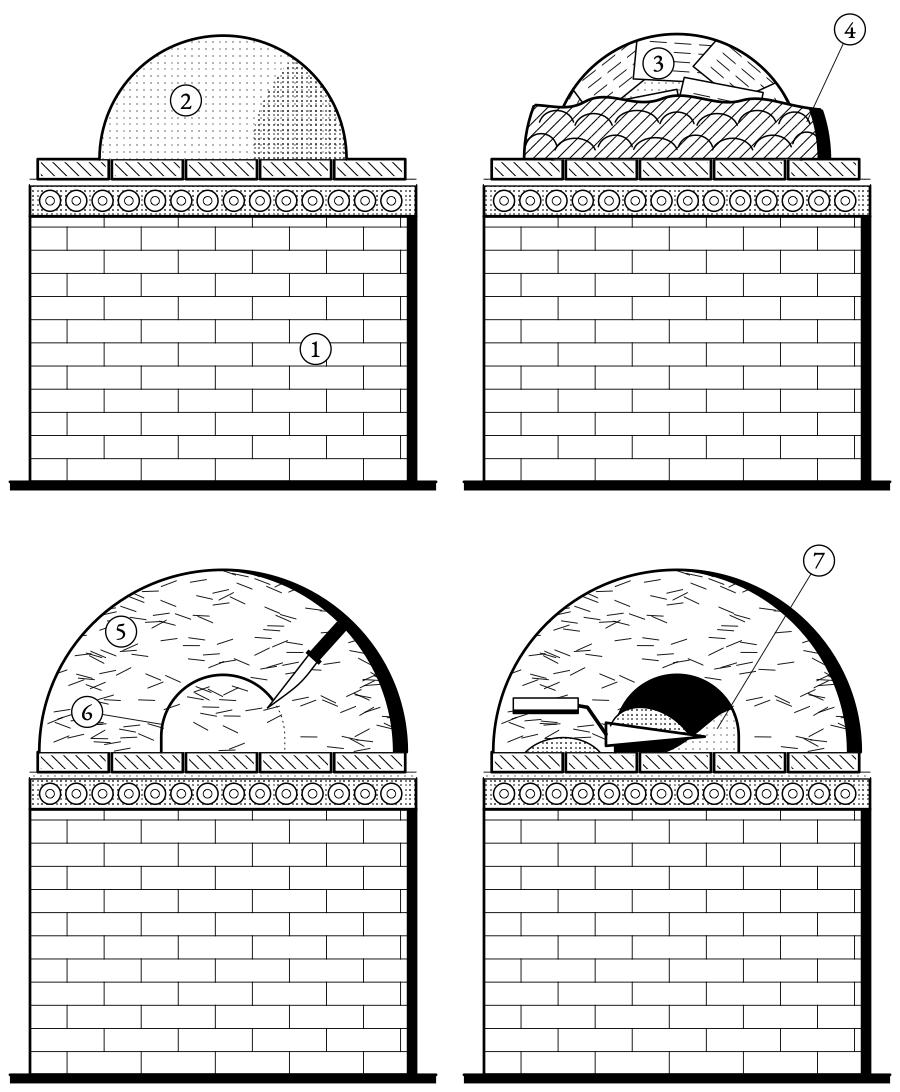
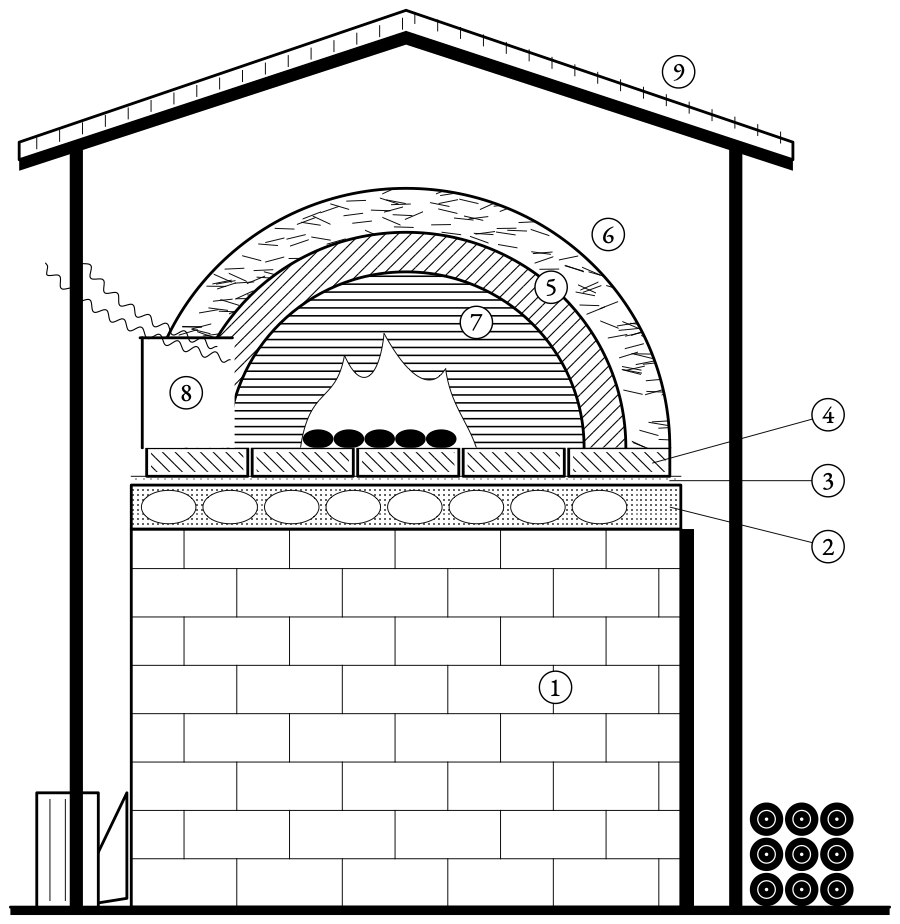
2 A cob oven Safety
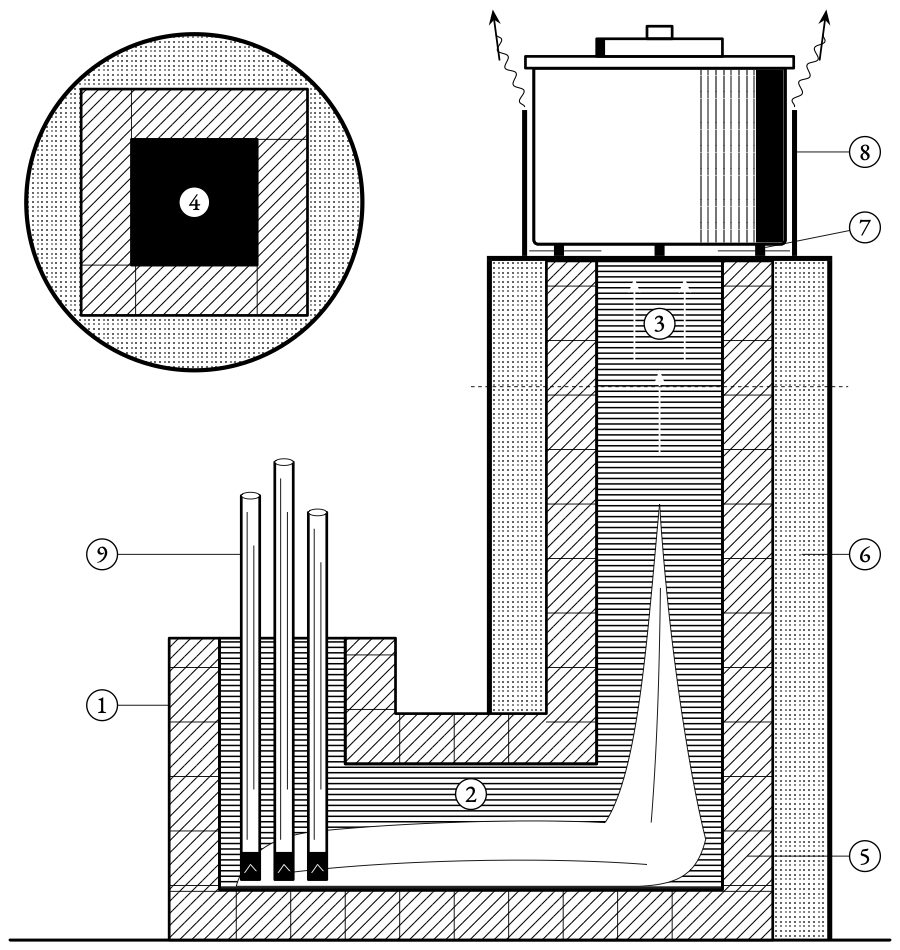
3 A brick rocket stove for the pot Safety
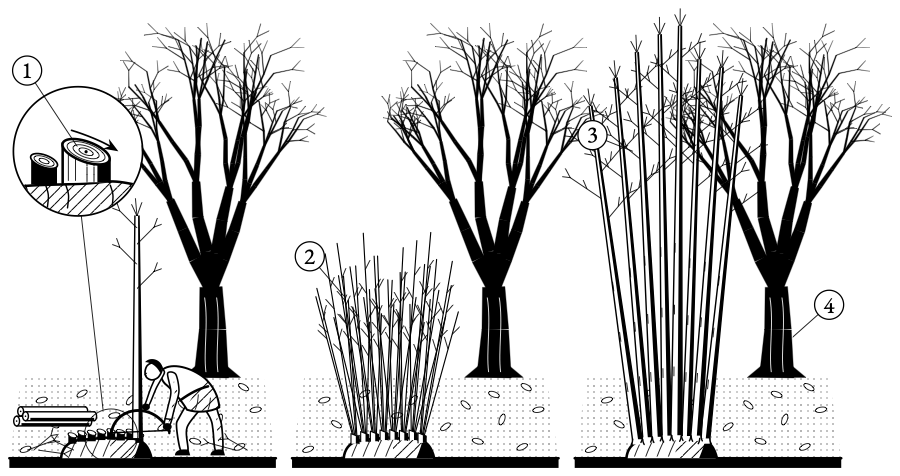
4 The woodlot year Safety
If it goes wrong
The fire smokes into the room. The flue is cold and the draught has not started, or the damper is shut, or the wood is wet. Open the damper fully, light a twist of paper high in the throat to warm the flue, and start again with small dry kindling. If it smokes every time, the chimney is blocked or too short, and that is a sweep's job.
The first lines of each protocol. The steps, weights and temperatures are in the book.
Numbers to Carry
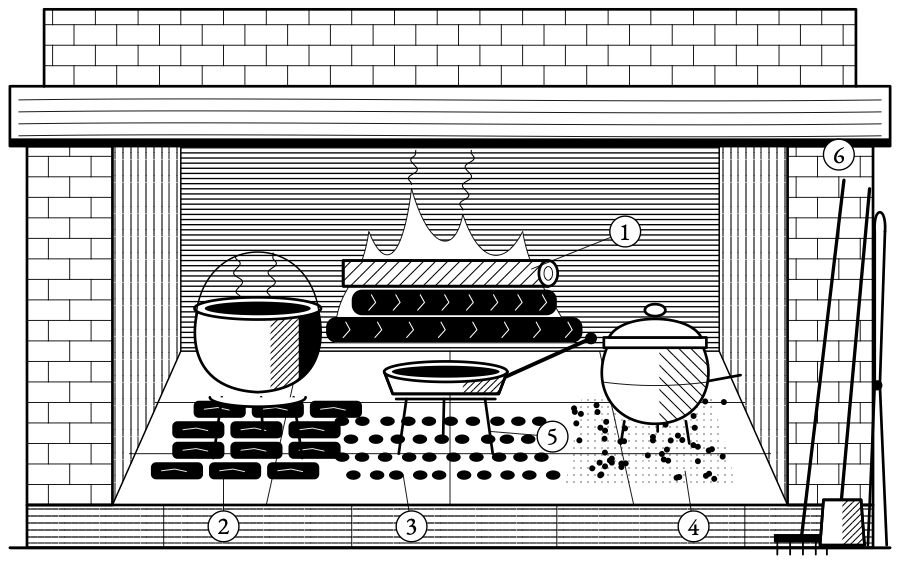
- The three heats: big coals tight for boiling, walnut coals thin for frying, small coals in ash for the simmer. Move the pot, not the fire. 115
- The oven: heat soaks into brick at an inch an hour. The door is 63 parts in a hundred of the dome's height. About 0.9 kg of wood per kg of flour in an old oven, half that in an insulated one. 20
- The rocket: feed, tunnel, riser at 1: 2: 4, insulated riser, 15 mm pot skirt, 96 to 98 parts in a hundred burned. Flue gas out of the house at 120 °C or more, or tar. 21
- The family: 11,600 kWh of heat, 3,200 of hot water, 800 of cooking. About 7.7 tonnes or 16 Ster of beech a year with a masonry stove and summer charcoal. A hectare and a half of coppice. 119 123
- The village: 75 households, 90 to 115 hectares of woodland in rotation. 119 123
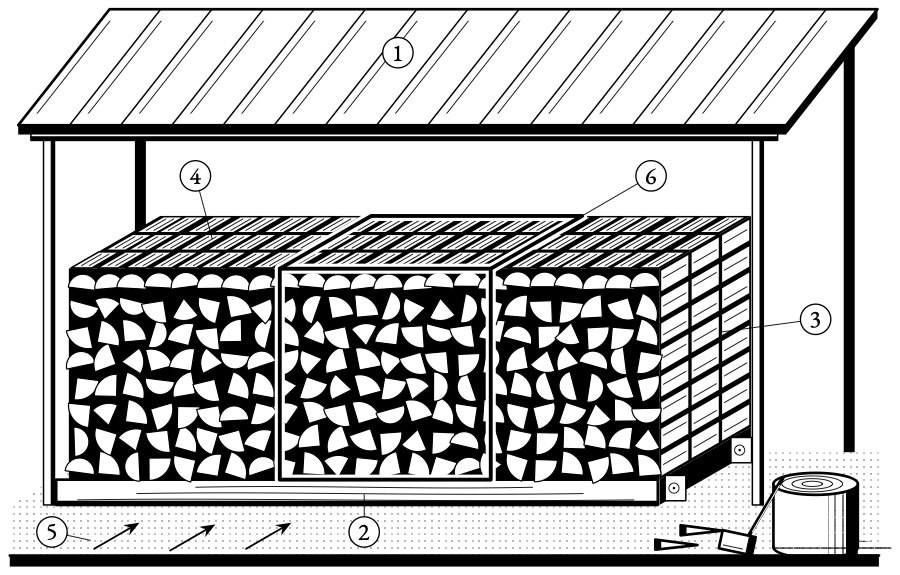
- Wood: under 20 parts water in a hundred, one summer for birch, two for beech. A Ster of beech is about 480 kg. Charcoal is a quarter of the wood that made it. 119 123 3
- The masonry stove gives back 85 parts in a hundred, the steel stove 50, the brazier 25. 119
The Library
The hearth techniques, the three heats, the spider, the Dutch oven and the turnspit dog from the hearth cooking document (115). The oven's physics, the door proportion, Pompeii, the Nassau bakehouse order and the wood per kilogram of flour from the masonry oven document (20). The rocket stove, its proportions, its efficiency, the mass heater and the German emission rules from the rocket stove document (21). The household's heat, the stove efficiencies, the beech arithmetic and the Ster from the biomass document (119). The coppice-with-standards design, its history and the labour figures from the woodlot document (123). Charcoal yield and the clamp from the charcoal document (3). Nothing in these documents is verified, and the three household documents cite one another rather than independent sources. Wrangham, Carlowitz, Hartig, Cotta, the Holznot debate, the Tiergarten in 1945 to 1947, the Grunewald and Tiergarten areas, Berlin's gas and electric kitchens, the Schornsteinfeger and Ofensetzer, the cob oven build, the flour test, the banked fire and the seasoning times come from my own knowledge and are marked.
The plates