FEASTING · Part I · Fire and Iron
Chapter 2
The City Is a Mine
Draft 1, 25 September 2026 · 7,456 words · 5 movements
The Opening
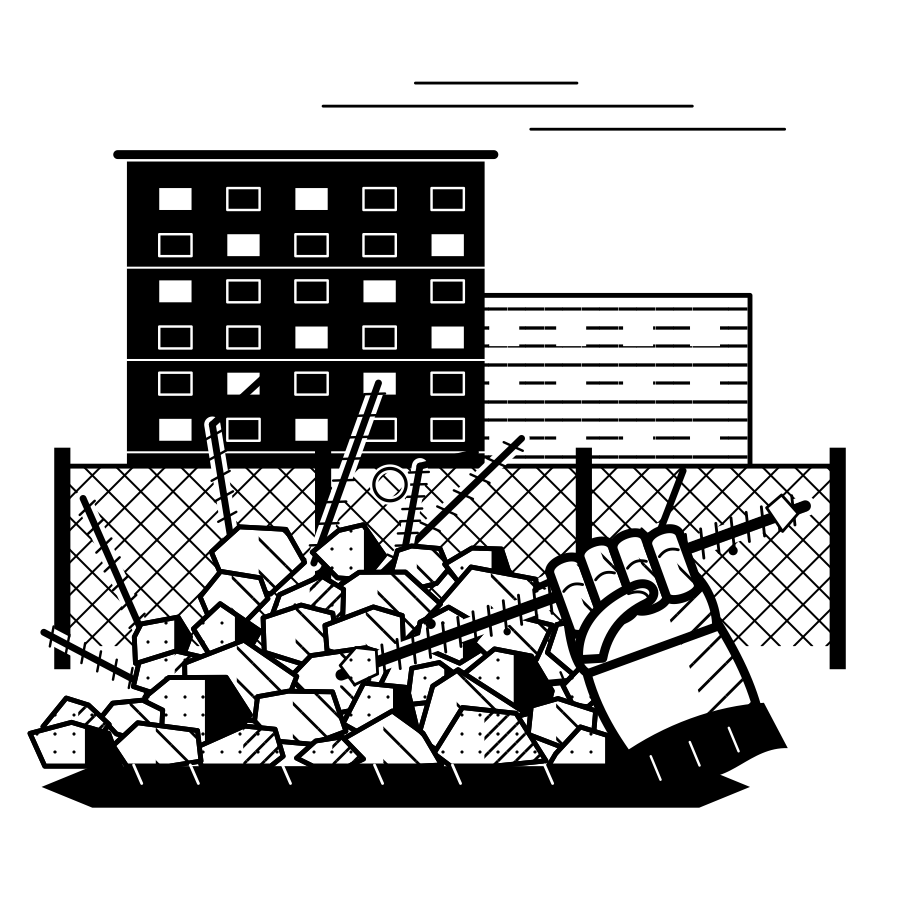
The digger has stopped for the night and the site is quiet. Where the block of flats stood there is a heap of grey lumps with rust-coloured rods sticking out of them at every angle, bent, some of them still tied to each other with wire, all of them scabbed with the concrete they were poured into sixty years ago. Rebar. Nobody looks at it either. It is the most ordinary thing in the city, more ordinary than brick, and tomorrow a machine with a magnet on its arm will pull it out of the rubble and drop it in a skip, and a lorry will take the skip to a yard, and the yard will sell it by the tonne for less than the price of the diesel that moved it.
Pick up a stub of it, if the fence lets you, and weigh it in your hand. About a kilogram for the length of a forearm. It is ribbed so the concrete could grip it, and it is a poor steel, made cheap and made soft on purpose, and there is more of it under our feet than there is gold in every vault on earth. In 1813 the women of this city gave their gold rings to the Prussian treasury to pay for a war and were given iron rings in return, cast at the royal foundry a few streets from where the digger stands, and the rings said on them, Gold gab ich für Eisen. I gave gold for iron. They wore them with pride, because iron was the thing that mattered and gold was only the thing that bought it.
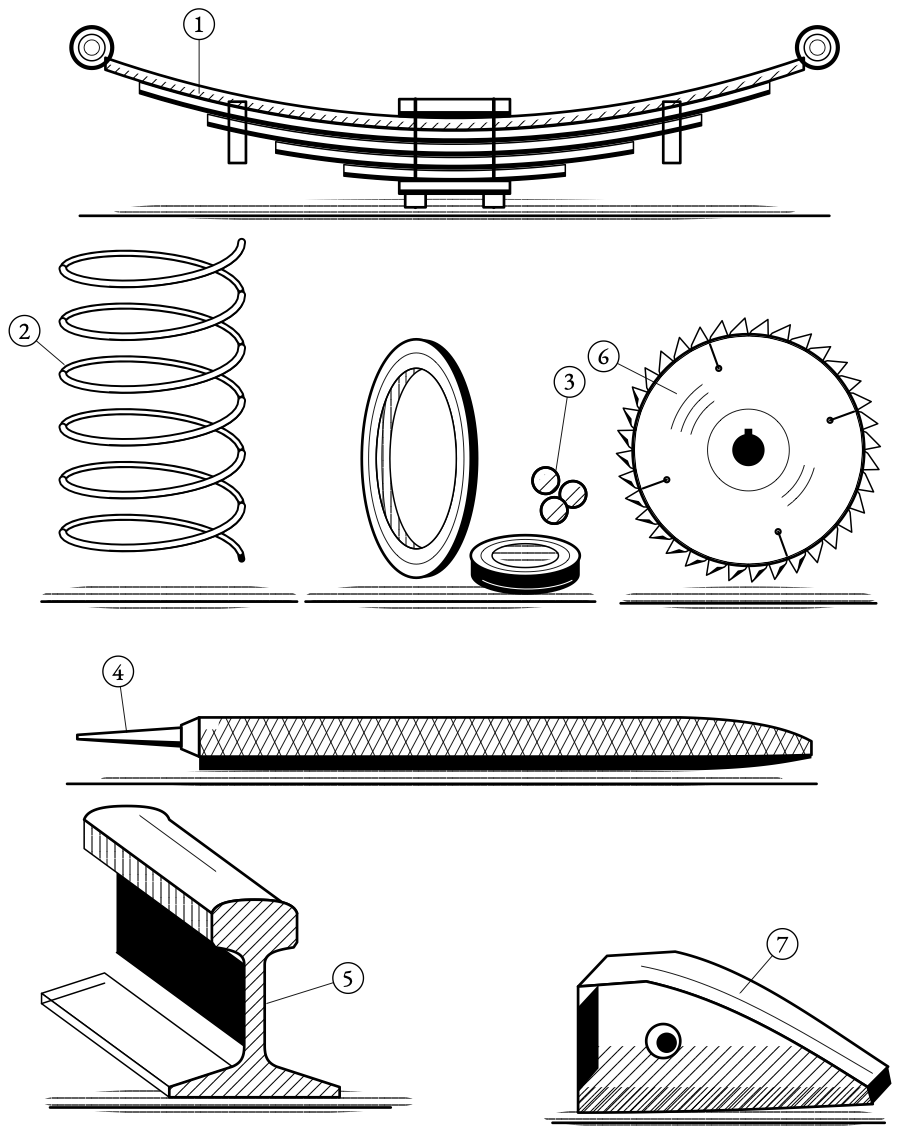
A city is a mine. Not a metaphor of one but the thing itself: an ore body of a size no prospector ever walked over, forty kilograms and more of iron for every square metre of it, parks and lakes included, lying in beams and rails and pipes and cars and the ribs of every concrete floor, already smelted, already rolled, waiting only to be read. The reading is the skill. A prospector looks at a hillside and sees a seam. The eye we need looks at a parked car and sees the two leaf springs under the back axle, which are the best steel within a mile, and the coil springs at the front, which are nearly as good, and the wheel bearings, which are better than either and harder to work, and the body panels, which are nothing at all. It sees the rail in the disused siding and knows that one metre of it is a lifetime's anvil. It sees the file in the drawer and knows it is a knife.
The opening of the chapter. It goes on in the book.
The Story
- What a city is made of
- Gold for iron
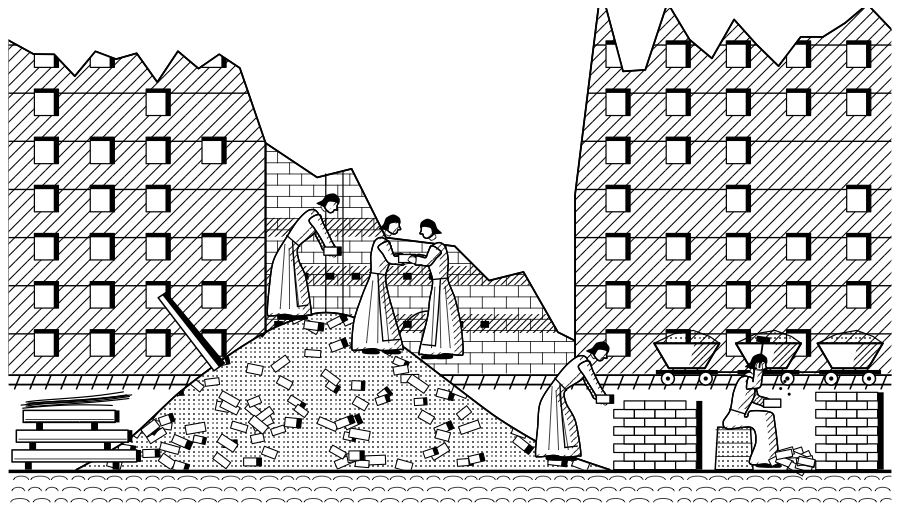
- The rubble years
- The prospector's eye
- Sparks in the dark
- A box of dirt
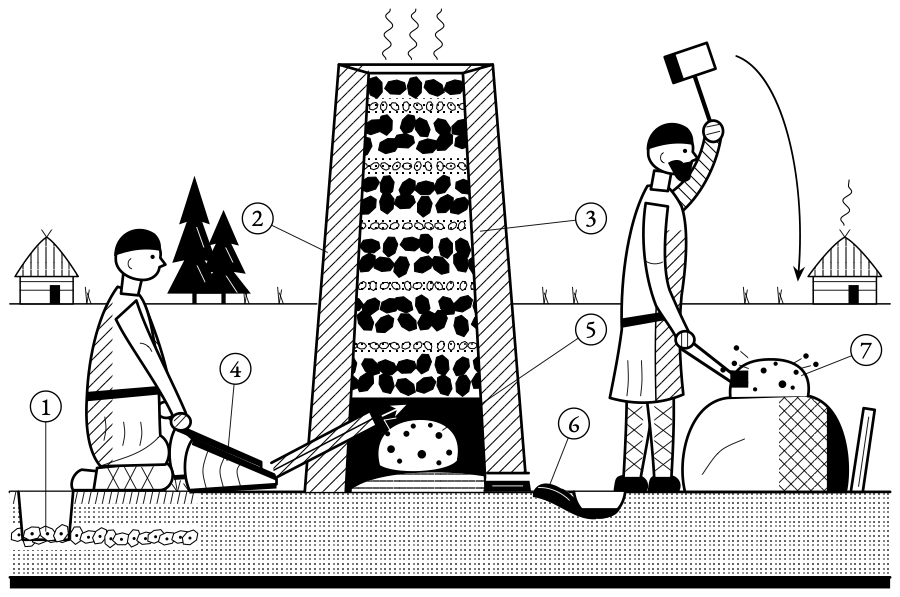
- The Köhler and the anvil
- The Honest Broker's scrap
- The turn to the present
4,737 words in the book.
At the Bench
The ore first, then the forge, then the fire, then the fuel. Every step here is done outdoors or in a shed open at both ends, in cotton or wool, never in synthetics, with safety glasses on and a bucket of water and one of sand within reach. The grinder is the tool that hurts most people at this bench: a guard on the wheel, never a wheel run above its rated speed, never a cracked wheel, and the piece held to it lightly.
1 Reading a pile Safety
2 A box of dirt
3 The brake drum, the blast and the anvil Safety
4 Lighting and tending the charcoal fire Safety
5 Charcoal for the smith Safety
The clamp is the first chapter's, and the charcoal document's method (3) is the one to follow. For the smith, three rules on top of it. Burn hardwood only, hornbeam, beech and oak from the coppice, cut to the thickness of a wrist and fully seasoned. Break the charcoal to walnut size and screen it, and throw the fines on the garden. Cure it. Fresh charcoal spread thin in the open for a day or two before it is bagged …
If it goes wrong
The fire is cold and the steel comes out red instead of yellow. The mound is too thin, or the charcoal is softwood, or the blast is weak, or the steel is lying at the mouth of the pipe in the oxygen where it cools and scales. Heap more fuel over the work, raise the steel a hand above the mouth, and check the blower: a leaky bellows valve or a choked outlet loses most of the air.
The first lines of each protocol. The steps, weights and temperatures are in the book.
Numbers to Carry
- The city: about eleven tonnes of steel per person. Nearly all of it mild. The good vein: springs, bearings, files, saw blades, rails. (own knowledge, marked)
- Carbon: mild under 0.3 parts in a hundred, will not harden. Medium 0.3 to 0.6. High 0.6 and up, for edges. Springs 0.5 to 0.65. Bearings 1.0 with 1.5 chromium. Files 1.0 to 1.2. Rail 0.62 to 0.80. 1
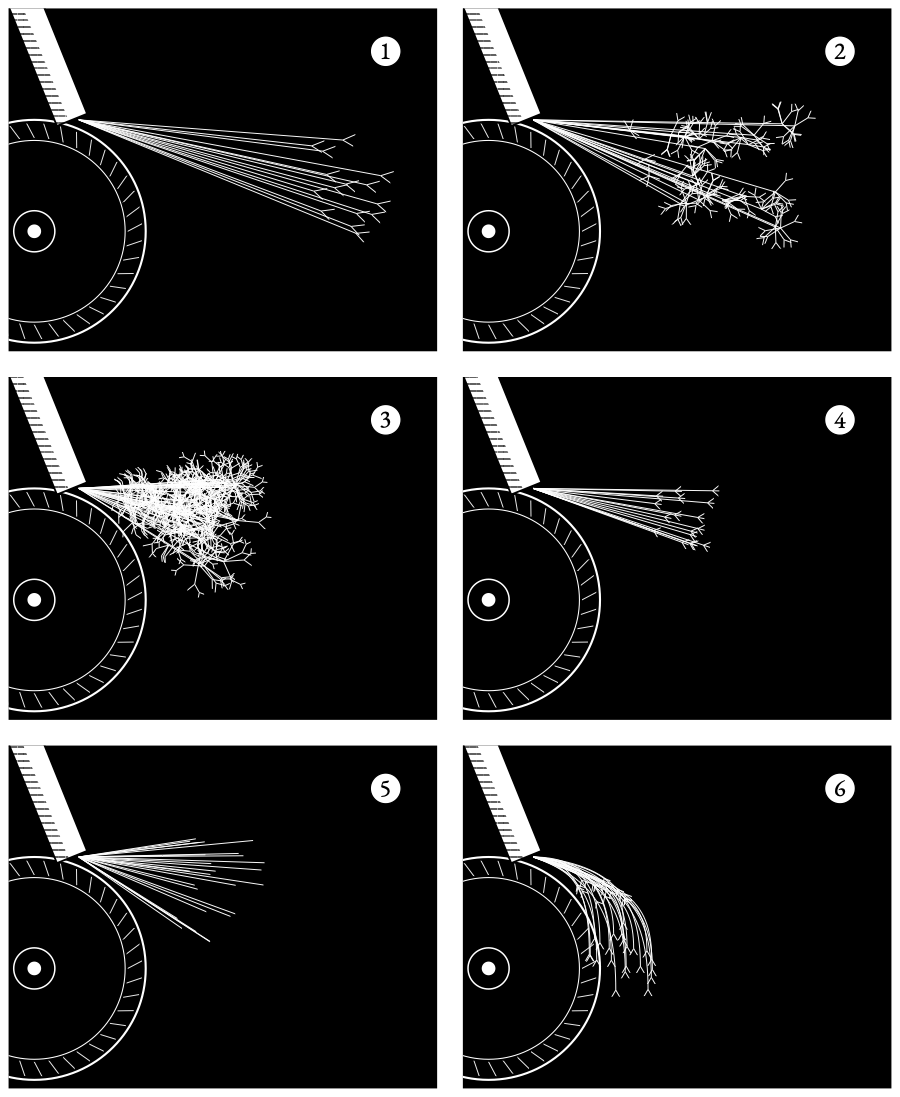
- The spark: long and forked, mild. Short, bushy, bursting, high carbon. Orange and muted, chromium. Yellow bush, stainless. Dull red at the wheel, cast iron. 1
- The magnet lets go at 770 °C, the Curie point. Harden a shade above it, in warm oil. Water for no unknown steel. 1
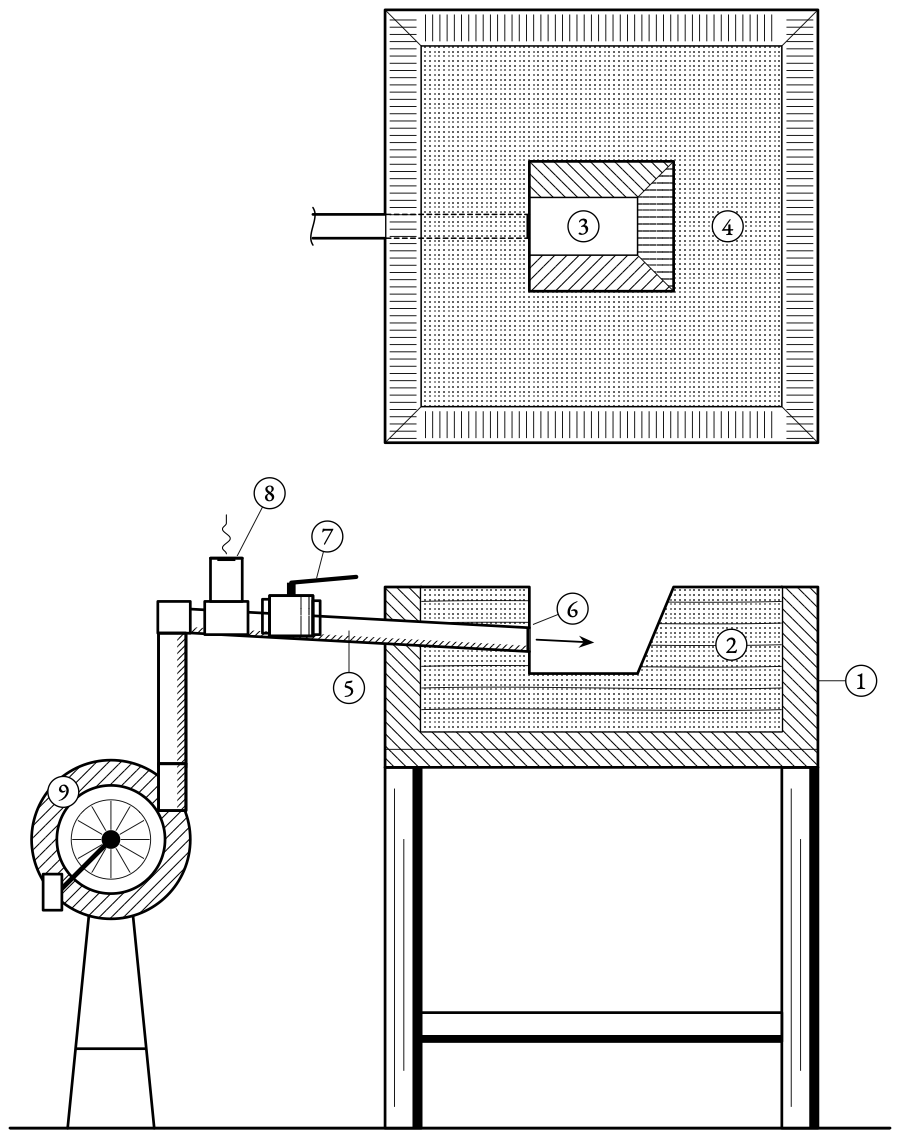
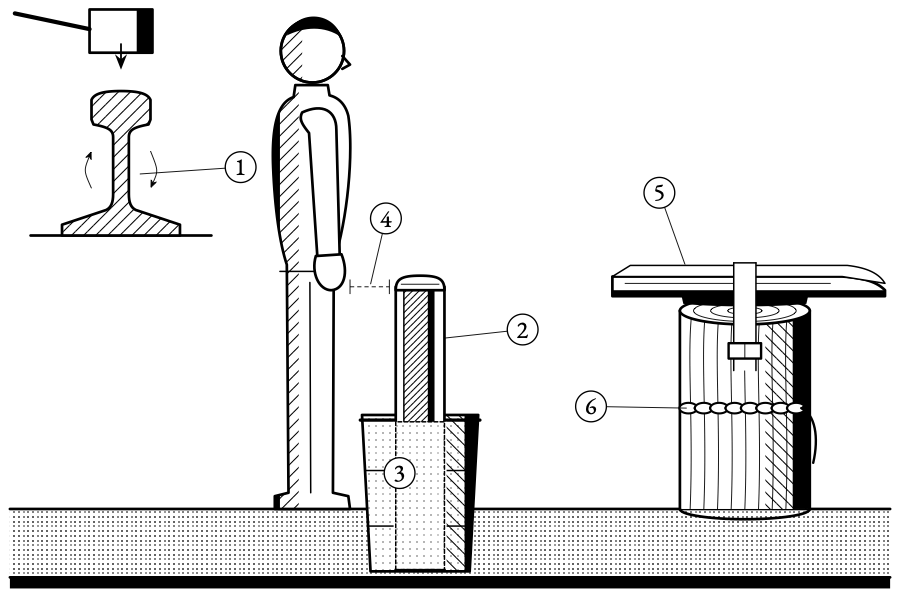
- The box of dirt: 60 cm square, 18 to 23 cm deep, trench two fists, pipe 20 to 25 mm inside, mouth 25 to 50 mm above the floor. Five centimetres of earth between fire and wood. (2a, 2b)
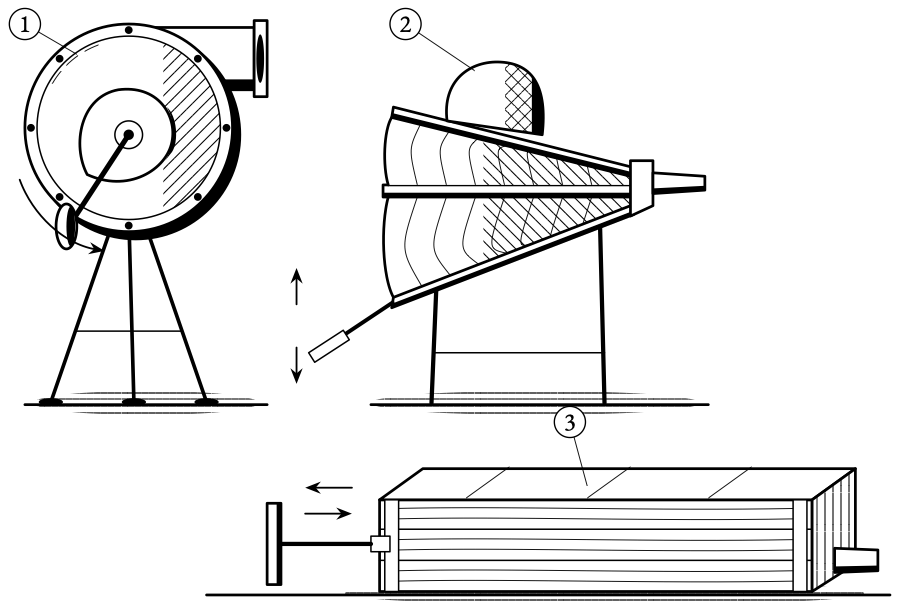
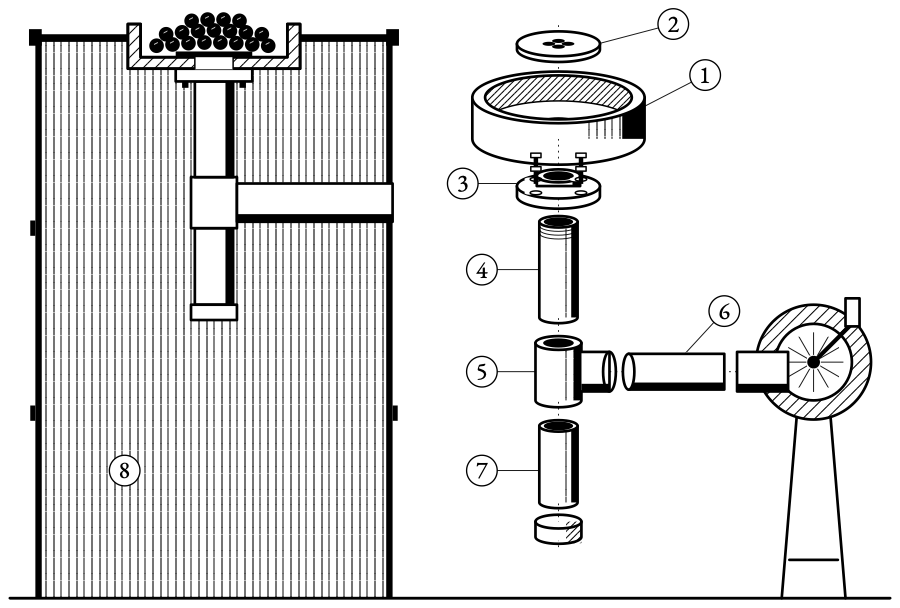
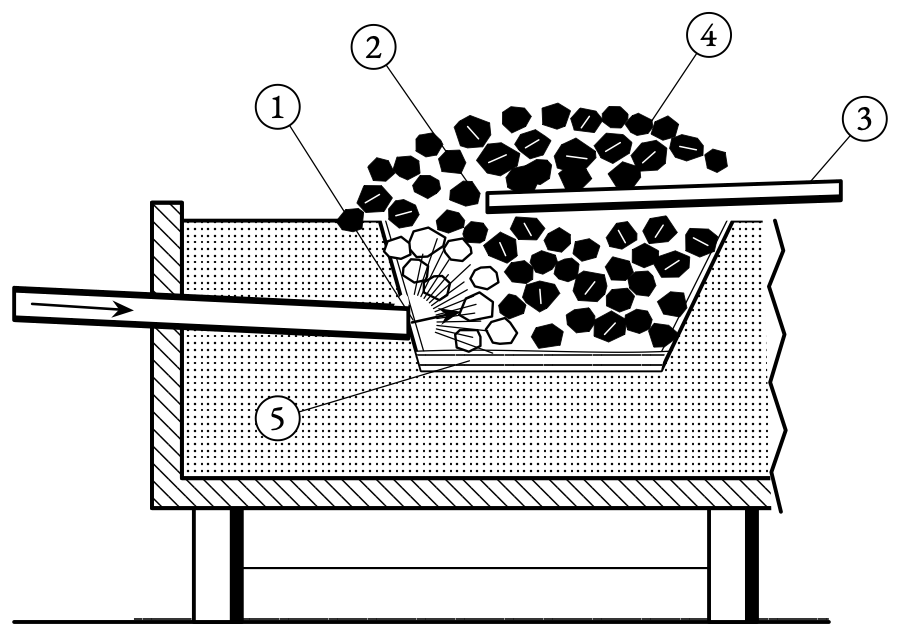
- The drum: 23 cm inside, 5 cm deep, 50 mm flange, tee, ash dump. Coal only. Charcoal wants the side blast. (2a, 2b)
- The heats: dark red 650, bright red 800 to 900, yellow 1,000 to 1,100, welding 1,200 to 1,300, white means burning. (2b)
- Charcoal: walnut size, hardwood, cured a day or two in the open, rings on the anvil. About 100 litres or 12 to 15 kg a day, 2 hectares of coppice a year for a village smith. (3, own arithmetic)
- The anvil: 20 kg per kilogram of hammer at least, 40 is better, rail on end, knuckle height, silicone and chain. 4
- The poisons: zinc fumes at red heat, fever in 4 to 10 hours. Cadmium kills. Lead in paint and pipe. Asbestos in every building before 1993. Carbon monoxide at 400 parts per million brings headache and sickness within two hours and can kill within three, and a closed workshop climbs far past that within the hour. Forge outdoors. (1, 2b, 4, own)
- Pewter and old solder: lead, up to two parts in five in the worst pewter. The law allows five parts in ten thousand of lead in a pewter that meets food, and no kitchen test can see that little, so pewter of unknown make goes to candlesticks and never to the table. 147
The Library
The carbon classes, the object taxonomy of springs, bearings, files and rails, the European stamping system, the spark test table, the file and fracture tests and the magnet from the urban steel scavenging document (1). The JABOD box, the brake drum, the tuyere, the blowers and bellows, the fire zones, the colour scale, the linings and the fuel comparisons from the two forge documents (2a, 2b). Charcoal size, species, the ring test and the clamp vocabulary from the charcoal document (3). The rail and forklift-tine anvil, the mass ratio, the silicone bedding, the tongs and the German safety rules from the anvils and tongs document (4). The scrap grades of rail, spring, pipe and pewter and the lead in old pewter and solder from the cutlery document (147, read on 25 September 2026). None of these is verified, none gives a figure for the steel in a building, a car or a city, none says a word about Berlin, and the two forge documents and the charcoal document cite each other. The steel per person and per city, the rebar per cubic metre, the car, the rail per kilometre, the bog iron and the bloomery, Peitz, the Royal Foundry and the iron rings, Borsig, Bessemer, Siemens-Martin, Hennigsdorf, the rubble years and the Teufelsberg, the Curie temperature, the tempering colours, the asbestos ban, the charcoal per day and per year, knuckle height and the recycling figures come from my own knowledge and are marked.
The plates