FEASTING · Part I · Fire and Iron
Chapter 3
The Knife
Draft 2, 25 September 2026 · 7,502 words · 5 movements
The Opening
The knife in the drawer is the one that came with the block. It has a black plastic handle and a blade that was stamped out of a sheet, and it is not sharp, and it has not been sharp for years, and nobody in the house has noticed, because a dull knife still cuts bread if enough weight goes on it and still gets through a tomato if the tomato is pressed rather than sliced. The onion makes everyone cry more than it should. That is the only symptom.
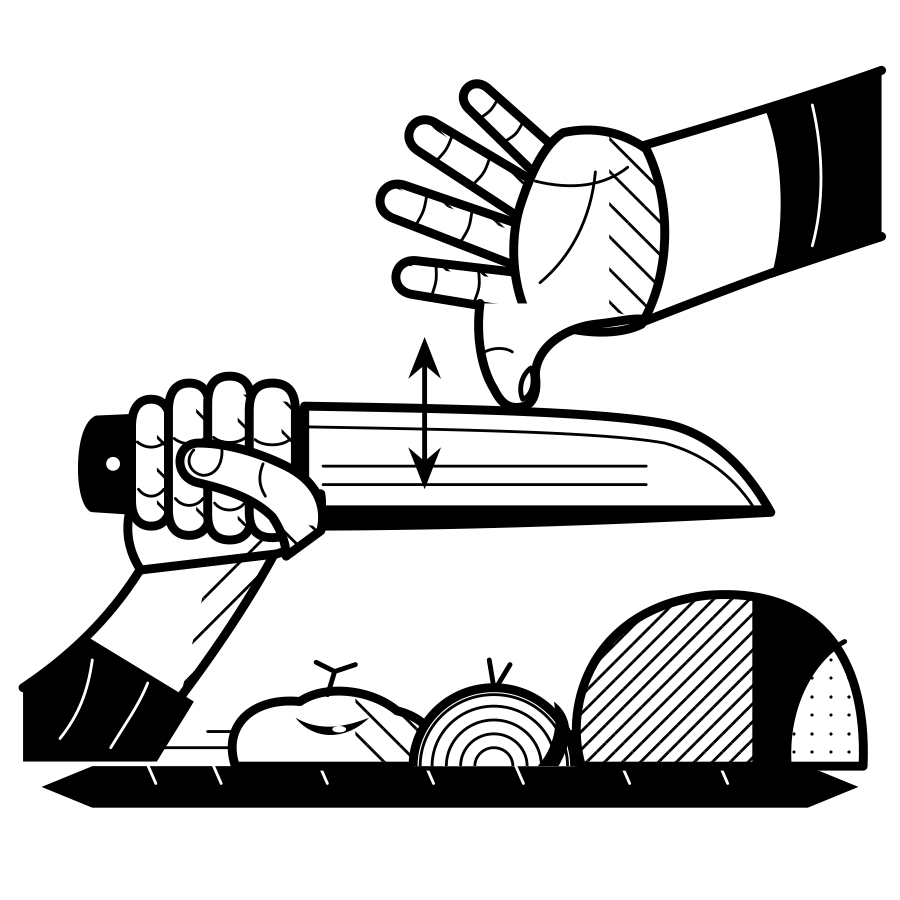
Draw your thumb across the edge, sideways, never along it, and feel what is there. On a sharp knife the thumb catches at once, a fine bite, as if the steel wanted to go in. On this one the thumb slides. The edge has rounded over into something a hair's width across, which is a wall to a tomato skin, and the knife has been pushing through food for years rather than parting it. It is not the steel's fault. The steel is fine, a stainless of a modest kind that would take a good edge if anyone gave it one. Nobody has, because no one at the table knows how, and because a new knife costs less than an hour of anyone's time.
A knife is a tempered thing. Steel that is hard enough to hold an edge is, straight out of the fire and the oil, as brittle as a wineglass, and the smith has to take some of that hardness away again, gently, over a low heat, until the blade will bend a little before it breaks. That second heat is the temper, and it is the whole art. Too little, and the knife shatters on a bone. Too much, and it rolls over on a carrot. The word came to people from the forge: someone with a good temper has been through the fire and the quench and has been warmed back to a usable hardness. Someone who loses it has gone back to glass.
The opening of the chapter. It goes on in the book.
The Story
- The first edge
- What happens in the steel
- The steel from the mine
- The tongs first
- Forging the blade
- The edge
- The blades of the field
- The skillet
- The Honest Broker's edge
- The turn to the present
4,750 words in the book.
At the Bench
Everything here is done at the charcoal forge, outdoors, in cotton, wool and leather, with the eyes covered and the quench can and its lid within reach and the water bucket on the far side of the shop. No galvanised steel in the fire. No file, spring or blade quenched in water. The dust from stones and linings is silica: wet, always.
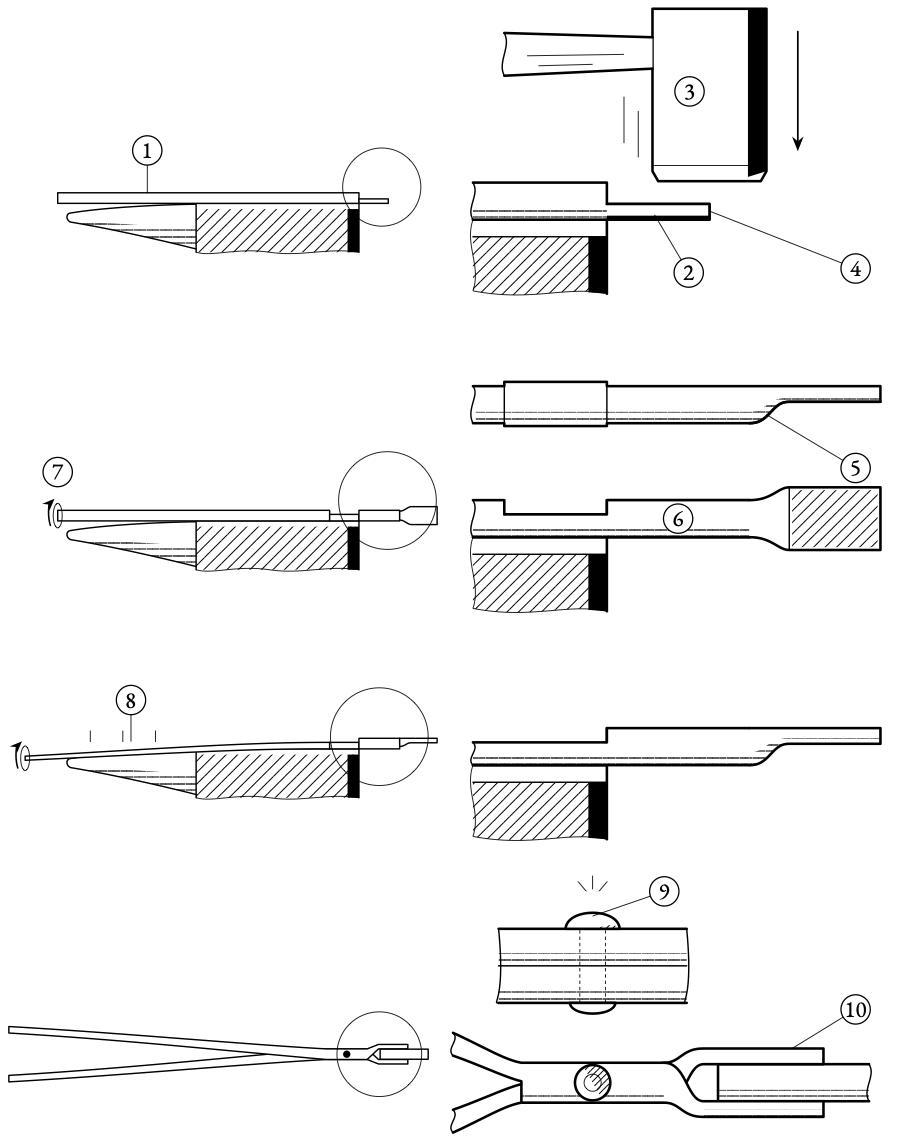
1 The tongs
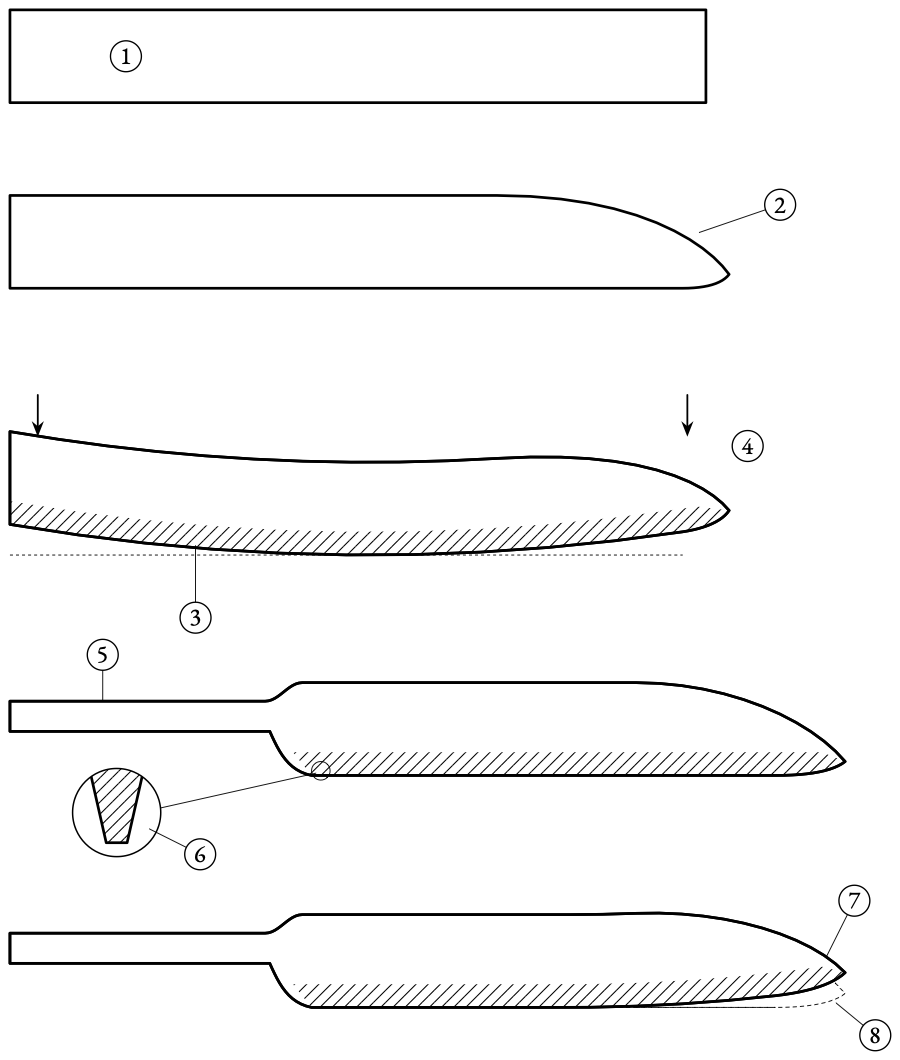
2 A kitchen knife Safety
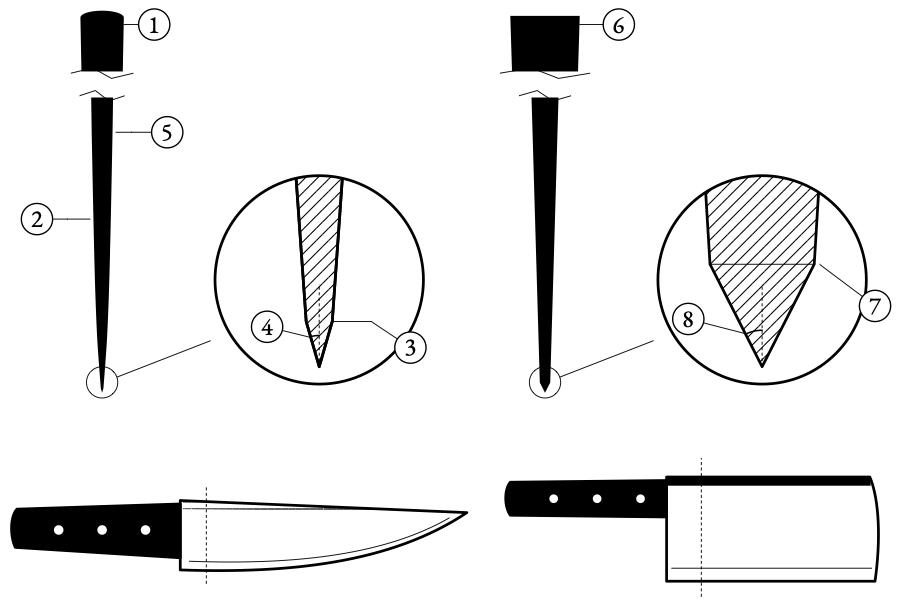
For a cleaver: spring steel, 4 mm spine kept parallel, 0.5 to 0.7 mm behind the edge, hardened at 830 °C in warm canola, tempered at 190 to 200 °C twice, edge at twenty-five to thirty degrees a side, left at the sandstone.
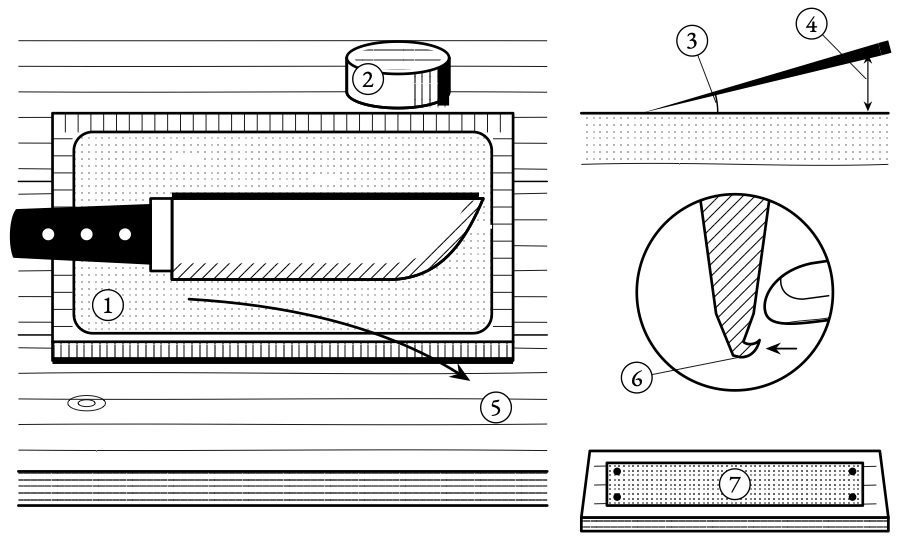
3 The stone
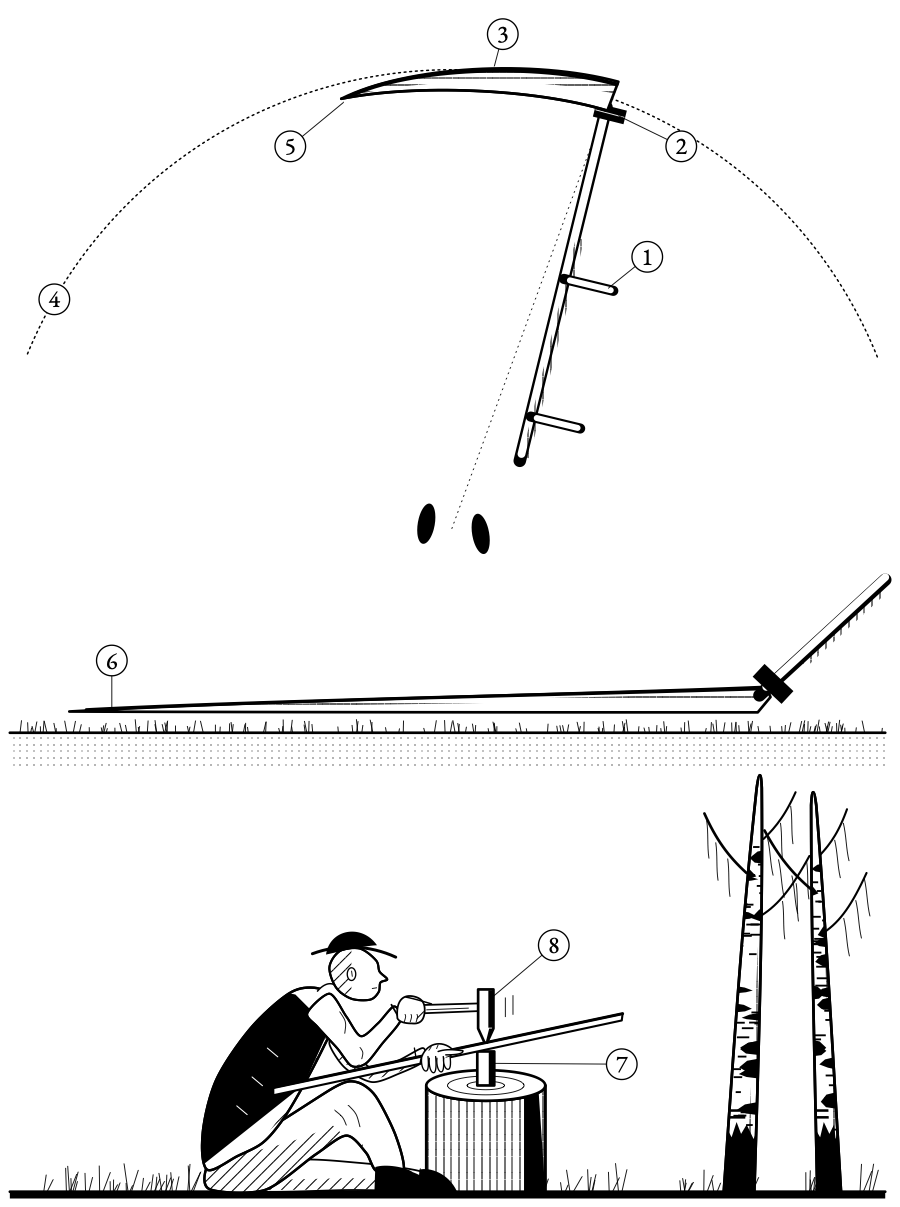
4 Peening the scythe Safety
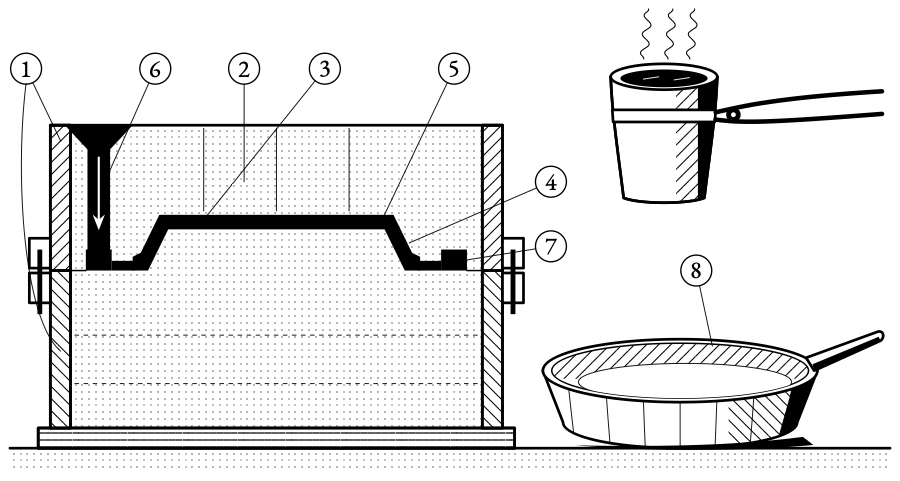
5 The pan, before the first pour Safety
This is a foundry protocol and it belongs to someone who has poured before. Before that person is found, what a household can do: make the sand and the pattern, and sort the iron.
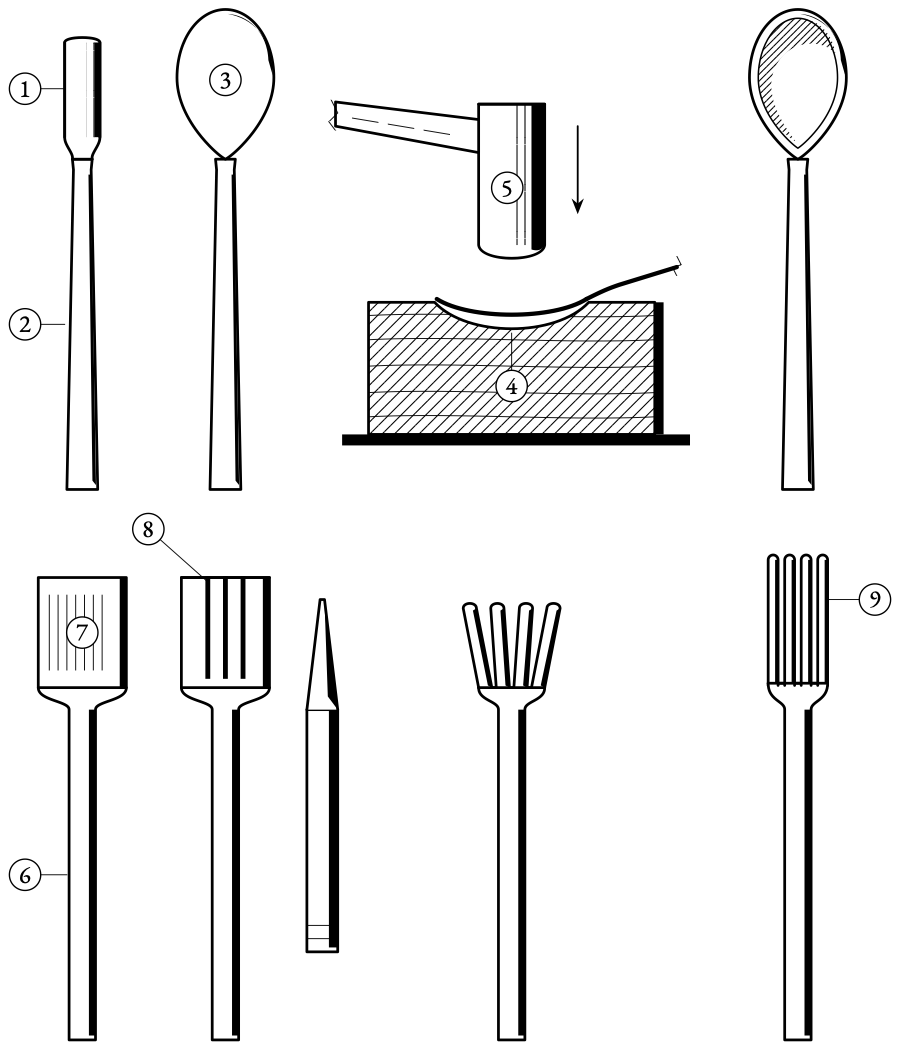
6 A fork and a spoon for the table Safety
The pair that Chapter 17 lays. Forge them after the tongs and before the knife, because they teach the slit and the sink and forgive a bad heat.
If it goes wrong
The edge ripples after the quench. The bacon edge. It was forged or ground thinner than a millimetre before hardening. It cannot be straightened. Grind it back past the ripple, or normalise, reforge thicker and start again.
The first lines of each protocol. The steps, weights and temperatures are in the book.
Numbers to Carry
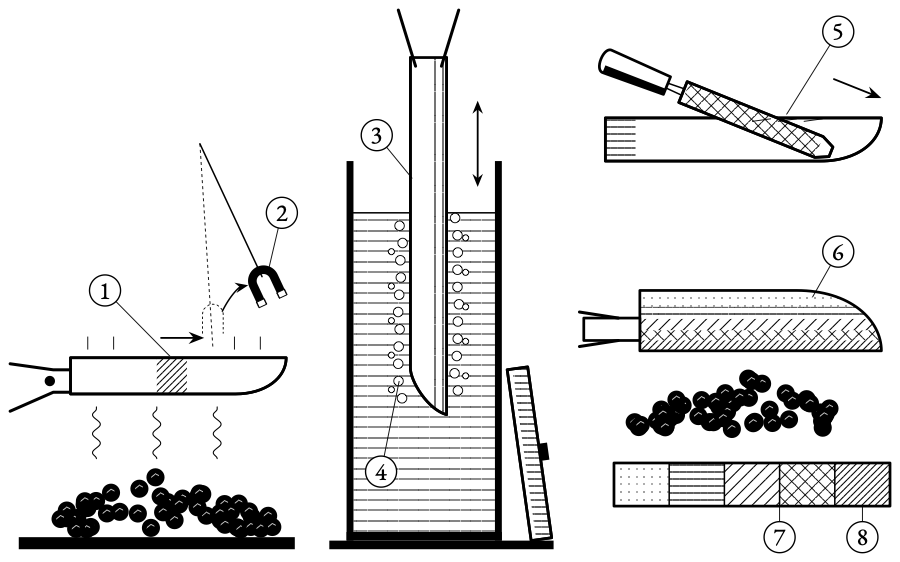
- The change: 730 to 760 °C, the shadow and the magnet. Harden at 800 to 815 for 1084, 830 for spring. Through 600 to 550 °C in a second. 5 6
- The temper: 200 °C two hours twice, light straw, 60 Rockwell for a knife. Never 230 to 315, the purple-blue trough. 345 and above, grey-blue, for a spring. 5 6
- Forging: orange-yellow 980 to 1,060 °C. Stop at dull red, 650. Normalise 900, 815, 730 in still air. Edge 1 mm before the quench. 5 6
- The chef's knife: spine 2 to 2.5 mm, 1 mm at 10 mm up, 0.1 to 0.2 behind the edge, 15 to 17° a side. The cleaver: 3 to 4.7 mm spine, 0.5 to 0.7 behind the edge, 25 to 30° a side, 58 Rockwell. 6
- The stone: Brandenburg sandstone is 600 to 1,000 grit. Wet. Burr, chase, remove. 6
- The scythe: peened cold, 60 Rockwell, tip 3 to 5 cm inside the heel's arc, a thread cut under 250 g. 7
- The hoe: harrow disc 5 mm, eye punched 25 to 30 mm, 4 mm collar, edge hardened alone. The fork: five tines of spring, 35 cm, 50 Rockwell. 7
- The pan: iron at 2.5 to 4 % carbon, walls 3 mm sides and 5 mm base. Sand 80: 5: 5: 5: 3. No enamel, stainless or paint. Flaxseed, an hour past the smoke, six times. 19
- The quench can: steel, lidded, 5 litres or more. Water on the far side of the shop. (own)
- The table: spoon from 16 mm rod, bowl 65 by 42 by 1.6 mm holding 12 to 15 ml, sunk cold. Fork from 12 mm square spring, pad 40 by 50 by 3, slits 8 mm apart, tines 4.5 mm on a 4 mm web, springing under a firm finger. A table of twelve, 520 hours and 340 kg of charcoal. 147
The Library
The steels, the forging and tempering tables, the normalising cycles, the muffle, the quench oils and the triple-quench myth from the tool-steel document (5). The knife and cleaver geometry, the Sheffield finding, the Brandenburg sandstone, the wet-stone mechanics, the Berlin smithies and the German exposure limits from the bladesmithing document (6), which cites document 5 as its first source, so the two are one witness. The scythe, the eye-hoe and the broadfork from the hand-tools document (7), with every temperature lost in extraction. The cast iron, the green sand, the gating, the scrap rules, the inoculation and the seasoning chemistry from the skillet document (19), which never describes a furnace, a melting or pouring temperature, or the steam hazard. The tongs from the anvils document (4). The spoon and the fork, the slitting and the sinking, the oral edge and the costed table of twelve from the cutlery document (147, read for draft 2 on 25 September 2026), which cites 6, 4 and 14 and takes its horn and its pewter from a re-enactment forum and a document-sharing site. The cooper's tool steels and their tempers (froe 48 to 50 Rockwell, axe 56, jointer 60 to 62), which agree with 5 and 7, from the cooperage document (143). None of these is verified. The stone-age edge, Solingen, Sheffield and Huntsman, the Austrian scythe works, the sharpening motion, the handle, the quench can and its fire, the crucible furnace and its charcoal, the melting and pouring temperatures, the seasoning oven, the hoe temper and the argument about sharpening before forging come from my own knowledge and are marked.
The plates