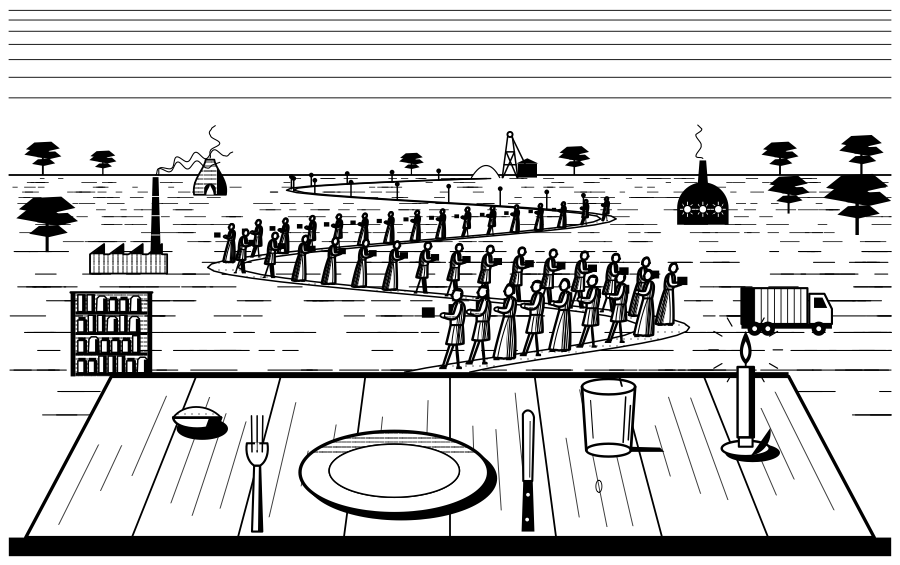
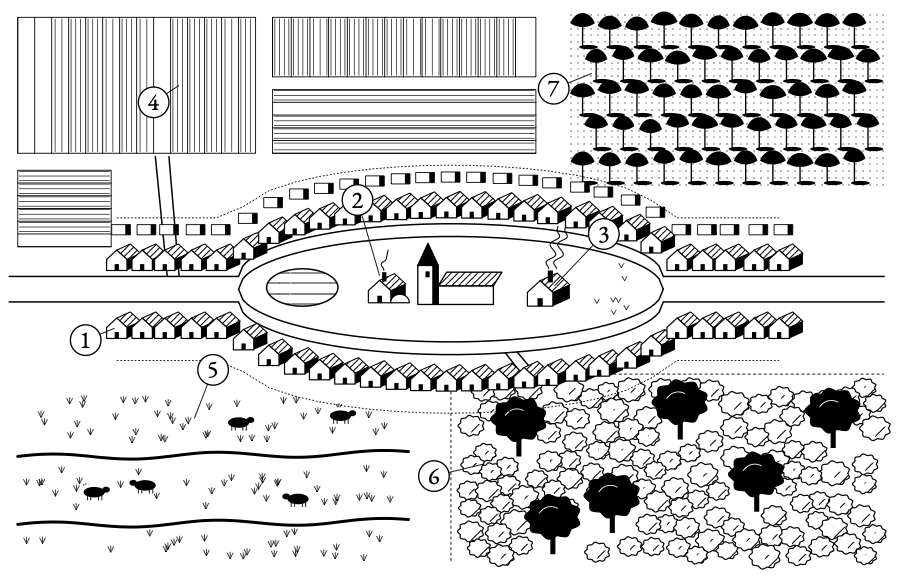
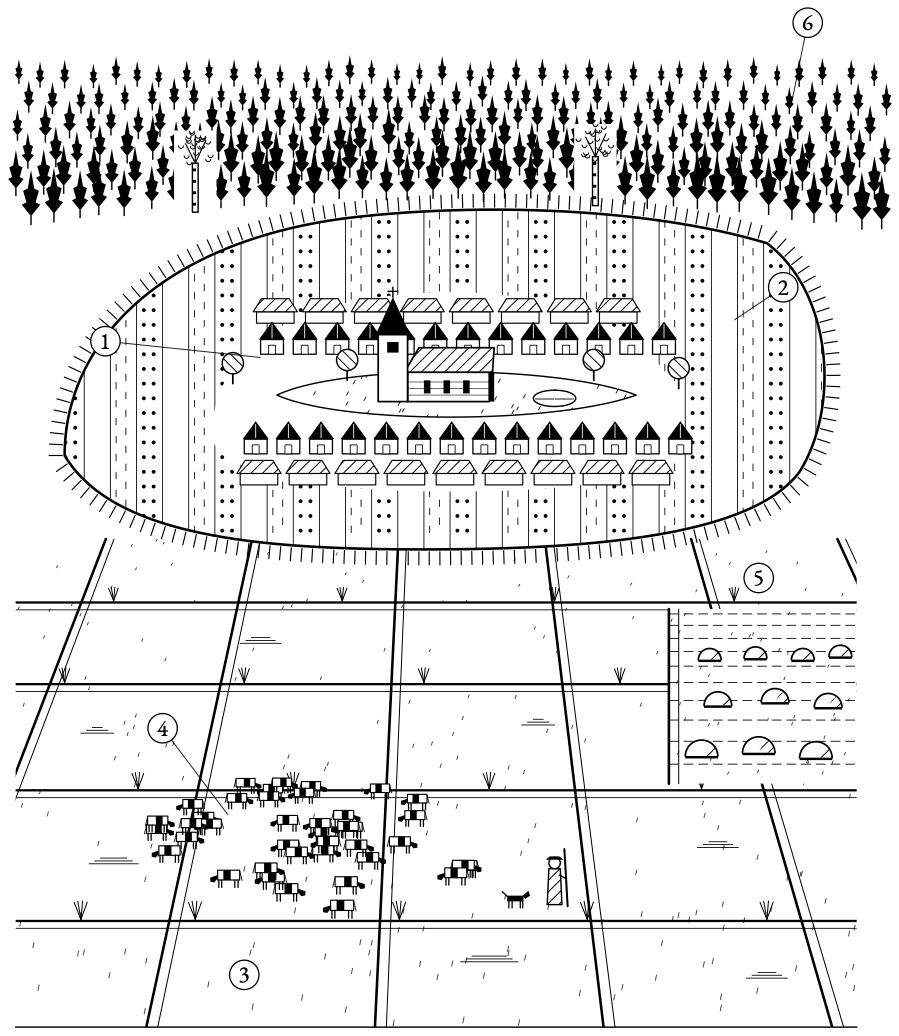
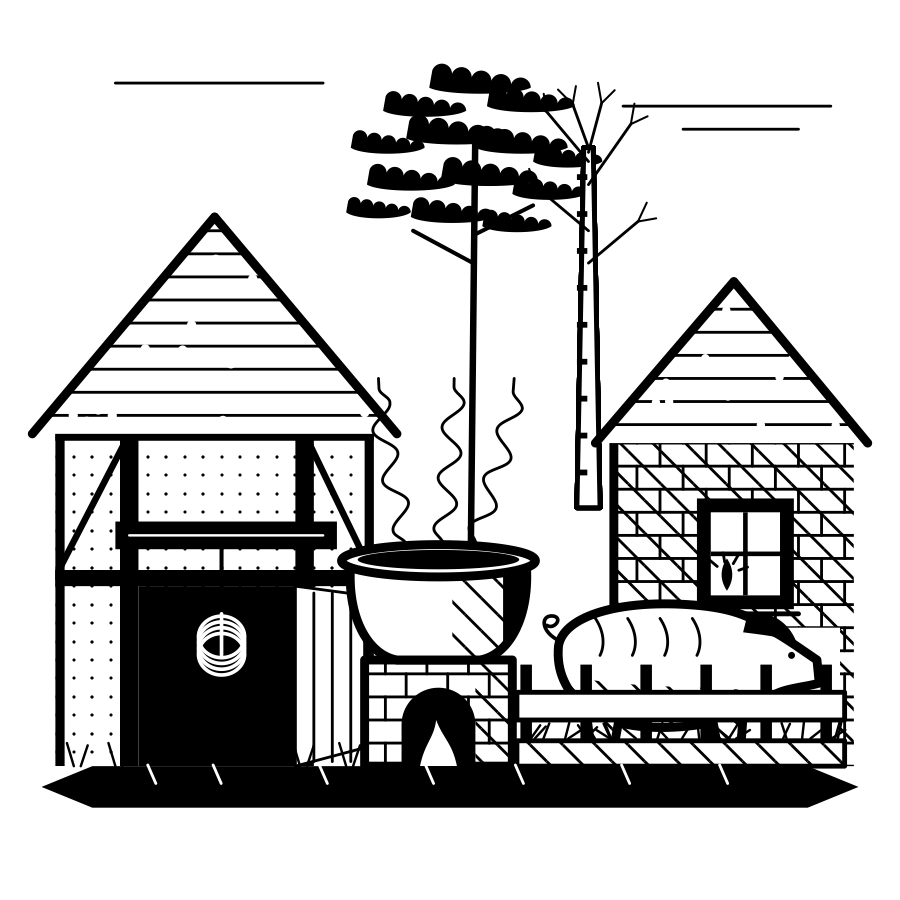
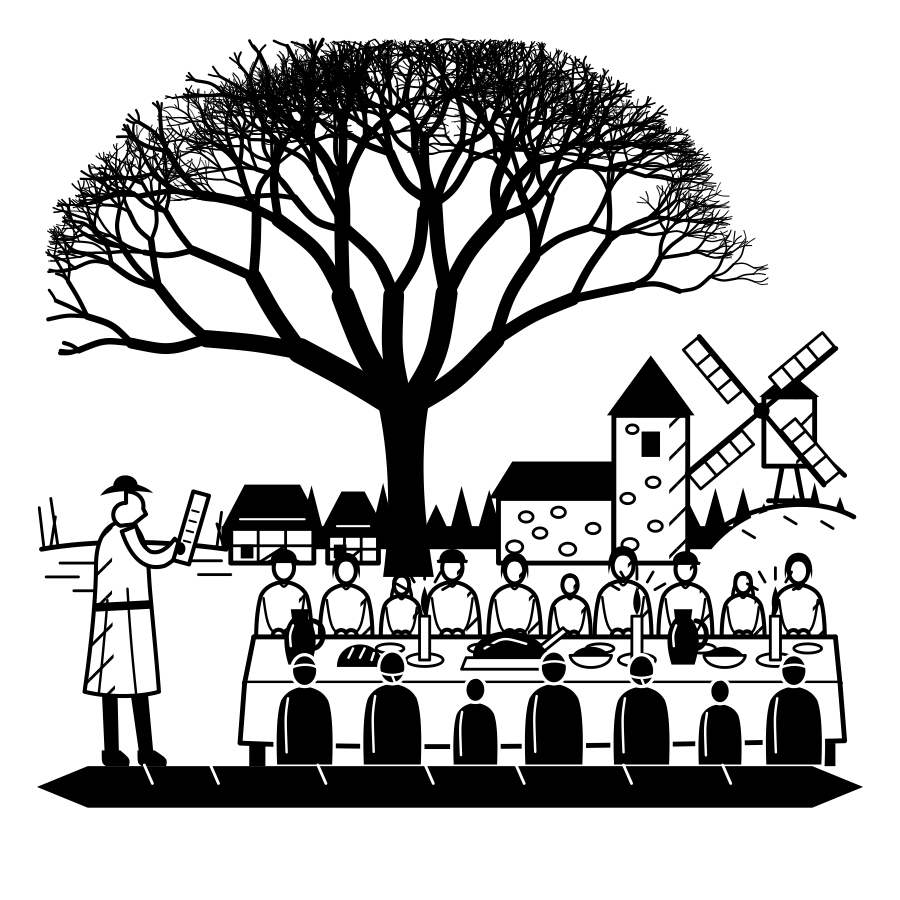
Plate 00-01 Everything on the table is the last link of a long chain. Not one of the hands along it is ours.Plate 00-02 Fifty to sixty households, some three hundred people, and about twelve hundred hectares of land and wood. Above that size, someone can be a smith.
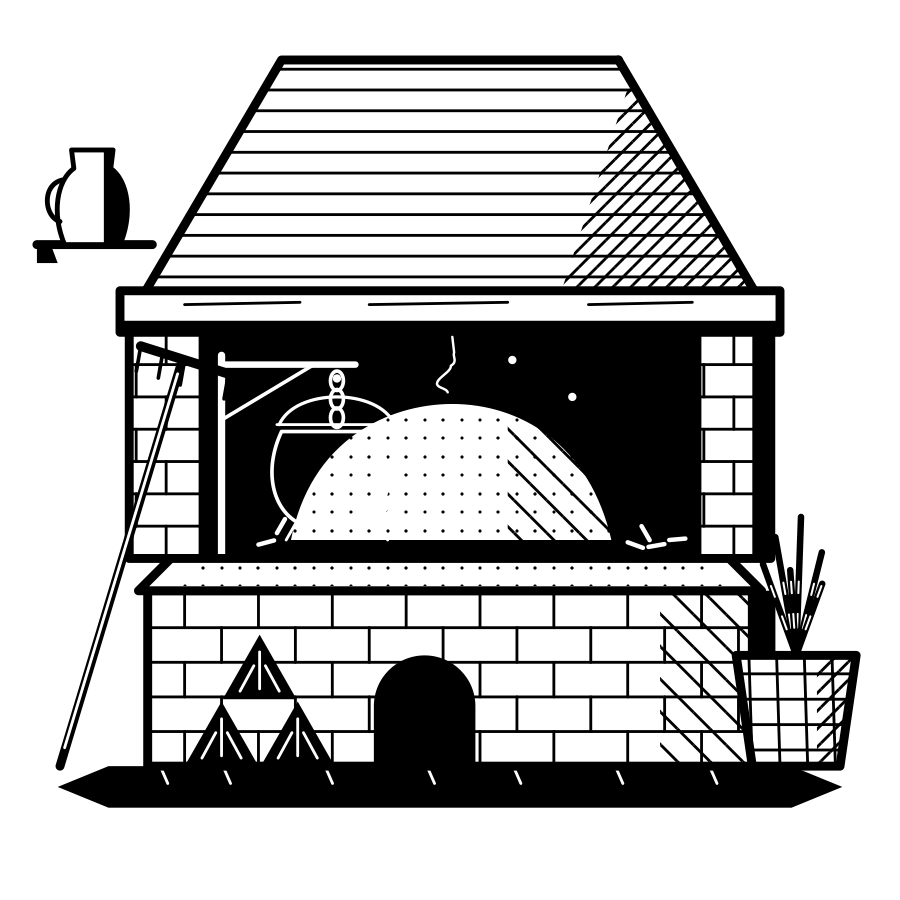
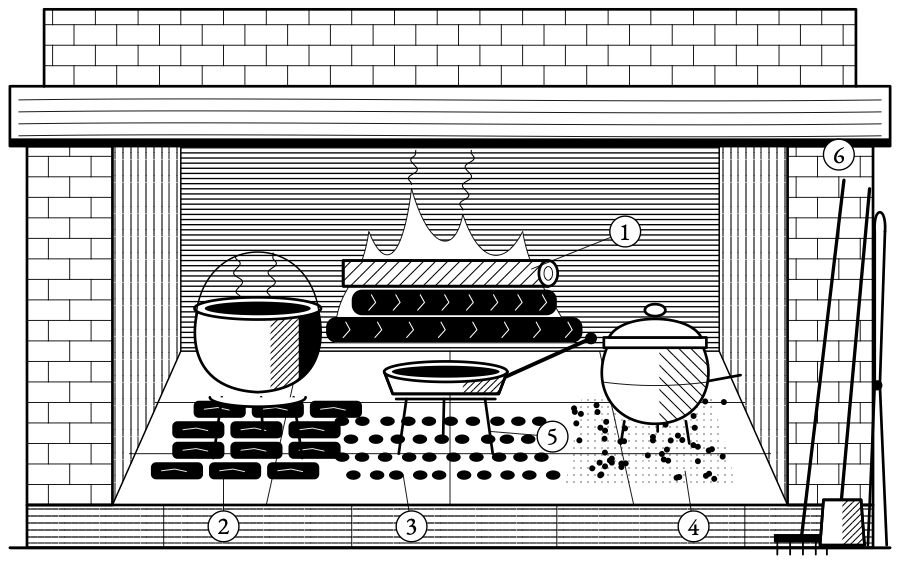
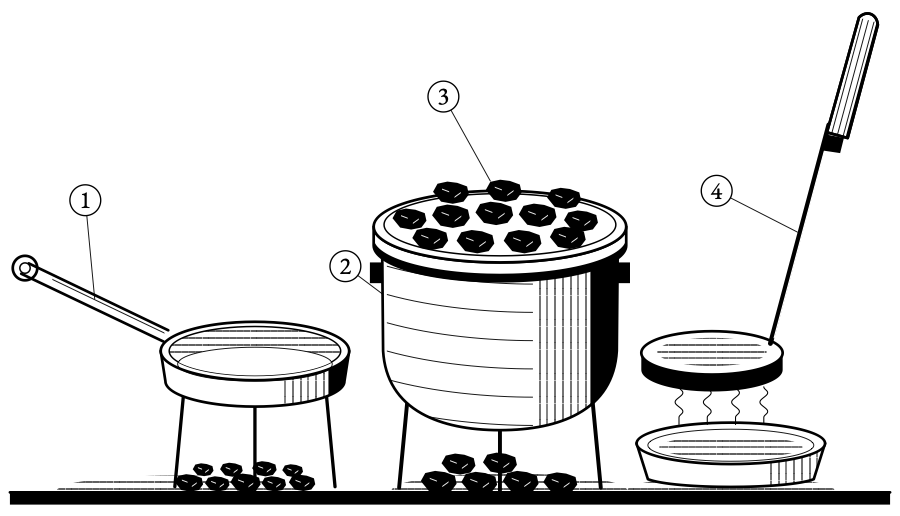
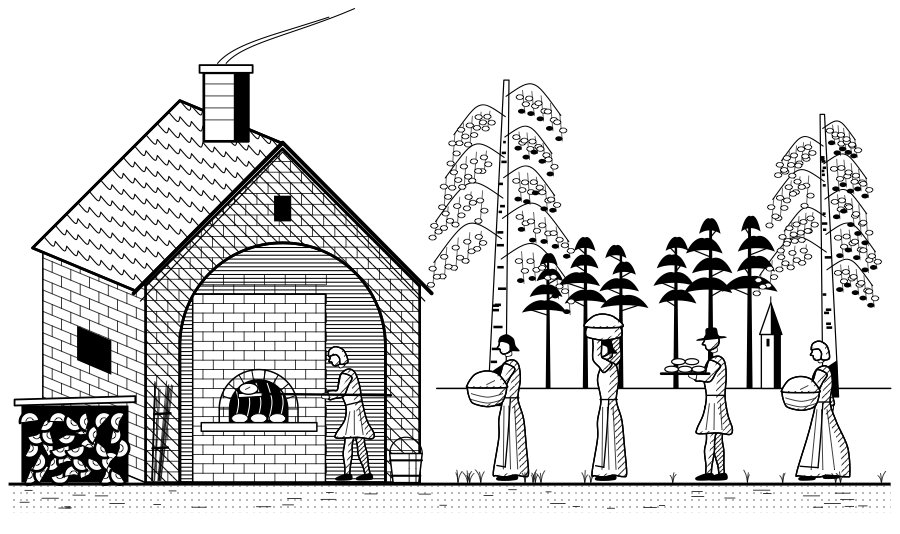
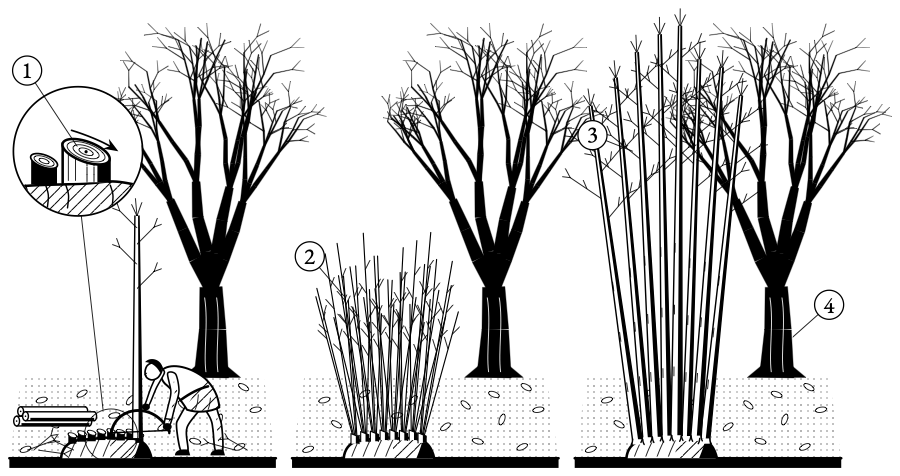
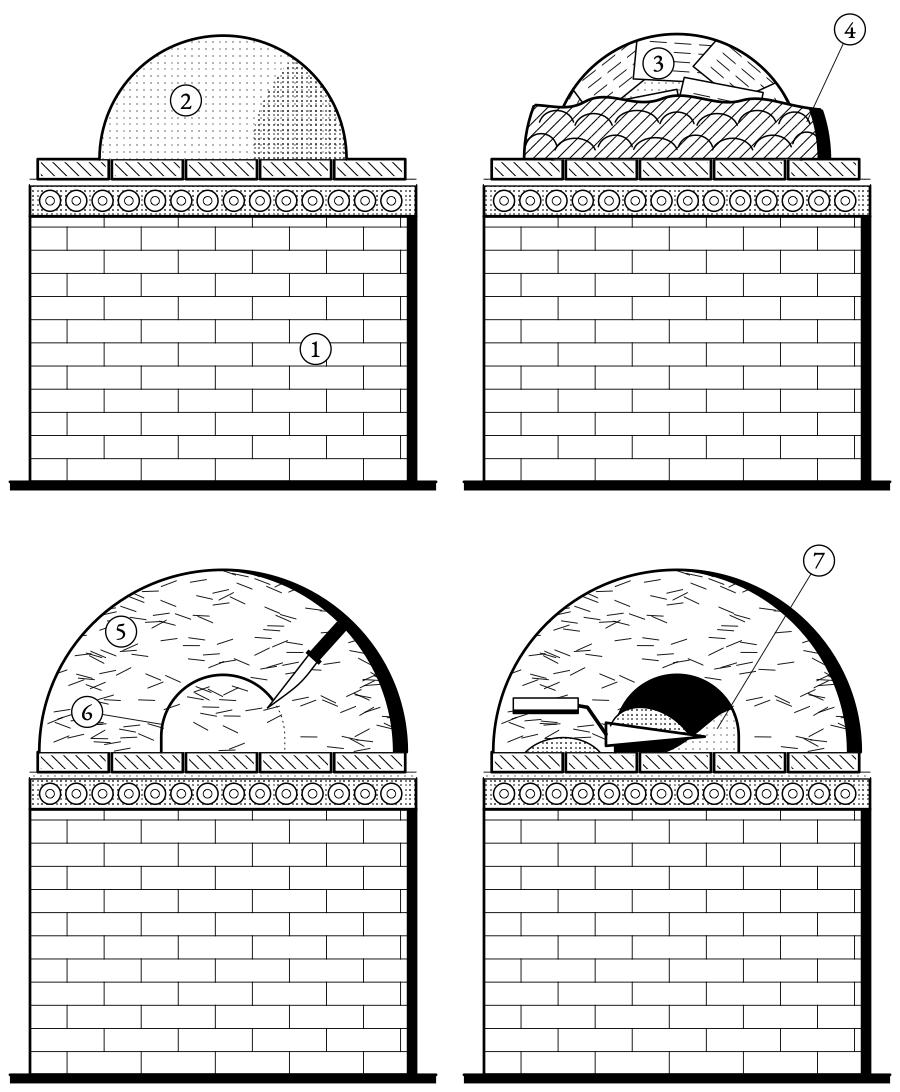
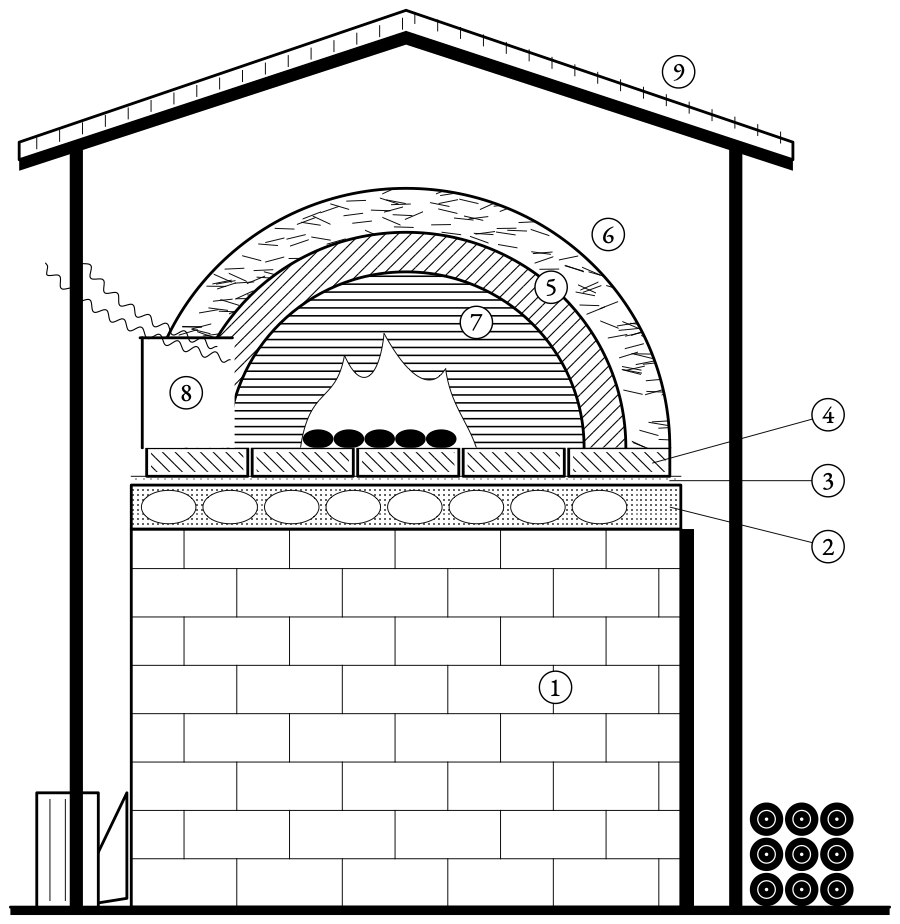
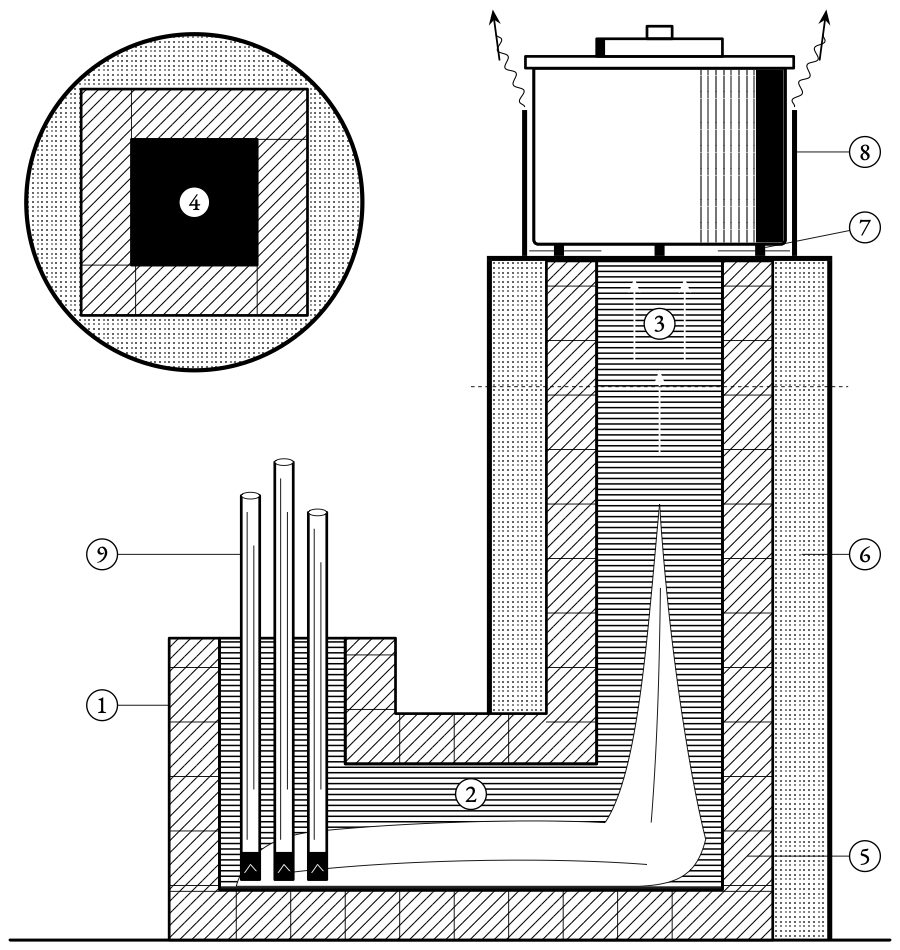
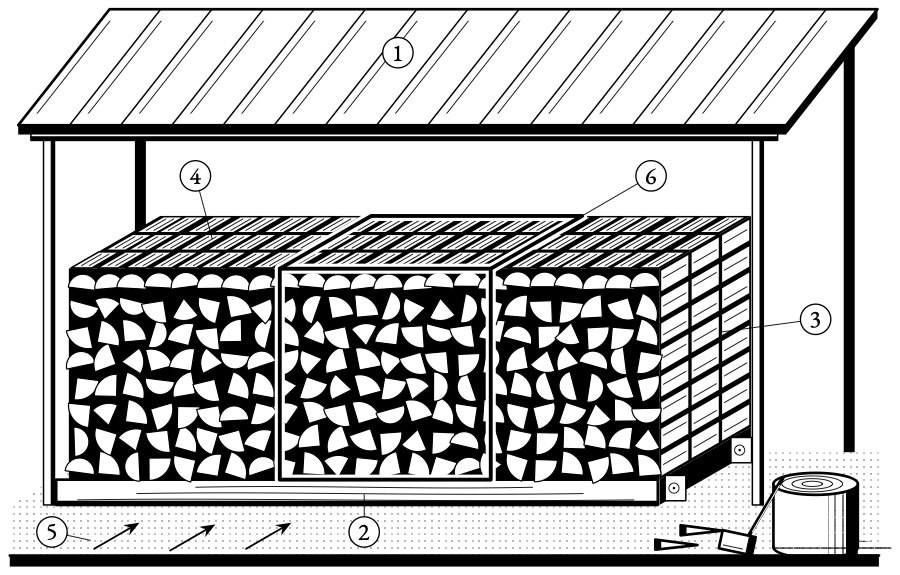
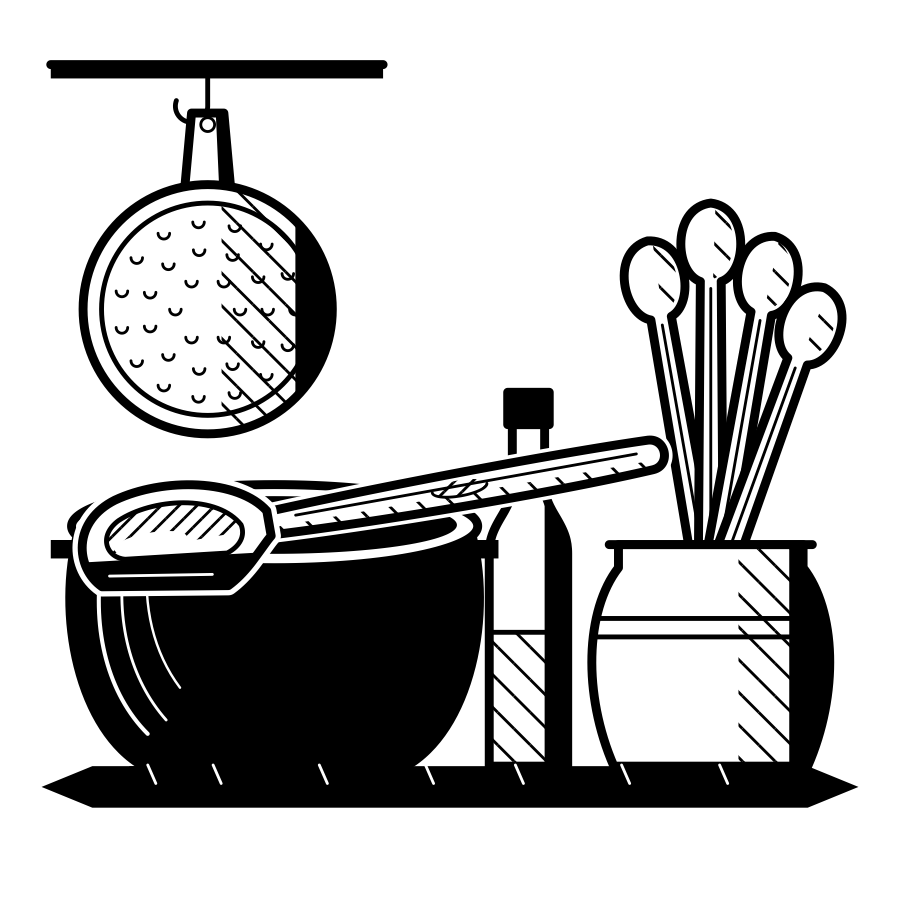
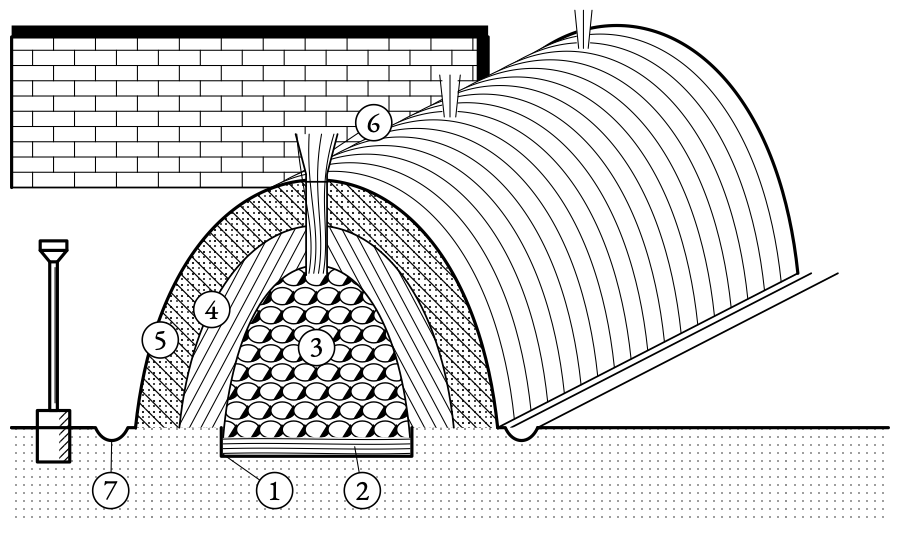
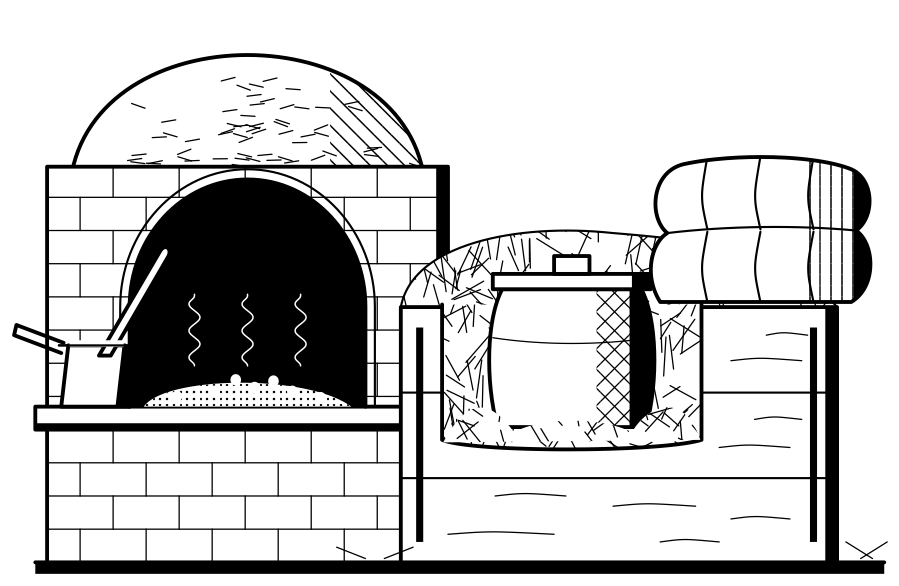
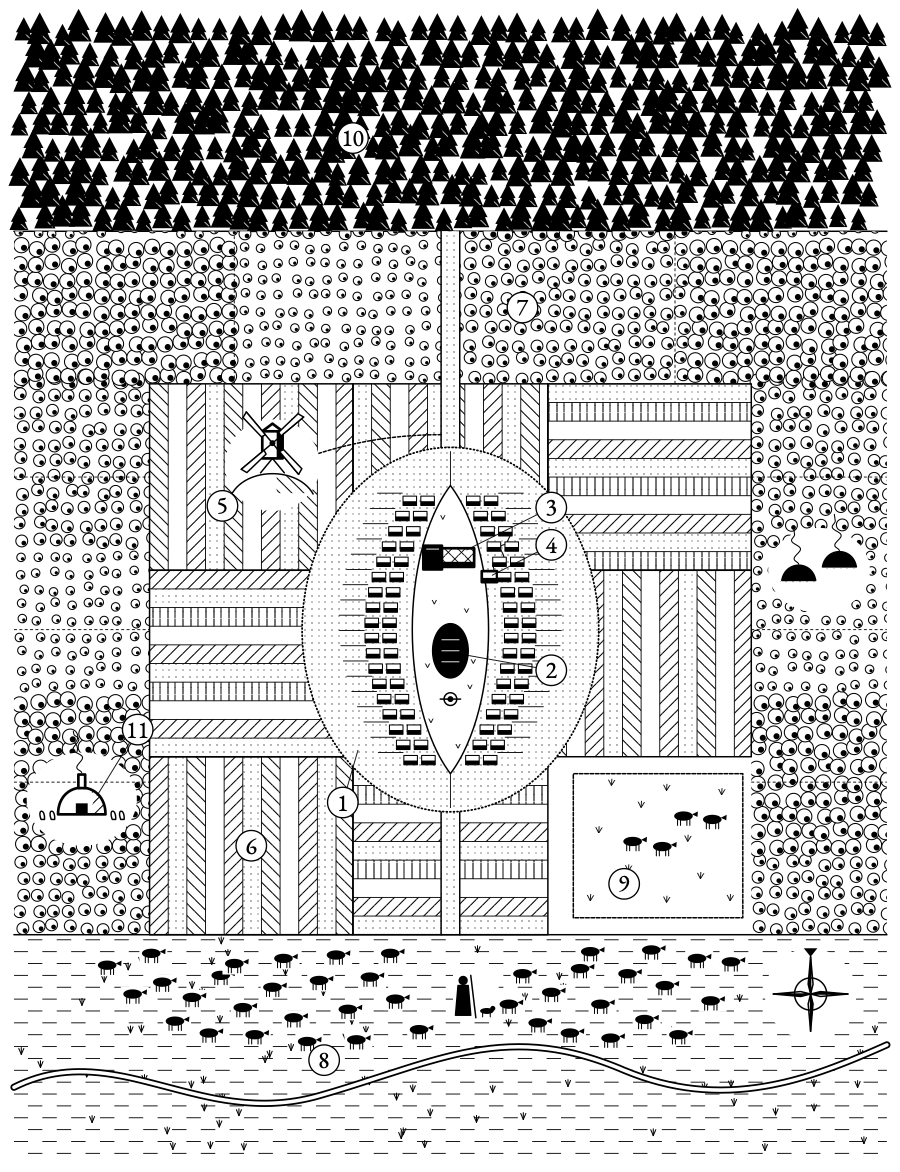
Plate 01-01 The fire was banked at night under its own ash and woken in the morning with a breath. The house kept time by it.Plate 01-02 The flame is for the room and the coals are for the food. The cook changes the heat by moving the pot, not the fire.Plate 01-03 The spider, the Dutch oven and the salamander were made for a fire of coals. The rimmed lid holds twice as many coals above as below, so the bread browns on the crust.Plate 01-04 One oven fired for the whole village burned a fraction of the wood of thirty house ovens. The households baked in turn, and the cakes went in on the falling heat.Plate 01-05 A hornbeam cut to the ground does not die. It throws up new shoots, and in twenty years they are firewood and the stump is cut again.Plate 01-06 The dome is built over a heap of damp sand, and the sand is dug out once the clay is firm. The dense layer holds the heat and the straw layer keeps it.Plate 01-07 A cob oven in section. The door is kept low, so the smoke leaves over its top and the heat stays in the dome.Plate 01-08 Feed, tunnel and riser stand in the ratio one to two to four. The flame burns out in the hot riser before it reaches the pot, and the skirt drives it up the pot's sides.Plate 01-09 A Ster is a stacked cubic metre, about 480 kilograms of dry beech. A family's year is sixteen of them, or six in an insulated house.
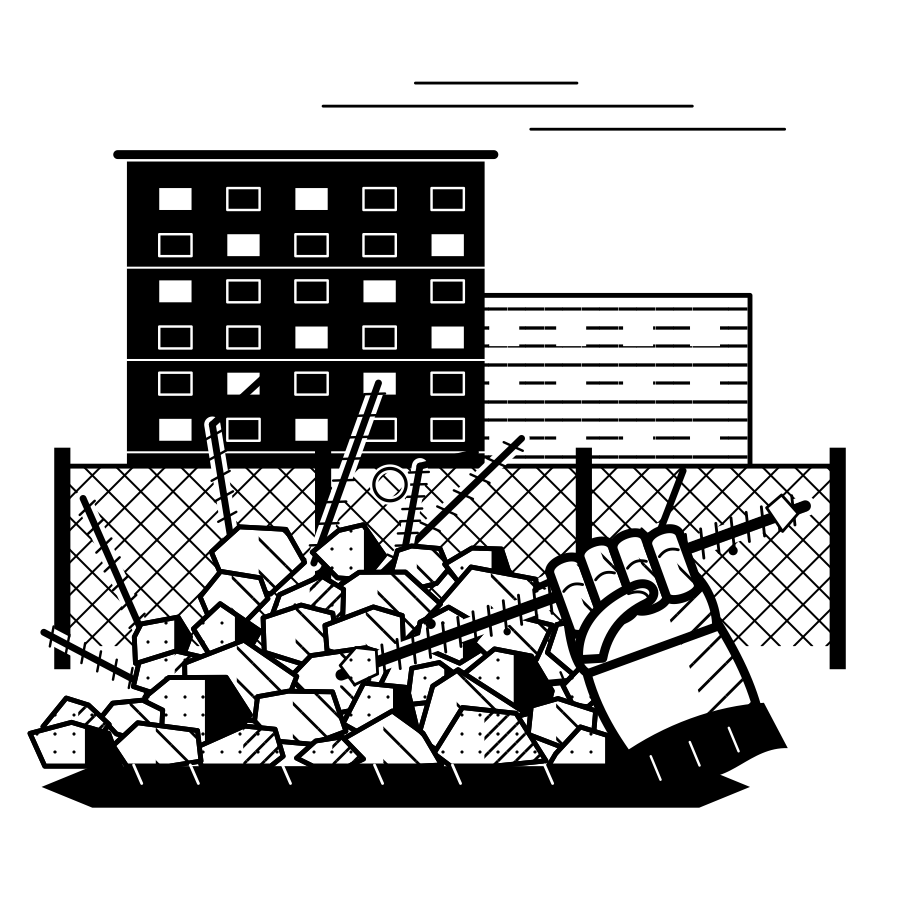
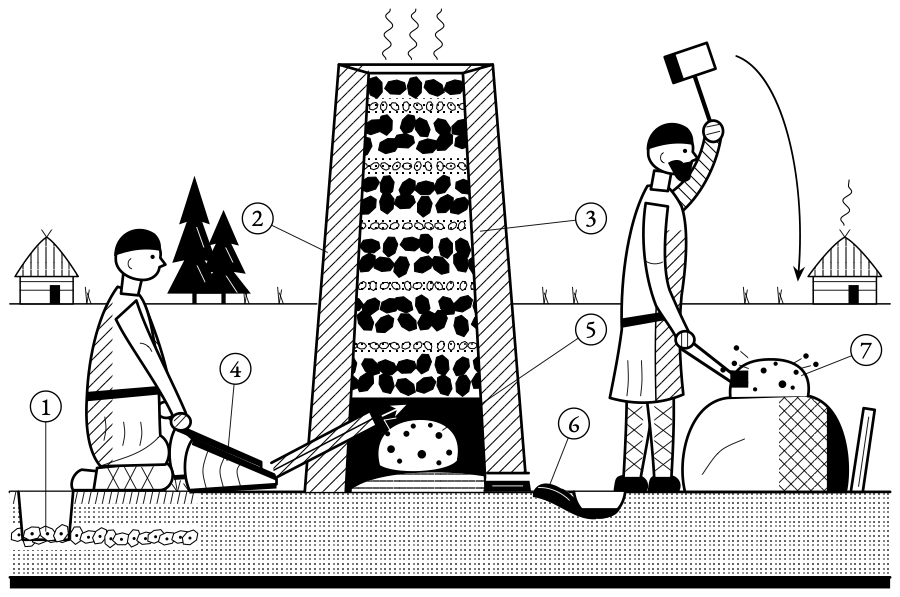
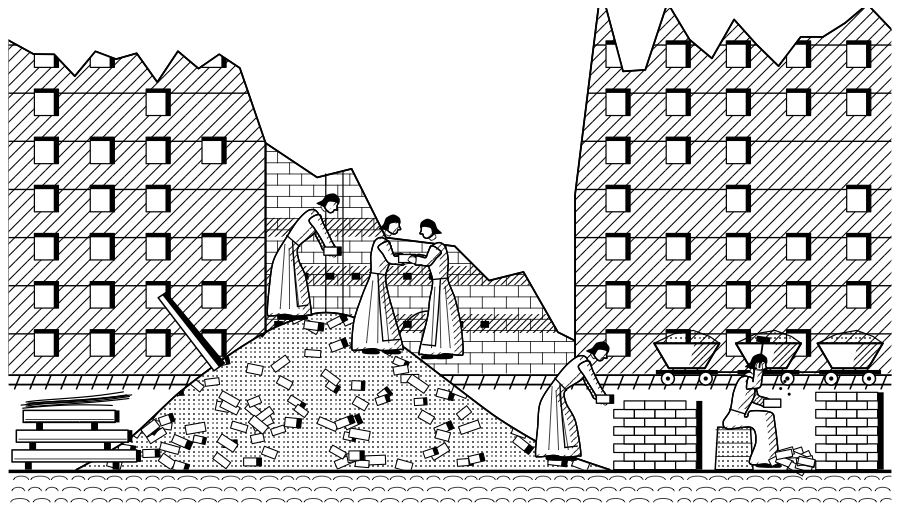
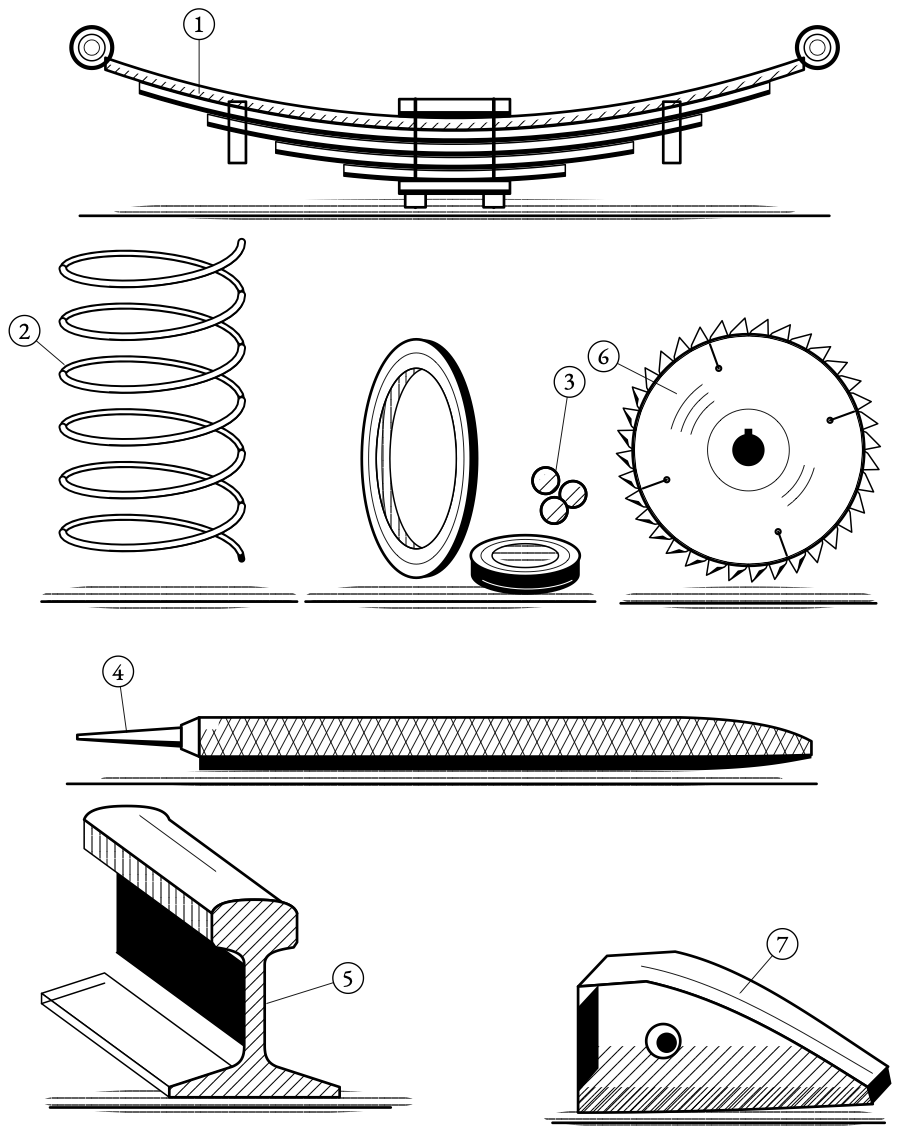
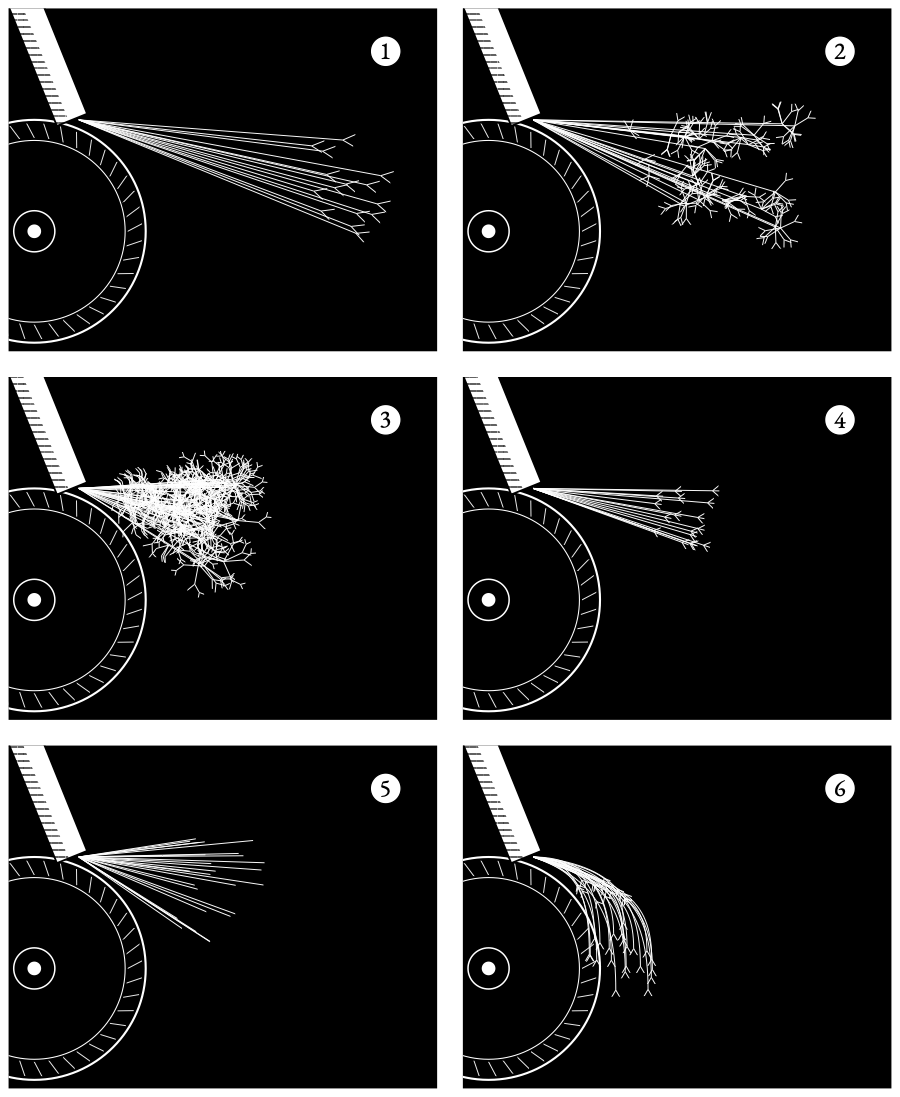
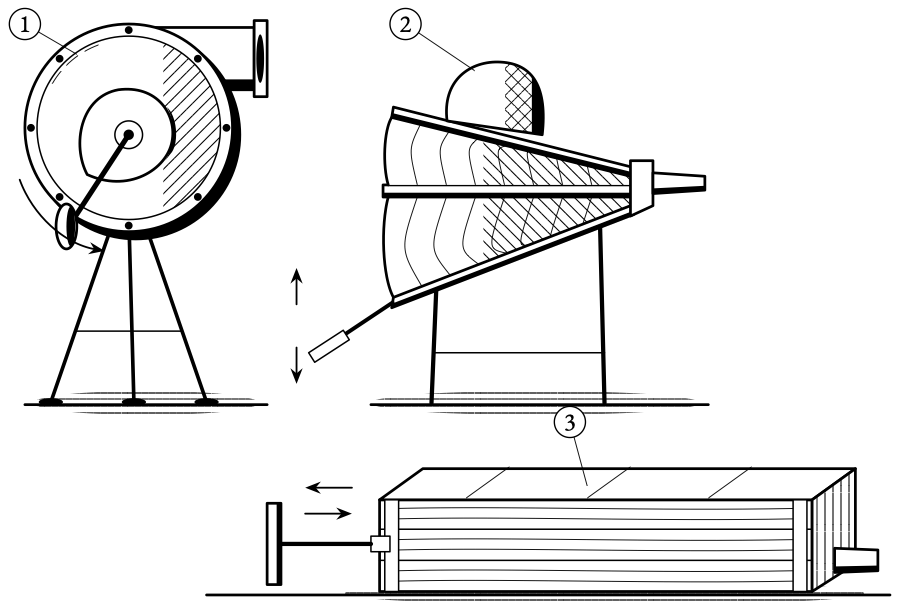
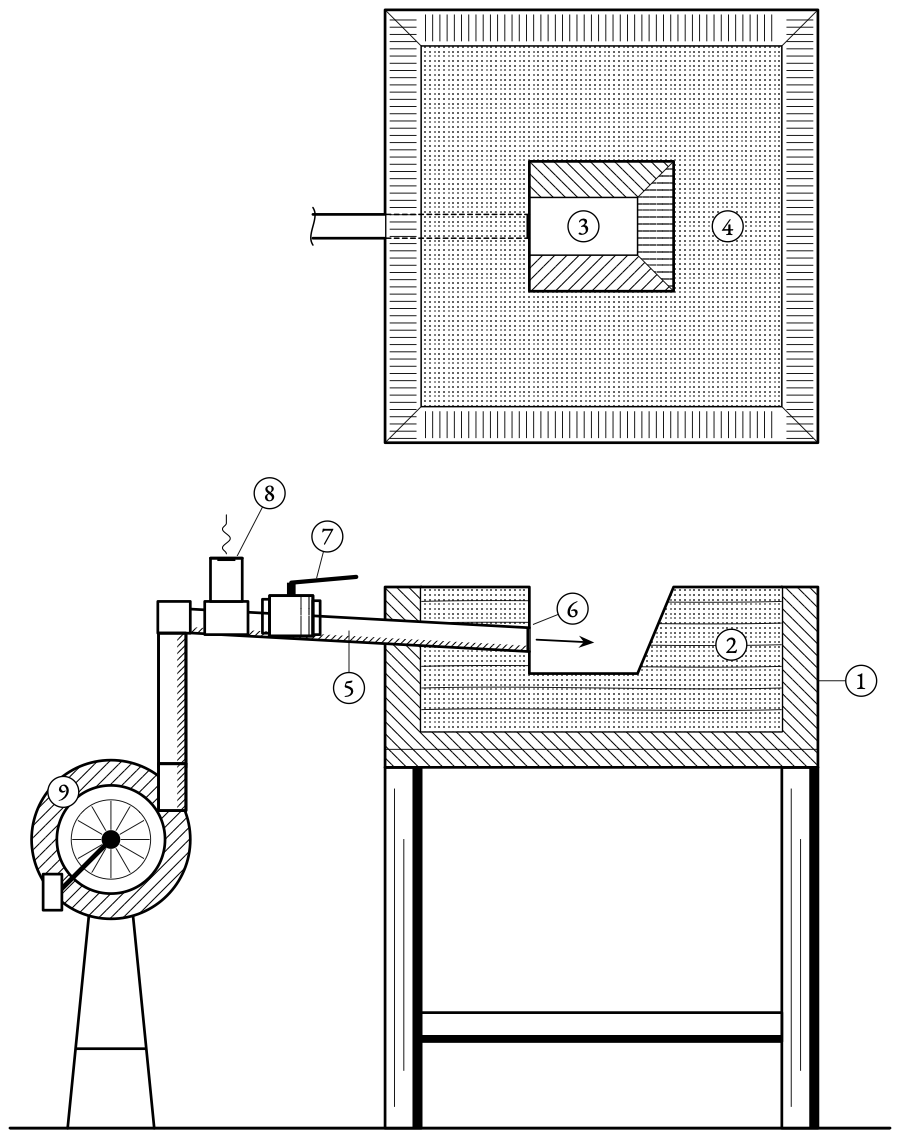
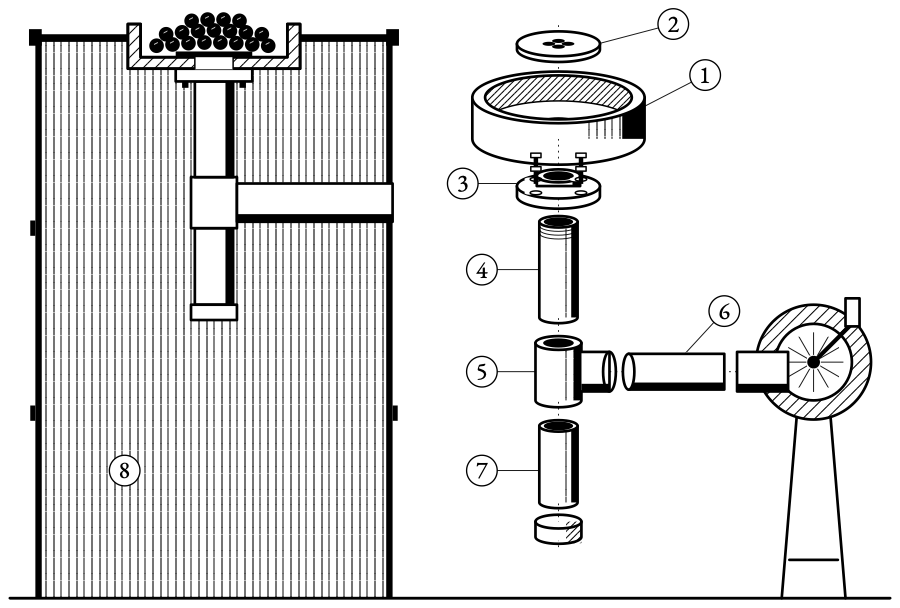
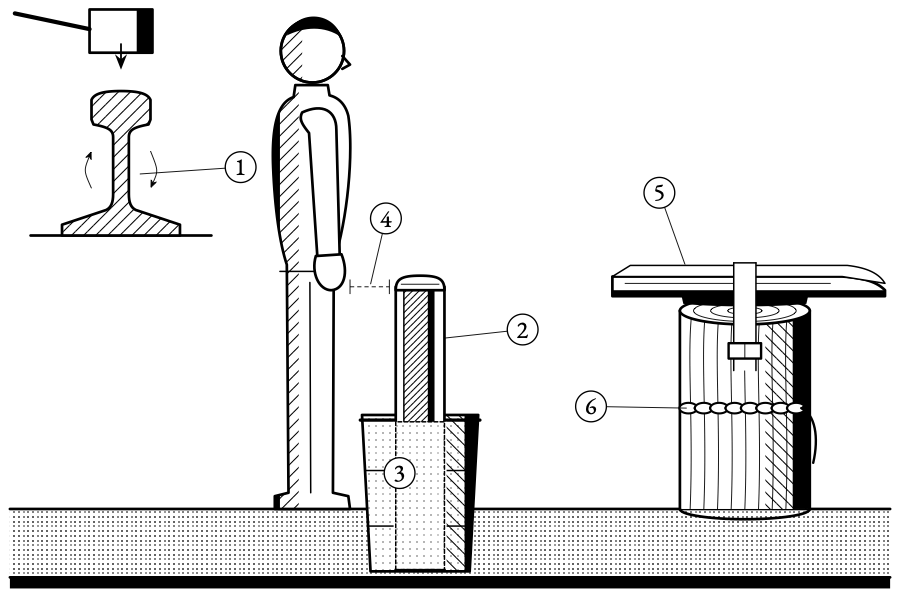
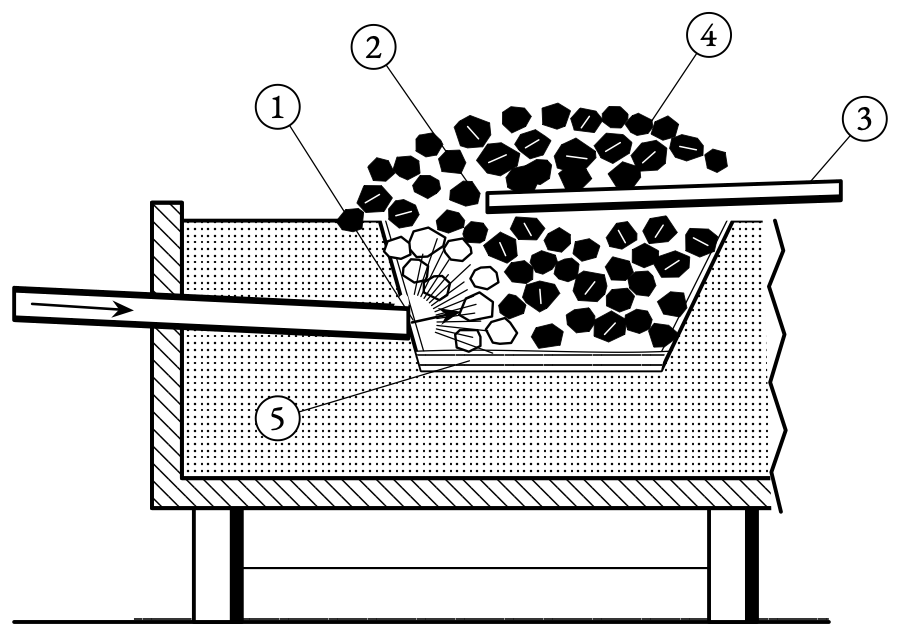
Plate 02-01 Rebar in the rubble, about a kilogram for the length of a forearm. There is more of it under our feet than there is gold in every vault on earth.Plate 02-02 The clay furnace never melted the iron. It made a bloom, a spongy loaf of iron and slag, which was hammered hot into a bar.Plate 02-03 In the rubble years the city was mined by hand. The bricks were cleaned and laid again, and the iron went back to the furnaces.Plate 02-04 The good steel of a city runs through a few objects only. The object is the label, because the people who chose the steel knew what they were doing.Plate 02-05 Carbon bursts in the flying spark like a seed pod, and the more carbon, the more it bursts. The test is read in shade, beside a known mild bar and a known spring.Plate 02-06 The air is the harder half of the forge. A hand-crank blower cannot be made from scrap in a day, so it is the one tool of the smithy worth hunting for now.Plate 02-07 The box of dirt is the charcoal forge. Air comes in from the side through an iron pipe, and the ash falls below its mouth and does not choke it.Plate 02-08 The brake drum forge is blown from below and wants coal. Charcoal in it blows out of the fire in a fountain of sparks.Plate 02-09 Stood on end, a metre of rail puts an unbroken column of steel between the hammer and the earth. The floor is twenty kilograms of anvil for every kilogram of hammer, and forty is better.Plate 02-10 Steel laid at the pipe mouth scales and burns. A hand's width higher the charcoal has eaten the air, and there the work sits, buried.
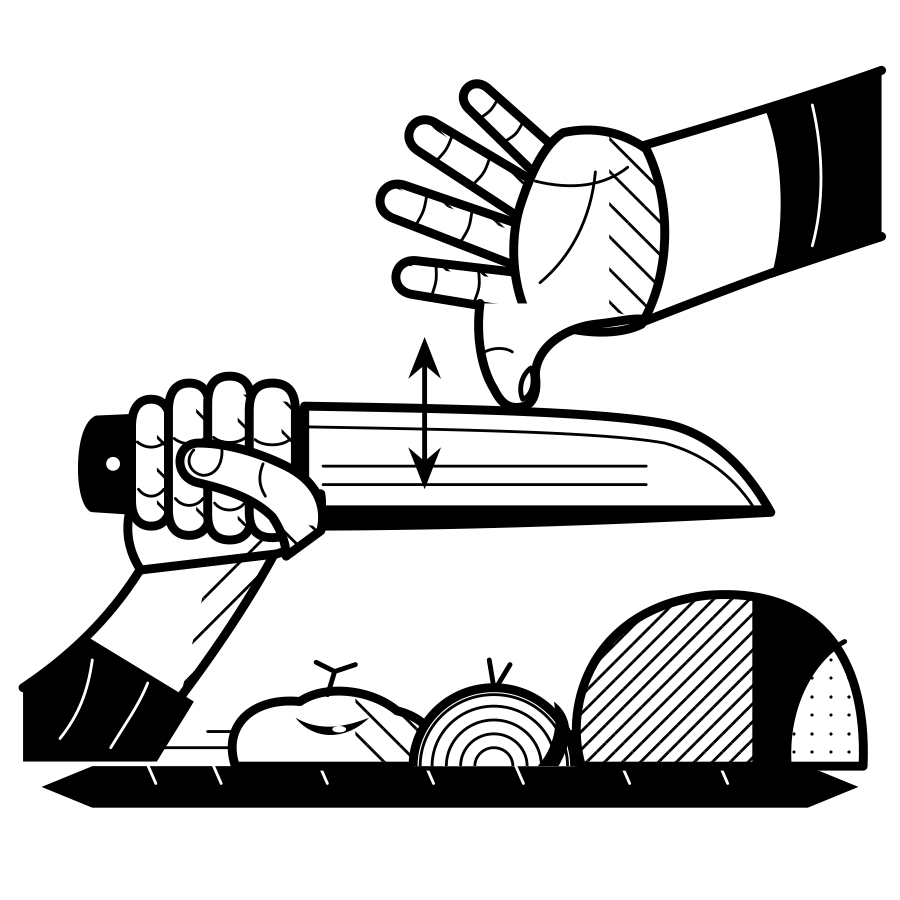
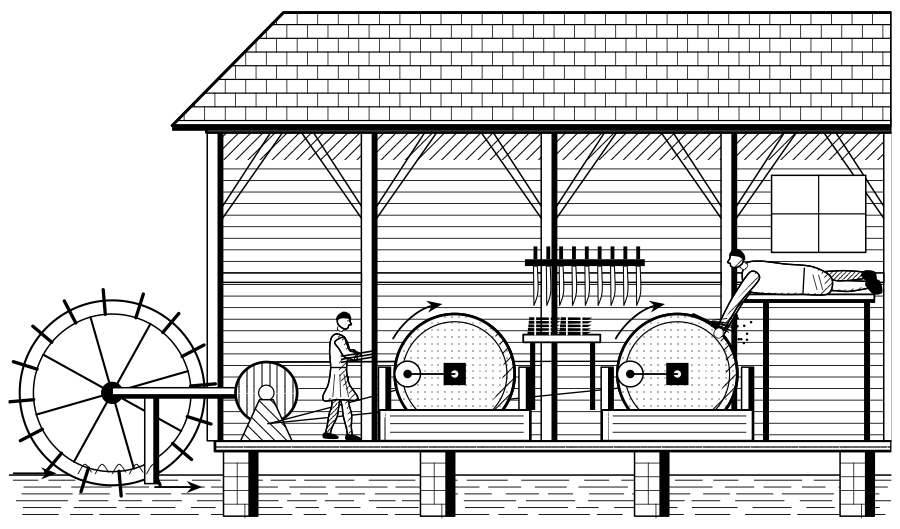
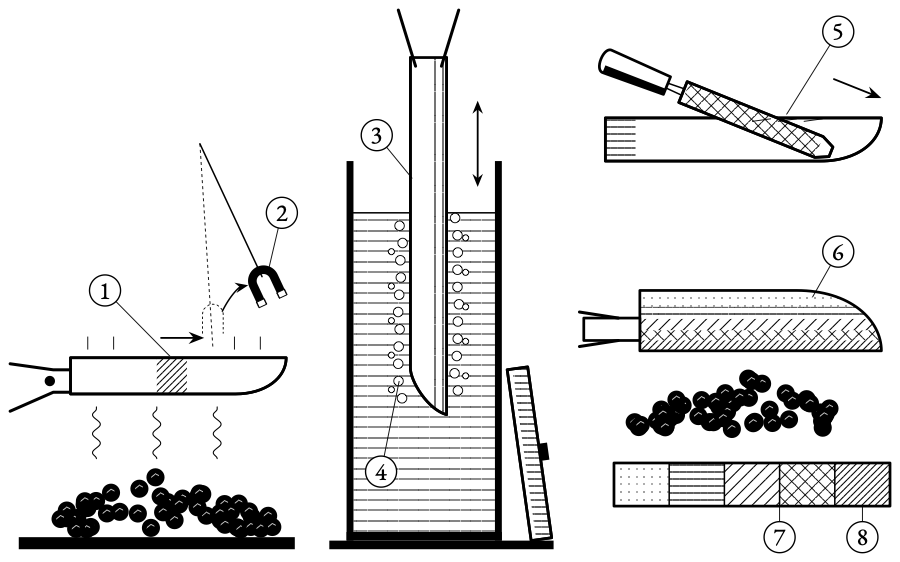
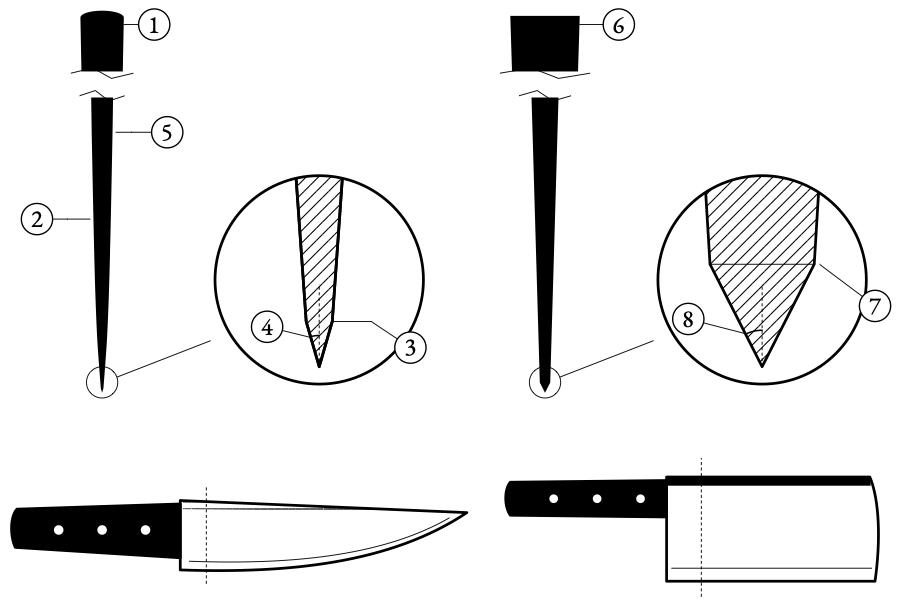
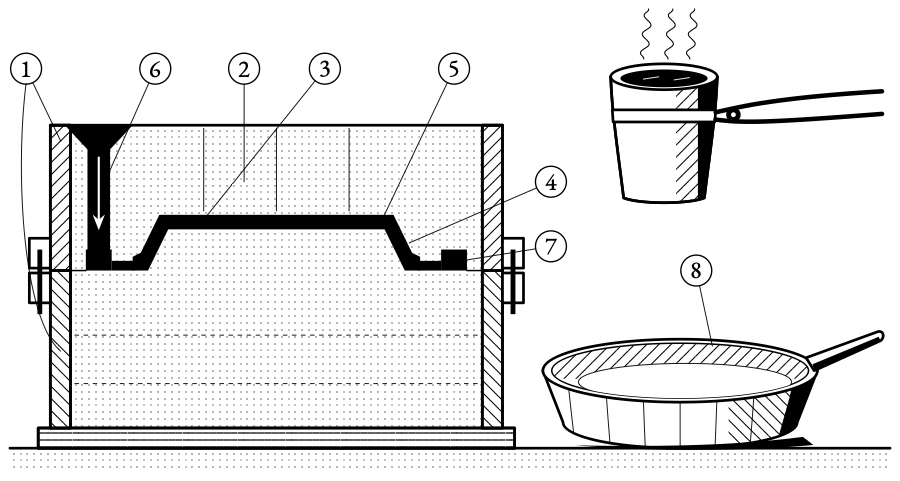
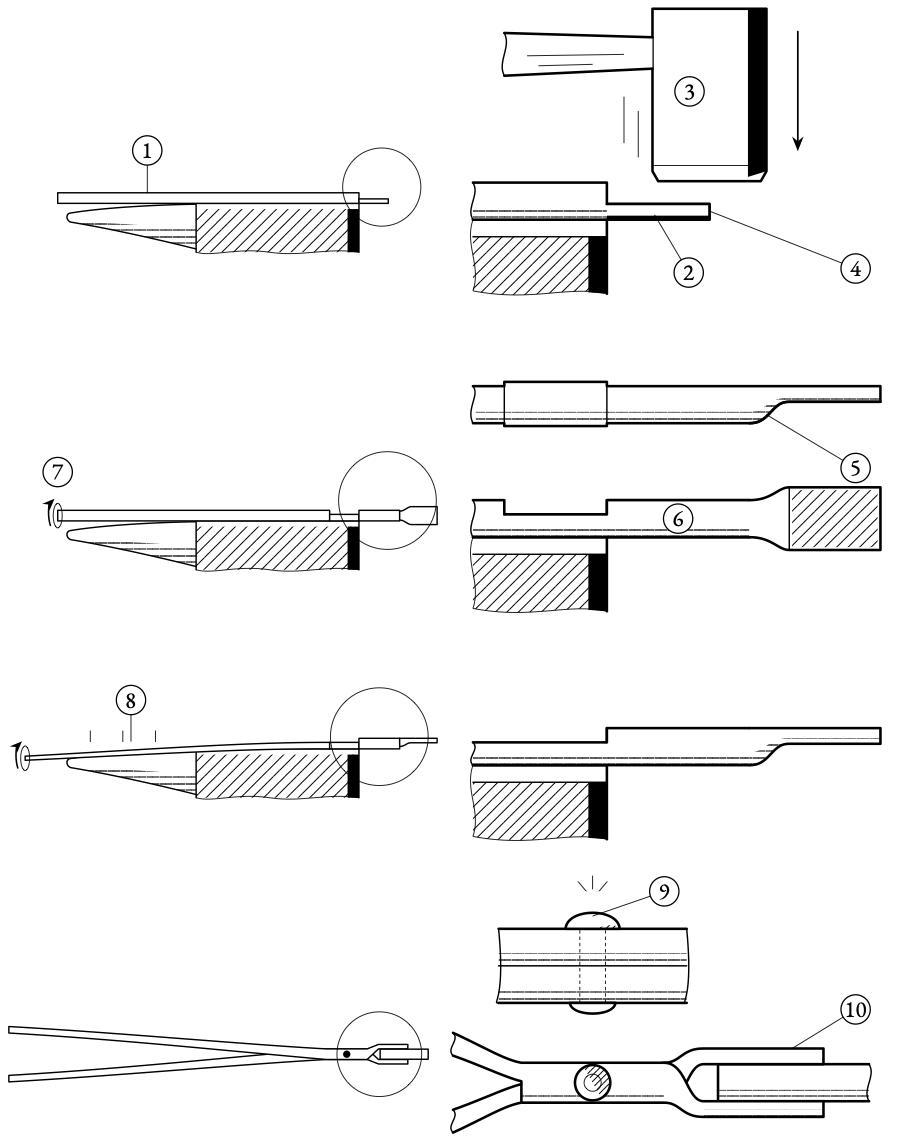
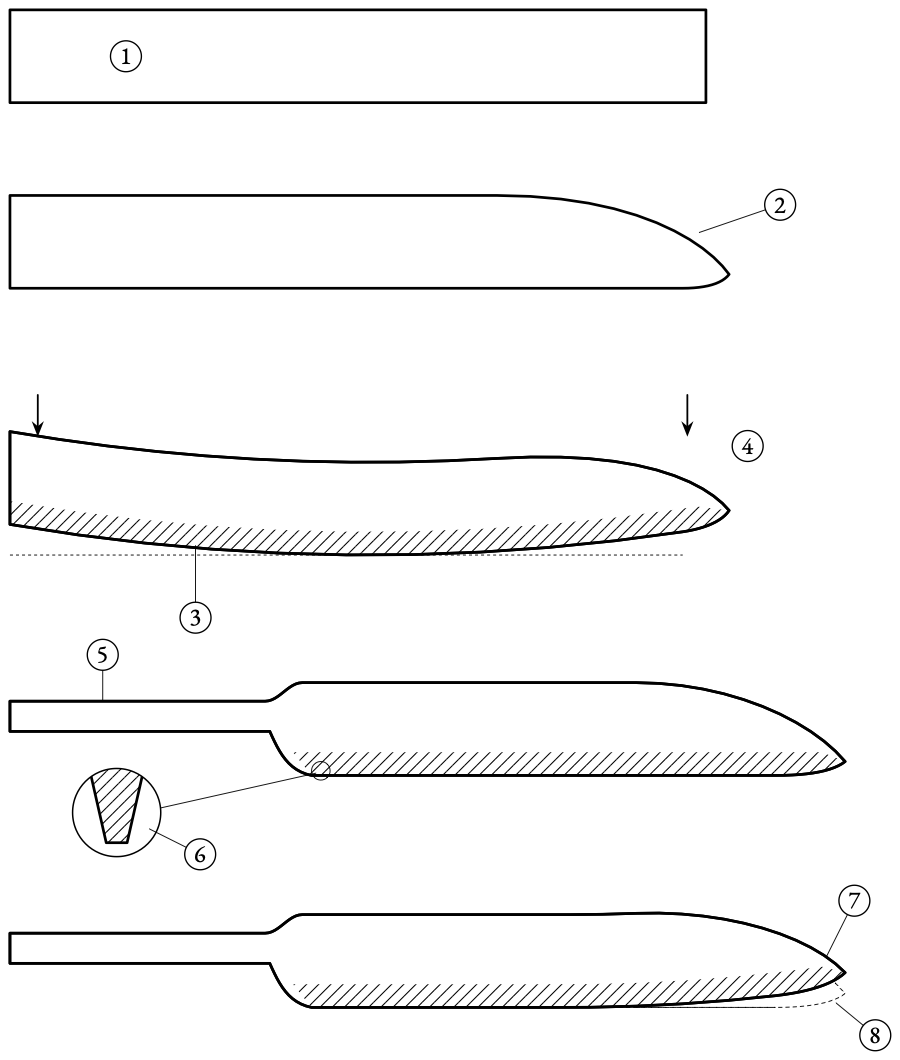
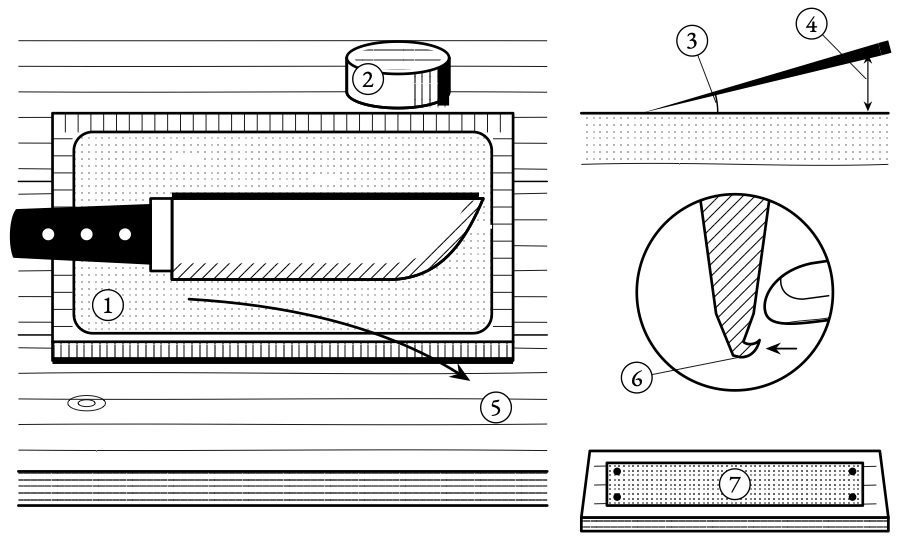
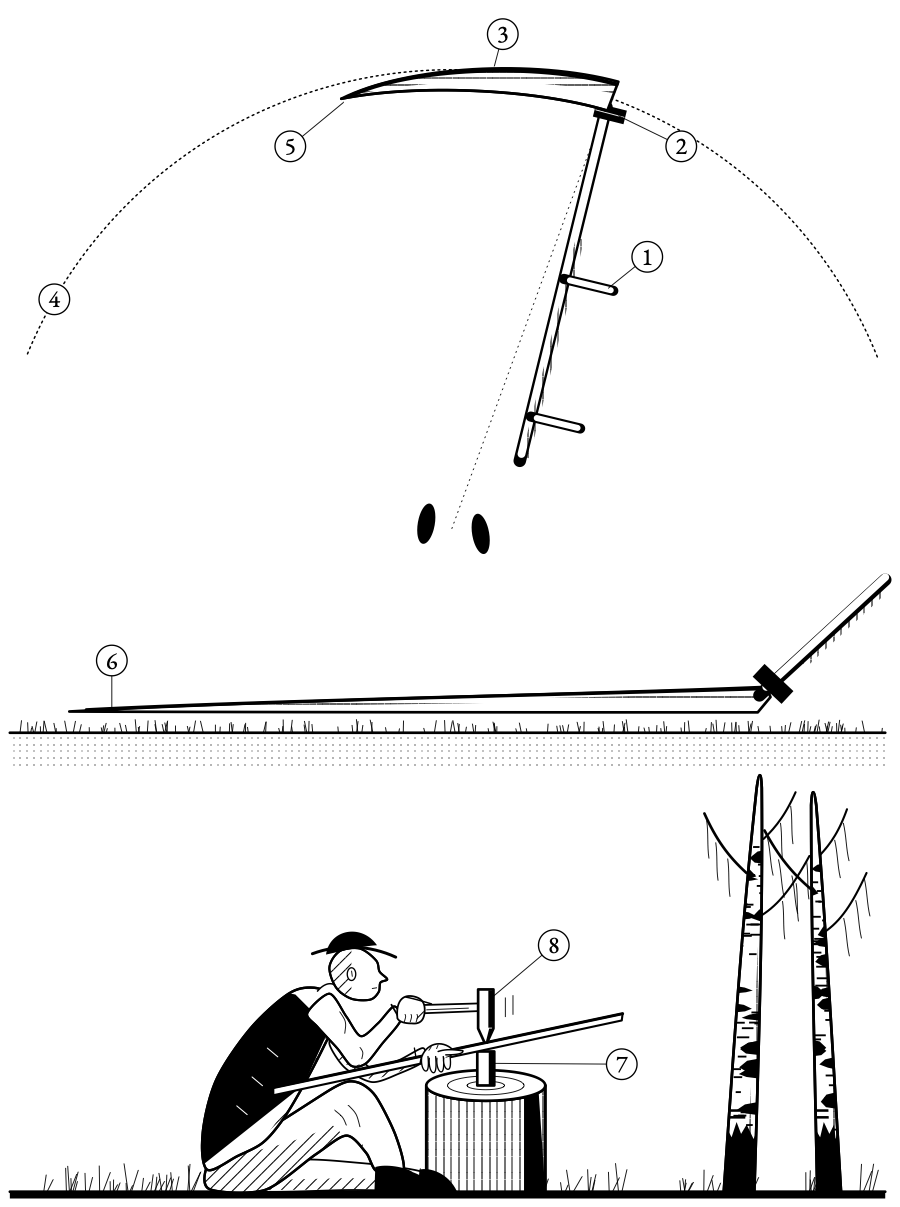
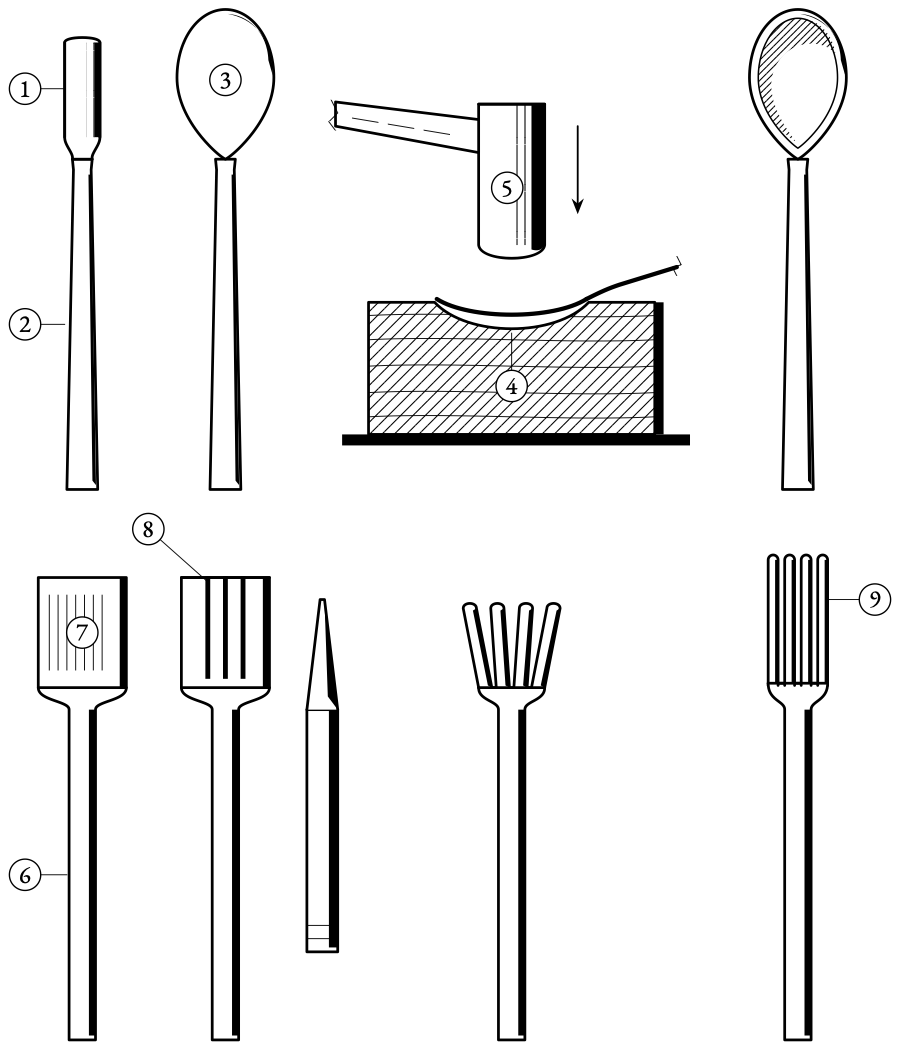
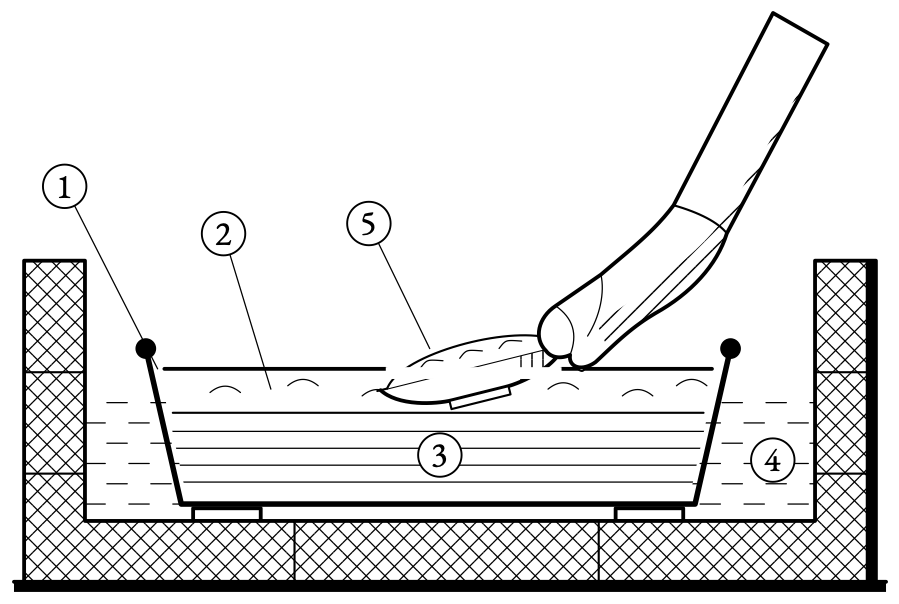
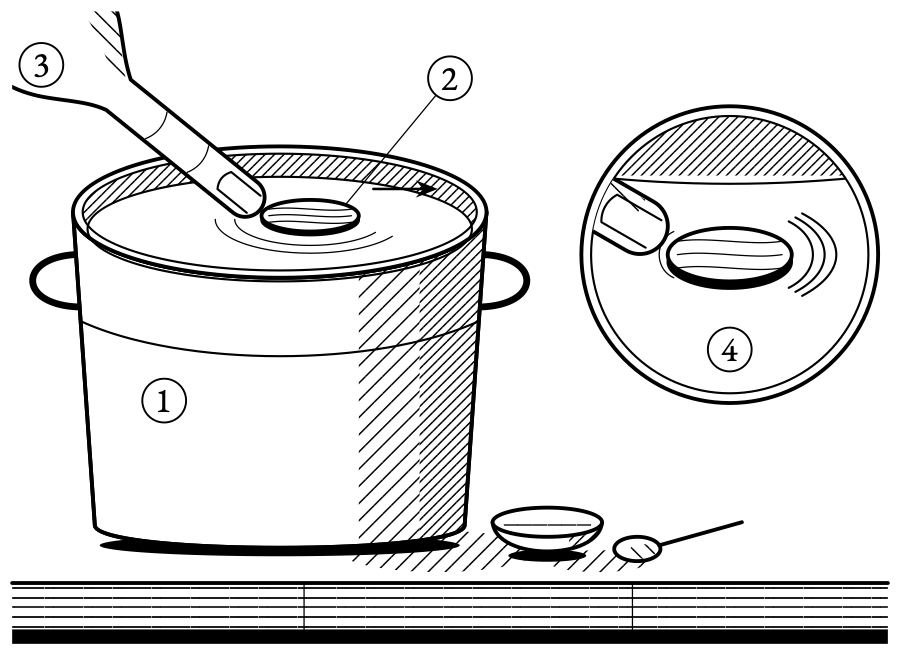
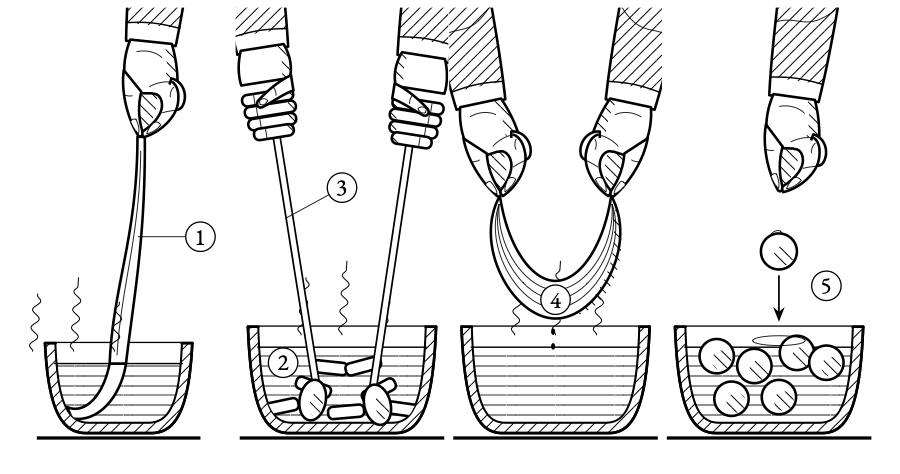
Plate 03-01 The thumb goes across the edge, never along it. On a sharp knife it catches at once. On this one it slides.Plate 03-02 A grinding shop on the river, where the water turns the stones and the grinder lies over his wheel. Solingen and Sheffield put their edges on this way for centuries.Plate 03-03 The shock and the warming. The magnet tells the smith when the steel is ready, the oil traps the carbon, and a low heat gives back enough toughness to forgive a knock.Plate 03-04 Two blades cut through across their width. The chef's knife is paper-thin behind its edge, while the cleaver keeps its weight and meets the bone with a thicker bevel.Plate 03-05 A skillet mould cut through. The iron comes in at the rim through wide flat gates, so the thin walls fill before they freeze.Plate 03-06 The first thing forged is the tongs. Three set-downs and two quarter turns make each half, and a single rivet joins them.Plate 03-07 The knife is a bar drawn out. The point comes first, then the bevel, then the tang, and the last heat leaves a small upward curve for the quench to take away.Plate 03-08 The oldest motion in the kitchen. Edge leading, the spine lifted a finger's width, twelve strokes, then feel for the burr.Plate 03-09 The scythe hangs on its snath at three angles set in the tang. The tip runs inside the heel's arc, so the blade slices the grass rather than chopping it.Plate 03-10 A spoon sunk cold into a hollow in hornbeam, and a fork slit from a pad of spring steel. They are forged after the tongs and before the knife.
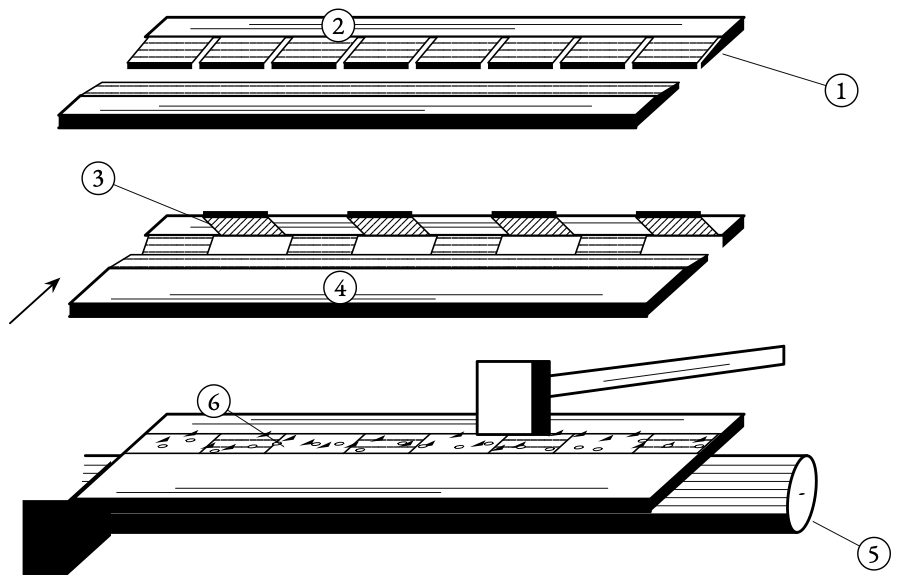
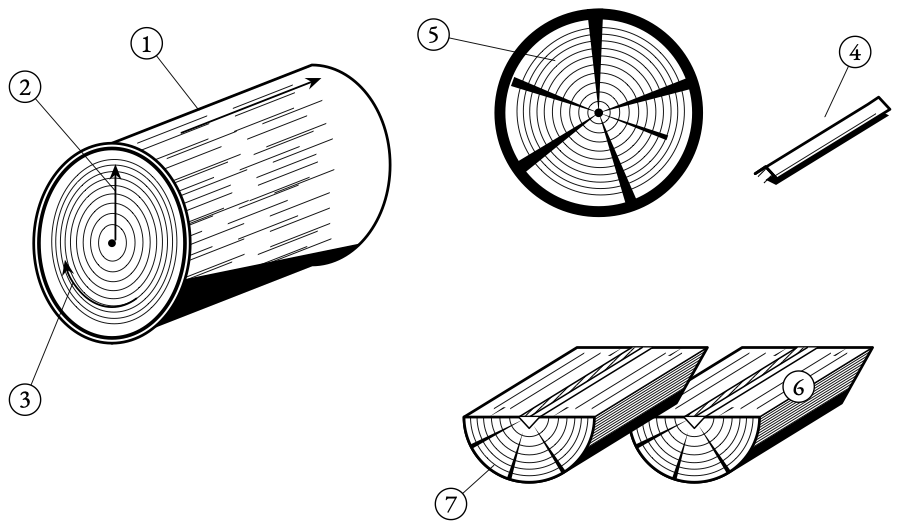
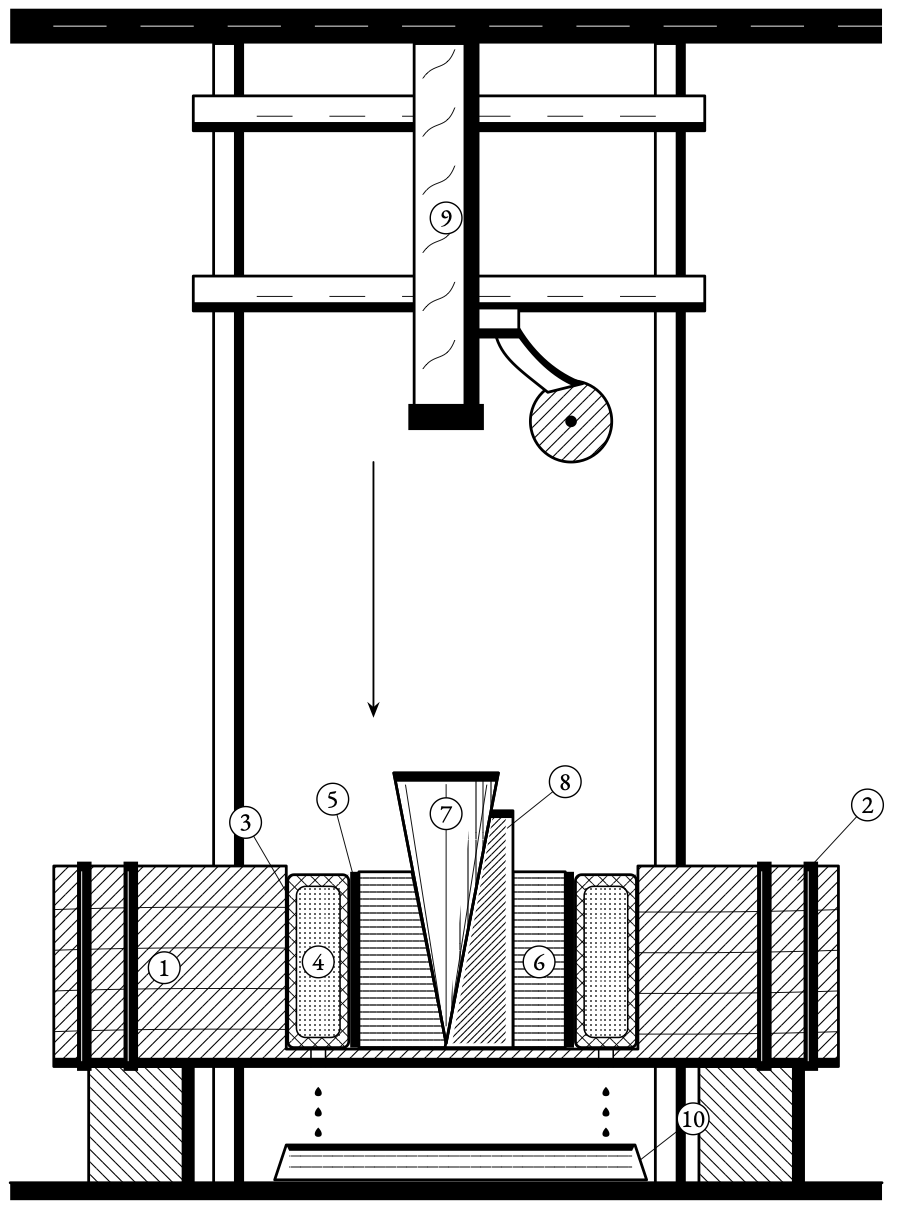
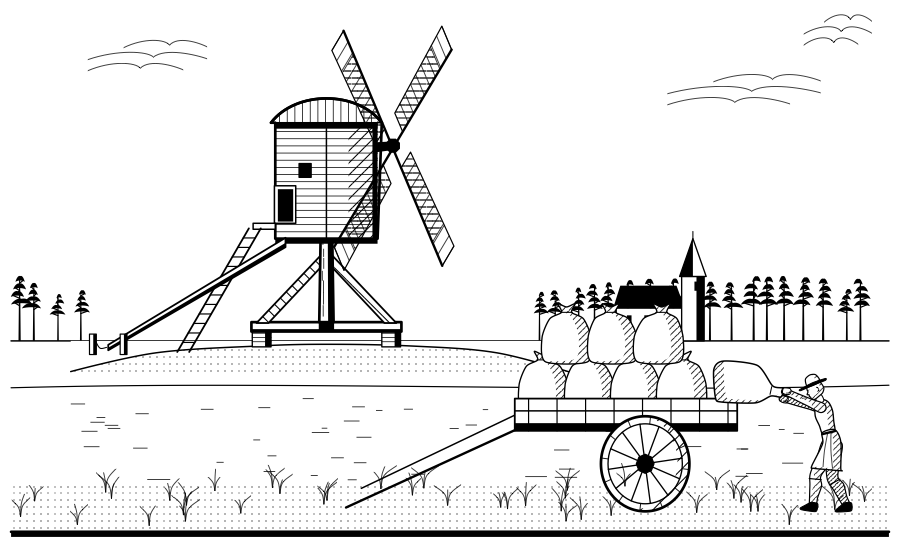
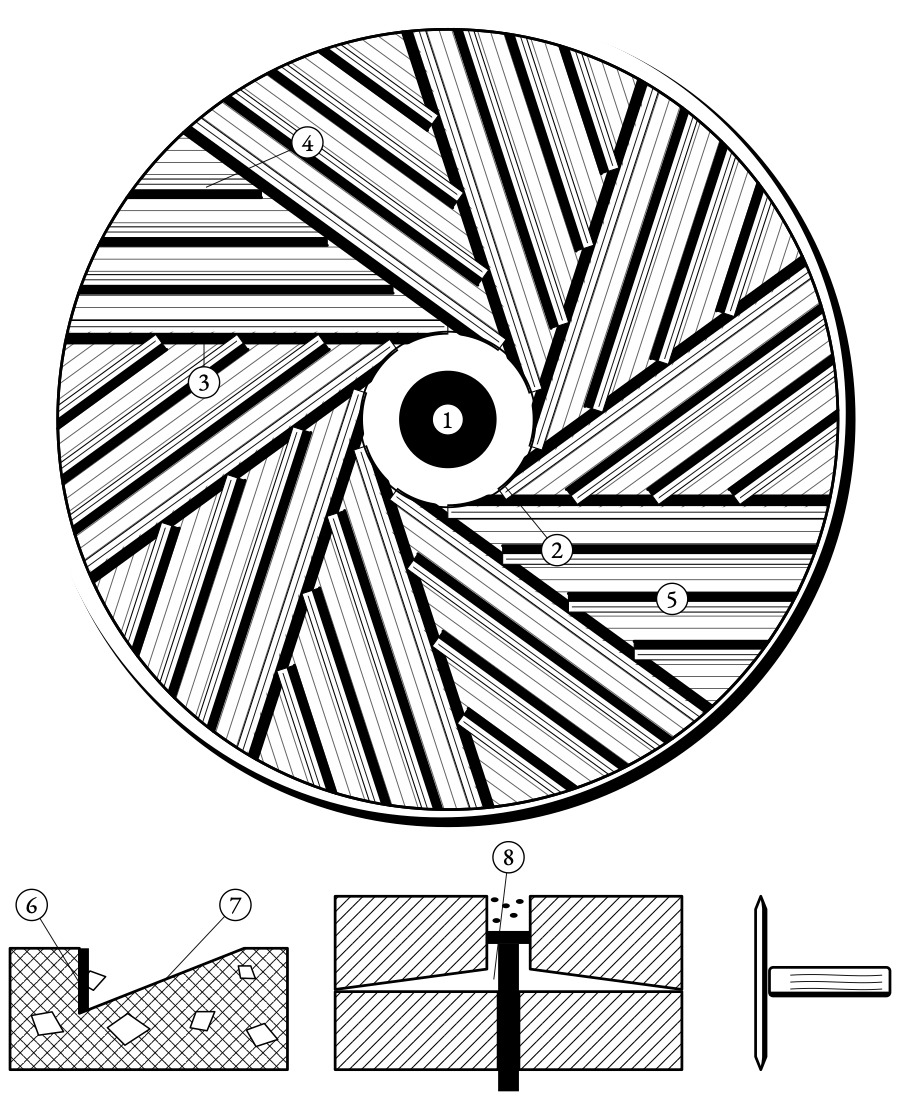
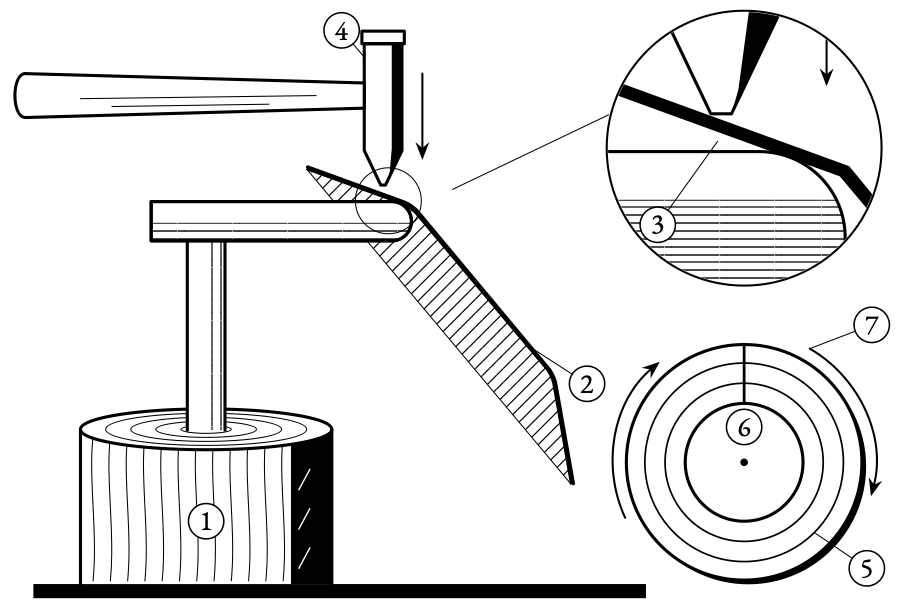
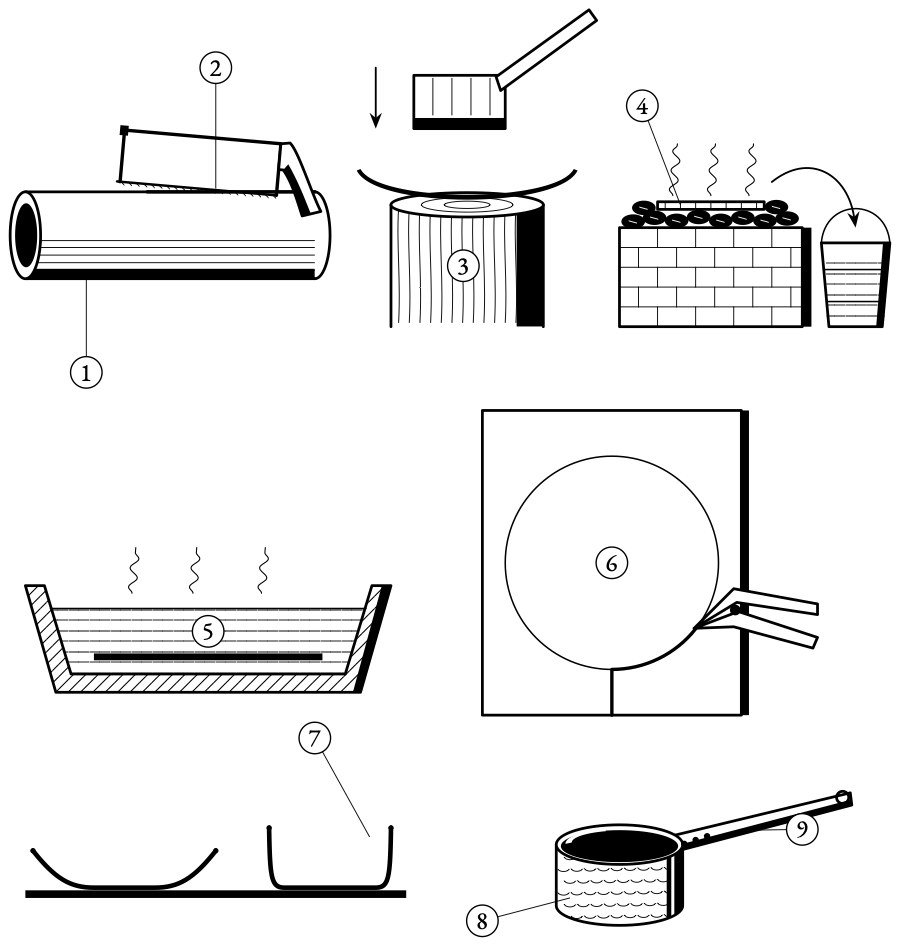
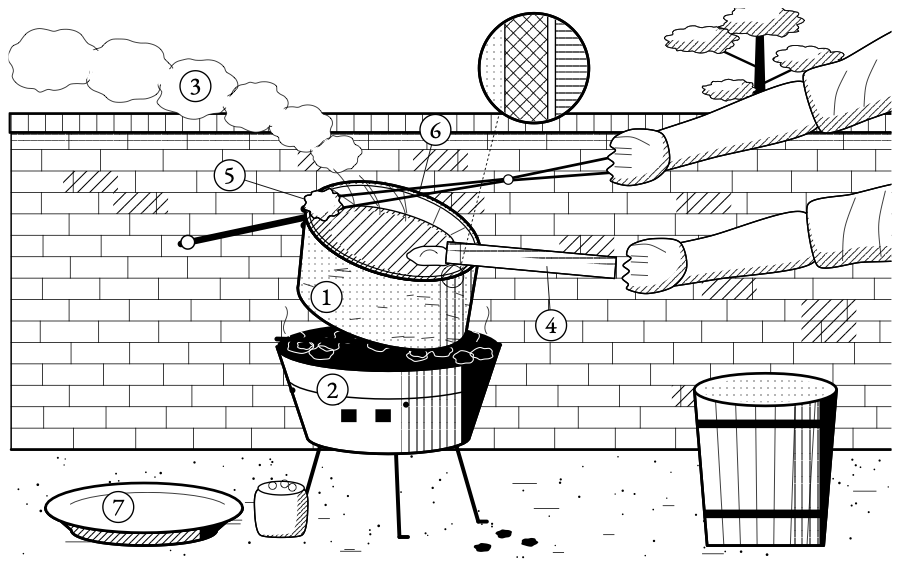
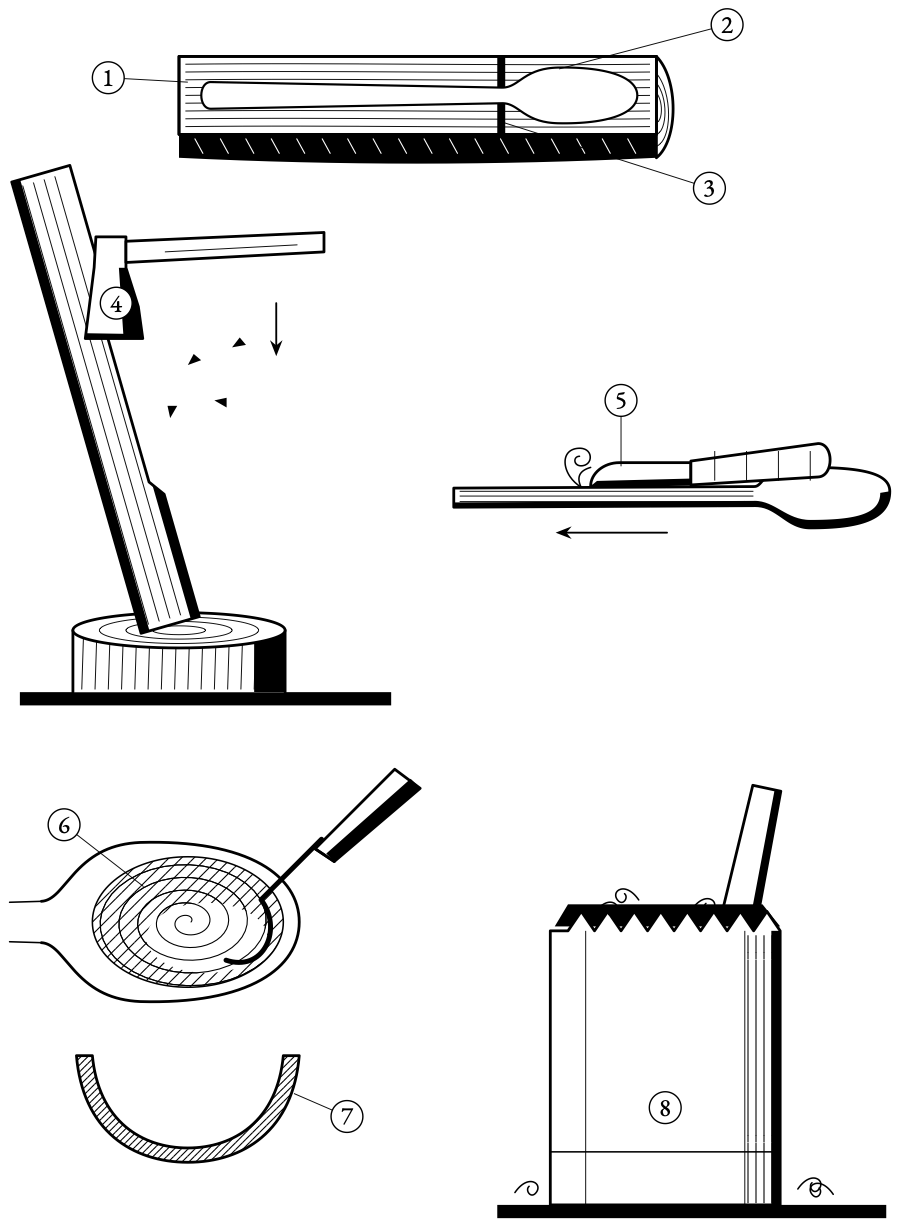
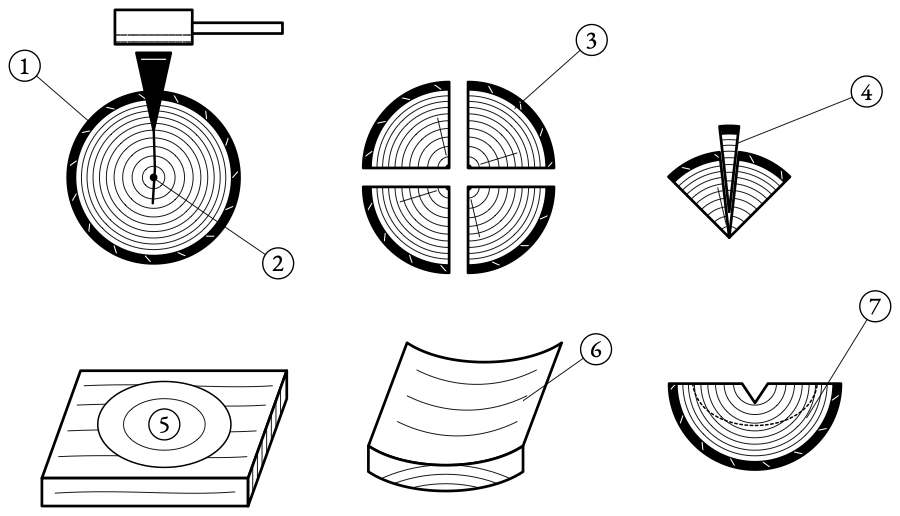
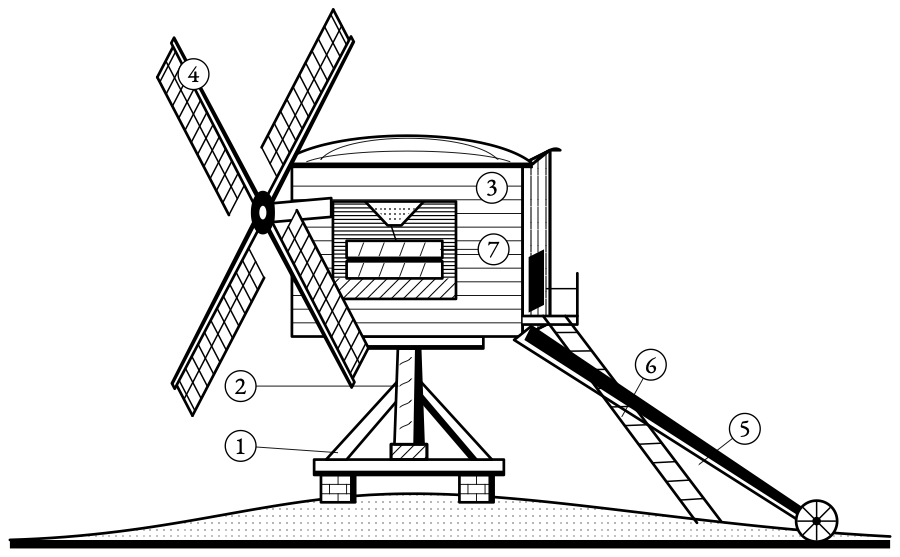
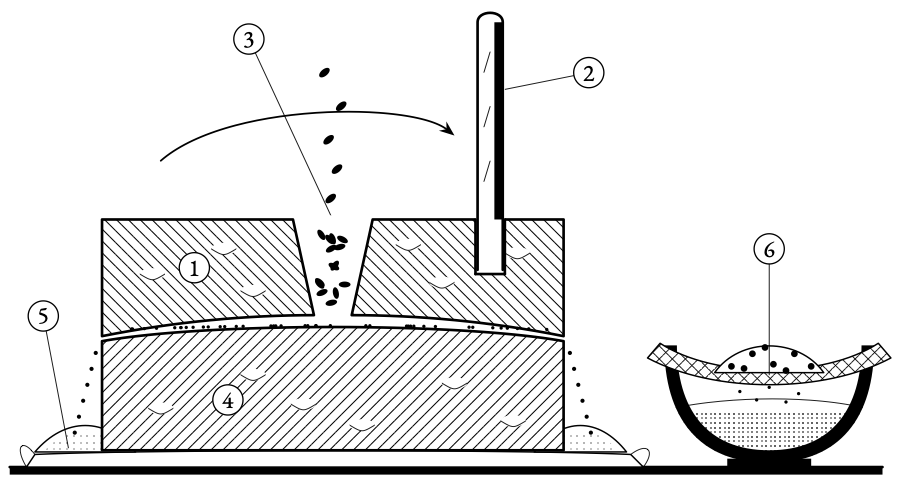
Plate 04-01 One side of the bowl is worn flat where twenty years of the same hand pressed it to the pot. The wood remembers.Plate 04-02 The cramp seam. One edge is cut into tabs bent up and down, the other slides between them, and the hammer weaves the two sheets flat.Plate 04-03 Wood shrinks twice as much round its rings as across them. That is why a log cracks in a star, and why the pith is split out before a spoon is carved.Plate 04-04 The Dutch wedge press cut open. The stamper falls on the driving wedge, the wedge squeezes sideways, and the oil runs down into the pan.Plate 04-05 A post mill on its single oak pillar, turned into the wind by its tail-pole. One stood in every Brandenburg village.Plate 04-06 The miller's harp. Ten quarters, each with a master furrow off the radius and three shorter furrows behind it, so the two stones cross like scissor blades.Plate 04-07 Raising. The disc sits on the stake at a slant, and the blow falls just beyond the steel, so the metal is pushed inward and the rim gathered up.Plate 04-08 From the pipe under the sink to the pan on the fire. The copper goes round hammer, fire, water and acid some twenty times before it stands as a pan.Plate 04-09 The tinker's pass. The tin pools in the base and the cotton sweeps it up the walls in one continuous circle, bright behind the cloth.Plate 04-10 A spoon from a split branch. It is drawn along the grain, roughed with the axe, shaped with the straight knife and hollowed in a spiral with the hook.
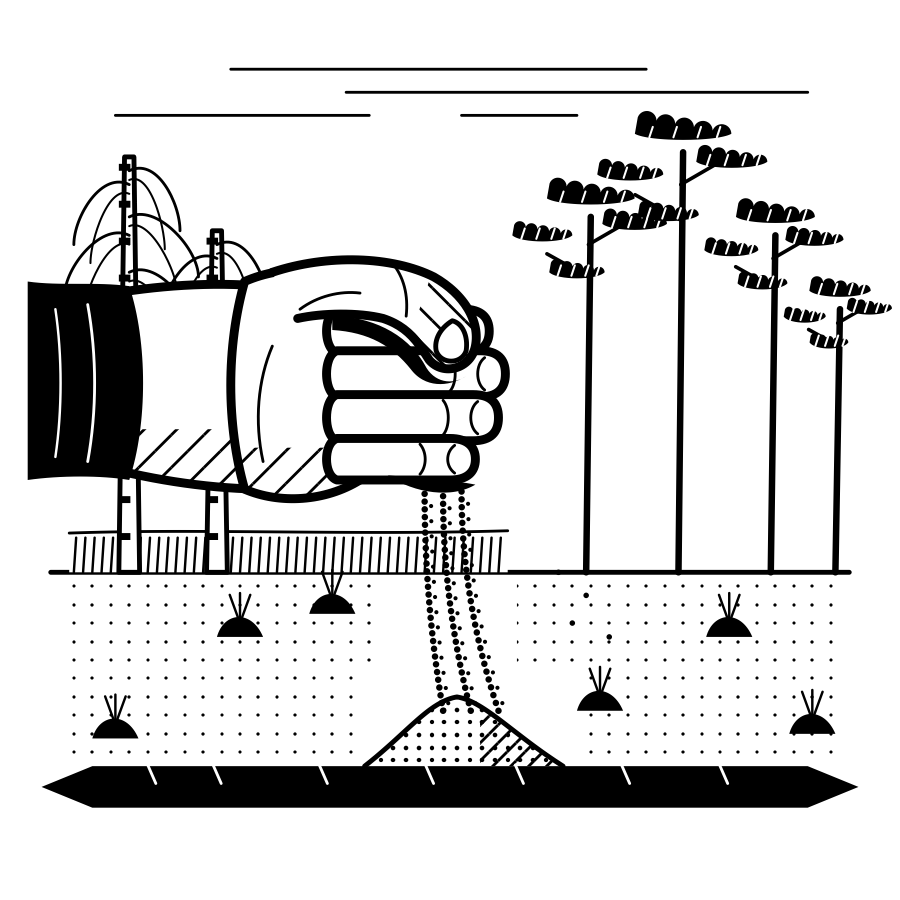
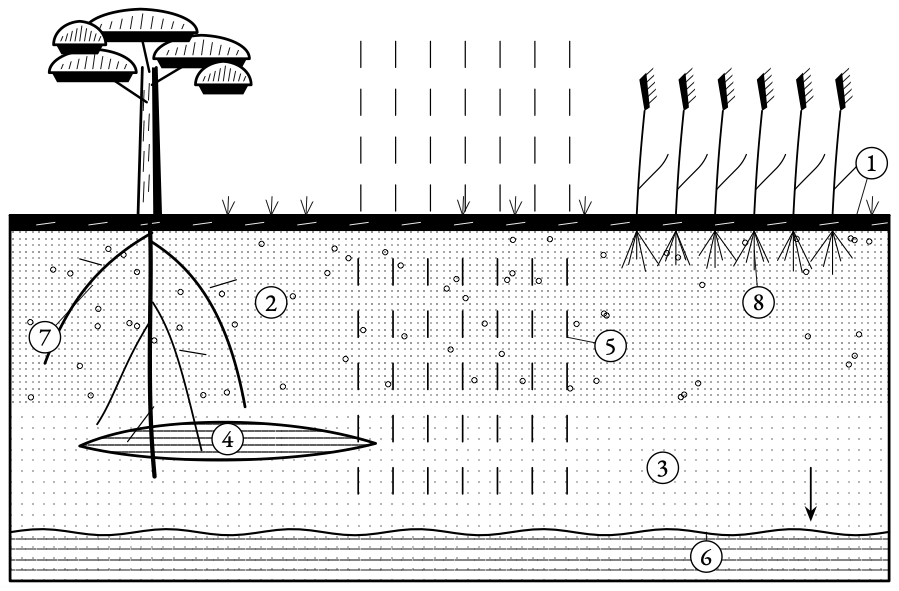
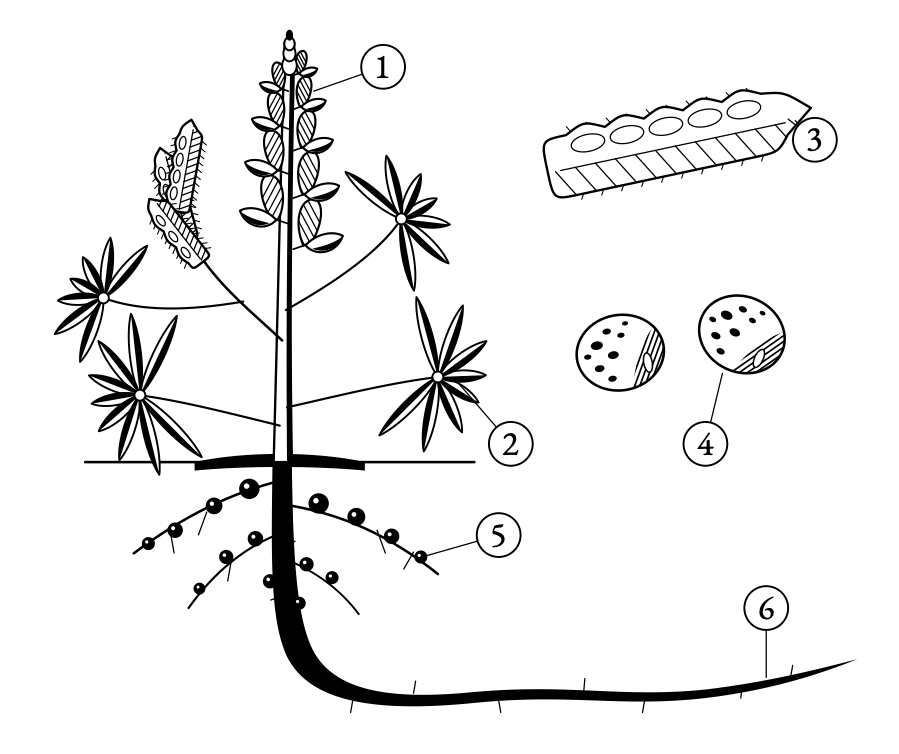
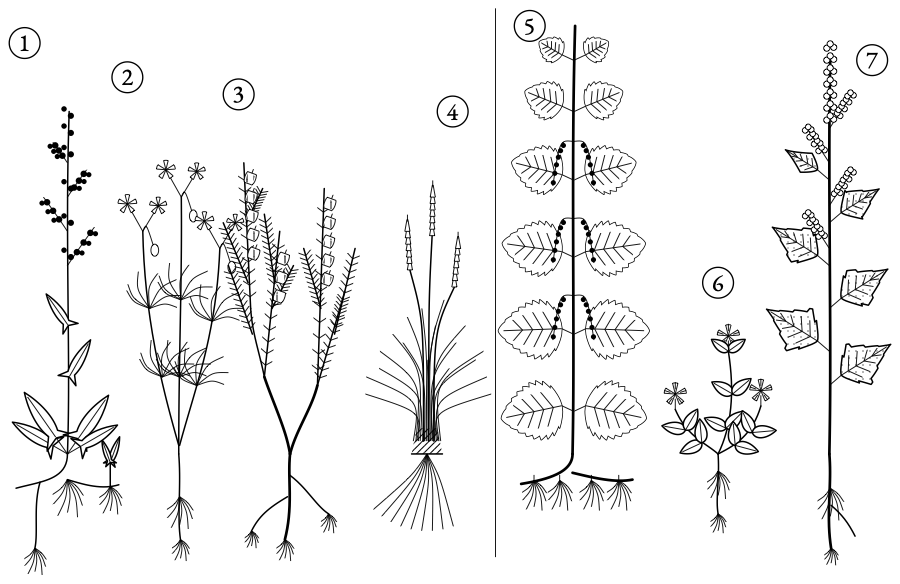
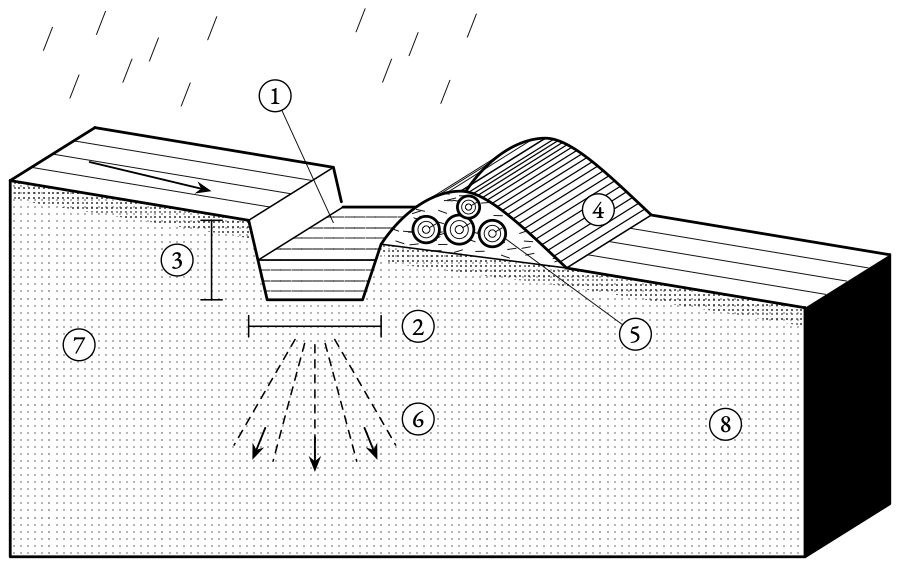
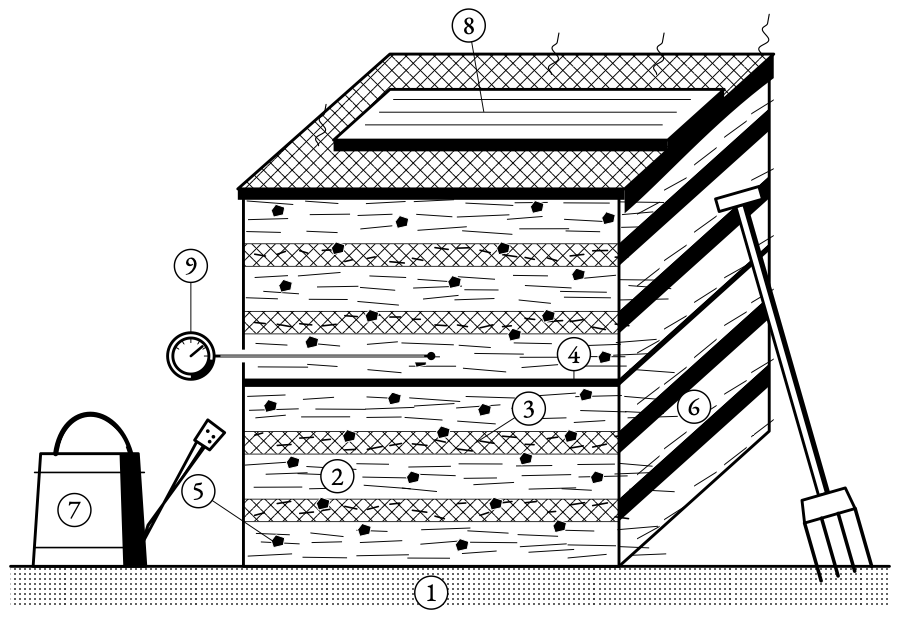
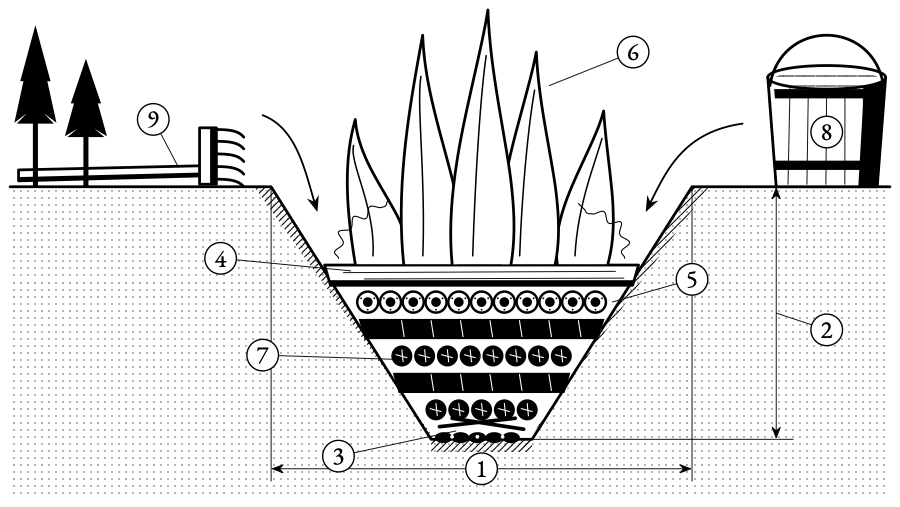
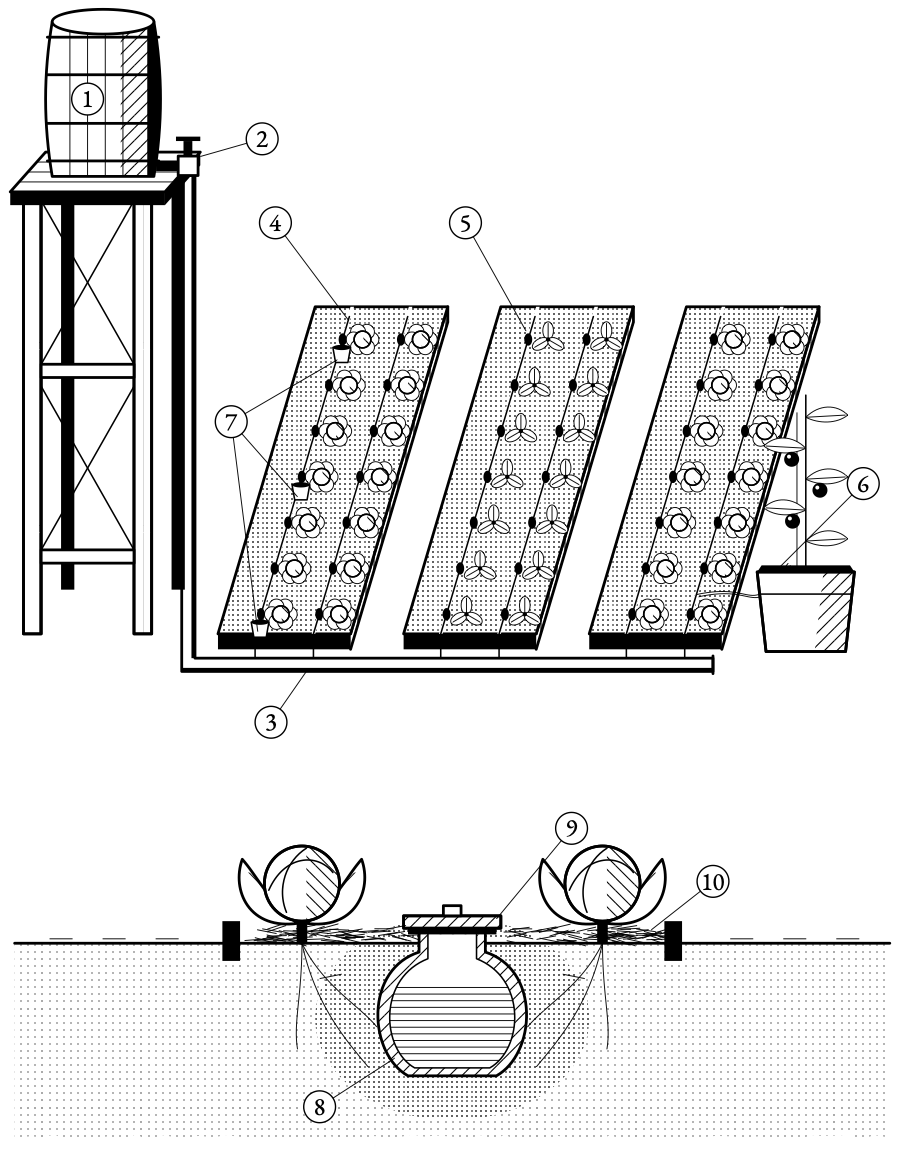
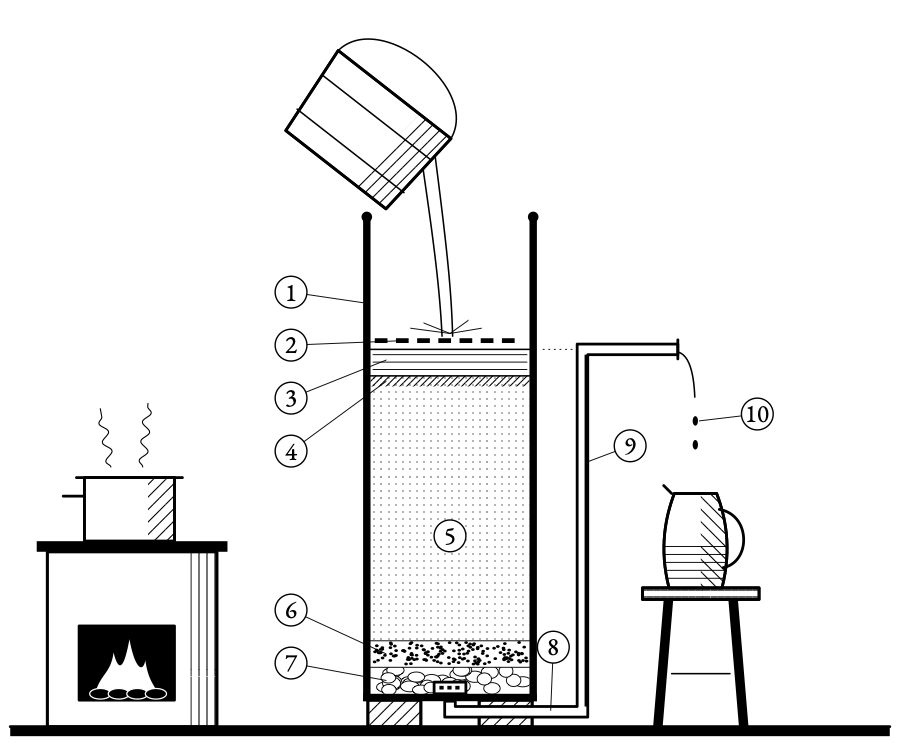
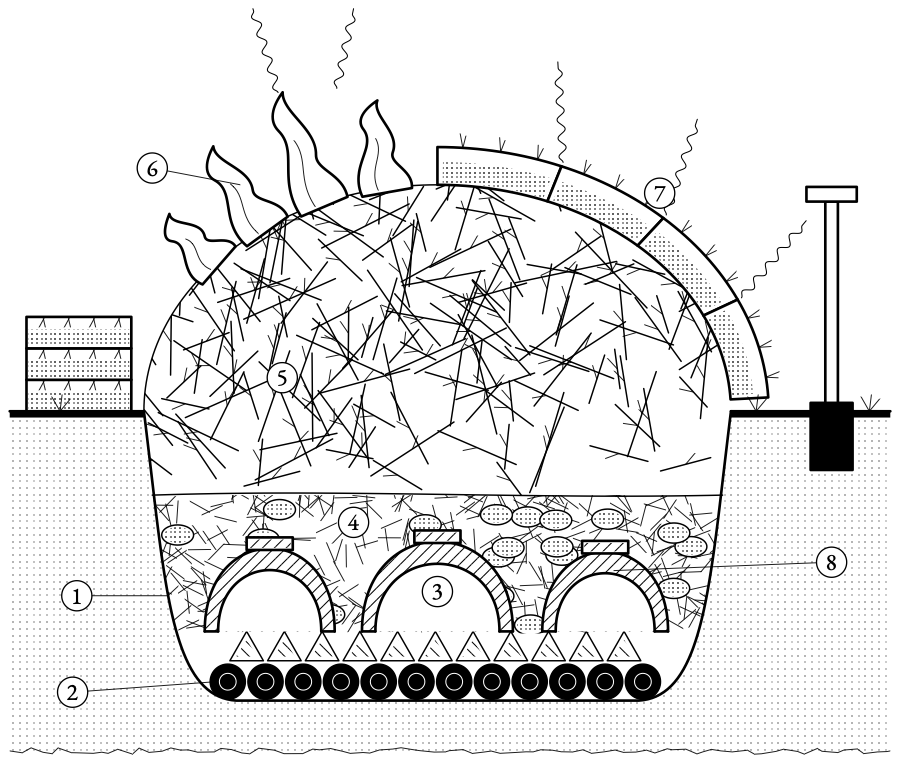
Plate 05-01 A handful of Brandenburg sand will not hold a shape. What the ice left twelve thousand years ago runs through the fingers and leaves only grey dust on the palm.Plate 05-02 The ground of the Mark in section. A skin of dark humus lies on sand that runs down for metres, and the rain goes through it like water through a sieve.Plate 05-03 The blue lupin, Lupinus angustifolius, the one lupin the fungus left. The swellings on its root feed the sand, and the taproot goes down three metres to water no other crop can reach.Plate 05-04 The weeds that read the ground. The four on the left grow on acid, hungry sand, and the three on the right mean someone has fed it for years.Plate 05-05 A swale in section. The ditch runs level along the slope, the spoil is heaped below it over a core of logs, and the rain that fills it has time to sink into the sand.Plate 05-06 The hot heap in section, built a metre each way in one day. Brown and green go on in layers a hand thick, and the thermometer in the middle tells you when the fever has come.Plate 05-07 The char pit in section. Each layer of wood is laid on as the one below turns white, and the flame on top keeps the air from the char beneath.Plate 05-08 Water moved by height alone. The barrel stands high, the feed pipe is fat, the lines run level, and in the next bed an unglazed pot does the same work more slowly and loses nothing.Plate 05-09 The slow sand filter in section. The spout is set higher than the sand, so the sand is always under water and the living skin at its top never dries.
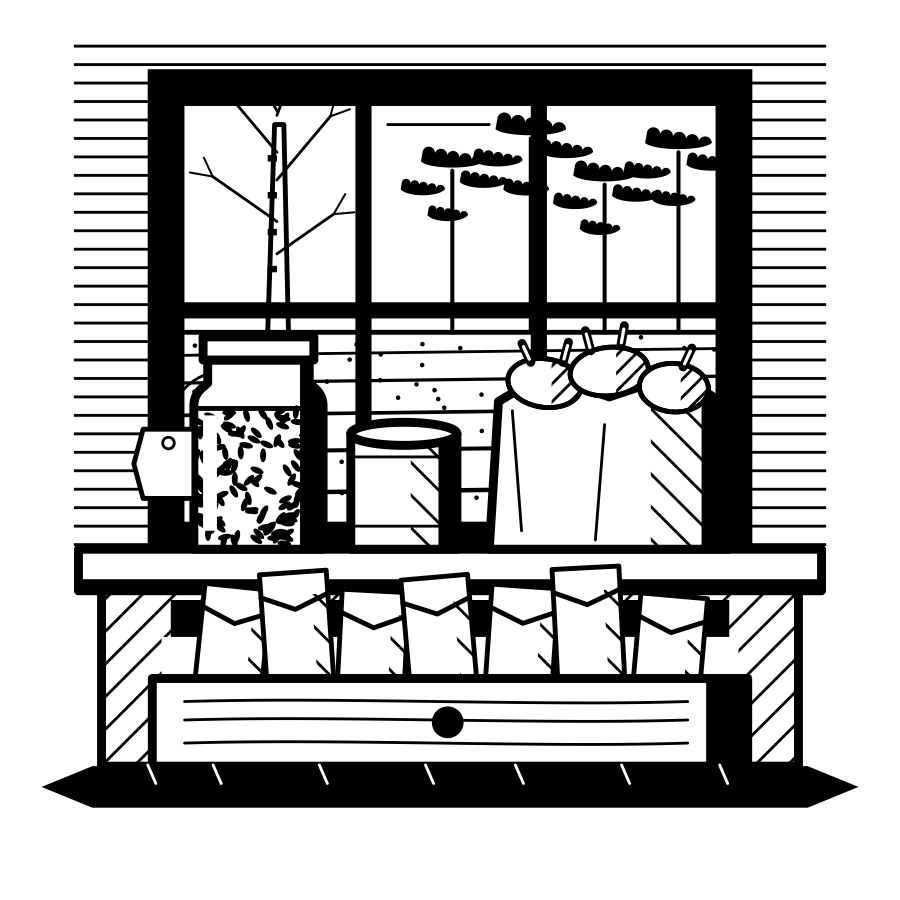
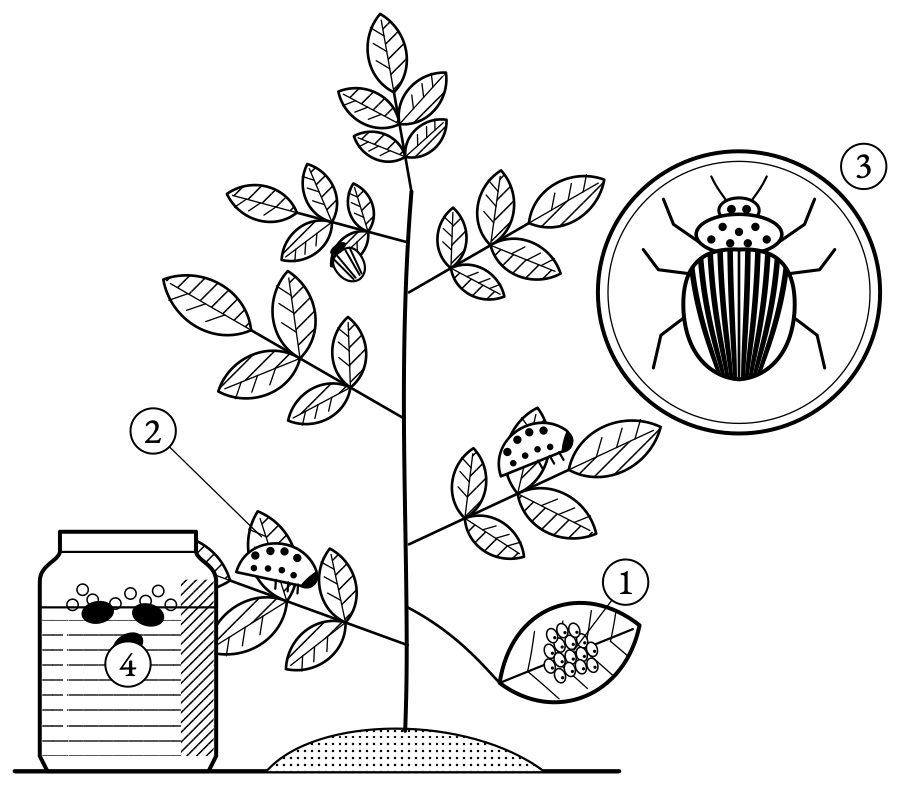
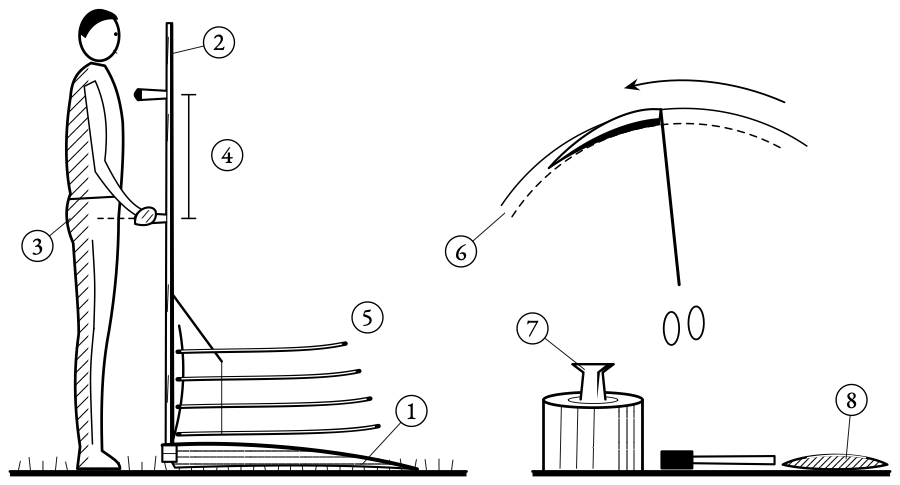
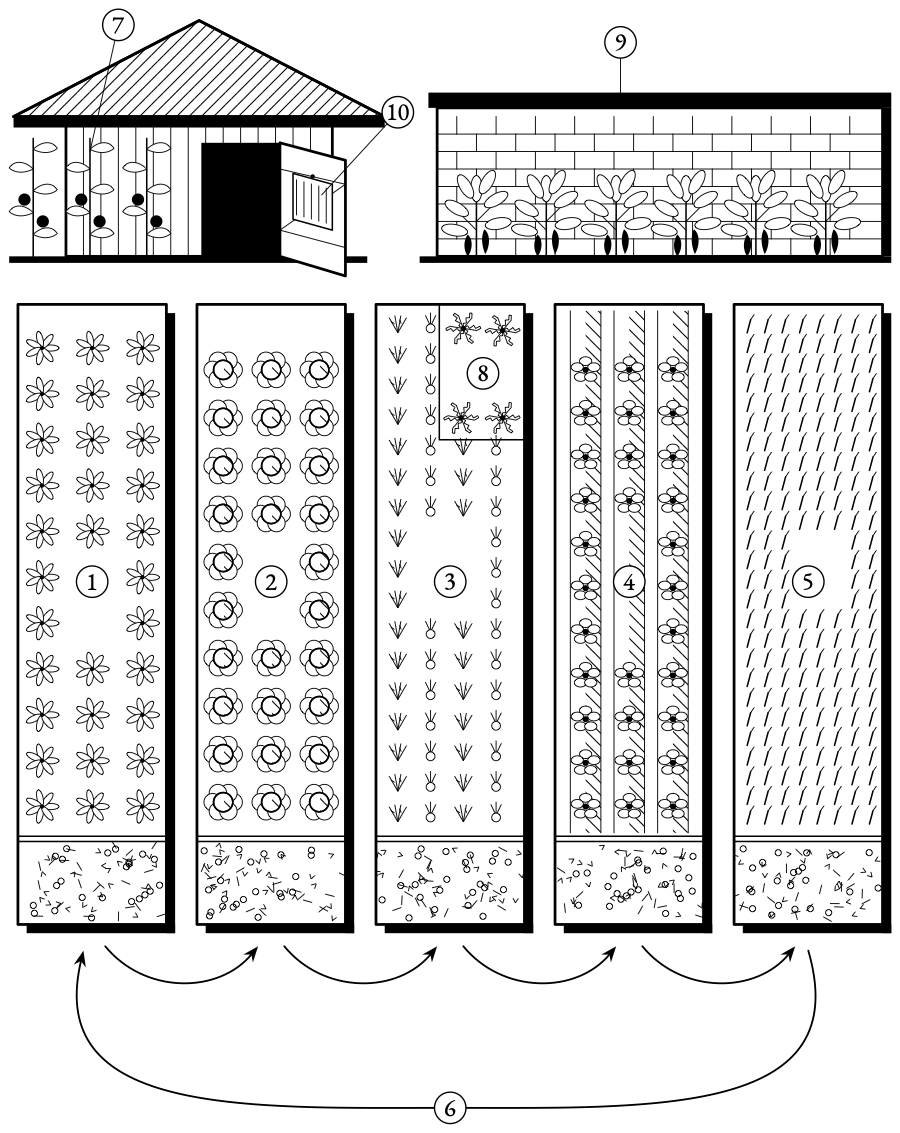
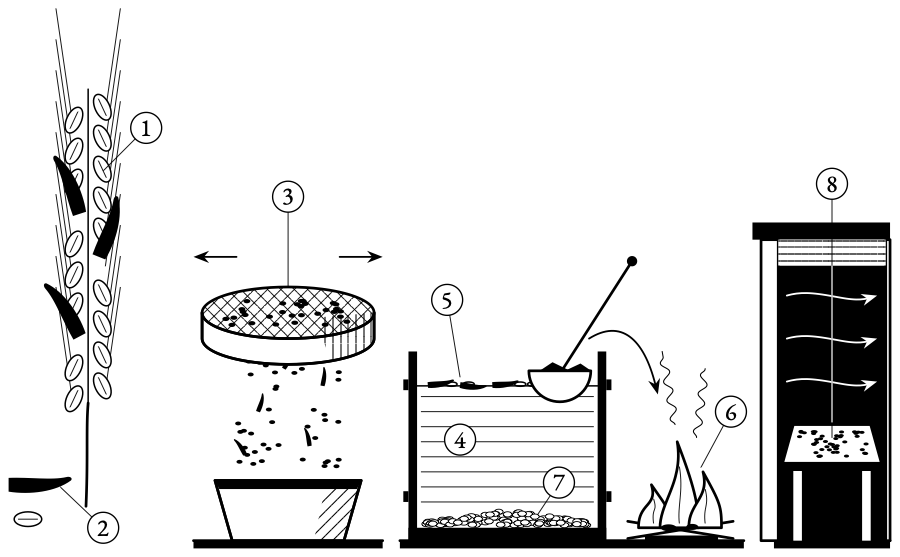
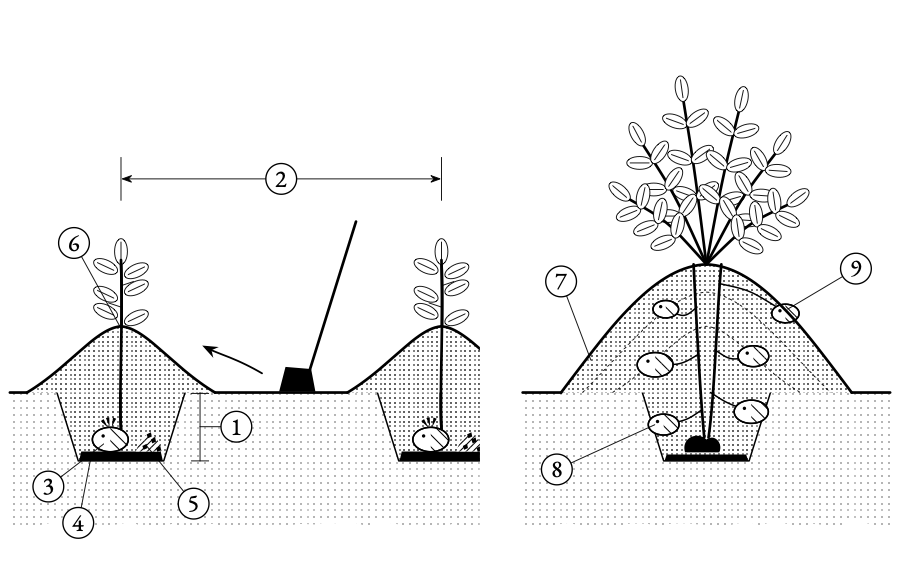
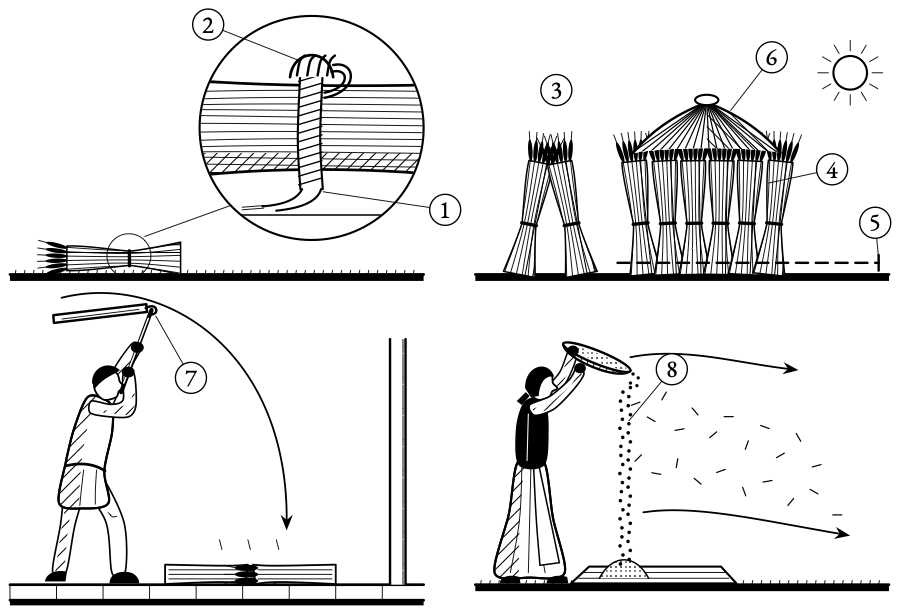
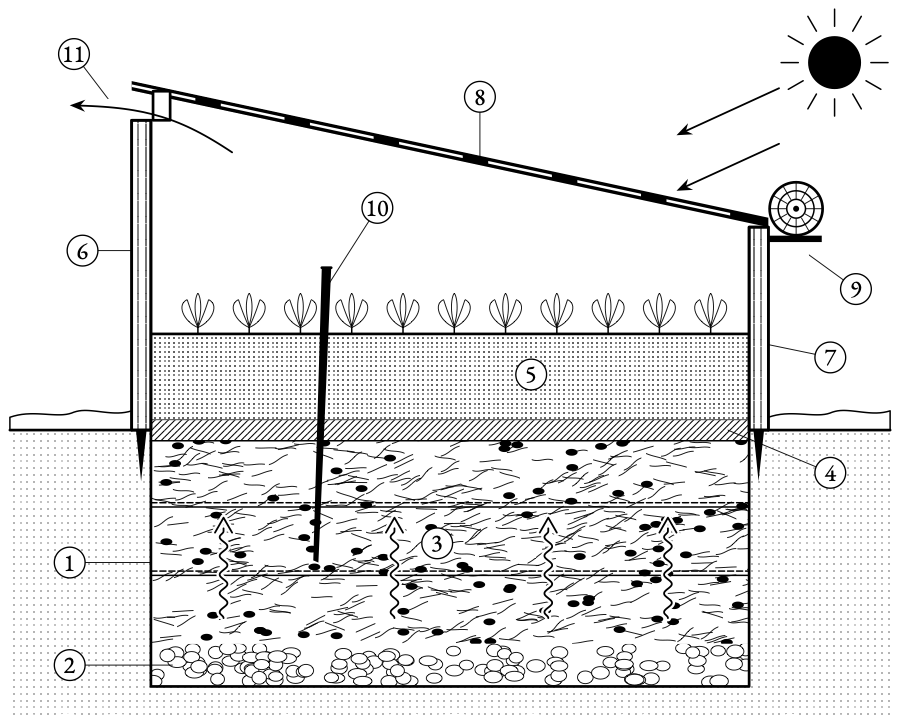
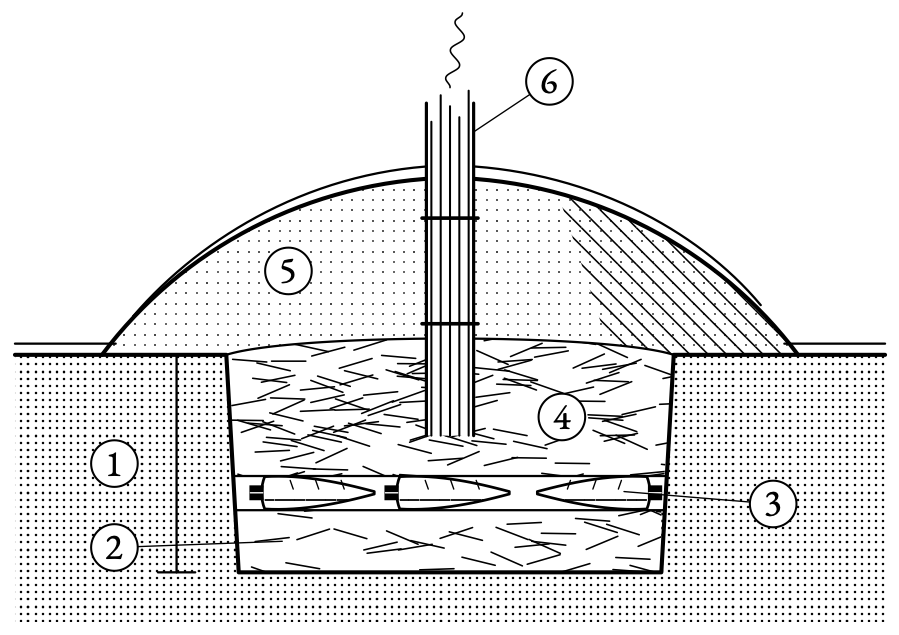
Plate 06-01 February, when nothing grows and everything is decided. Last year's packets, a jar of rye and a bag of seed potatoes greening on the sill.Plate 06-02 The Colorado beetle in its three forms, all of which go into the jar. Turn the leaves every morning in June and look underneath.Plate 06-03 A grain scythe fitted to its mower. Stood on its blade, the lower grip comes to the hip, and the cradle's wooden fingers lay the cut rye down with its ears together.Plate 06-04 The five beds and the order of their talk. Lupin, cabbage, carrot, potato and rye move one bed on each year, and every bed has its winter cover.Plate 06-05 Ergot, and the brine that takes it out. A sieve lets the black horns through, but in salt water they float and the sound rye sinks.Plate 06-06 The potato ridge in section. Each time the soil is drawn up the stem is buried deeper, and along the buried stem the new tubers set.Plate 06-07 From sheaf to grain. The sheaf is tied with its own straw, the stooks stand in a north and south line for the sun, and in winter the flail and the wind do the rest.Plate 06-08 Reichart's hotbed in section, a furnace that runs on a stable. The dung heats under the soil, and nothing is sown until it has fallen below twenty-eight degrees.Plate 06-09 A clamp for the seed carrots. Straw below and above them, sand over the straw, and a reed flue to let the damp out.
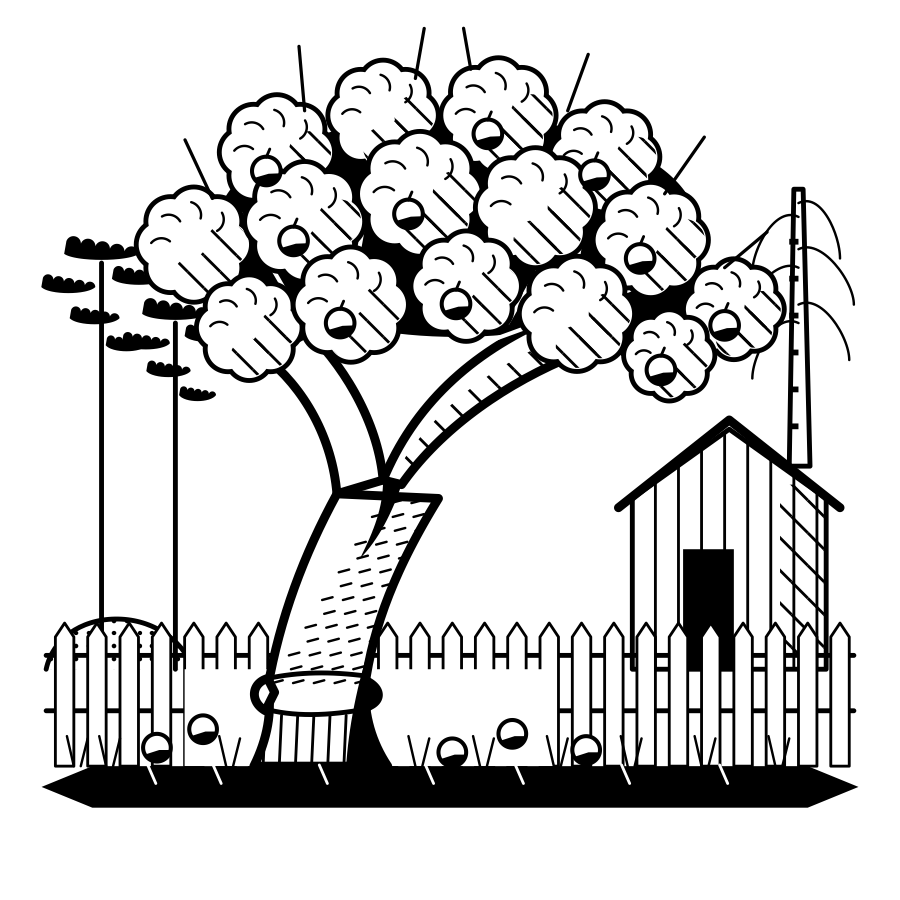
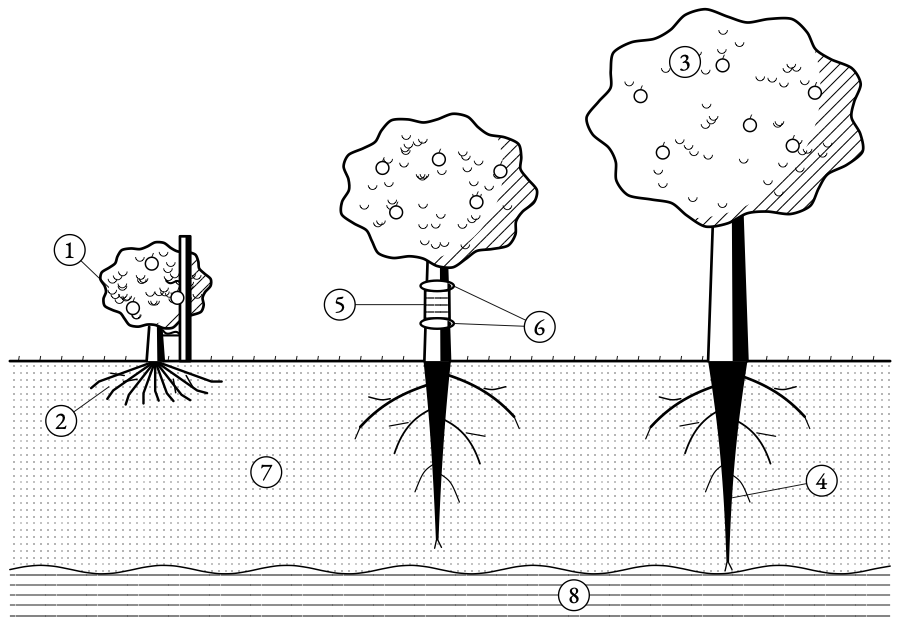
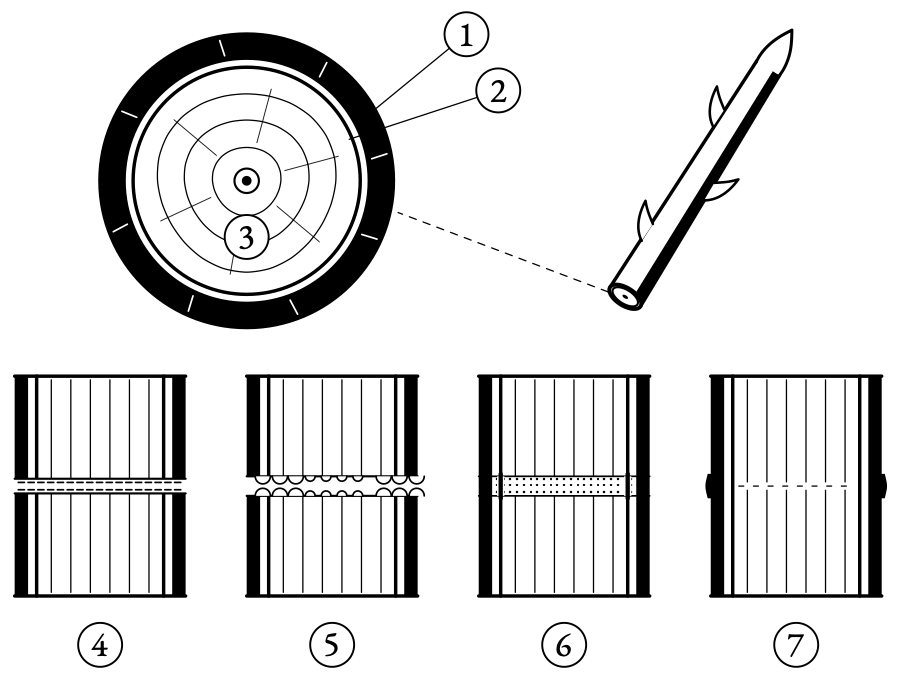
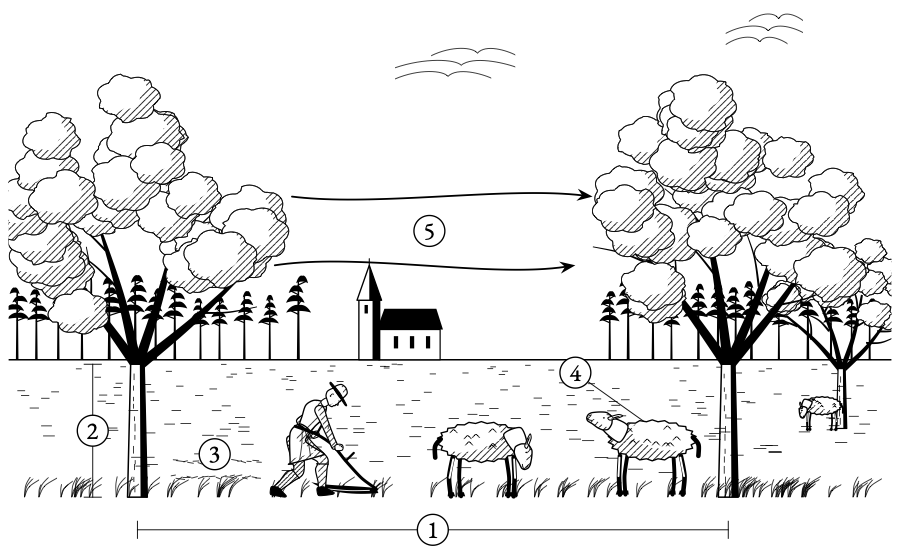
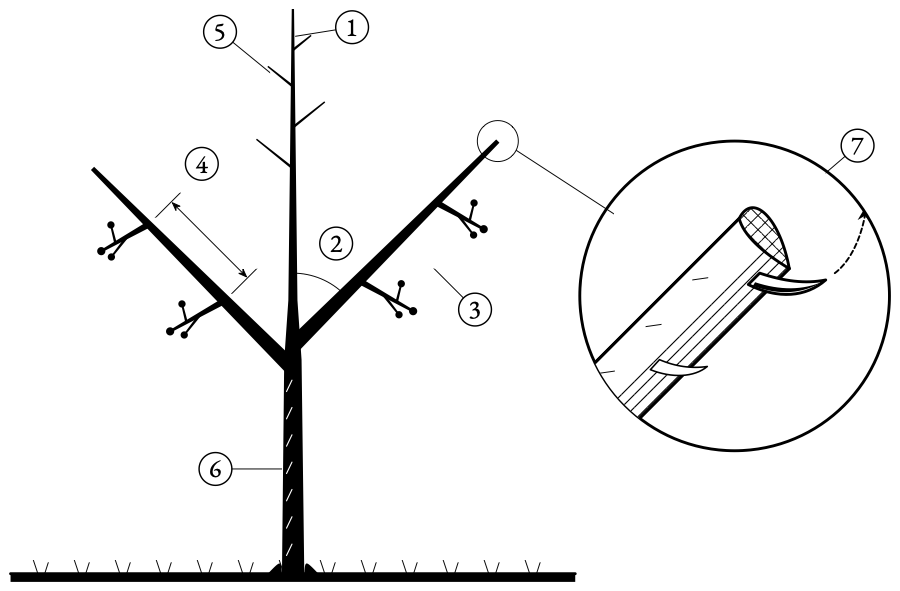
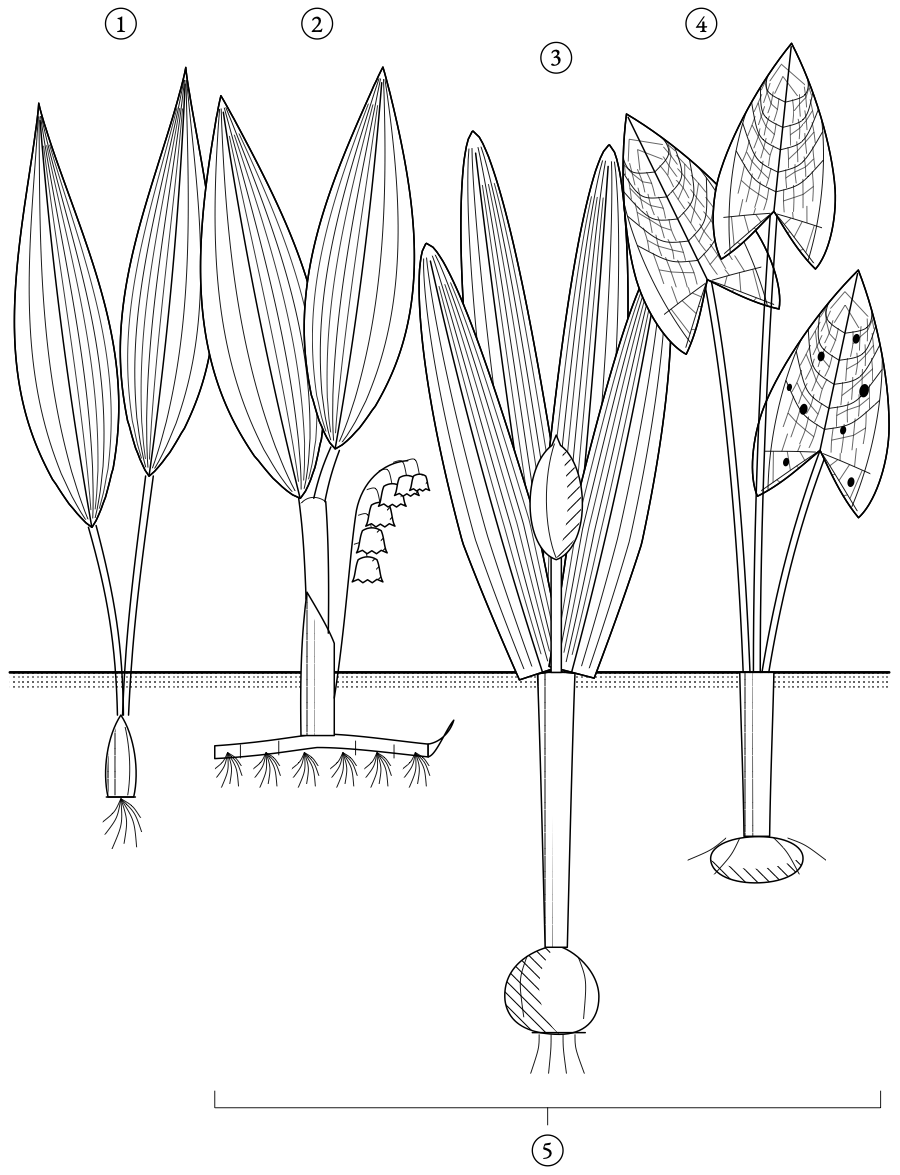
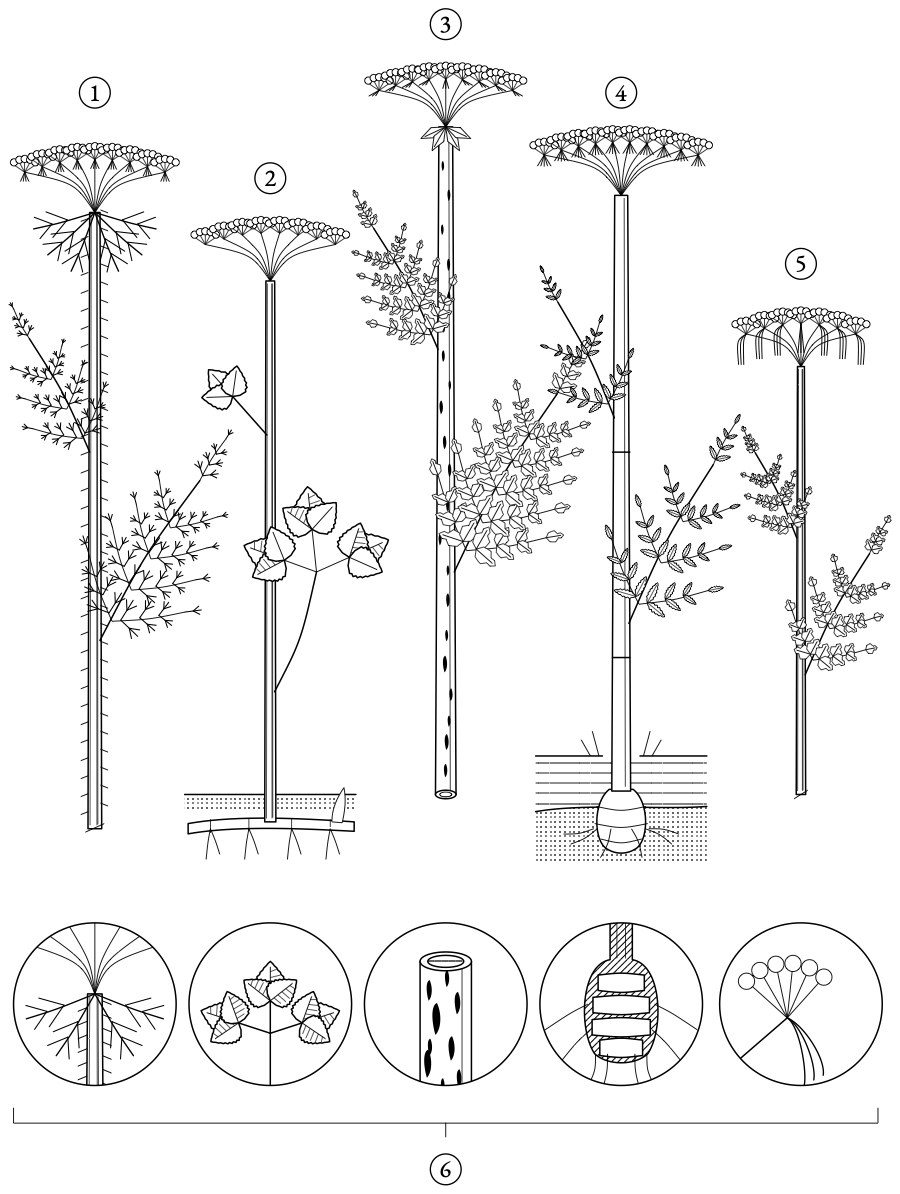
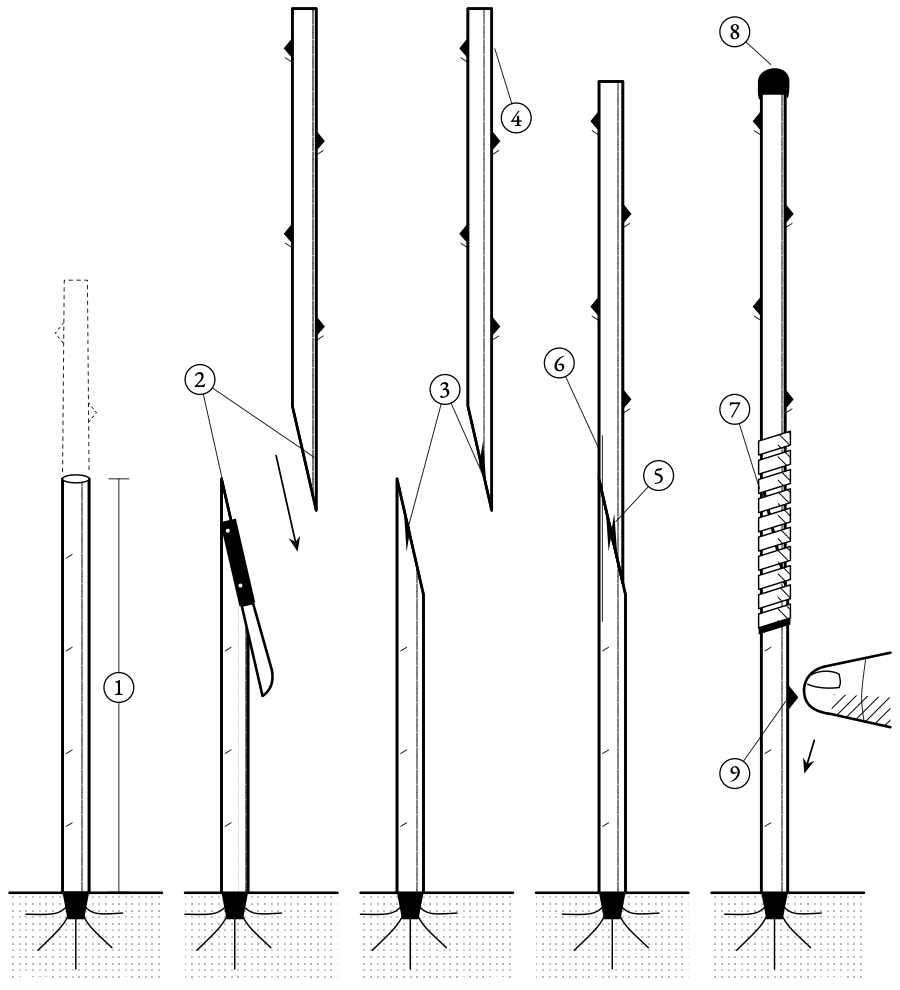
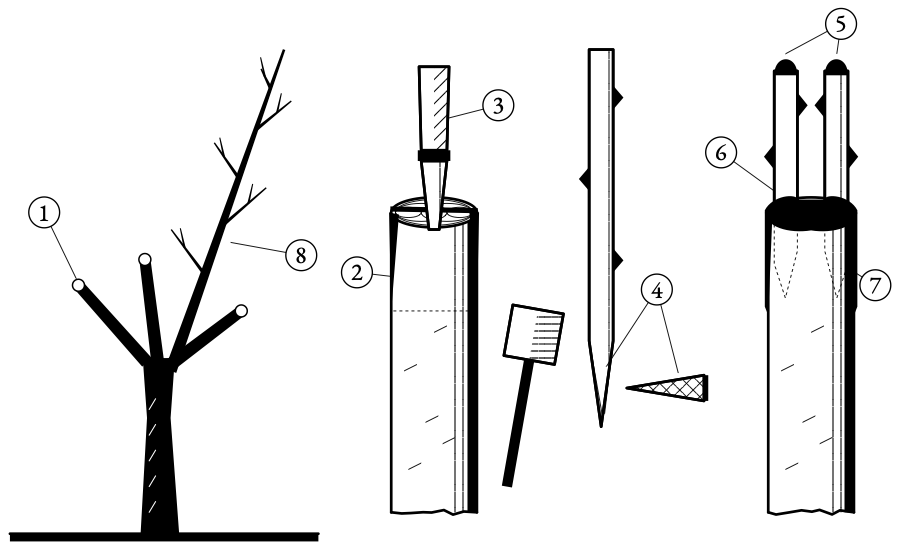
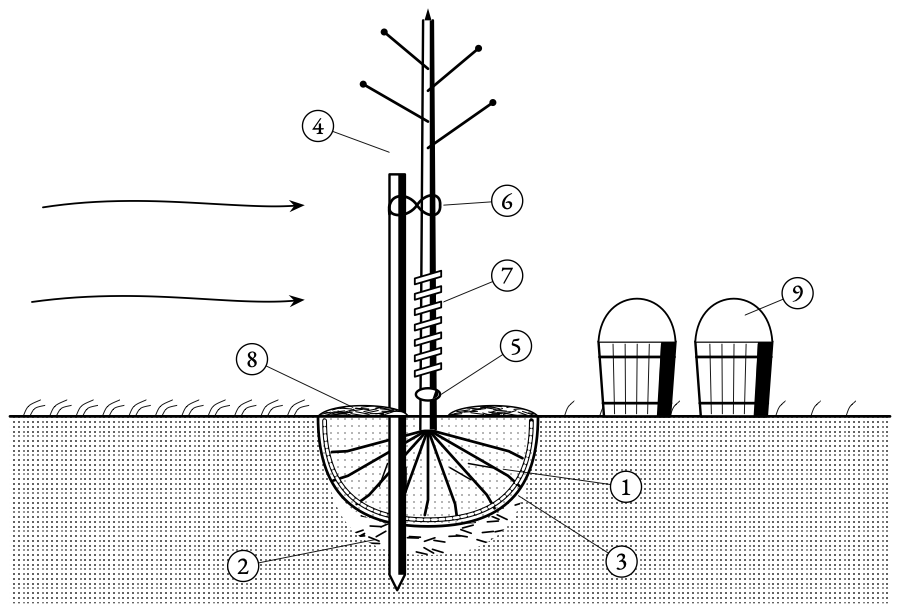
Plate 07-01 The old apple at the edge of the colony. Ten centimetres above the ground the bark changes its grain, and that ring is where somebody once joined two trees.Plate 07-02 Three trees on three roots. The dwarf on M9 stays small and dies of thirst on the sand, the standard sends its root down to the water, and the interstem tree lies between them.Plate 07-03 The green line under the bark is the only part of the twig that matters. Laid against the same line in the root, and held still, it heals in six weeks.Plate 07-04 The meadow orchard, standard trees on tall trunks in grass. The sheep and the scythe pass under the branches, and the wind between the trees keeps the scab down.Plate 07-05 The Oeschberg crown. A leader that stays highest, three or four scaffolds at forty-five degrees kept for life, and the fruit carried on the outside, where the light is.Plate 07-06 Wild garlic and the three that kill. Lily of the valley, autumn crocus and lords-and-ladies all come up beside it in spring, and after the third leaf your hands smell of garlic and the nose can no longer tell them apart.Plate 07-07 The carrot family, two to eat and three that kill. The flowers are alike, so look at the stem and the small leaves beneath the umbel, and when in doubt leave it.Plate 07-08 The whip and tongue, the most beautiful join in the garden. The same slope on both, a tongue in each, and the green lines under the bark laid together and bound tight.Plate 07-09 Top-working a wild apple. The stub is split and held open, two wedged scions are set at the edges where the bark is, and everything is sealed.Plate 07-10 Planting a standard on the sand. A wire basket against the voles, a stake on the side the wind comes from, and the graft ring a hand above the ground.
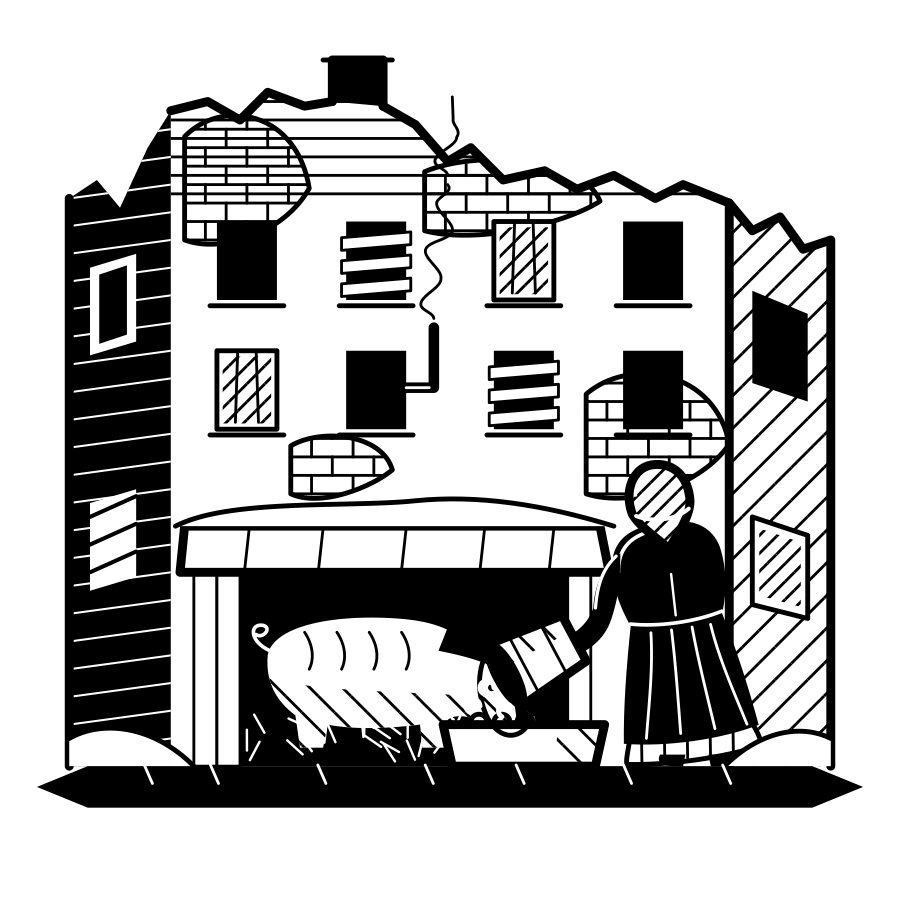
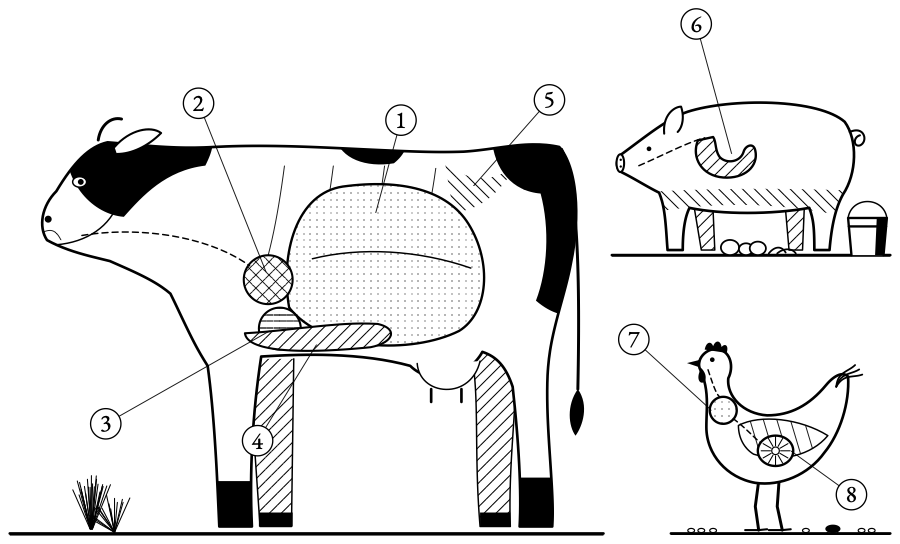
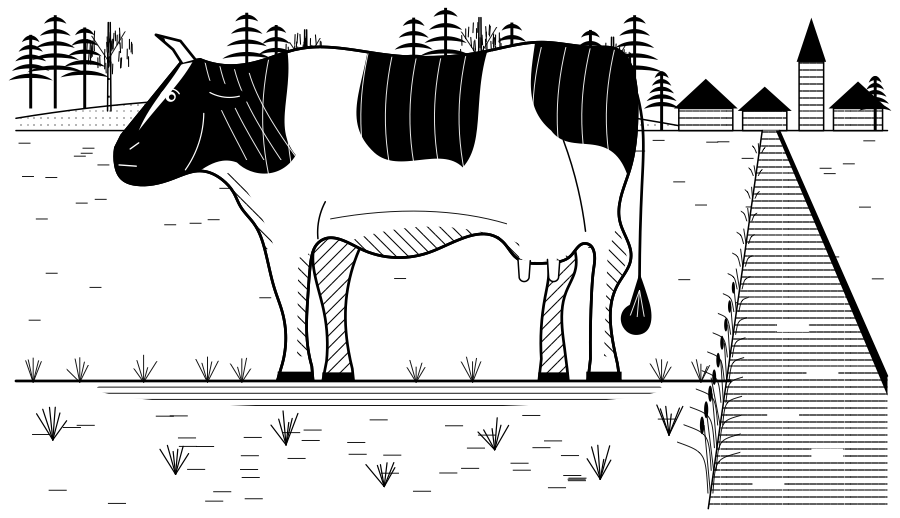
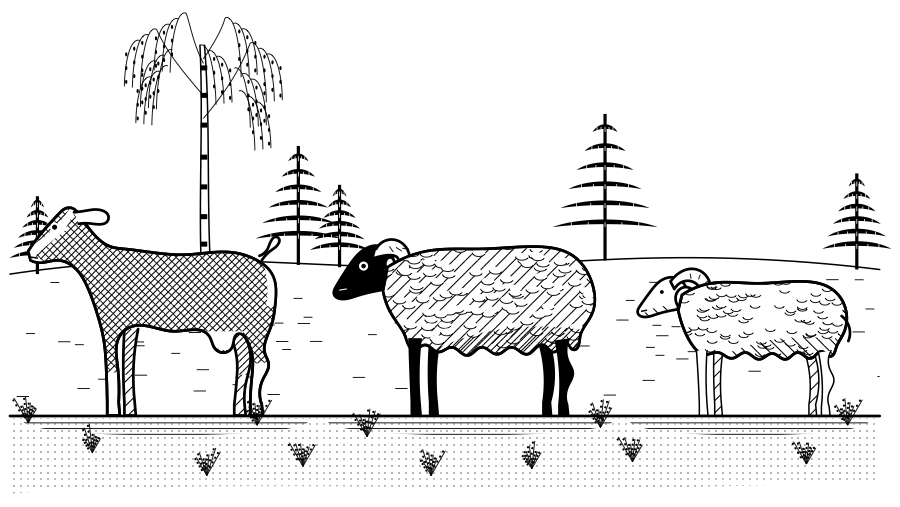
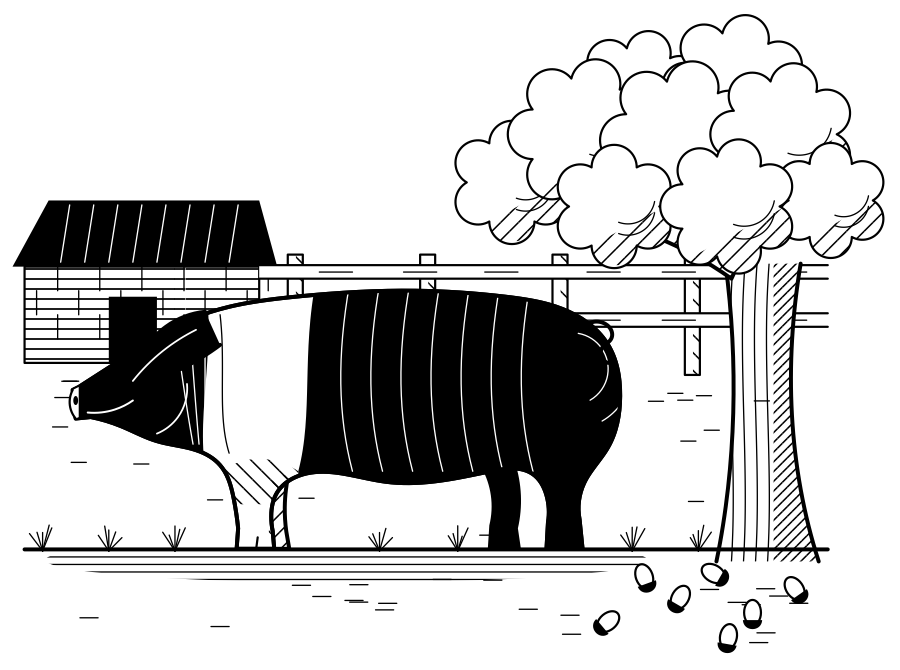
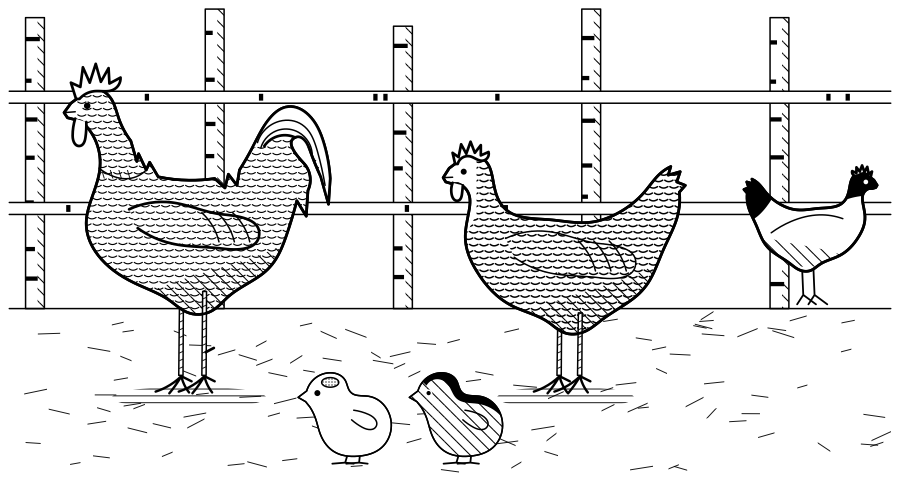
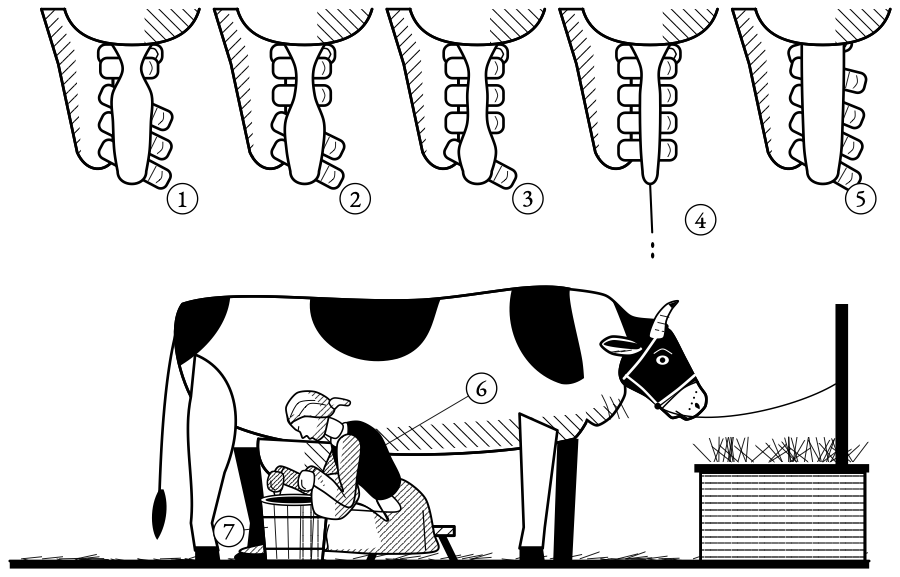
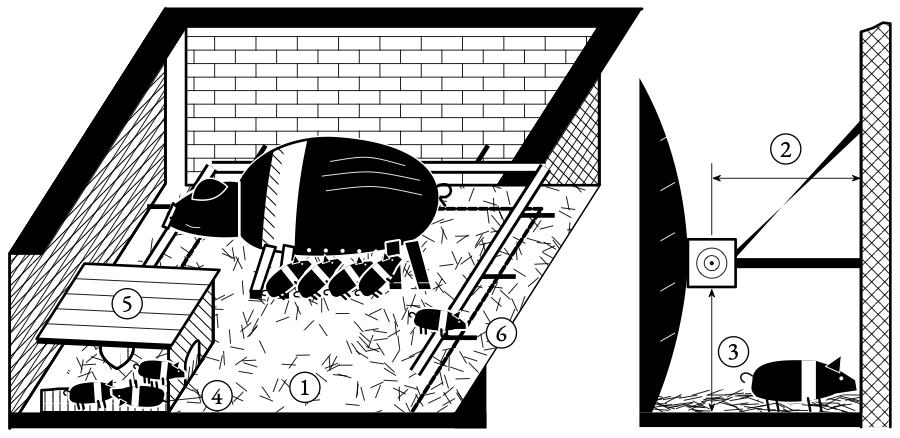
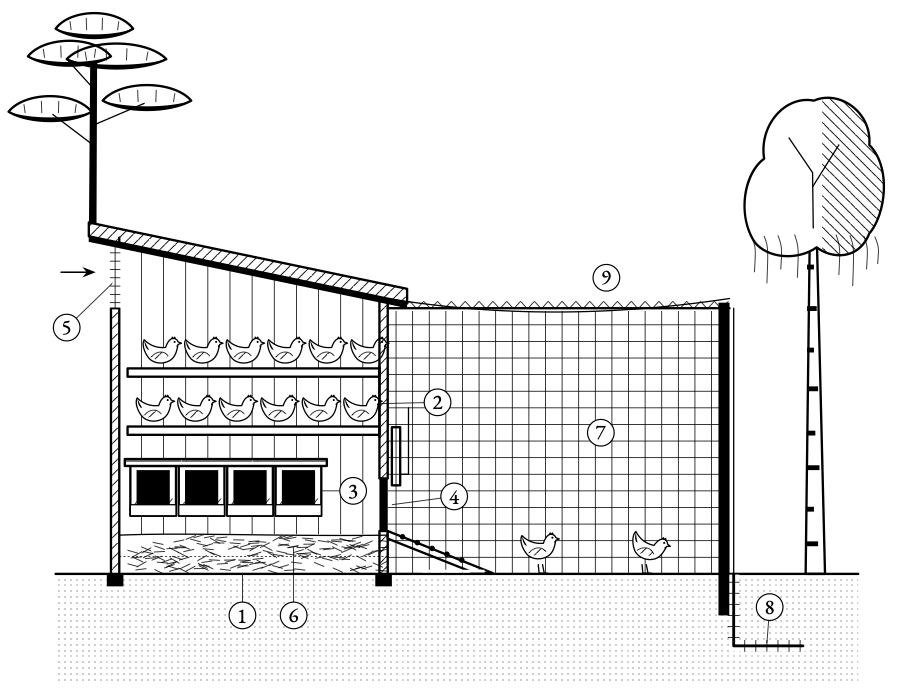
Plate 08-01 Kreuzberg, winter 1946. A pig in a back-courtyard shed, fed on the peelings of a whole staircase of families.Plate 08-02 Three borrowed stomachs. The cow's rumen turns grass, the pig's stomach turns whey and peelings, and the hen's gizzard turns beetles and fallen grain.Plate 08-03 The German black-and-white lowland cow, the cow of every Brandenburg village from the 1880s to the 1960s. She gave four or five thousand kilograms of milk and a calf that fattened.Plate 08-04 A village of the Mark on its sand island. Forty cows in one herd graze some eighty hectares of wet meadow, and one herdsman and one bull serve the whole village.Plate 08-05 The small animals of the sand. The Thüringer Wald goat, the rough-woolled Pomeranian sheep and the little Skudde, all three on the Red List.Plate 08-06 The German saddleback, black with a white belt over the shoulders. A slow lard pig for a kitchen's waste.Plate 08-07 The Bielefelder, a large, calm, barred hen that lays two hundred eggs and more. Her cockerel chicks hatch pale with a yellow spot on the head, her pullets dark with a stripe.Plate 08-08 The milking hand. Thumb and forefinger trap the milk, the other fingers close from the top down, and the hand opens to let the teat fill. Never pull.Plate 08-09 A farrowing pen. A rail along every wall leaves a gap where a piglet can get and a sow cannot, and the warm creep in the corner keeps the litter away from her when she lies down.Plate 08-10 A hen house for twelve. The litter composts under the birds and warms the house, and the buried wire skirt stops the fox that digs.
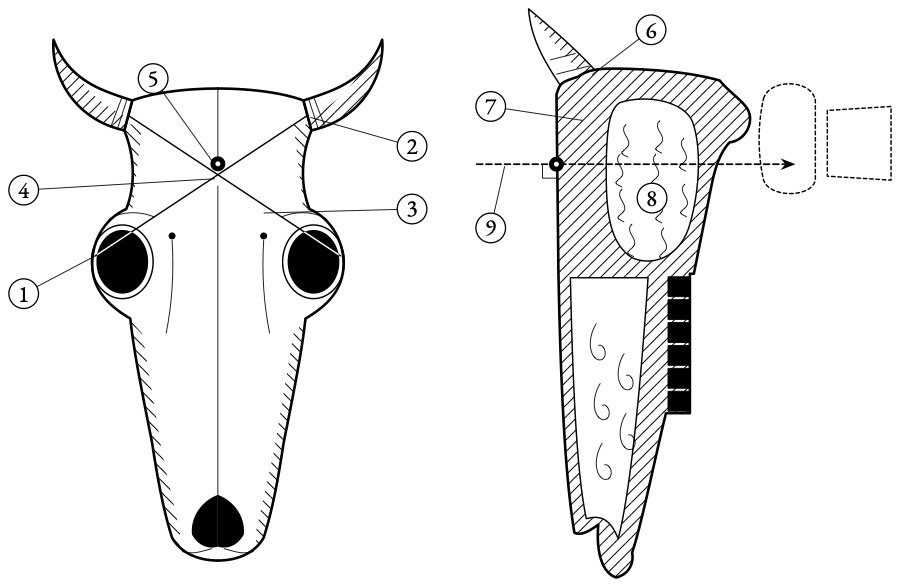
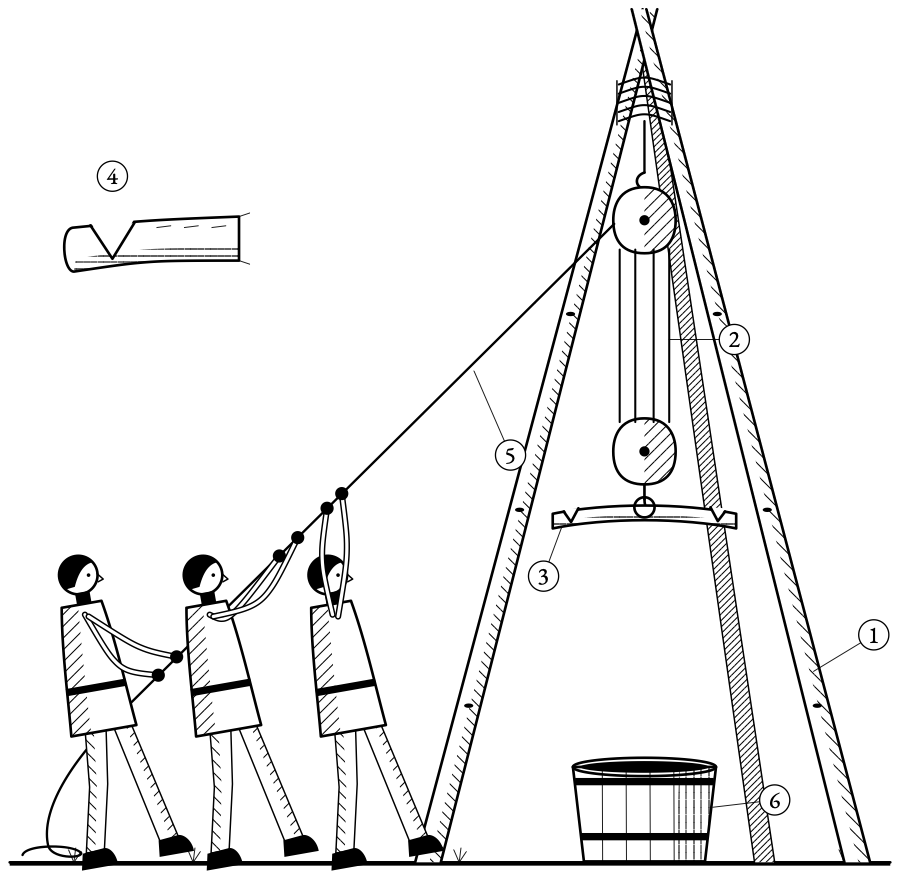
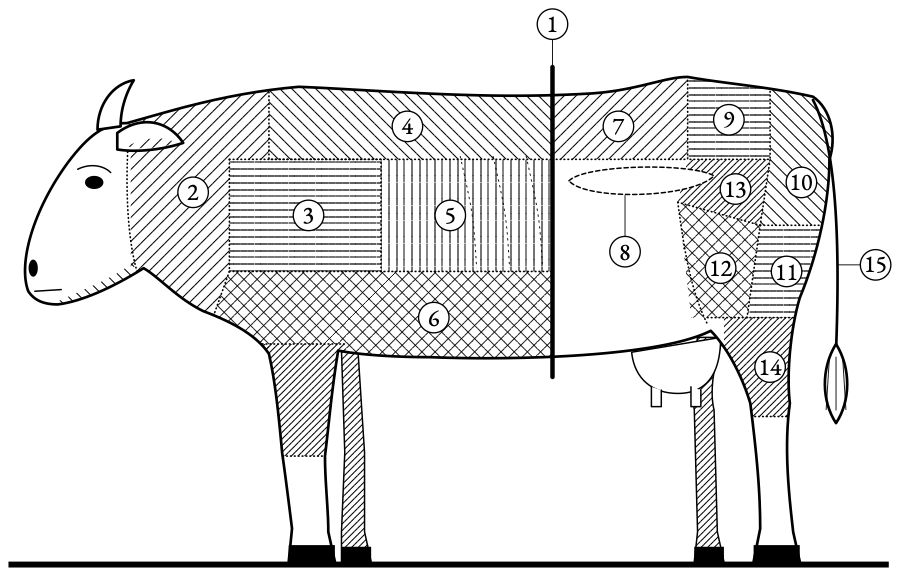
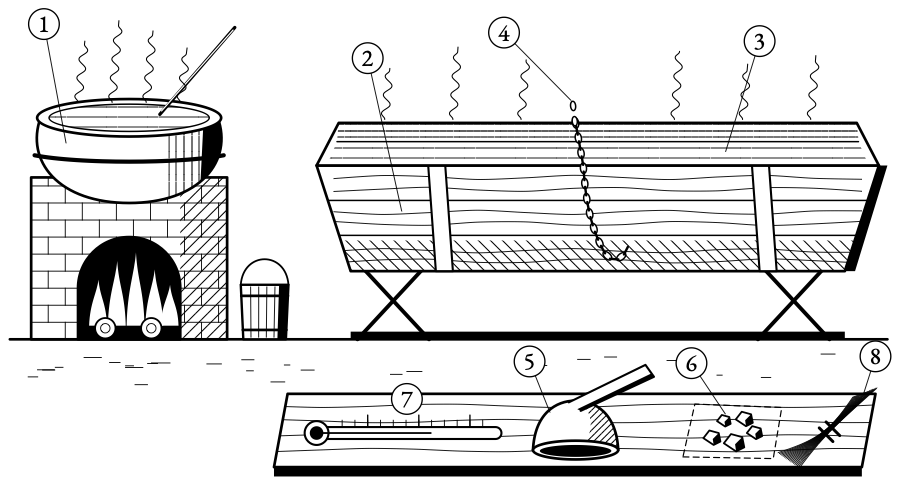
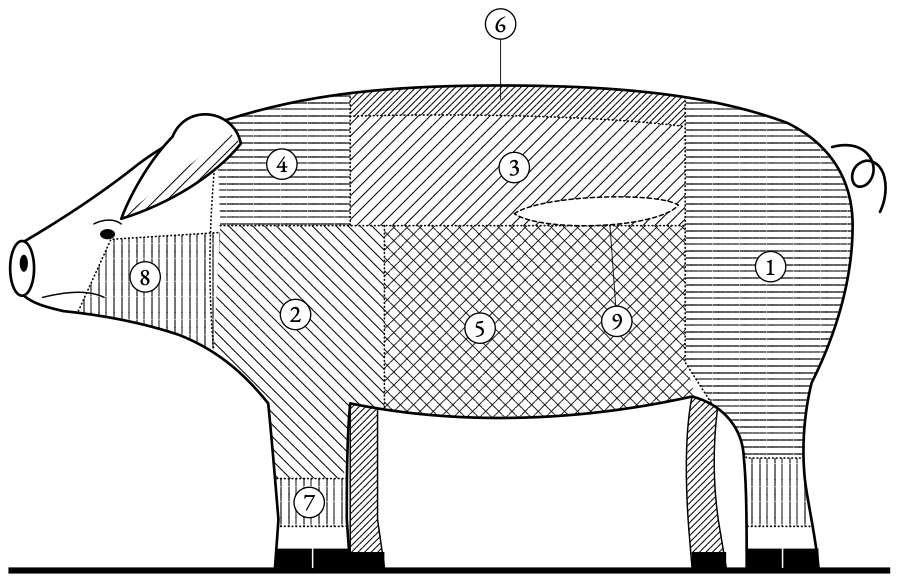
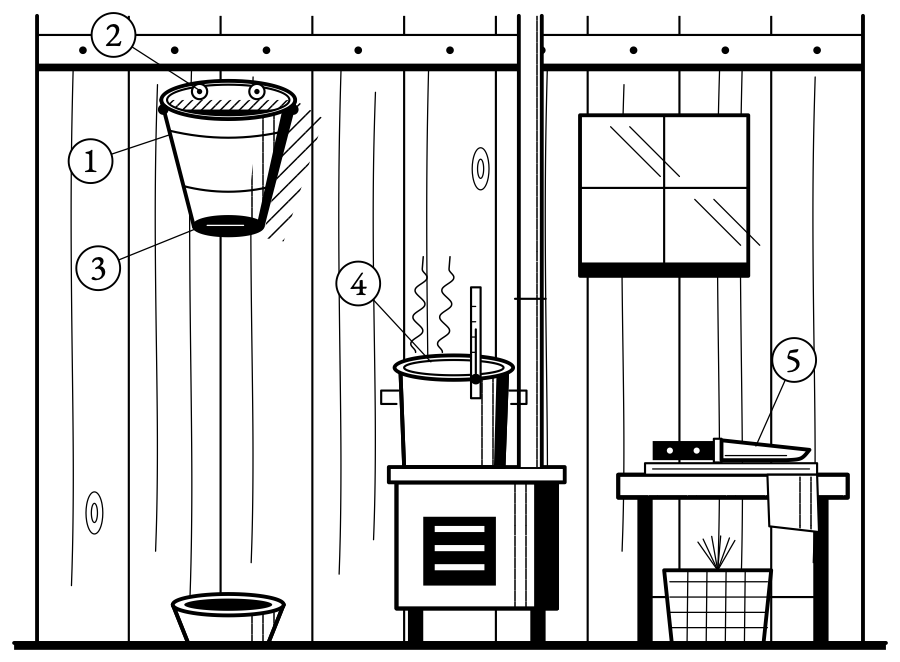
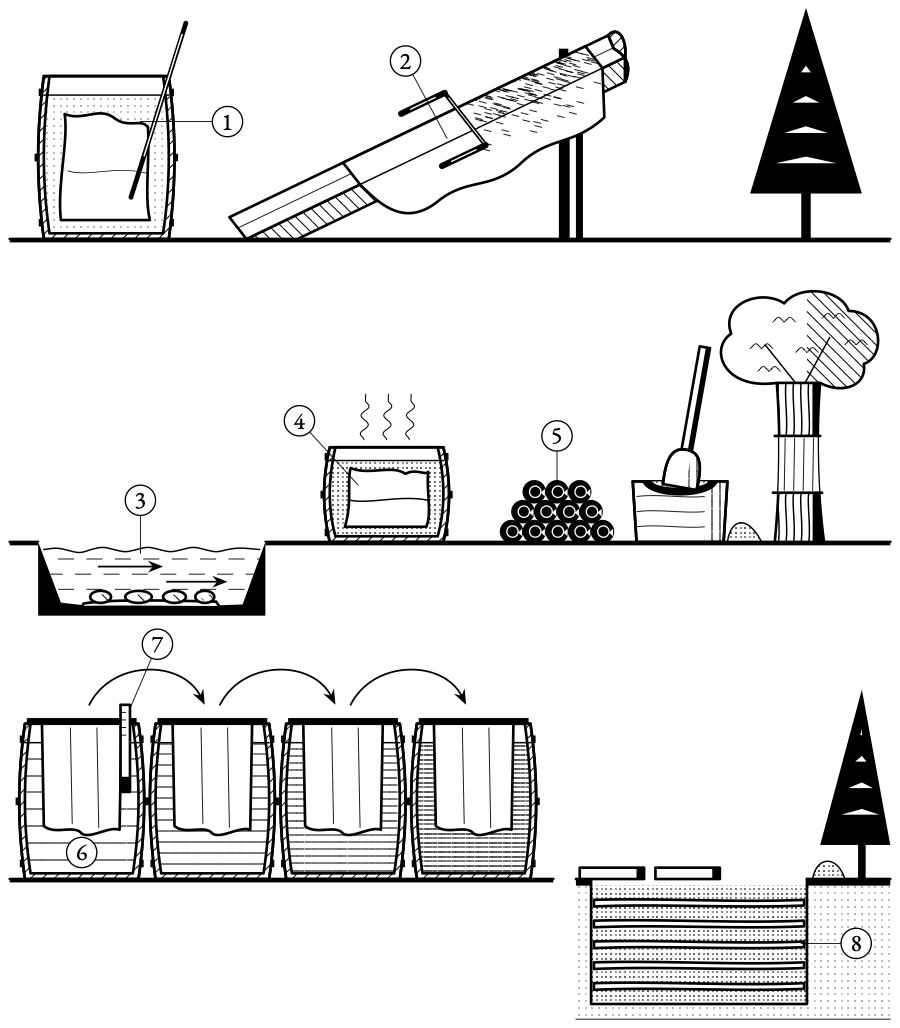
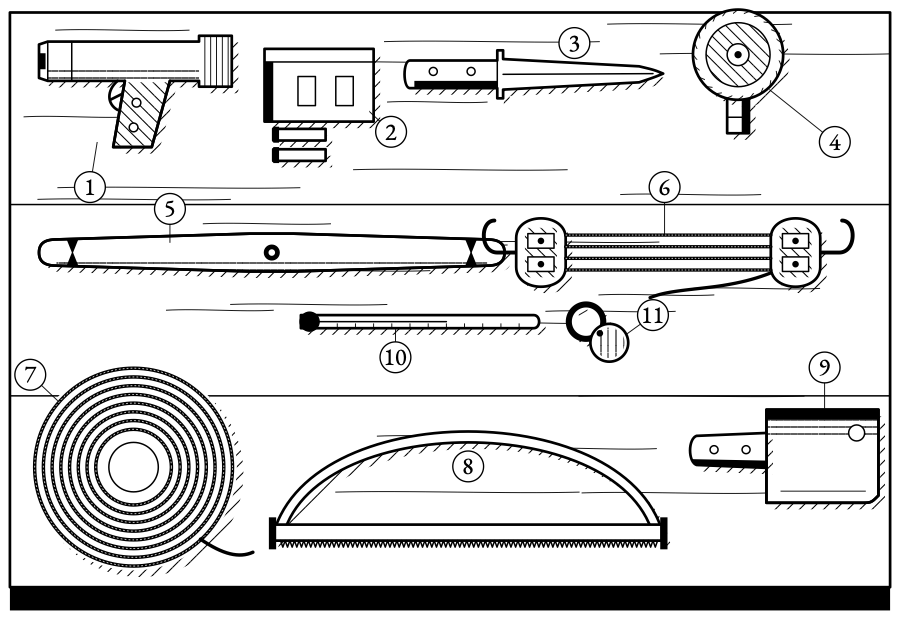
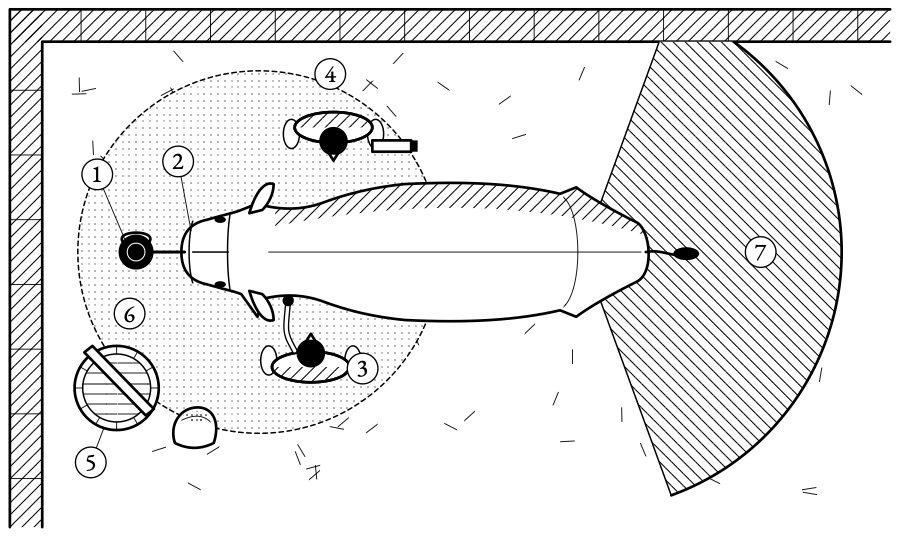
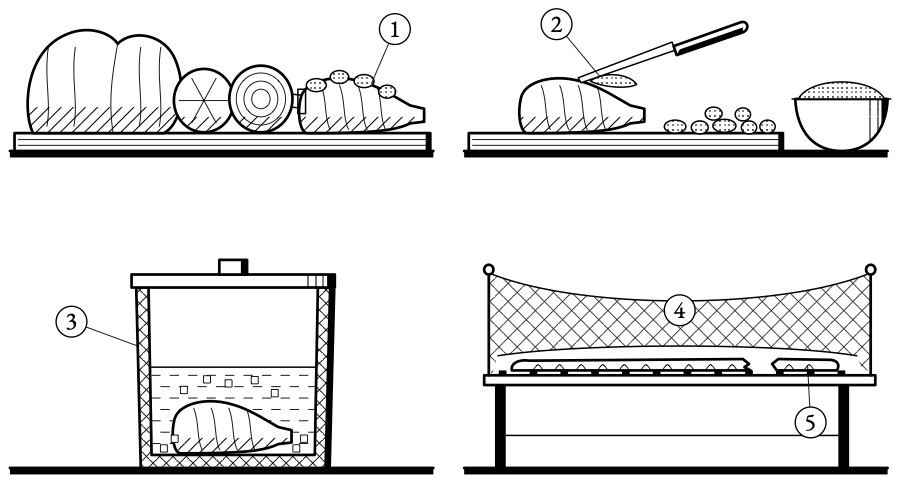
Plate 09-01 The first hard frost of November. The pig has been fattened on peelings and whey since the spring, and the yard has no abattoir behind it.Plate 09-02 Finding the point. Lines from the outer corner of each eye to the base of the opposite horn cross on the forehead, and the point is one to two centimetres above that crossing.Plate 09-03 The yard's hoist. A gambrel a metre long on a block and tackle of four falls, hung from a tripod of larch poles that will carry a tonne. Three people on the rope will lift a cow, two will not.Plate 09-04 The cow's cuts as a Berlin village named them. Everything in front of the twelfth rib wants long cooking, and nearly everything that can be eaten rare lies behind it.Plate 09-05 The scalding place. Two hundred litres of water at sixty-two degrees, a long wooden trough, a chain to turn the pig and a bell scraper worked hard with the grain.Plate 09-06 The pig's eight parts, each with one destination. Ham to the salt, belly to the smoke, back fat to the crock, and the fillet eaten that night.Plate 09-07 The cone. A bucket with its bottom cut out, nailed to the shed wall at chest height, holds the bird still so that the work is done once and done well.Plate 09-08 The tanner's yard in outline. Lime loosens the hair, the beam and drawknife clean the hide, and the bark liquor goes from weakest to strongest over months.Plate 09-09 The list for this chapter. A bolt gun and its cartridges, a sticking knife, a bell scraper, a gambrel, a block and tackle, rope, a bow saw, a cleaver, a thermometer and a hand lens.Plate 09-10 Places at the post. One person at her shoulder, the shooter out of her sight, the tub ready, and nobody at the hind end, ever.
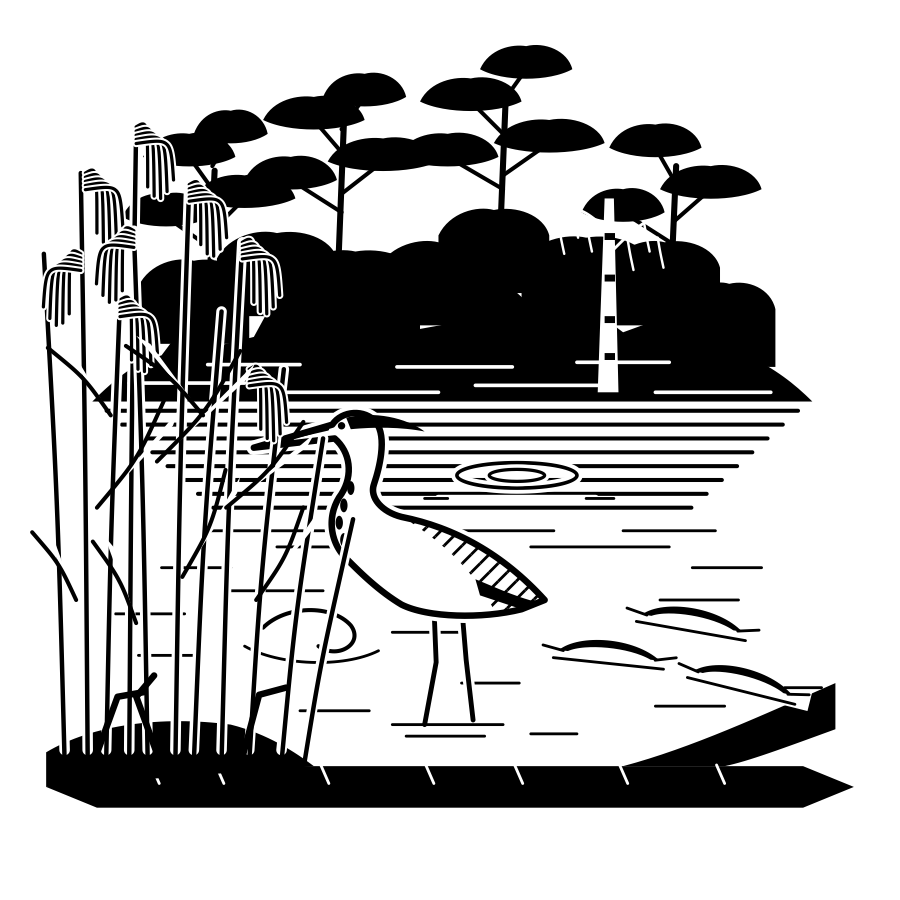
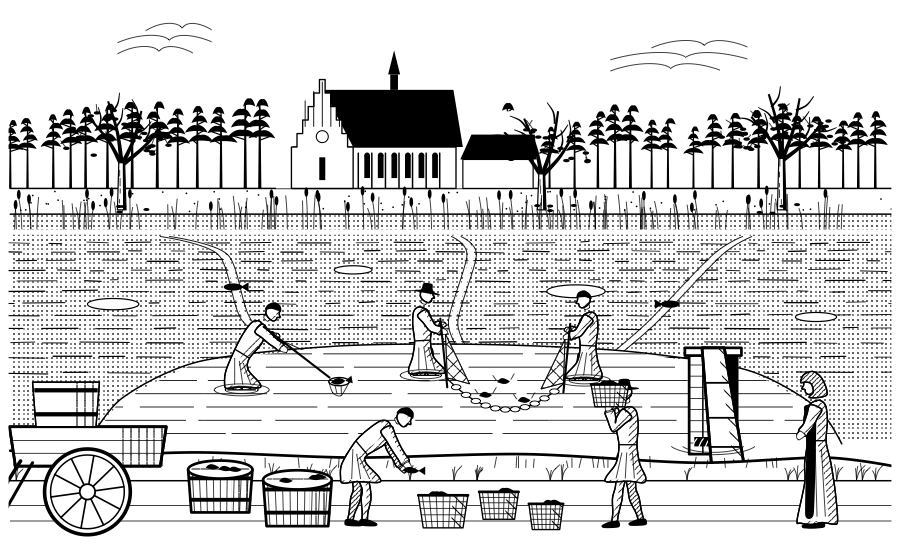
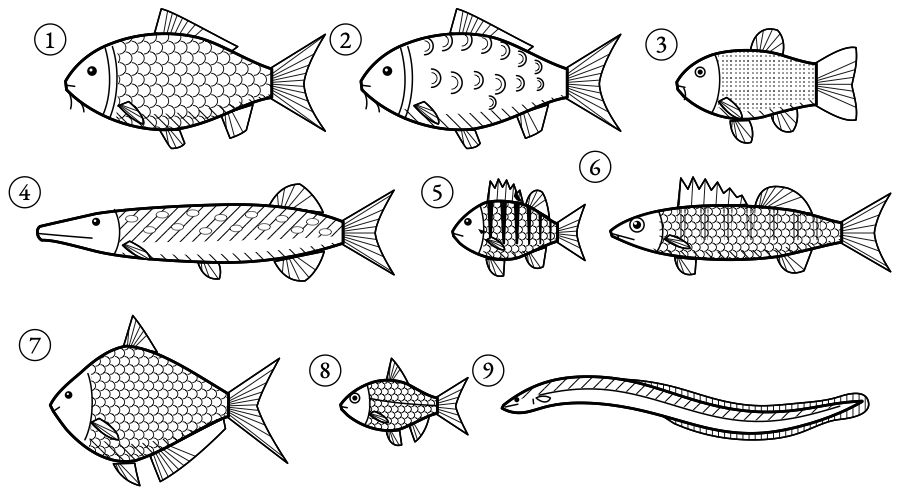
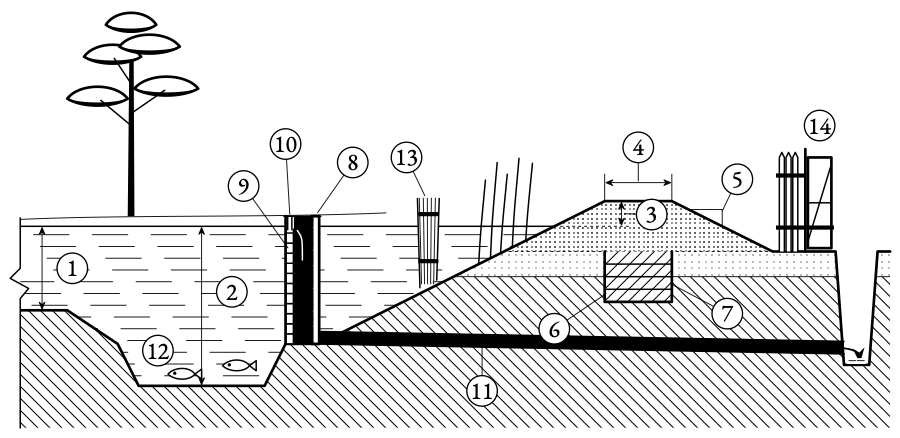
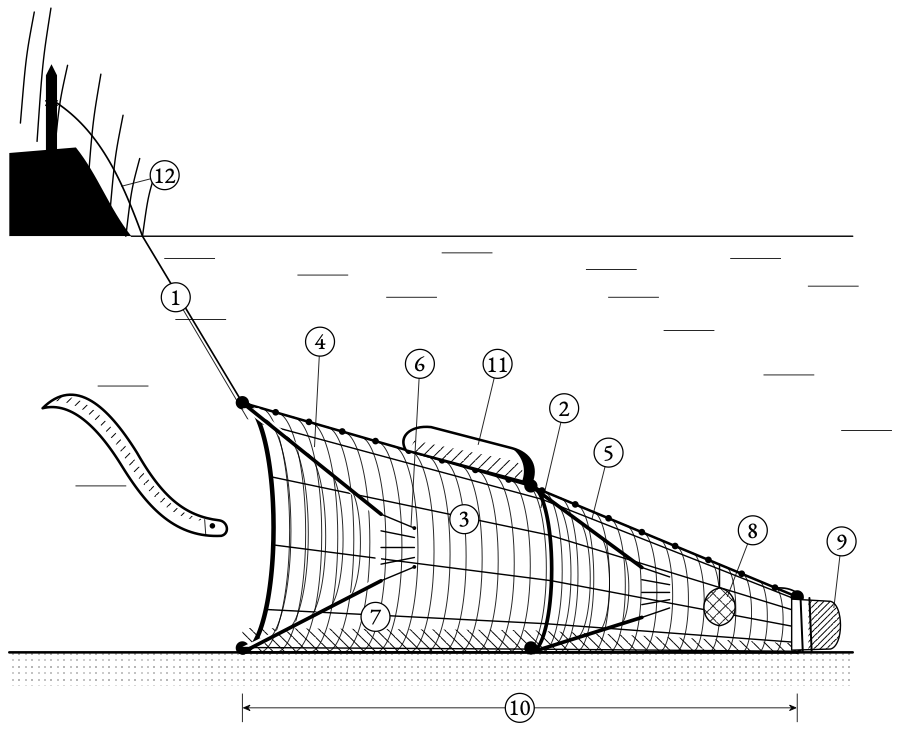
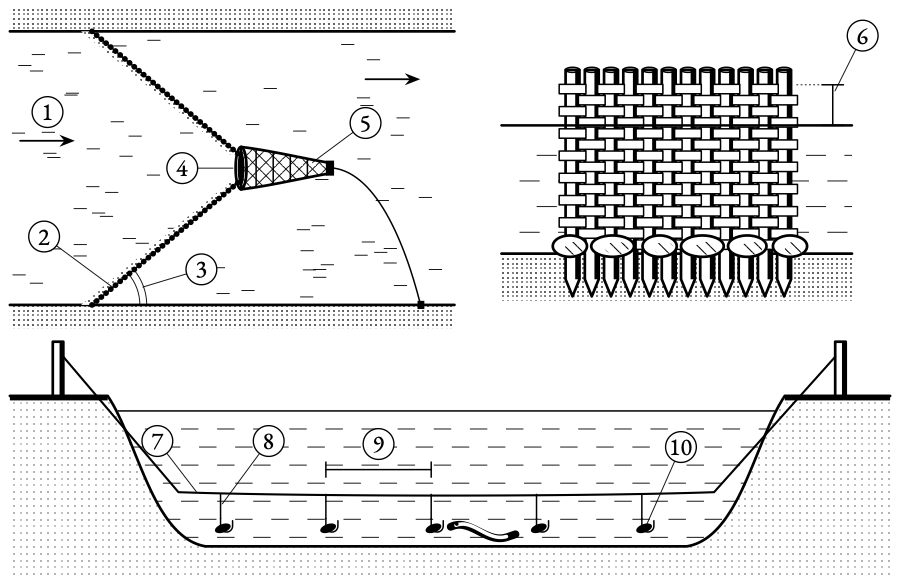
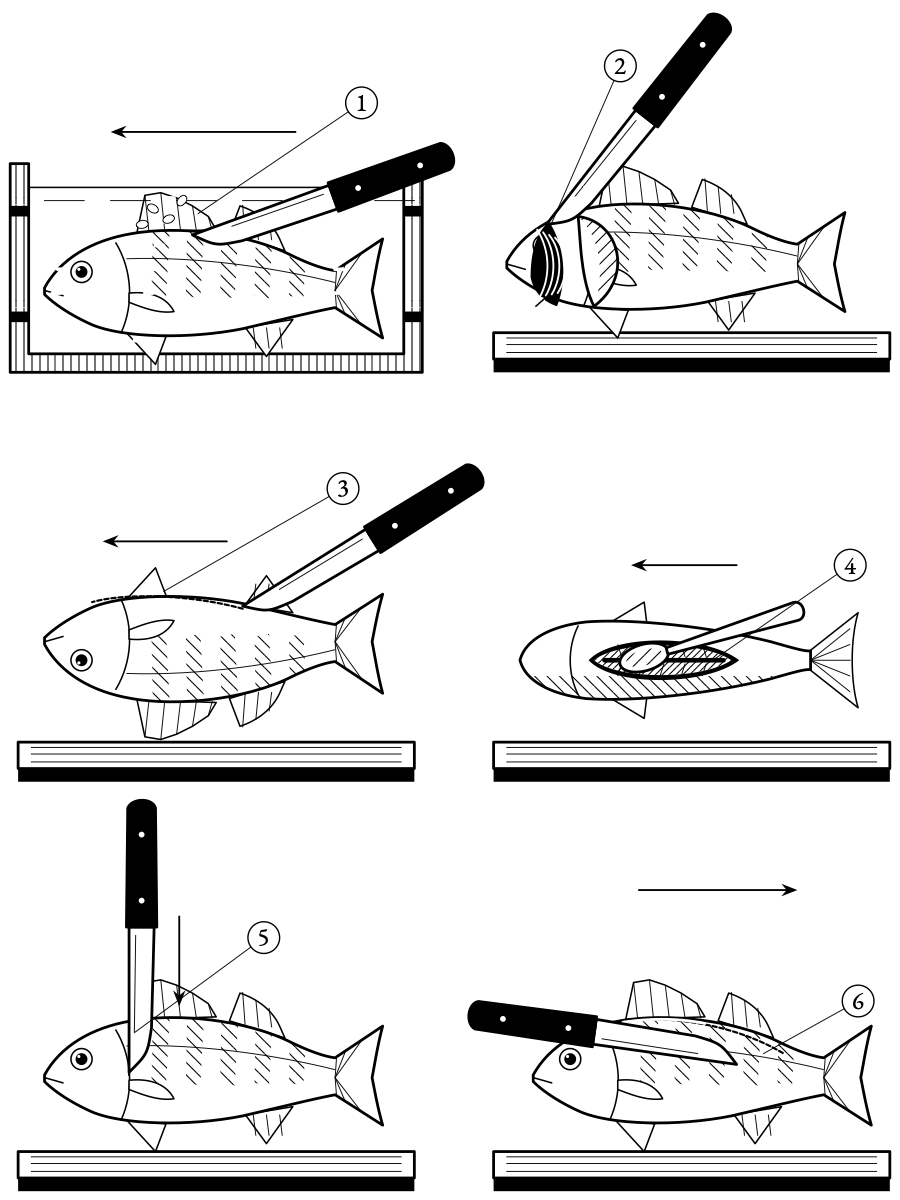
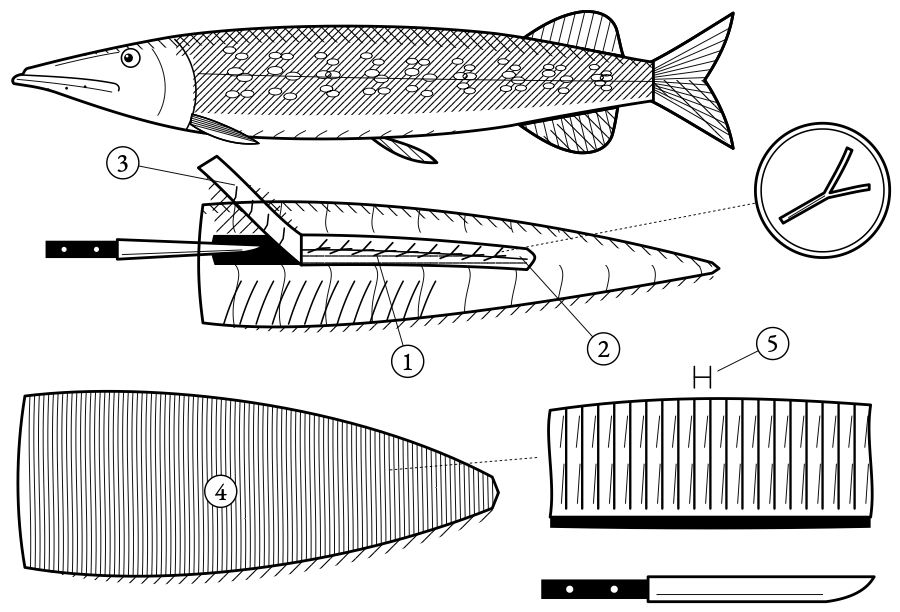
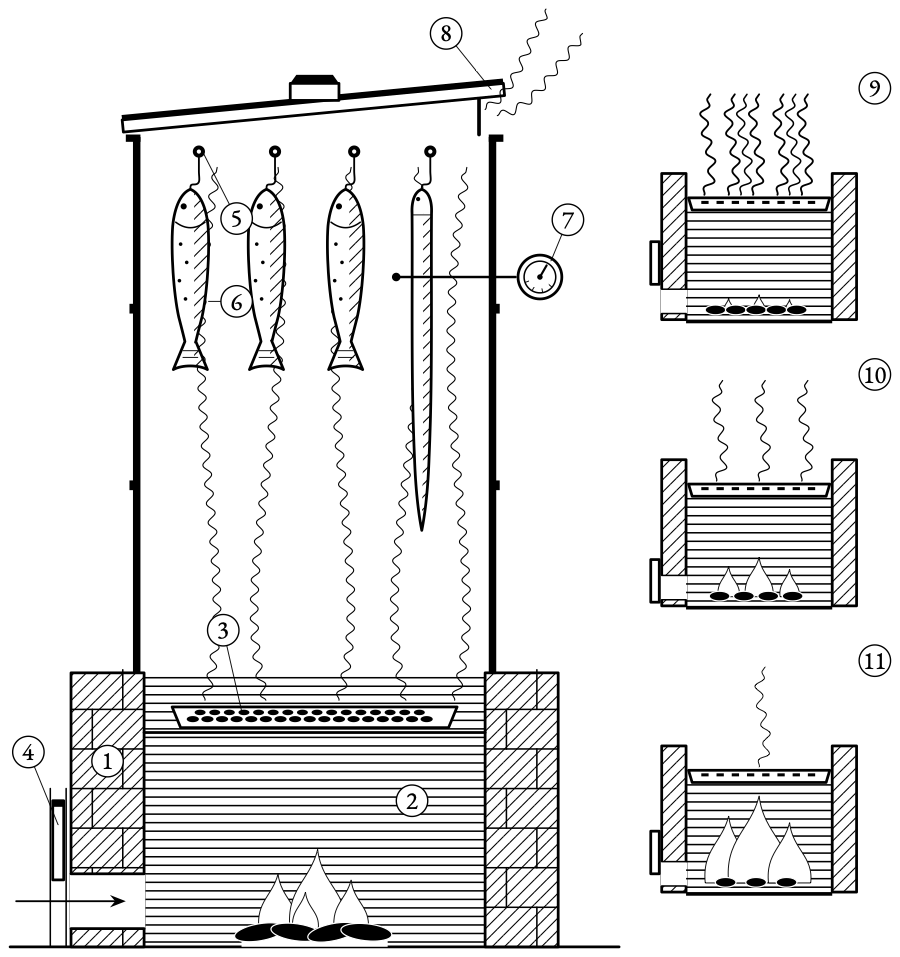
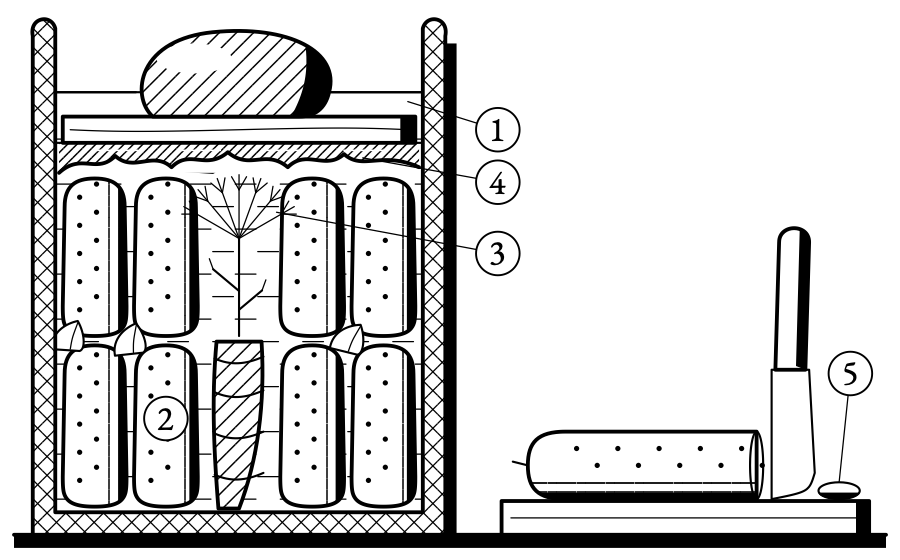
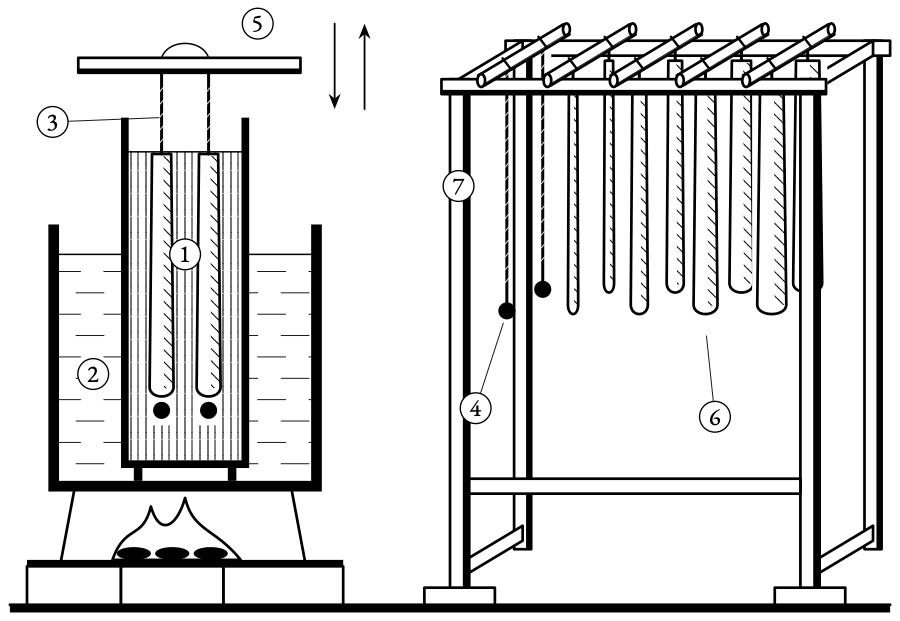
Plate 10-01 The Havel at Tegel before dawn in late October. The water tells you what is in it if you stand still long enough.Plate 10-02 An October draining in the manner Dubravius described. The water is let out through the wooden outlet and the fish are gathered by hand and net in the last pool.Plate 10-03 The fish of the chapter. Carp, tench and one pike for the pond, and the perch, zander, bream, roach and eel of the wild water.Plate 10-04 The household pond in section. A metre of water over most of the bed, two at the outlet end where the monk stands, and a clay core under the bank to stop the water finding its way out.Plate 10-05 The Havel eel trap, cut open. The eel pushes past the sharp tines of the first funnel and then the second, and the tines close behind it.Plate 10-06 Two tools the household knows and does not use. The V-weir on a ditch leads every fish to the gap, and the night line hangs its hooks in the dark.Plate 10-07 A round fish from whole to fillet. Scale it under water, take the gills, open the belly shallow, clean the kidney line, then run the blade along the bone.Plate 10-08 Two answers to the bones of fresh water. Cut the row of forked bones out of a pike fillet, and score a carp fillet so finely that no bone is long enough to lodge.Plate 10-09 The barrel smoker in section. A small fire and a tray of alder chips at the bottom, the fish hung from rods at the top, and a thermometer at the height of the fish.
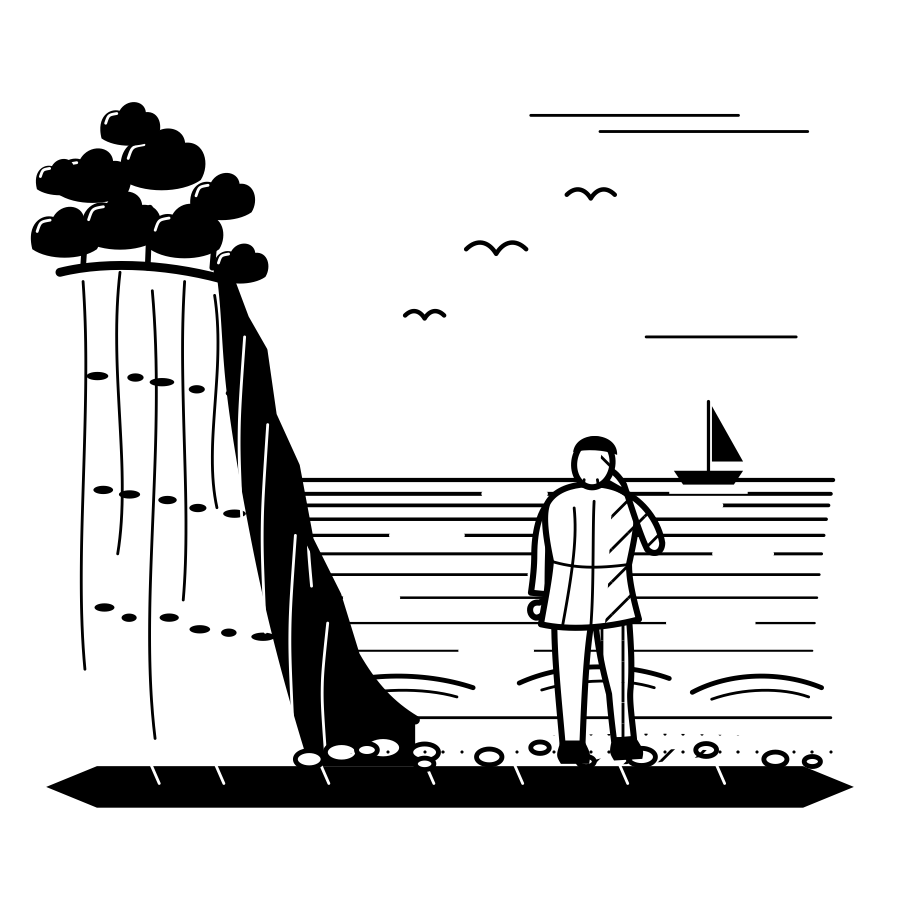
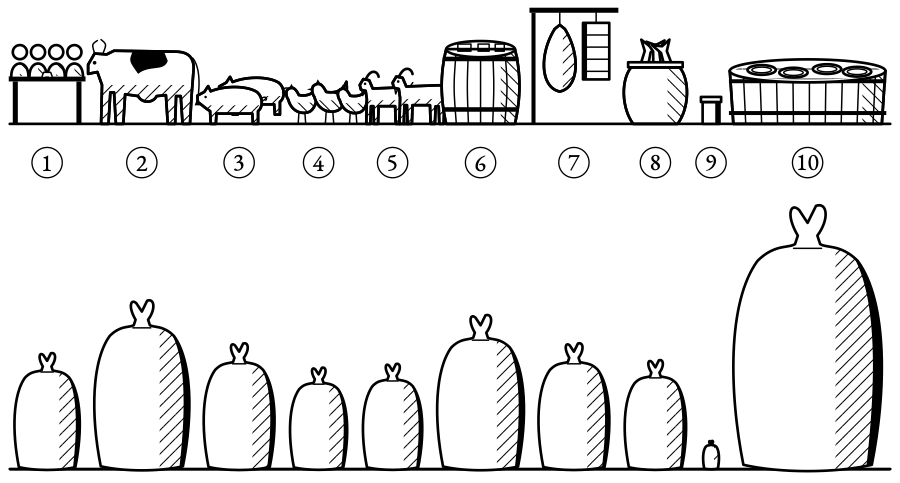
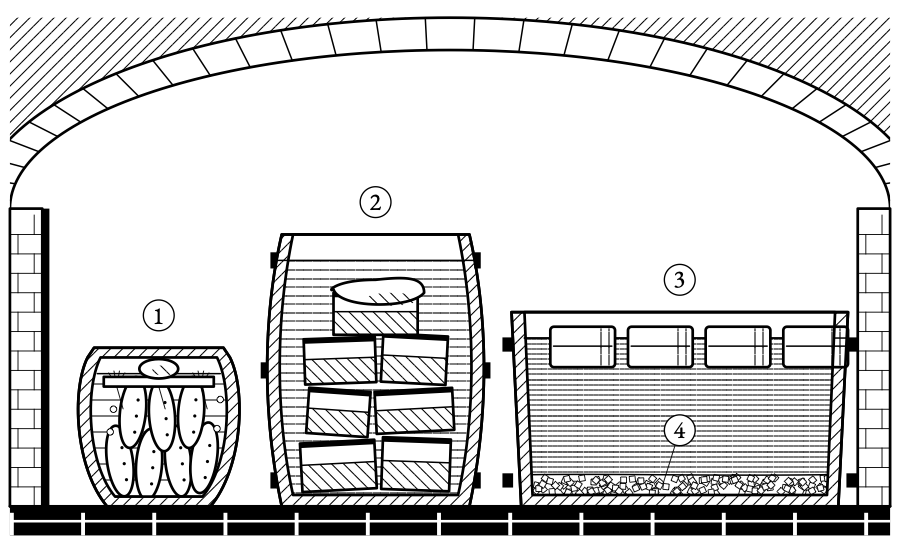
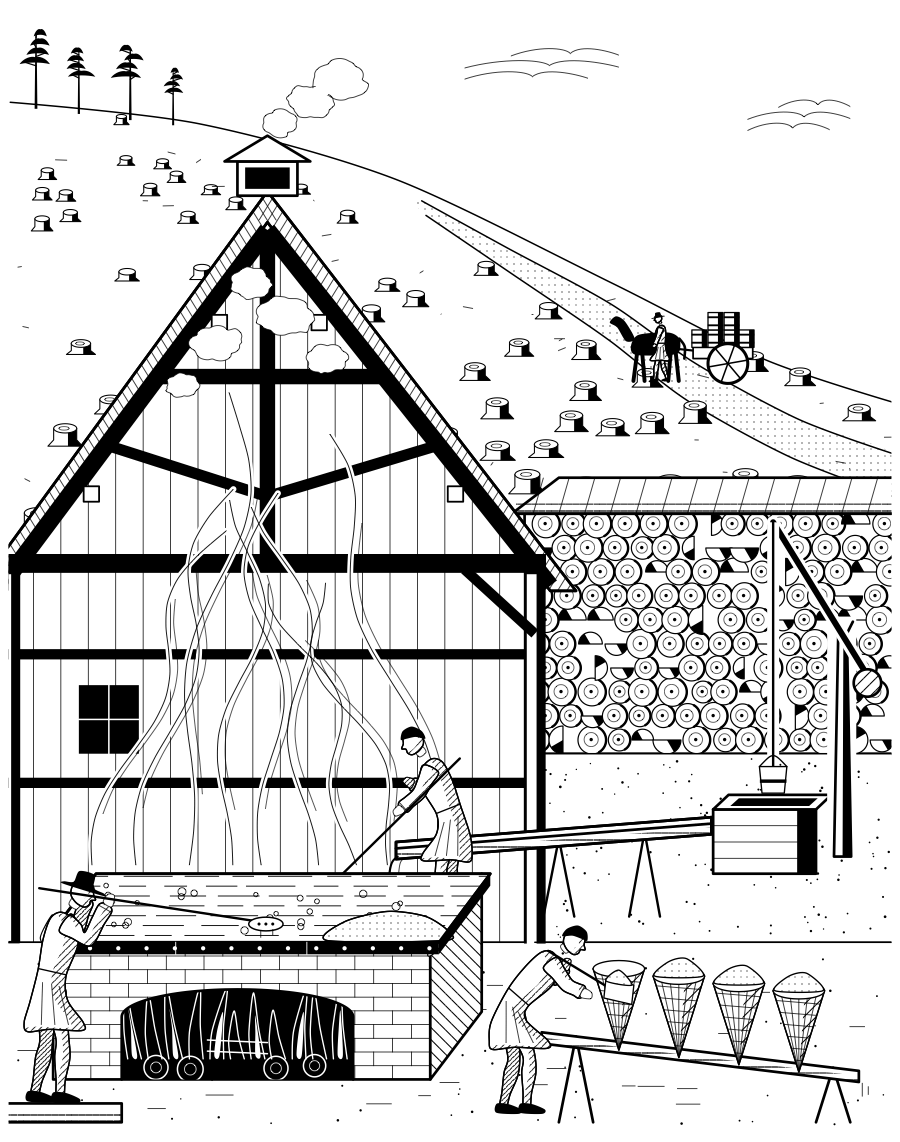
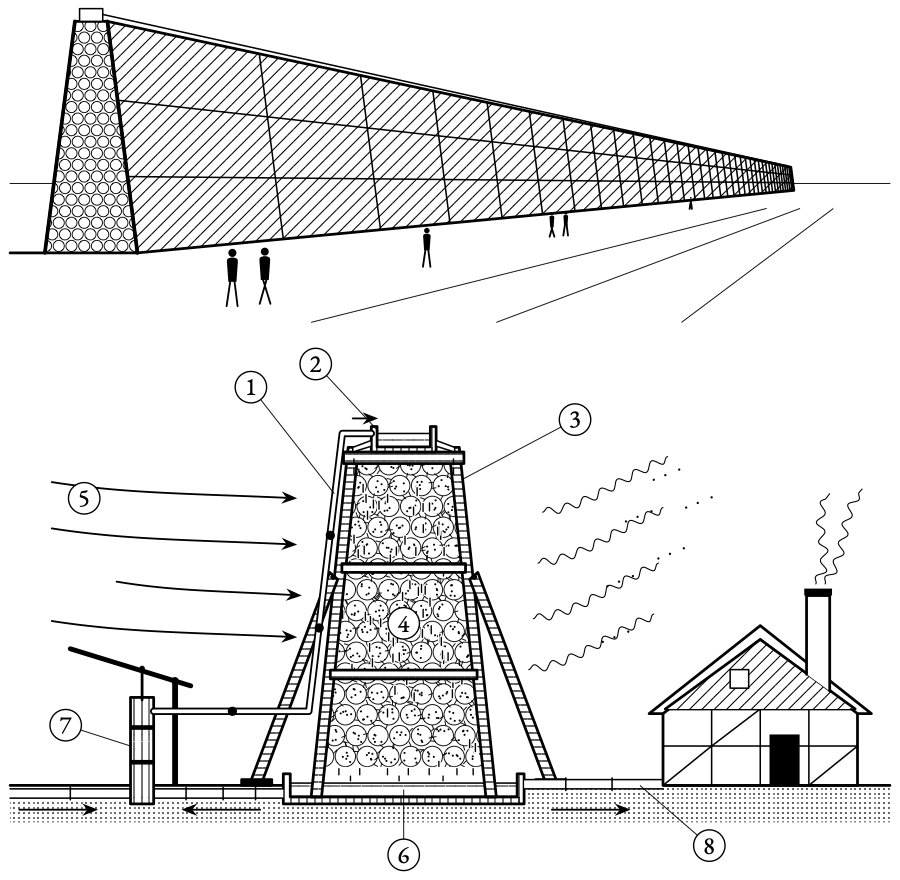
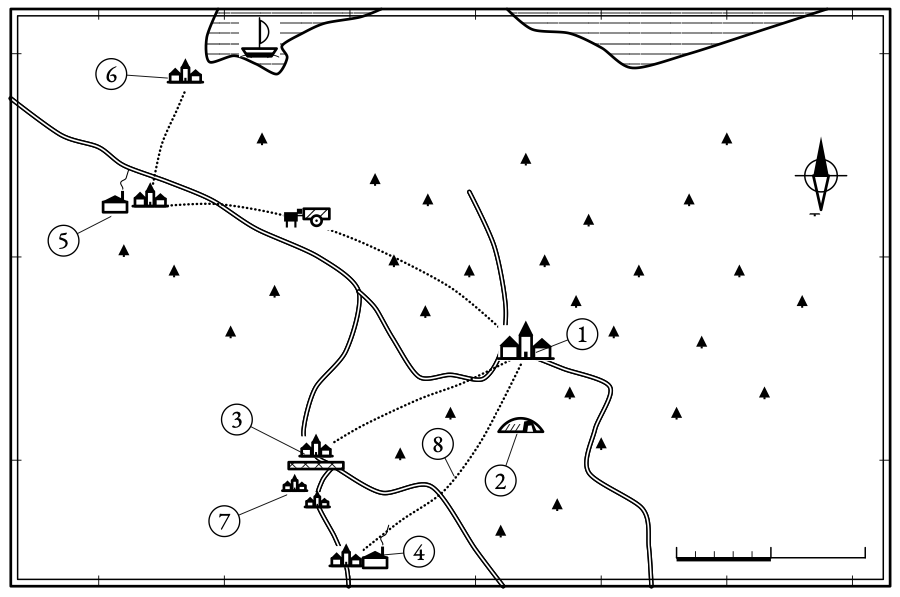
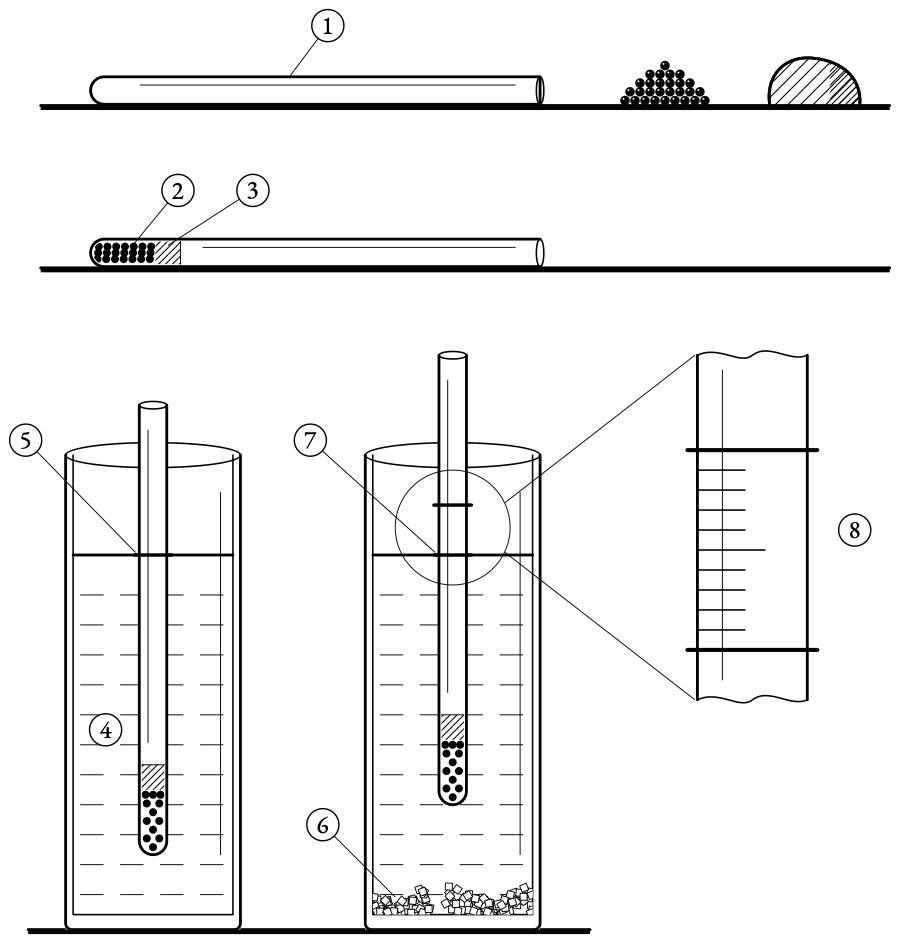
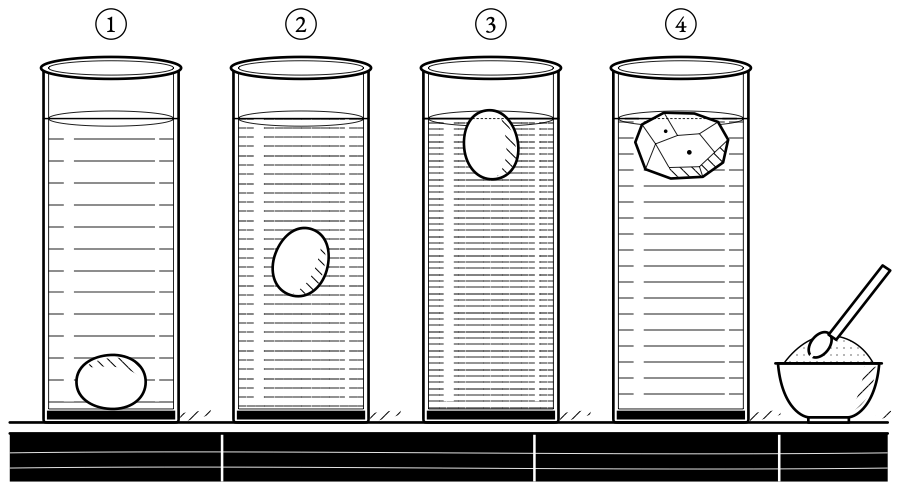
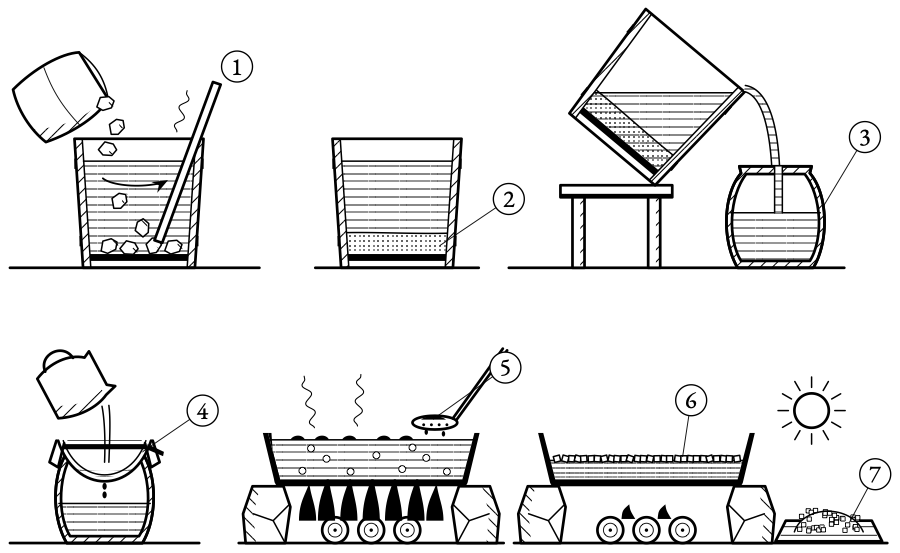
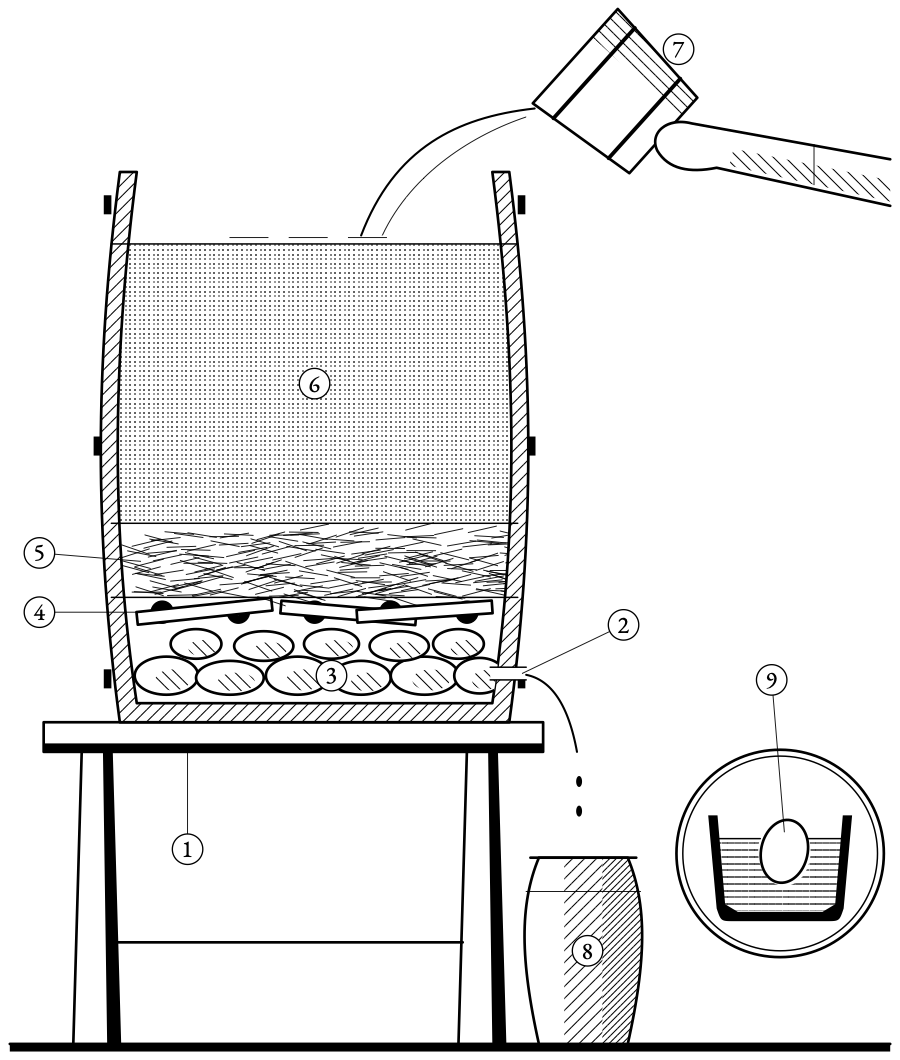
Plate 11-01 The Baltic off Rügen, barely salt at all. Eight grams to the litre, less than your tears.Plate 11-02 Where 128 kilograms of salt go in a year. The people are the smallest customer and the cheese vat the largest.Plate 11-03 The three brines of a kitchen. A light one to let things sour, a strong one to hold things still, and a saturated one, with grains left on the bottom, for the cheese.Plate 11-04 A salt house of the old kind. Brine is drawn from the spring and boiled in shallow pans over wood fires, and the salt is raked into baskets to drain.Plate 11-05 A graduation wall in section. Weak brine trickles down through the blackthorn, the wind takes the water, and the brine that reaches the bottom is several times stronger than the brine that went in.Plate 11-06 Berlin and the salt that lies around it. The dome at Sperenberg is too deep to reach, and the springs at Schönebeck, Halle and Lüneburg are a cart's journey away.Plate 11-07 Making a salinometer. Weight a glass tube until it floats upright, mark where fresh water reaches, then mark where saturated brine reaches, and divide the space between into ten.Plate 11-08 The check without glass. A fresh egg sinks, hangs or floats as the brine grows stronger, and a peeled potato floats when a pickling brine is strong enough.Plate 11-09 Road salt made fit for the kitchen. Dissolve, settle, pour off, strain, boil and skim, and stop when the crust forms.
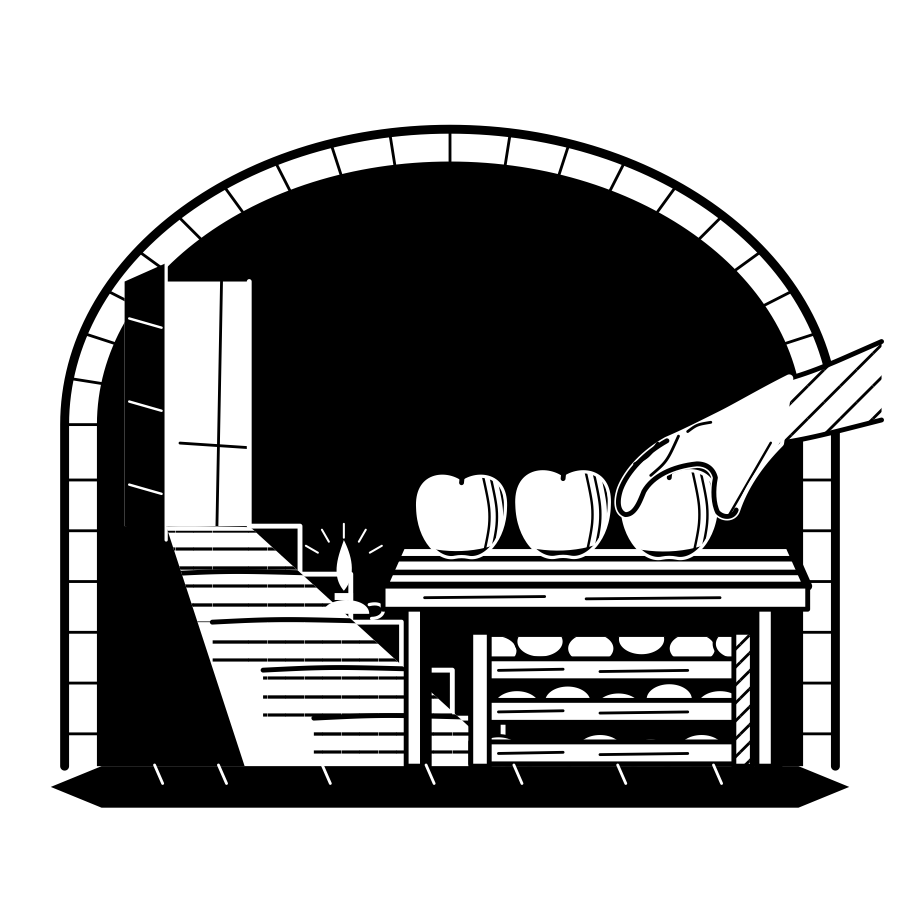
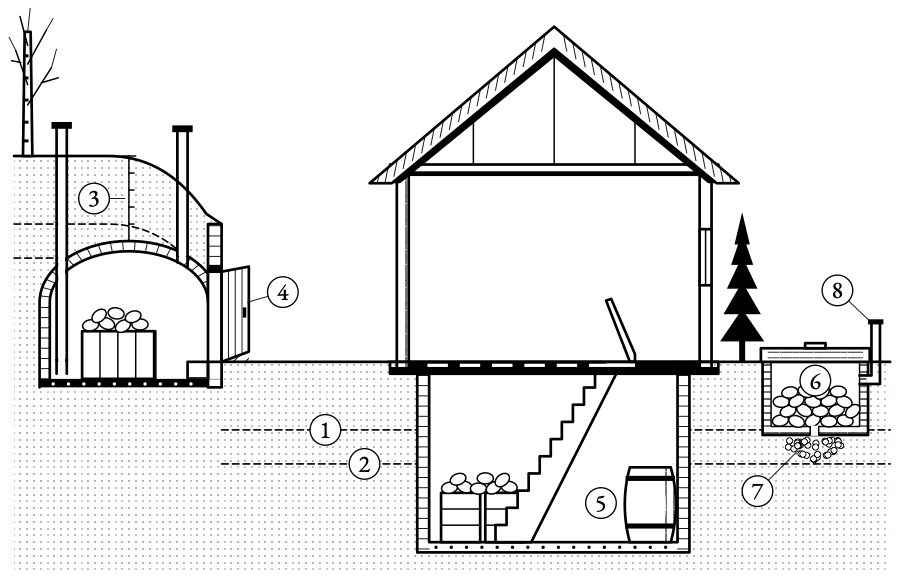
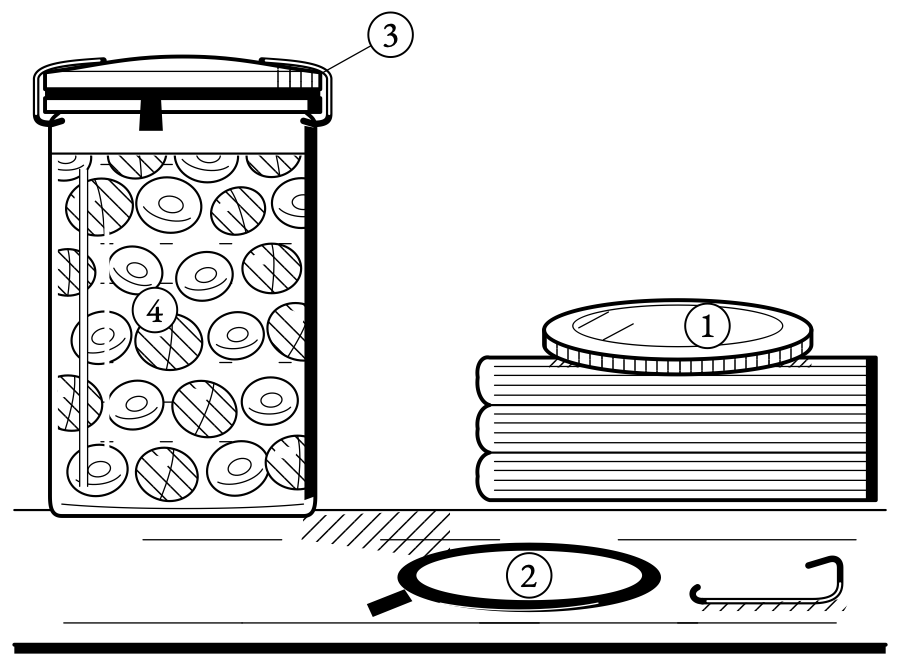
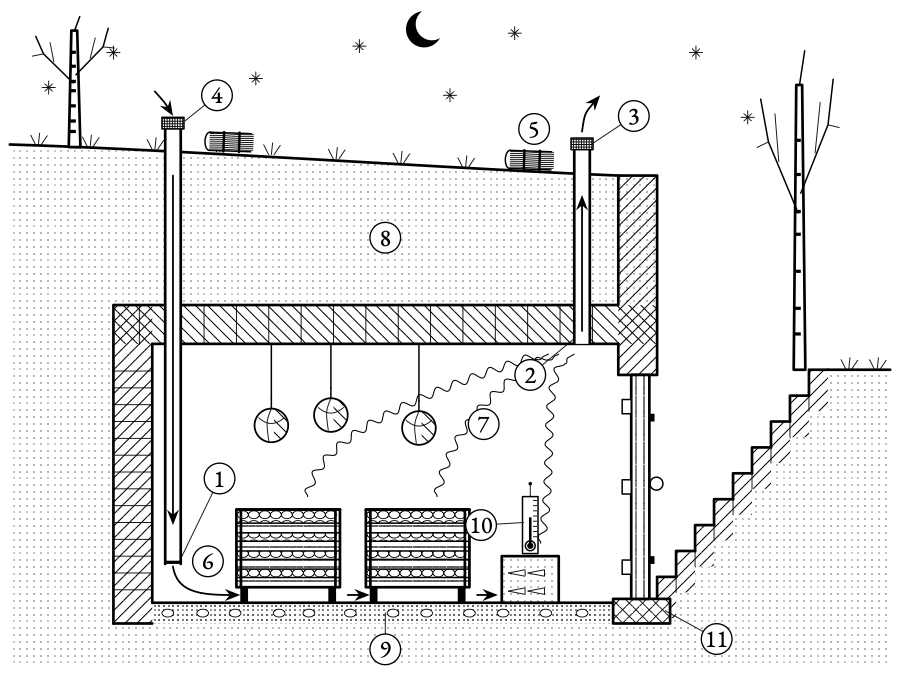
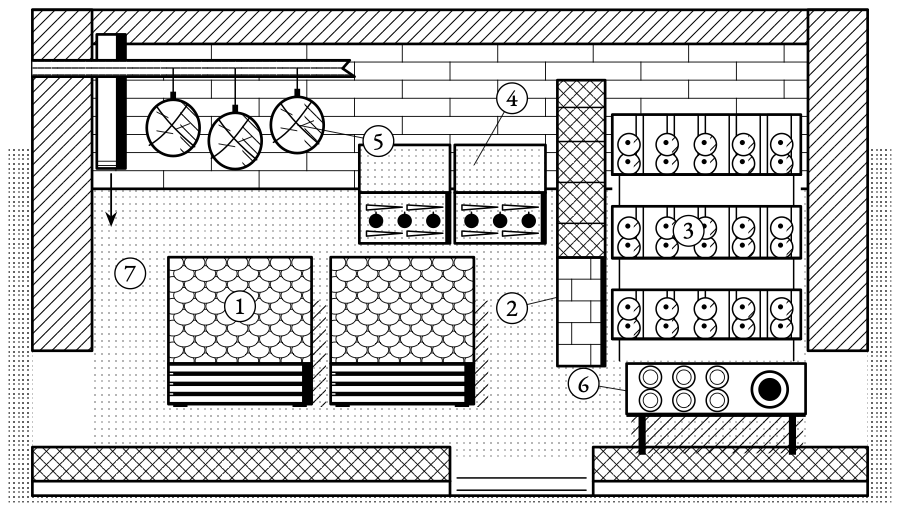
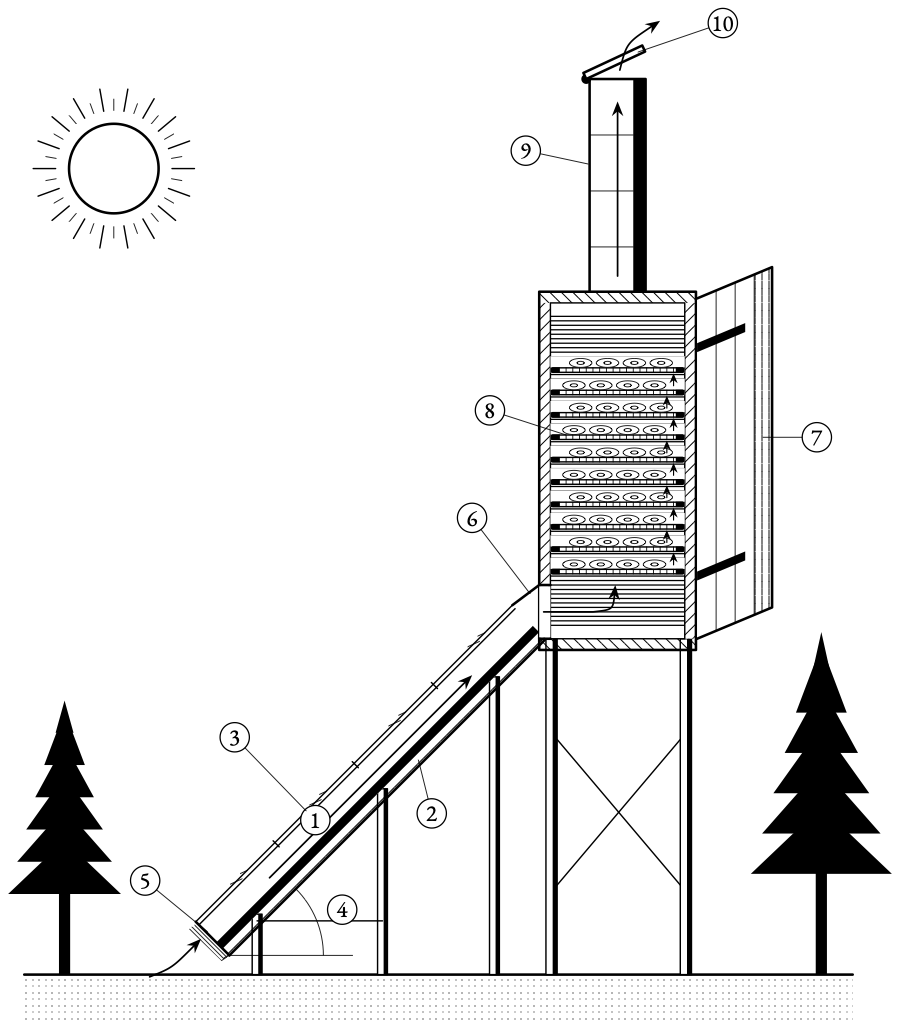
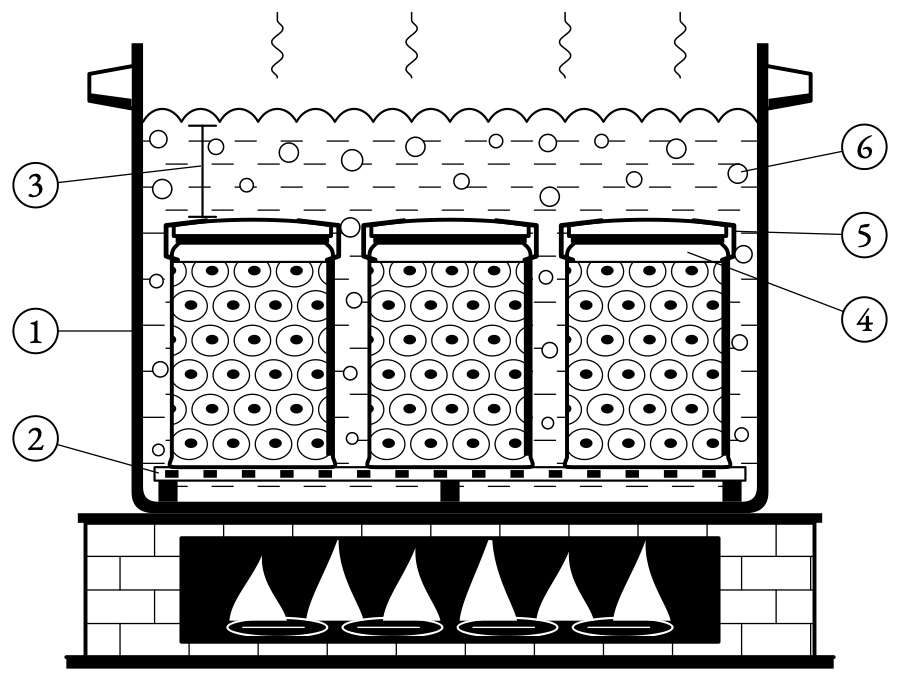
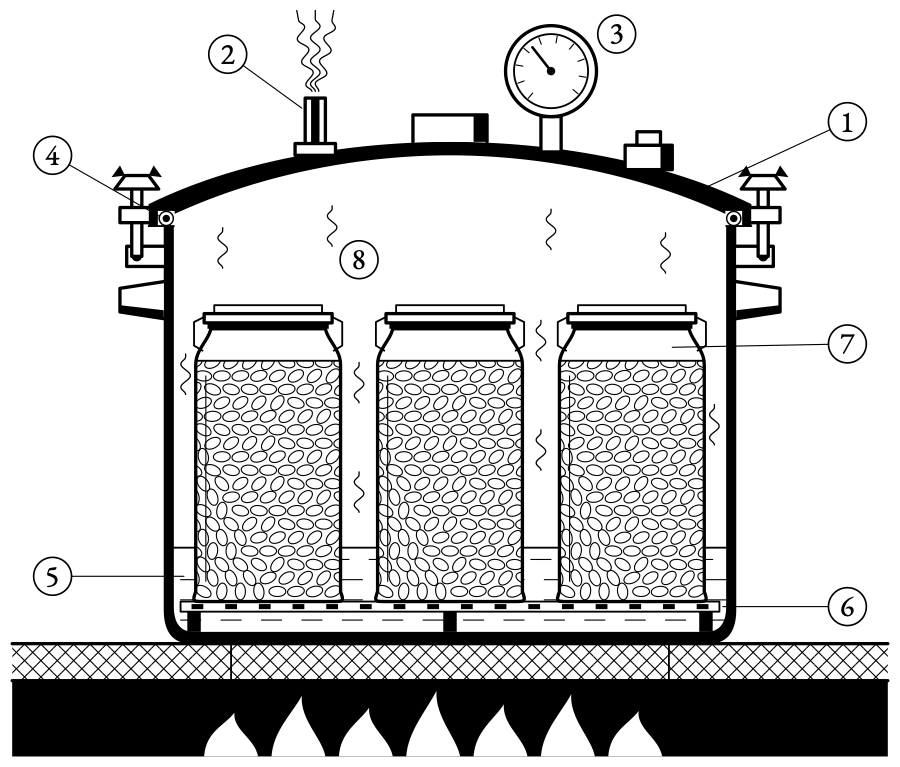
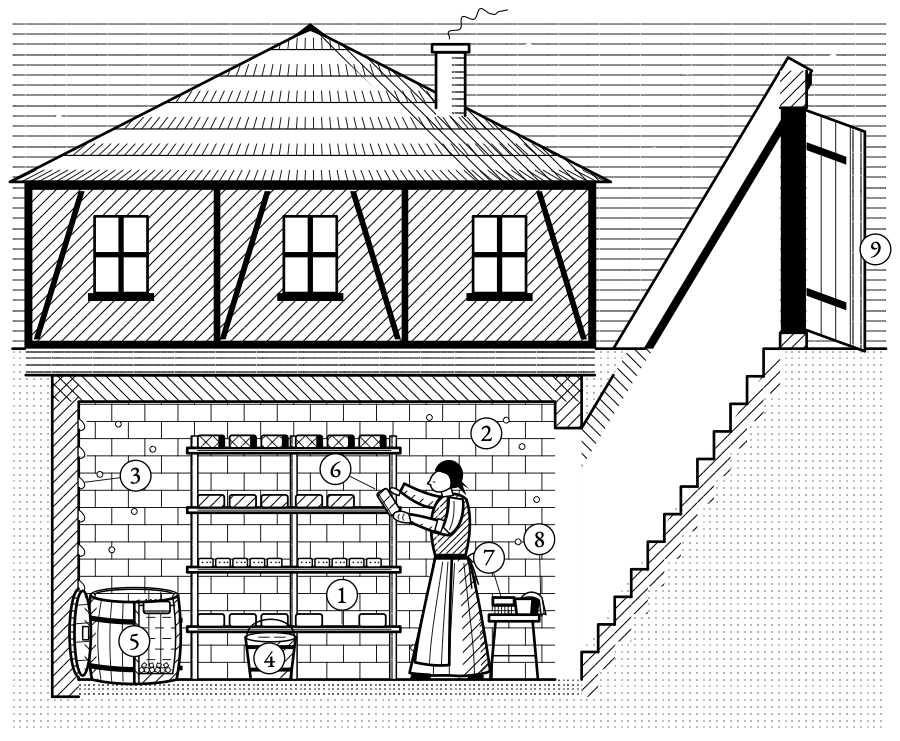
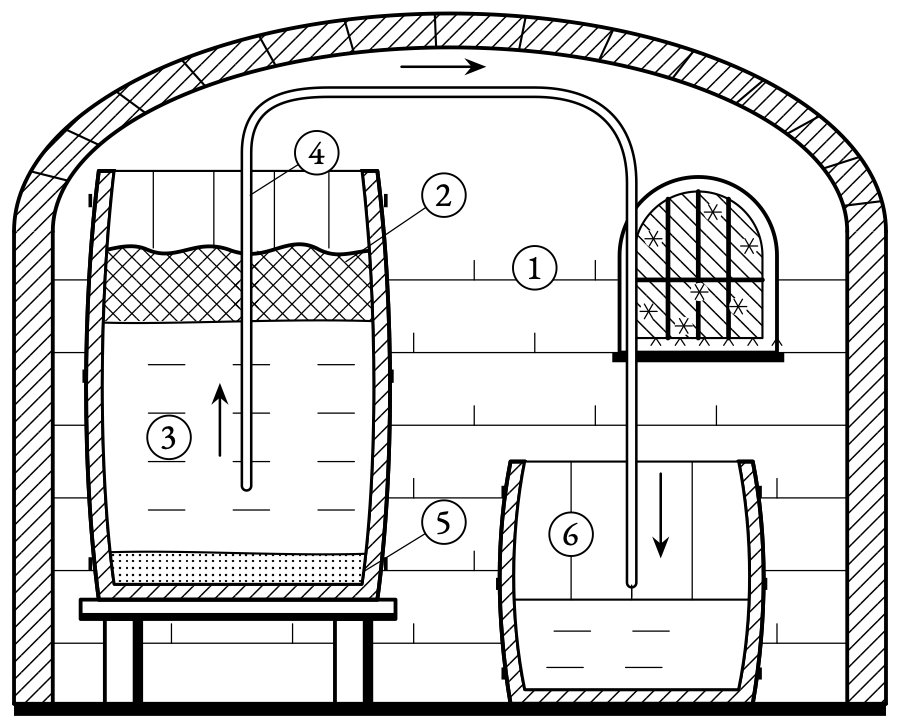
Plate 12-01 An apple laid on a cellar shelf in October. It will breathe slowly there until spring.Plate 12-02 Three cellars in the sand. A cellar dug into a bank, a cellar under the house, and a dead freezer sunk to its lid for the first winter.Plate 12-03 The Weck jar. The glass lasts a century and the steel clip nearly as long, but the rubber ring lasts a decade.Plate 12-04 The cellar breathes through two pipes. Cold night air falls in low at the far end, and the warm breath of the harvest rises out high by the door.Plate 12-05 Every crop has its own bedroom. The apples lie behind a stone wall, well away from the potatoes, and the cabbages hang by their roots in the coldest corner.Plate 12-06 A potato clamp in section. Straw keeps the earth off the crop, the earth keeps out the frost, and the twist of straw on the ridge lets the warmth out.Plate 12-07 The sun dryer. The sun heats the air in the black box, and the air rises through the trays in the dark and out of the chimney.Plate 12-08 The water bath, for fruit, jam and pickles only. The jars stand on a rack with a hand's width of boiling water over their lids.Plate 12-09 The pressure canner in section. The locked lid and its rubber ring trap the steam until the water boils at 116 degrees, the heat that kills the spore.
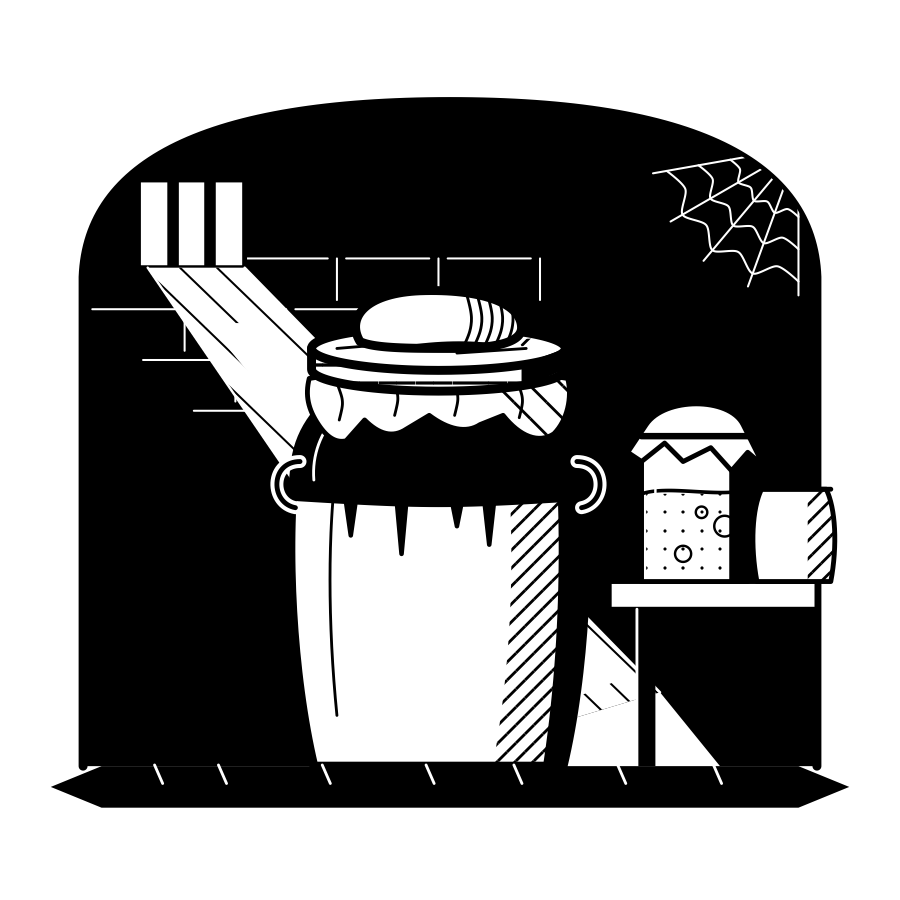
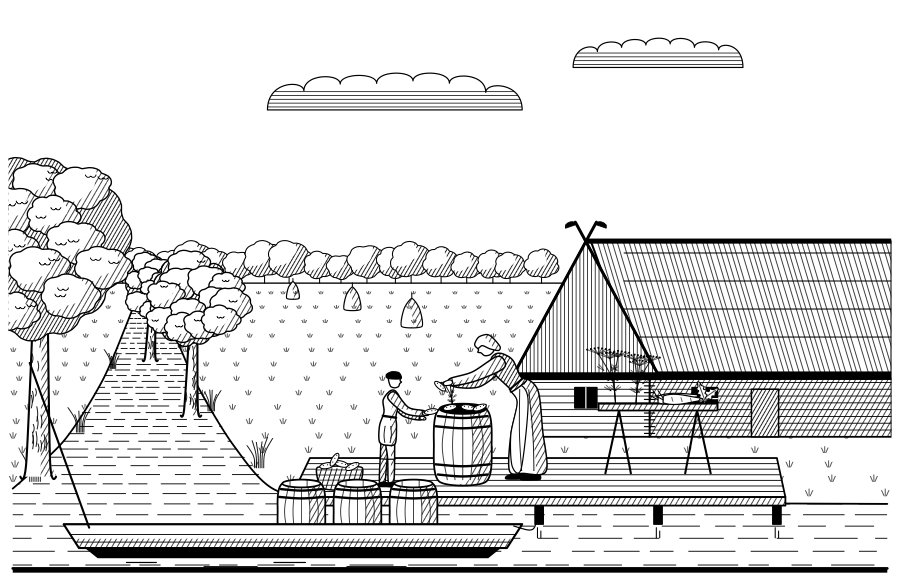
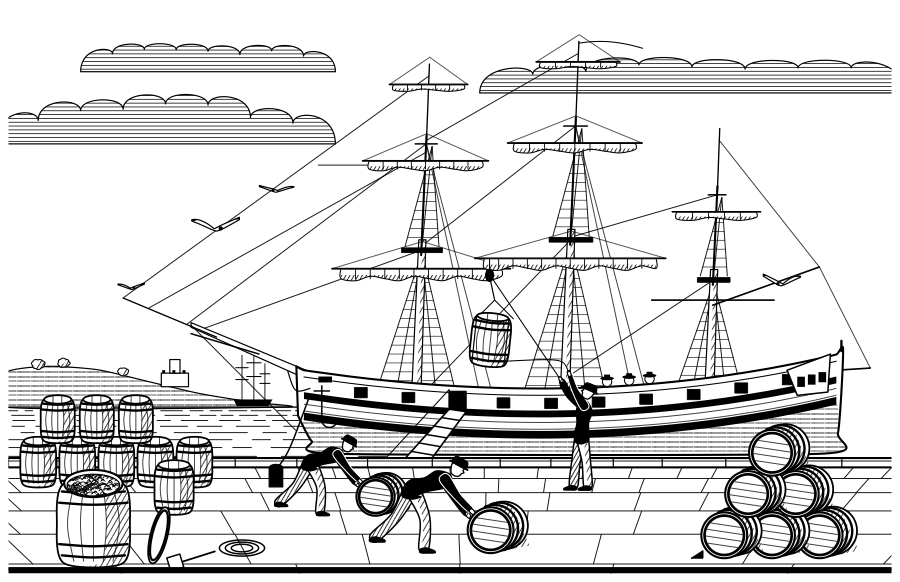
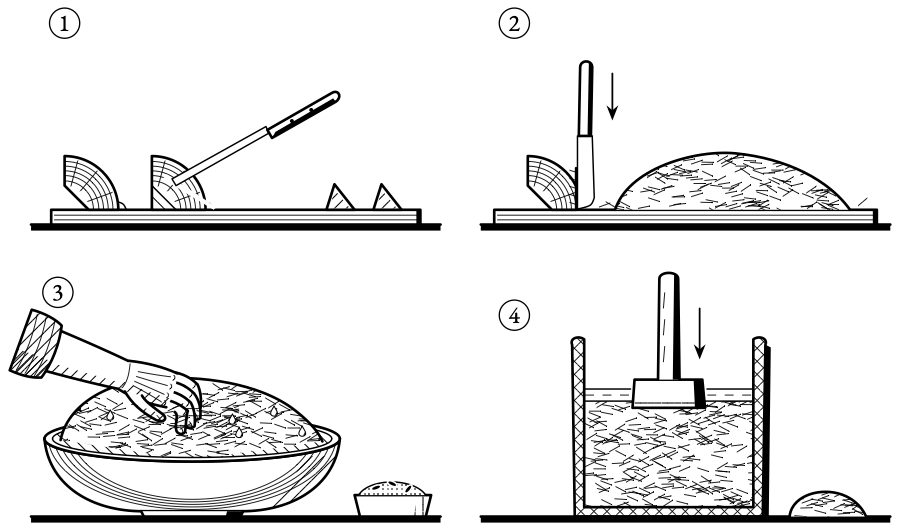
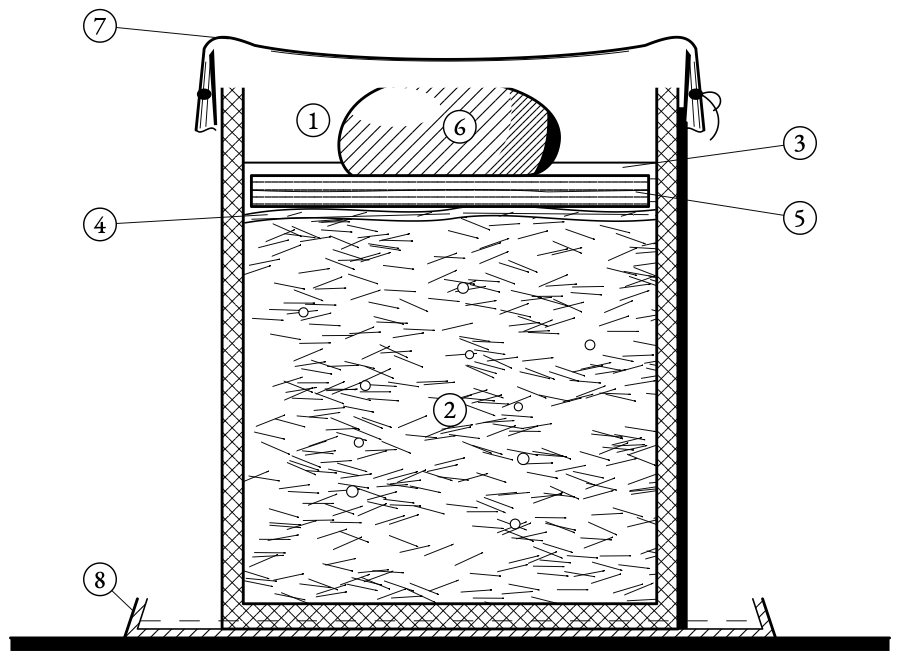
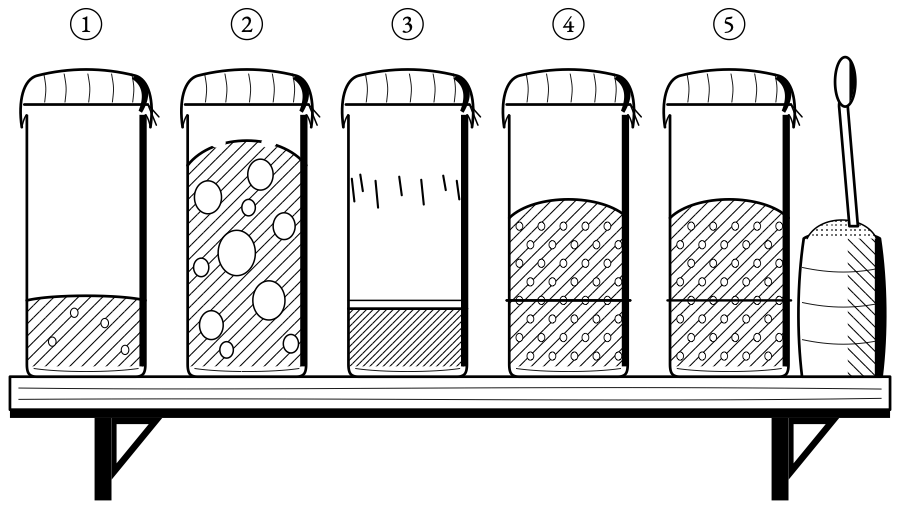
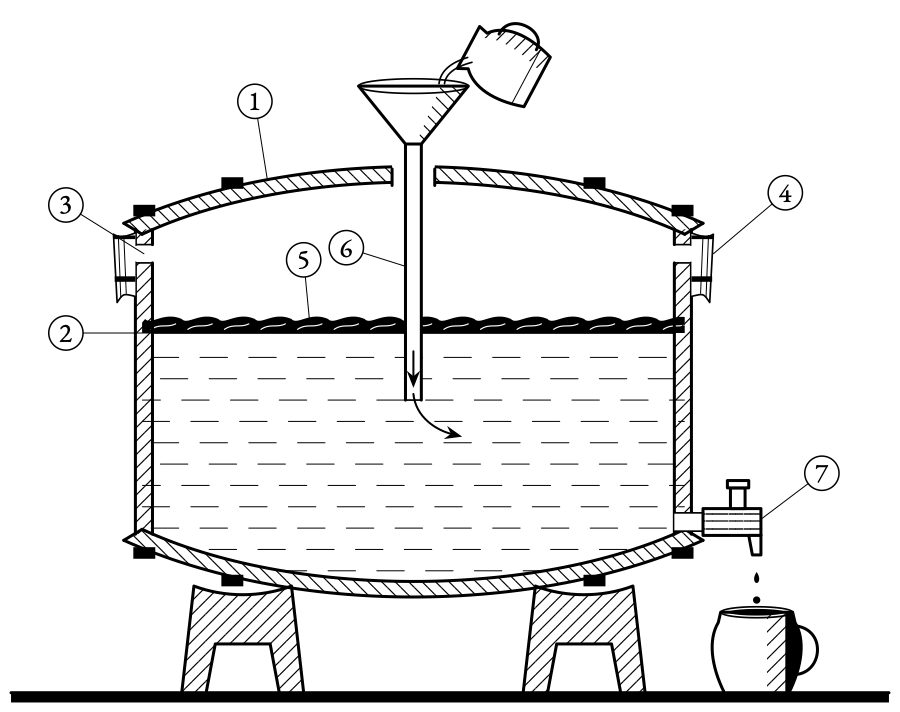
Plate 13-01 A crock in the cellar with a stone on its lid. Nobody has looked inside for three weeks, and that is the whole method.Plate 13-02 Pickles in the Spreewald. Cucumbers go into the barrels with salt and dill, as they have since the fourteenth century.Plate 13-03 Sauerkraut going aboard for the Pacific in 1772. In three years at sea not one man was lost to scurvy.Plate 13-04 Sauerkraut in four steps. Quarter and core, shred, knead with the salt until the juice runs, and ram it down into the crock.Plate 13-05 The sauerkraut crock in section. The cabbage lies under its own juice, held down by two leaves, a board and a stone, with only a cloth over the top.Plate 13-06 Whole cucumbers under brine with dill, garlic, horseradish and oak leaves. A sliver cut from the blossom end of each keeps them from going soft.Plate 13-07 A rye starter's first fortnight. The early rise is false and the flat day is normal, and by the second week it rises on time.Plate 13-08 The vinegar cask of Orléans. The mother floats undisturbed on top, new cider goes in underneath through a long funnel, and the vinegar comes out of the tap below.Plate 13-09 Yoghurt kept warm in a box of hay. A crock bedded in hay or a featherbed holds its heat for the four to eight hours the milk needs.
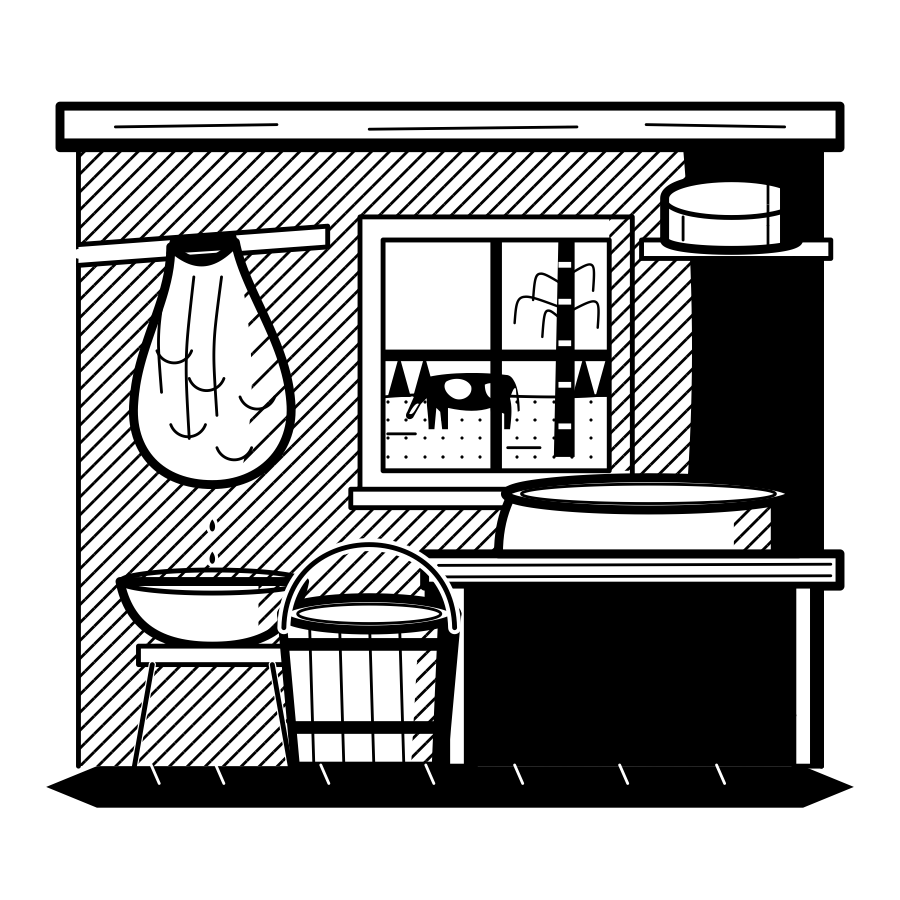
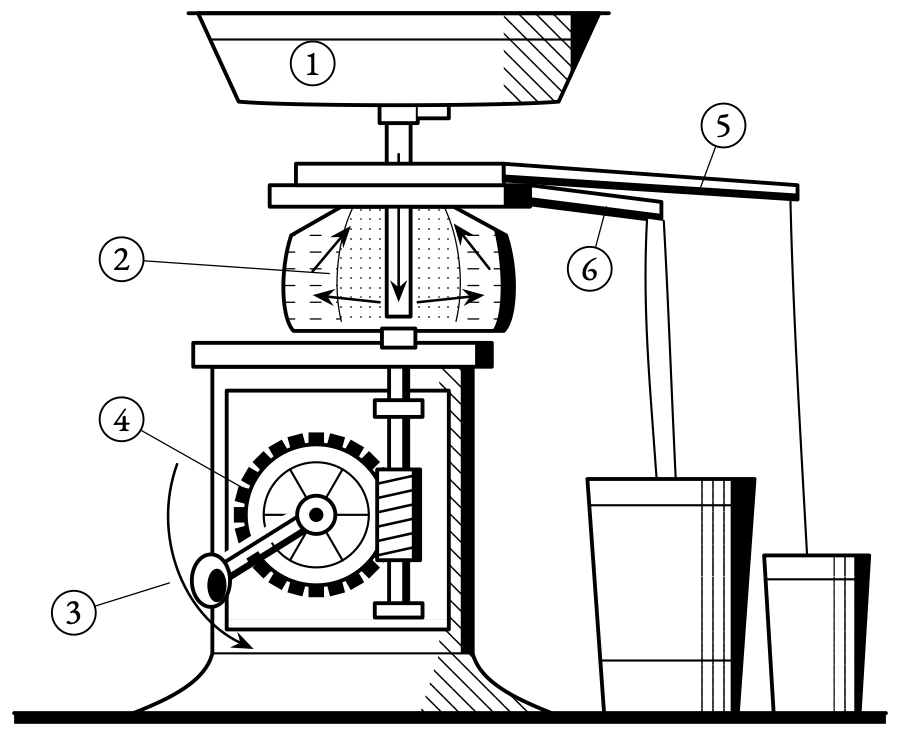
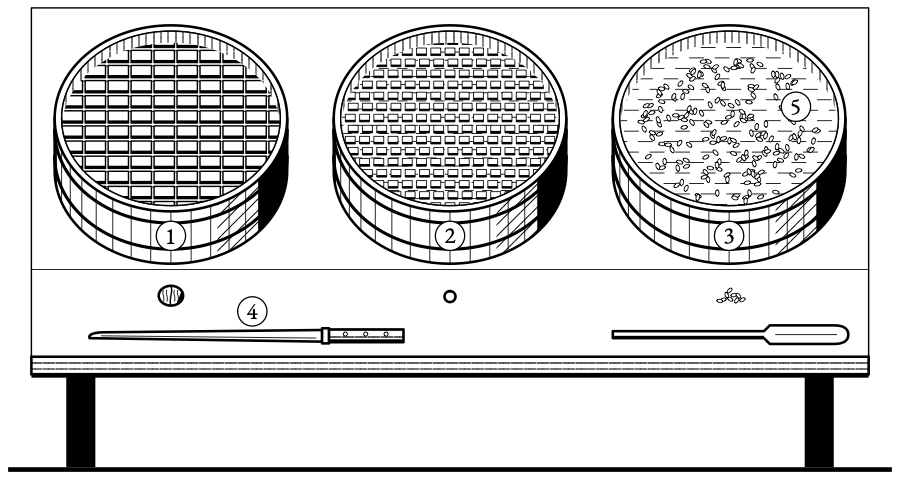
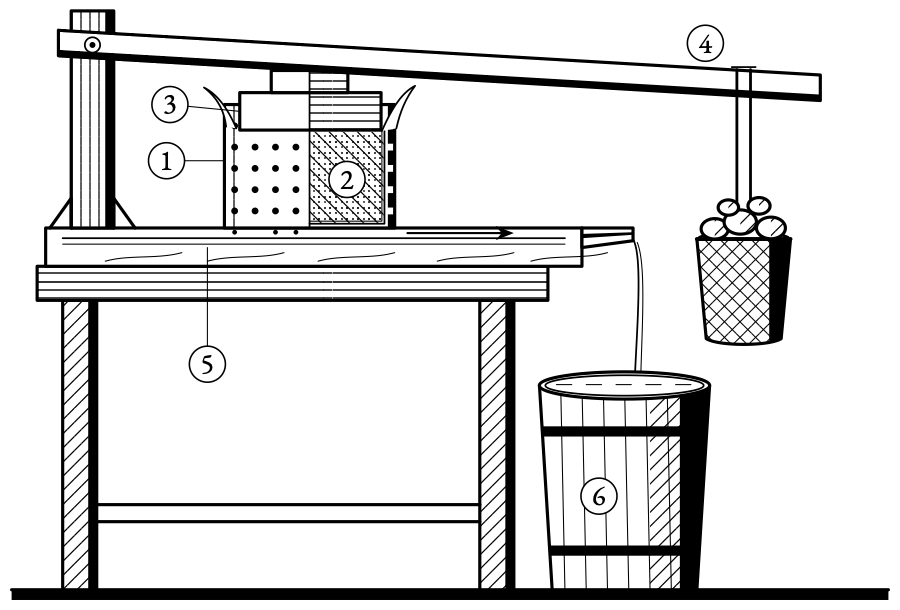
Plate 14-01 A pan, a cloth and a pail of morning milk. Everything between the spoon and the wheel is a matter of water, salt and patience.Plate 14-02 A hand cream separator. Sixty turns of the handle spin the bowl six thousand times a minute, and cream and skim run out of separate spouts.Plate 14-03 The size of the cut decides the cheese. Walnut-sized curd holds its water and makes a soft cheese, and curd cut as fine as rice makes a wheel that keeps a year.Plate 14-04 Cream by standing. Raw milk in a wide shallow pan, set in cold water, throws its cream by morning.Plate 14-05 Rennet from a calf. The fourth stomach is trimmed, salted, then slit and dried in the shade until it snaps like parchment.Plate 14-06 Testing home rennet. A scrap of bark floats on the milk and is nudged each minute, and when it sticks the milk has set.Plate 14-07 Stretching mozzarella. When a test strip pulls into a shining rope, the curd is cut into hot water, worked and folded, and pinched off into cold brine.Plate 14-08 A lever press. Stones hung on the lever press the curd in its mould with about ten times the cheese's weight, and the whey runs off the board into a bucket.Plate 14-09 The cheese cellar. The wheels sit on spruce boards against a sweating wall, and in a dry August the water is carried down the stairs, not up.
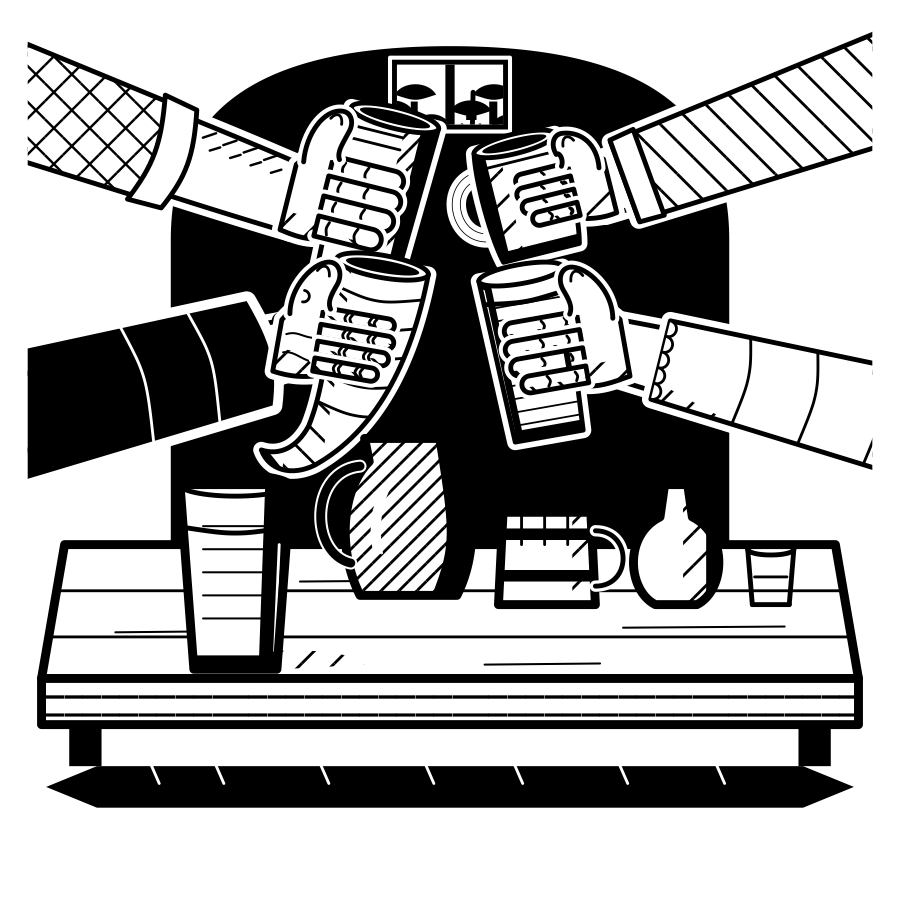
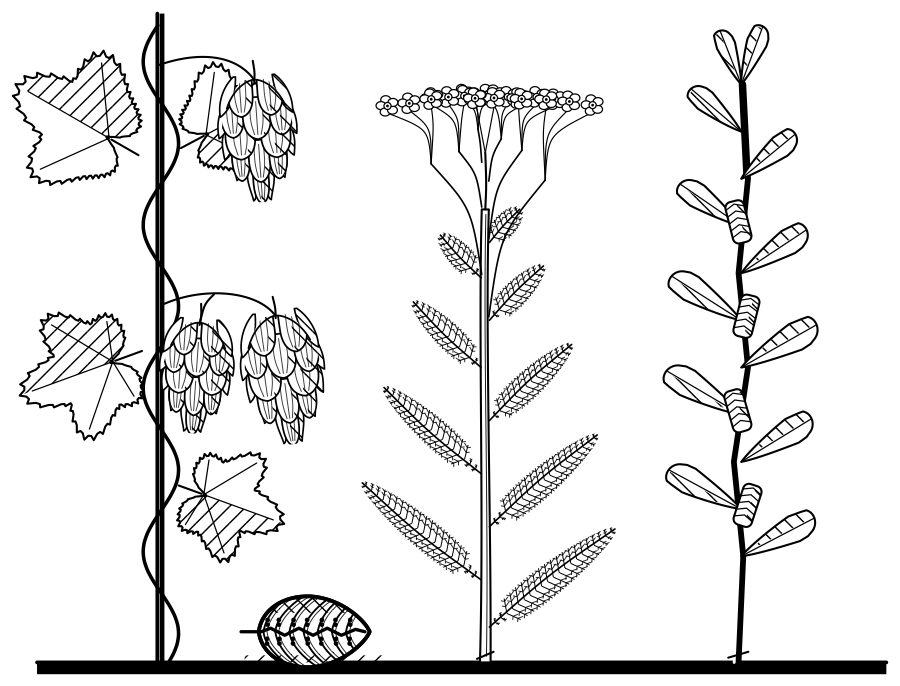
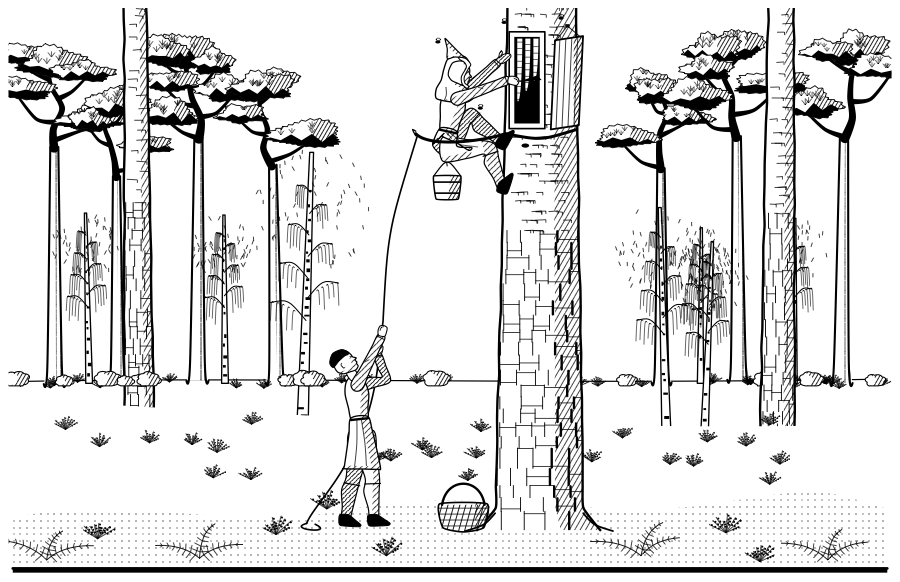
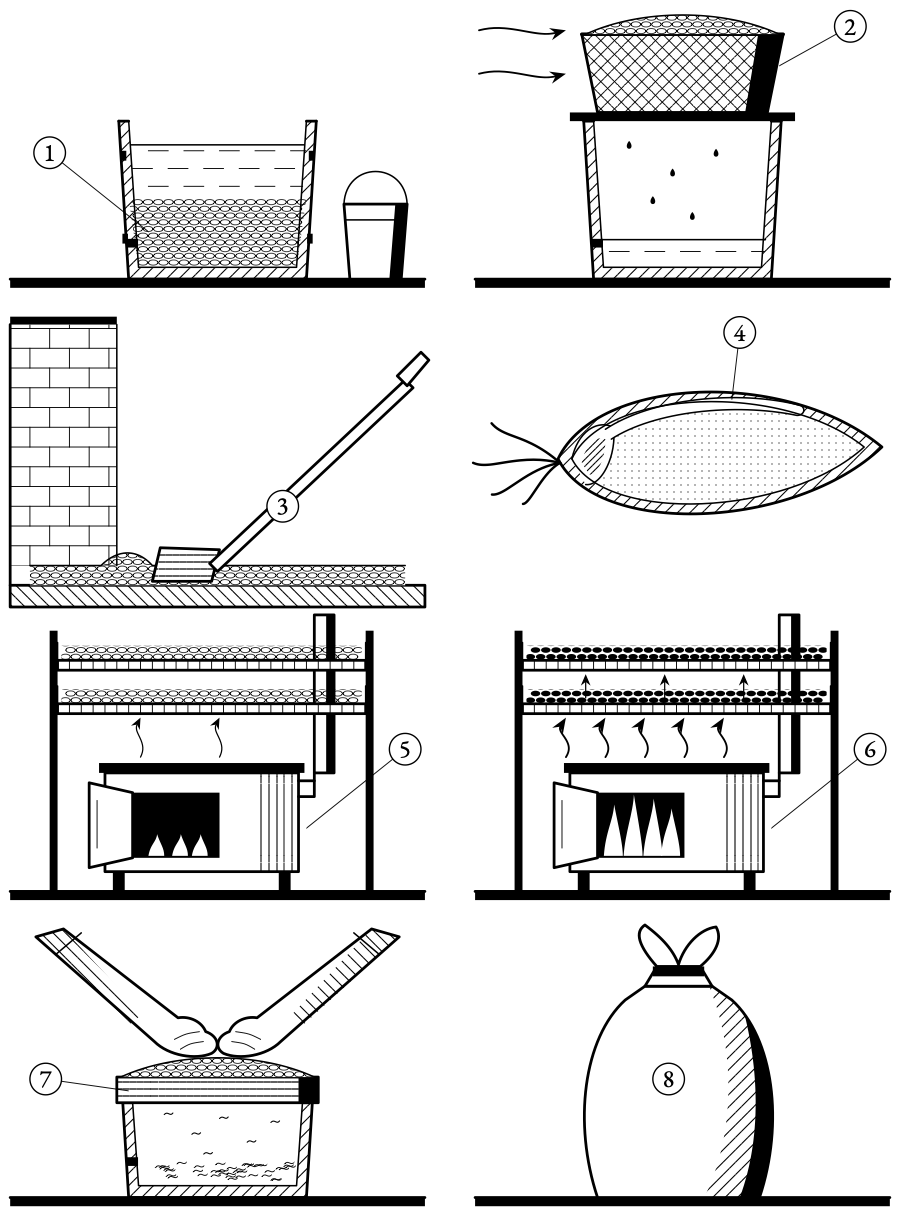
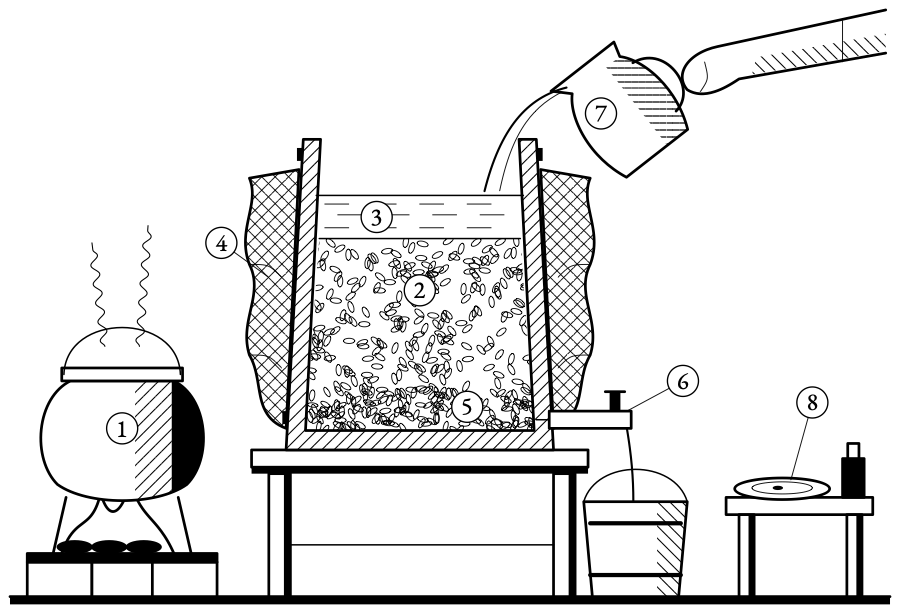
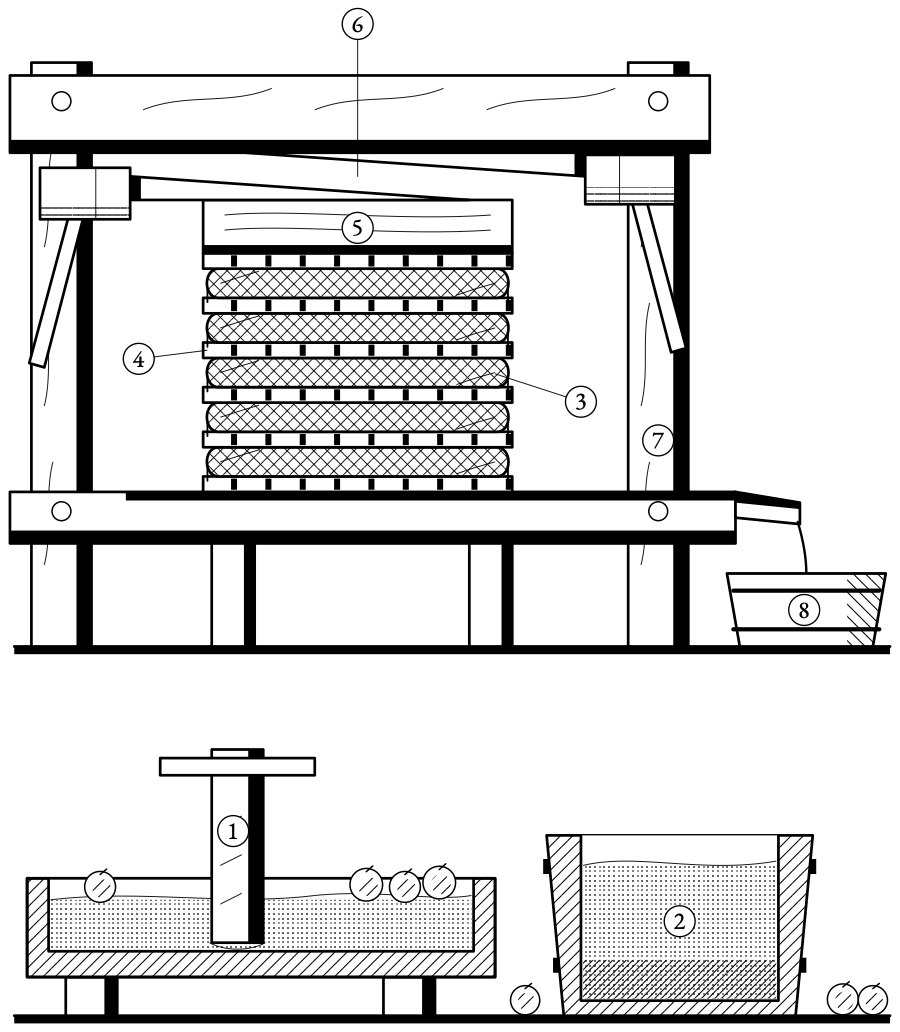
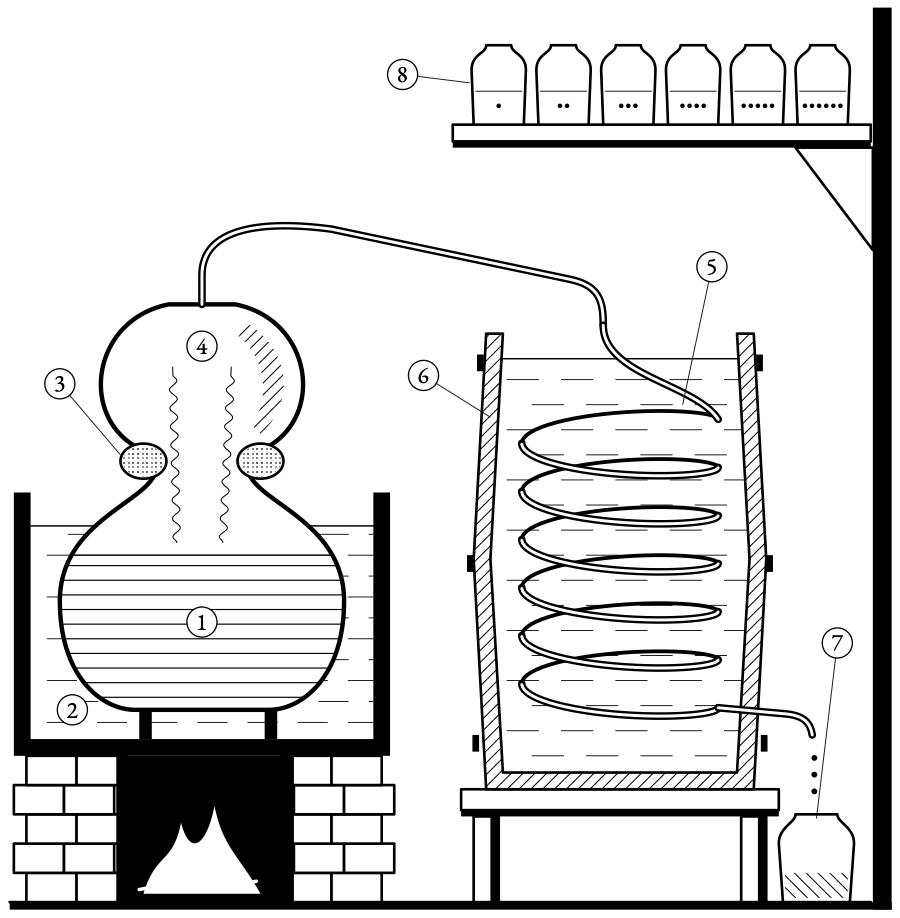
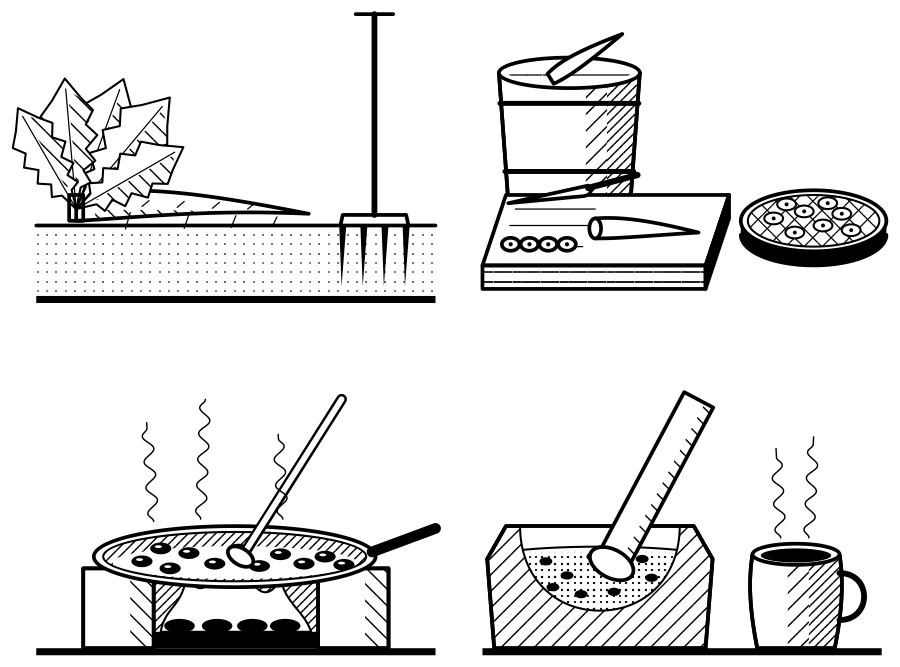
Plate 15-01 Water first, then ale, cider, wine and mead. The raised cup is older than bread.Plate 15-02 The hop cone, with yarrow and bog myrtle, the herbs of the older gruit. Hops keep a beer for months and gruit for a week.Plate 15-03 The Zeidler at work, four to eight metres up a living pine. He takes the comb and leaves the bees enough to see the winter through.Plate 15-04 Barley taught to wake, allowed to grow a little, then dried to sleep. The shoot inside the husk tells the maltster when to stop.Plate 15-05 The mash, wrapped in blankets and held near 66 °C for an hour. The grain bed filters its own wort.Plate 15-06 The wedge press of the old Brandenburg orchards. Each blow of the mallet drives the wedge, the block and the stack of cloths down together.Plate 15-07 Keeving. The brown cap rises in the cold and the clear juice is drawn from under it, to ferment slowly and stop sweet.Plate 15-08 The pot still. Copper throughout, sealed with bread dough, never sealed shut, and the first cupful always thrown away.Plate 15-09 Chicory, lifted in October, sliced, dried, roasted dark and ground. It looks like coffee and has none of what coffee does.
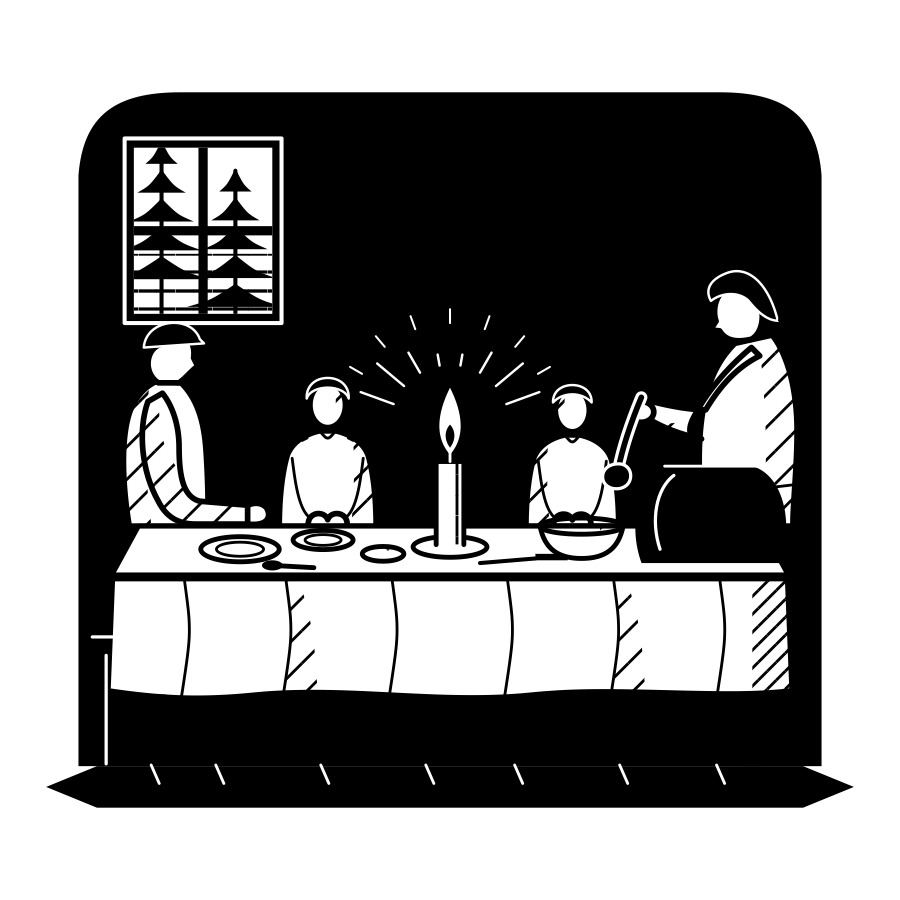
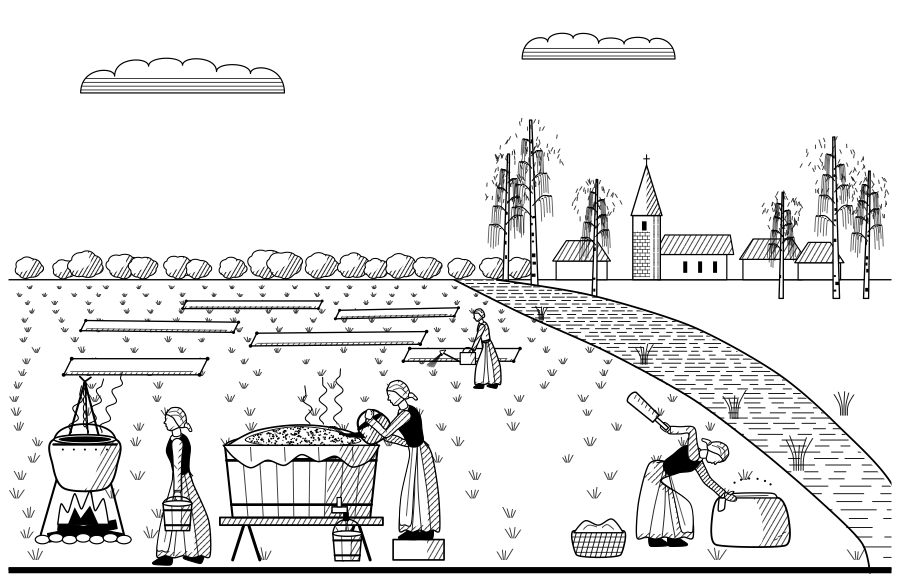
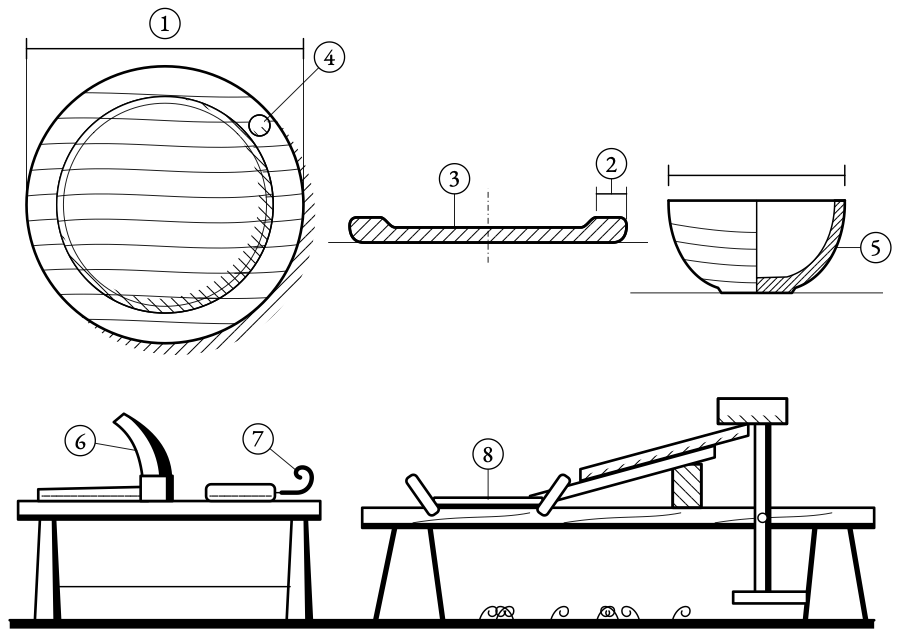
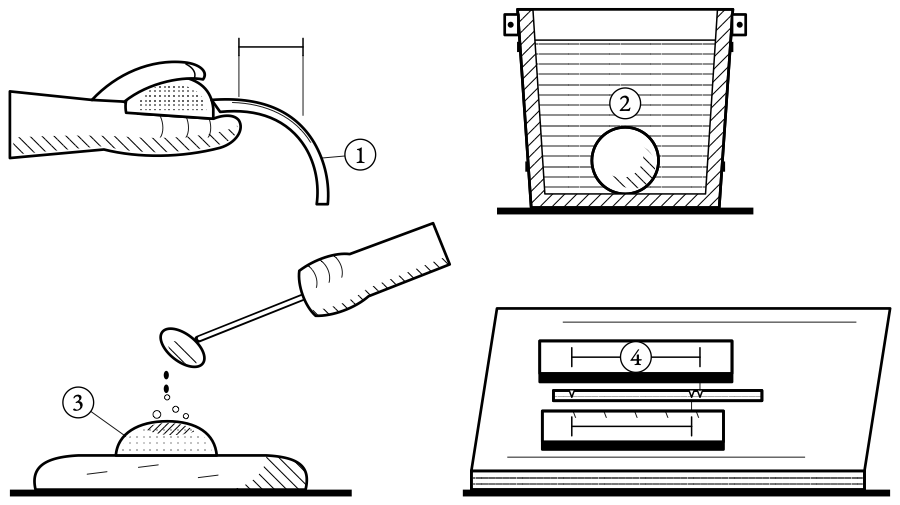
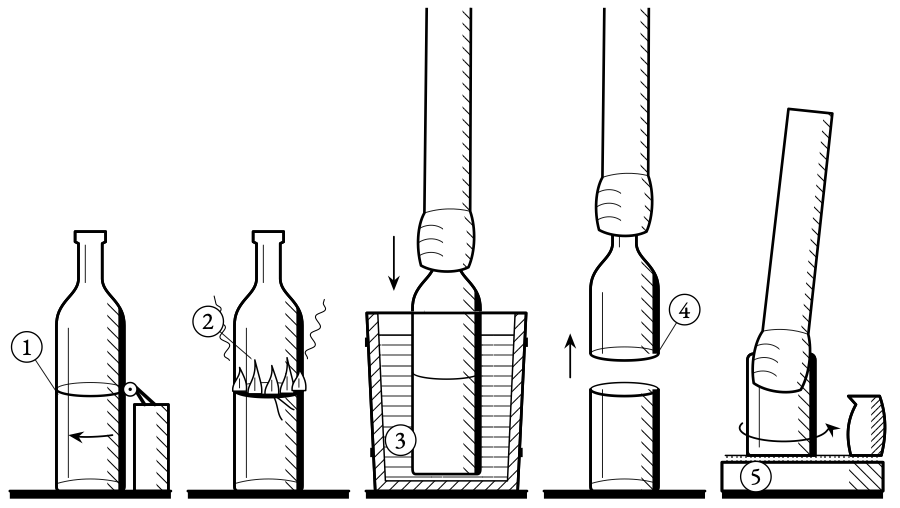
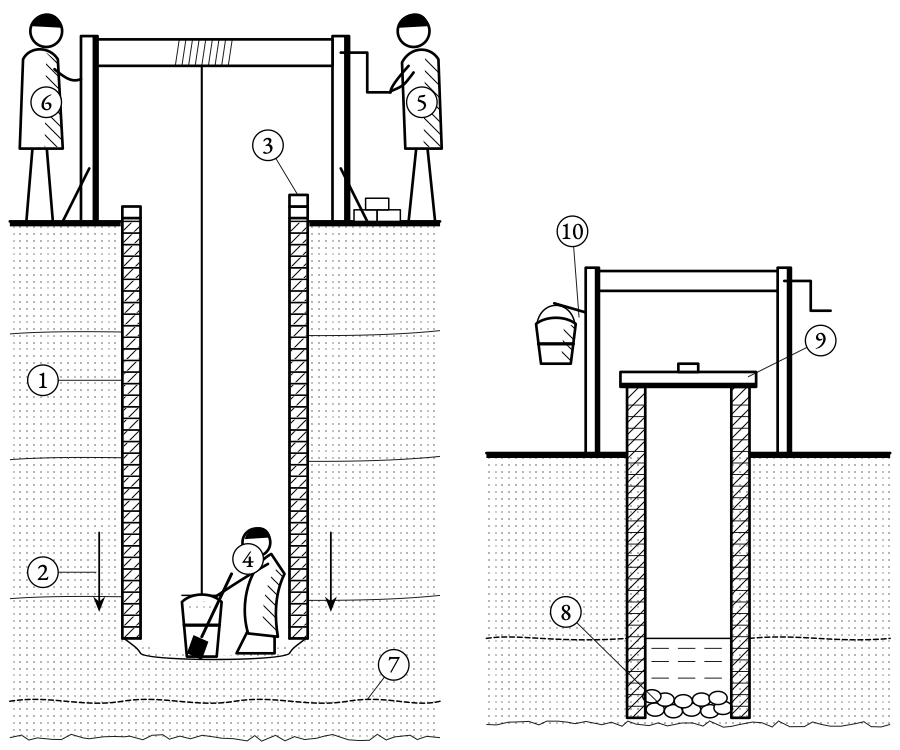
Plate 17-01 Lay a cloth tonight, any cloth, with one candle and the plates you have. The room changes, and it takes very little.Plate 17-02 The great wash. Boiling water poured through ash on the linen all night, then the cloth laid on the grass for the sun to finish.Plate 17-03 Split the plate from the radius of the log so the rings stand on edge through its thickness. A board with its rings lying flat cups into a saucer as it dries.Plate 17-04 The plate and the bowl, with the tools that make them. Leave everything a little fat until it has dried.Plate 17-05 Four tests at the clay bank. The ribbon, the ball, the vinegar and the bar tell the household whether the clay will make a pot.Plate 17-06 The pit fire. Built slowly, lit from the top, smothered with turf and left to die on its own, because the quartz turns at 573 °C going up and coming down.Plate 17-07 Dipping tapers. Two seconds in, a minute to cool, and again, until the candle is two fingers thick.Plate 17-08 The lye barrel. Beech ash, rainwater and patience, and a fresh egg to say when the lye is strong enough.Plate 17-09 A glass from a bottle. One score, a burning string, cold water, and a rim ground wet on sand until a fingertip finds nothing.
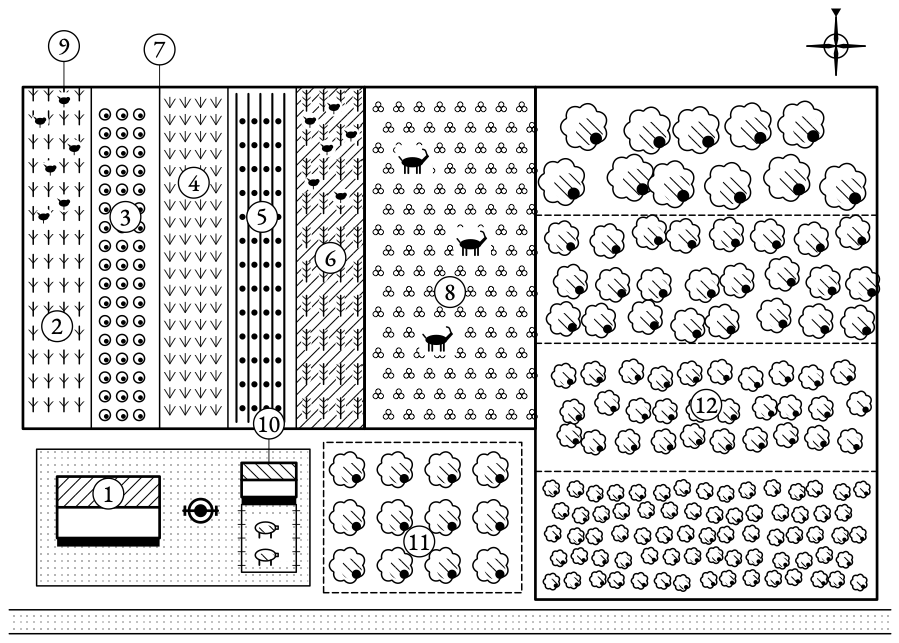
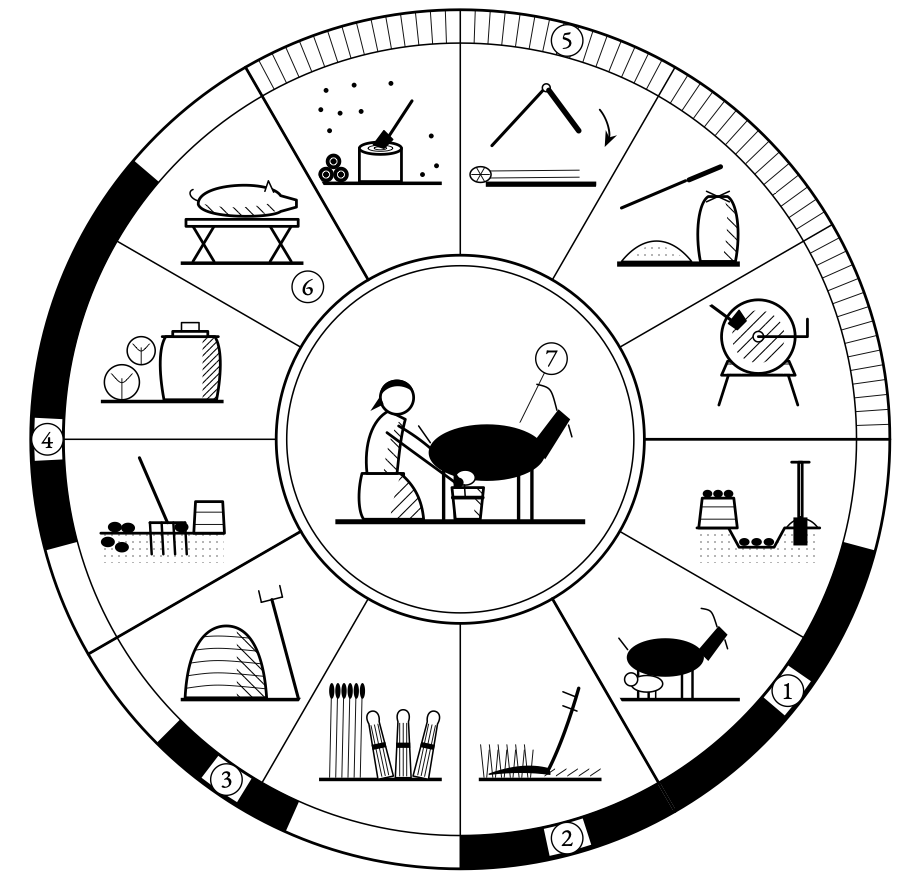
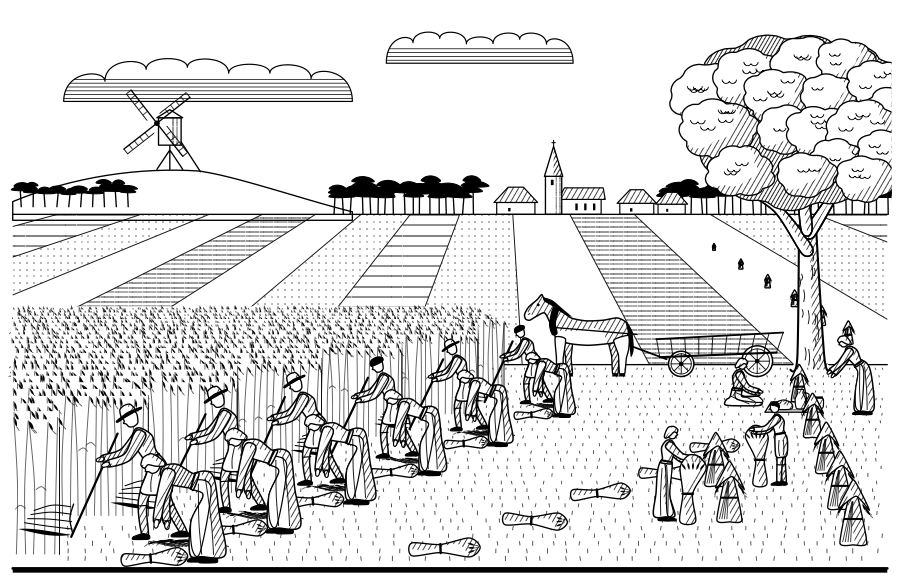
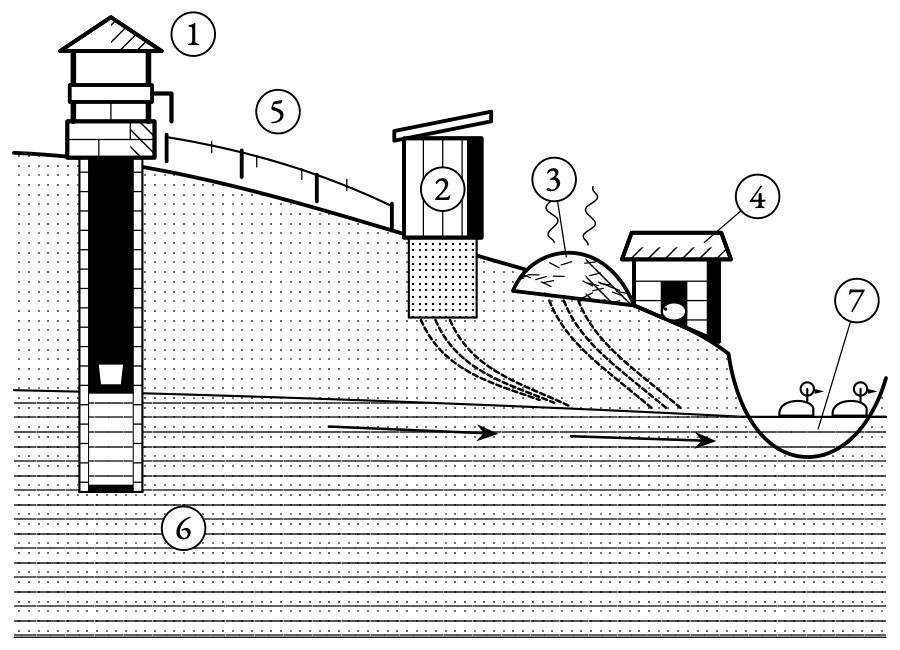
Plate 18-01 The feast at Martinmas. The village reads out its days owed and given, and settles them over one long table.Plate 18-02 The household on sand. A hectare of arable in five blocks turning through the rotation, half a hectare of clover for the goats, and the coppice for the hearth beside it.Plate 18-03 The year of the household on sand. Three narrow places where one house would need to be in two fields at once.Plate 18-04 Boon-work at the rye. Every household cuts one household's field, then the next, and the household whose field it is feeds the rest.Plate 18-05 The Bockwindmühle, which stood on every rise in the Mark. The whole mill turns on one post to meet the wind.Plate 18-06 The well stands uphill of the privy, the midden and the pig, and thirty metres from them, because the sand filters nothing.Plate 18-07 The village of three hundred on sand, as the book reckons it. Three to four hundred hectares with modern seed, of field, wood and meadow.Plate 18-08 The quern. A kilo or two of coarse flour an hour, which makes three hundred kilos of rye an hour a day, every day, for a year.Plate 18-09 The well is dug by sinking. The lining goes down with the digging, ring by ring, and nobody works alone at a well.