FEASTING · Part III · The Animals
Chapter 9
The Hardest Chapter
Draft 1, 25 September 2026 · 14,622 words · 5 movements
The Opening
In 1939 a sociologist from Breslau, living in London on nothing, published in Basel a book almost nobody read for thirty years. Norbert Elias's Über den Prozeß der Zivilisation argued that the manners of Europe had moved in one direction for five hundred years, and that the direction was away from the body. He gave the fork, the handkerchief and the bedroom, and he gave the joint of meat. In the Middle Ages the whole animal, or a recognisable quarter of it, was carried to the table and carved there, in front of the guests, by the host or by a young man of the house who had learned carving as an accomplishment. By the nineteenth century the carving had gone behind the kitchen door, the joint arrived already sliced, and the shape of the animal had been made to disappear. Elias's phrase for what had happened to the carcass was that it had been moved behind the scenes of social life, and he did not think this was progress or decline. He thought it was a change in what people could bear to look at.
Berlin built that change in brick. In 1881 the city opened its central cattle market and abattoir on the Eldenaer Straße, forty hectares behind a wall, with its own railway station where the animals came in at night from the east and went out in the morning as meat, and from that year until the last hall closed in 1991 a Berliner could live a whole life without seeing an animal die. Chapter 8 mentioned the wall. This chapter is about the other side of it, because the household of Chapters 5 to 8 has no wall. It has a pig in a sty, fattened on the peelings and the whey since the spring, and it is the first hard frost of November, and the pig weighs a hundred kilos, and there is no one to send her to.
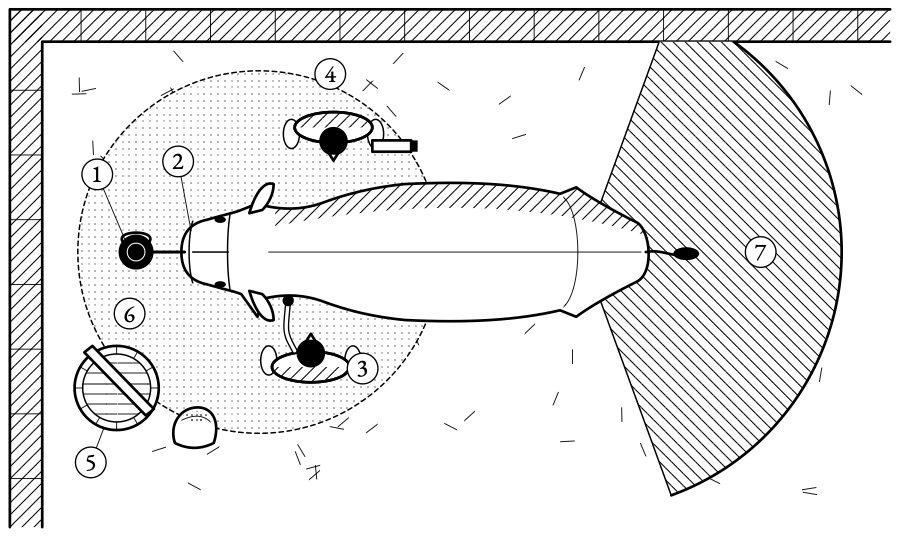
I am not going to make this easy. There is a way of writing about slaughter that keeps the reader on the civilised side of the door, all history and no blood, and there is a way that is a butcher's manual with no face in it, and neither one is honest. What the animal is owed is attention. Not sentiment, which looks away with wet eyes, and not toughness, which looks away with dry ones, but the plain act of looking, at the eye that tells you whether the stun has worked, at the watch that tells you whether the knife came soon enough, at the hand inside the belly that must feel for the gall bladder it cannot see. Every mistake in this chapter, and some of them are cruel and some are deadly, comes from somebody looking away for a moment. So come and stand where you can see. Stand at the head end, out of the reach of the legs, and do not go into the kitchen until the work at the post is done.
The opening of the chapter. It goes on in the book.
The Story
- Behind the scenes
- The law of the village
- The cow's last morning
- Hoisting, the hide and the inside
- Quartering and the German cuts
- The pig at the first frost
- The pig's day
- The hen
- The Honest Broker's carcass
- Fat, bone and hide
- The turn to the present
9,991 words in the book.
At the Bench
Every protocol here assumes four adults, a frost, a clean yard with water and a strong beam, and that the person at the gun has taken the course. Nothing here is practised on a live animal for the first time without someone who has done it before. Temperatures are at the centre unless it says otherwise.
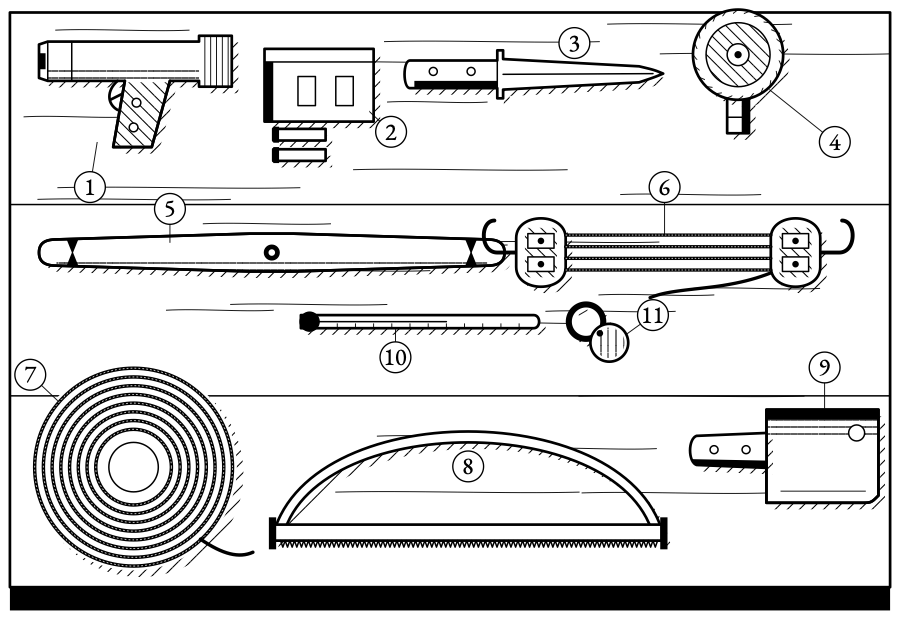
1 The cow's last morning Safety
2 Hoisting, legging and the hide Safety
3 Gutting, splitting and hanging Safety
4 The pig: stun, stick, blood, scald and scrape Safety
5 Casings and blood sausage Safety
6 The hen in the cone Safety
7 Rendering tallow and lard Safety
8 Bones: broth and the field Safety
9 Salting and bark-tanning a hide Safety
If it goes wrong
She lifts her head after the shot. The stun has failed. Shoot again now, 2 cm from the first hole, and only then ask why. Usually the charge was too light or the muzzle was not flat.
The first lines of each protocol. The steps, weights and temperatures are in the book.
Numbers to Carry
- The law: report to the district first. Stun always. Cattle and pigs inspected, pigs tested for Trichinella from the diaphragm pillar. Poultry and animals under 5 kg may have the blow or the wrung neck, nothing heavier. Bolt gun free to buy, rifle not. Sachkunde course two days. (own)
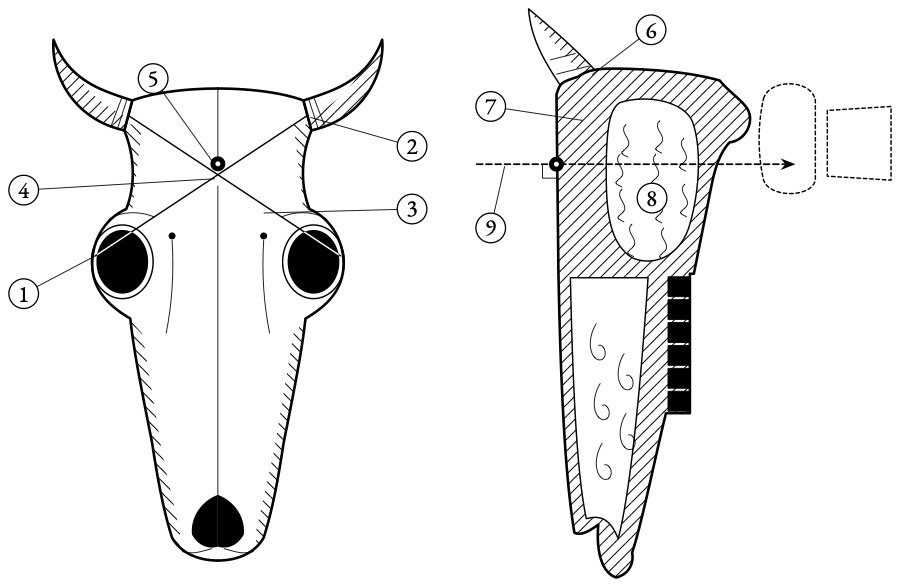
- The cow's point: lines from outer eye corner to opposite horn base, a finger's width above the crossing, midline, muzzle flat, aimed at the spine. Bolt at least 12 cm for a cow, 15 for a bull, 9 cm of penetration, 55 m/s or more. The poll shot misses far more often. Non-penetrating bolt: hens and rabbits only in German law. Cartridges by the maker's box, kept dry. (45, own)
- Stun signs: down at once, no rise, rigid then paddling, no blink, no rhythmic breathing, tongue out. Failed: head lift, nystagmus, regular breathing, bellow. Second shot at once. Stick within 60 s by law, 30 by the book. Blood pressure gone within 10 s of the thoracic stick, brain dark within 60 s. Blood about 4.5 % of live weight, some 20 l from 500 kg. 45 46 129
- The pig: stick within 15 s. Scald 58 to 62 °C, never above 63, under 58 no use. Hard-hair 7 to 9 min at 60, easy-hair 4.5 at 58. Singe 1,200 °C for 10 to 15 s in a furnace, a wisp of straw in the yard. 52
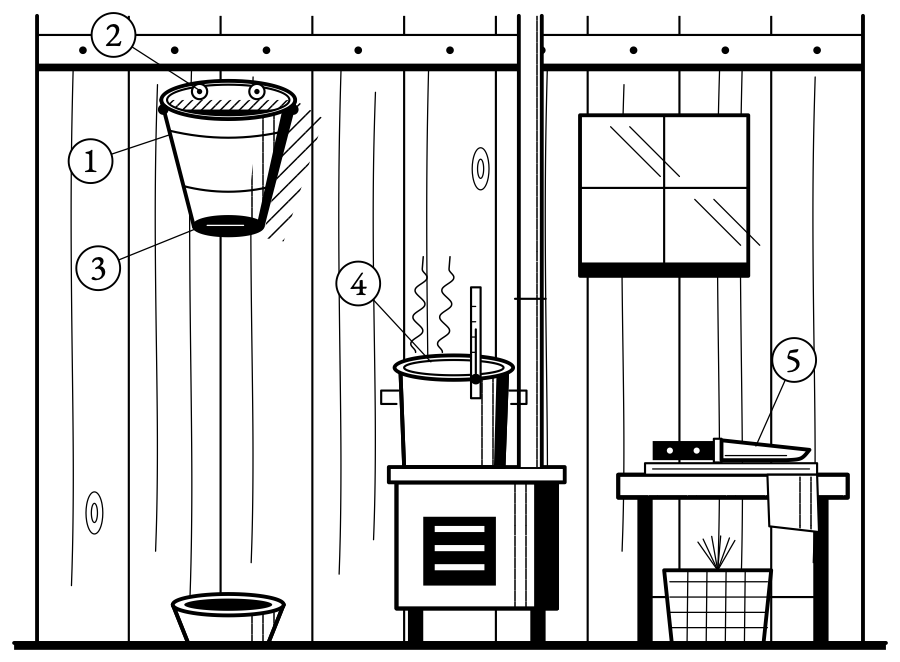
- The hen: a blow to the head first, by German law. Then dislocation under 3 kg, 70 birds a person a day. Bleed 90 to 120 s. Scald mature 54 to 58 °C for 60 to 120 s, young 50 to 54, above 66 the skin cooks. Gall bladder pinched within 15 to 20 s of exposing it. Rigor 4 h, tender at 12 to 24 h in the cold. 56 57
- Trichinella: cook to 70 °C at the centre, every part. Freezing does not count. Digestion test 44 to 46 °C for 30 min. Compression: 28 oat-grain pieces from the diaphragm pillars, 40× magnification, misses the uncoiled species, so a pig passed on the plates is still cooked to 70. (52, own)
- Risk material by German law today: cattle over 12 months skull with brain and eyes, and the cord. Where BSE is not ruled out: over 30 months the backbone, at any age tonsils and the last 4 m of small gut. The book's own rule is stricter (Bench 3). One trial: the saw that split one cow carried up to 61 mg of her cord, and a few mg onto each of the next five carcasses. Never bone meal to cattle. No pithing rod. (46, 45, own)
- Hanging: the law wants under 7 °C right through and falling all the time; a slaughterhouse gets there in a day. Yard: 0 to 4 °C 7 to 10 days, 10 °C 3 days, above 15 do not kill. Not below 10 °C in the first 10 h. Dry-age limit 35 days at −0.5 to 3 °C, RH 85 %, 5 % loss at 14 days. (46, 129, own)
- The muscle: shear force kg: fillet 2.0, blade 3.1, loin 3.8, round 4.8, brisket 6.7, shin 7.7. Under 3.2 tender, over 4.6 tough. Myosin 54 to 58 °C, collagen shrinks 53 to 67, actin 80 to 83, collagen to gelatin above 70 with hours. Steak off at 50 to 57, braise at 80 to 95. Bone-in 10 to 15 % longer. 48 57
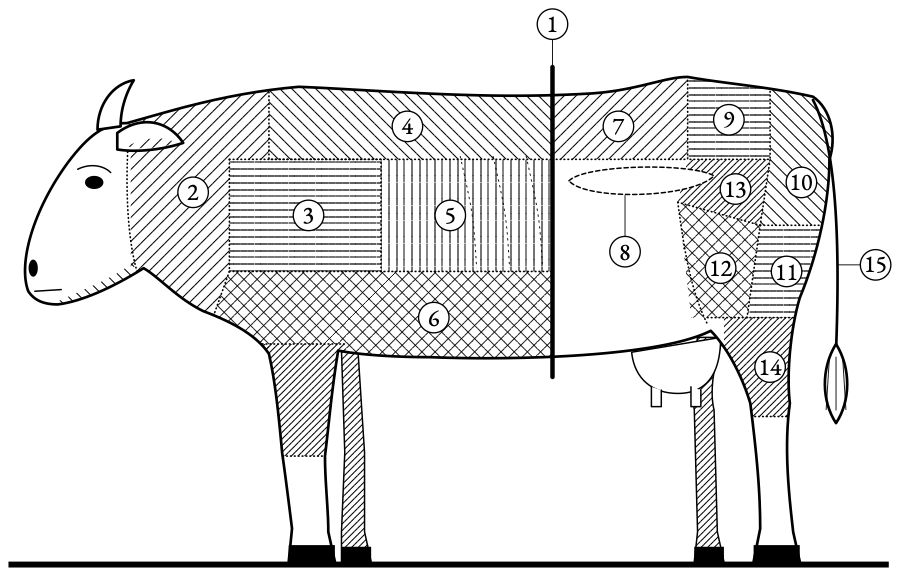
- The cow counted: 500 kg live, 270 kg carcass, 175 kg boneless, 40 kg bone, 30 to 40 kg fat, hide 35 to 40 kg and 4 to 5 m². Fore 52 %, hind 48 %, chuck 26 to 28 %, round 22 %. Rumen 100 l. (own, 47, 129, 46)
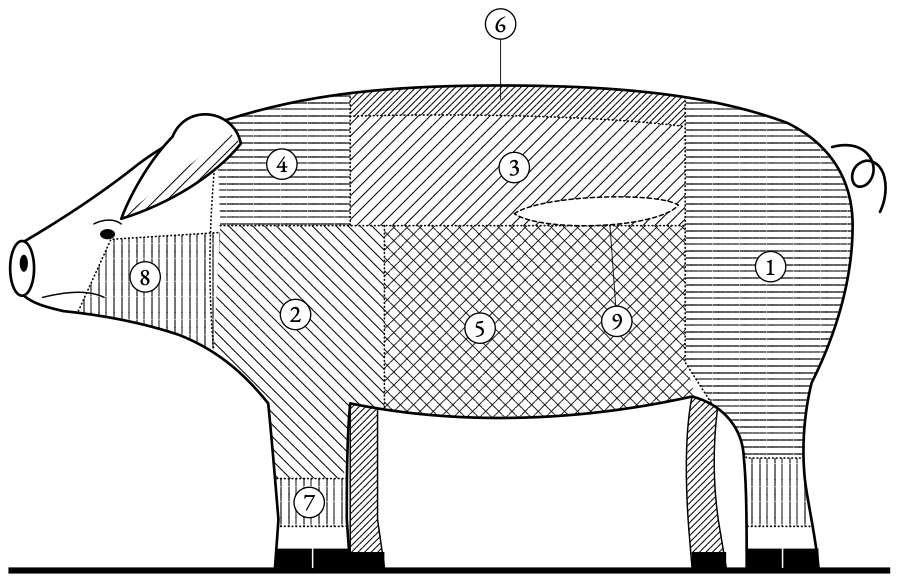
- The pig counted: 100 kg live, 75 kg hangs. Ham 2 × 9 to 10 kg, shoulder 2 × 6 to 7, loin 2 × 6 to 7, belly 2 × 5 to 6, back fat 8 to 12, leaf fat 2, hocks 3, head 6, feet 2, blood 3 l, gut 20 m, innards 7 kg, lard 10 to 12 kg. Dressing 70 to 75 %, skin 6 % of live weight, cooler shrink 3.5 to 4 %. (own, 129)
- The sausage: 18 g salt per kg. Blood 1 l to 1 kg boiled meat and rind to 300 g fat dice. Liver one third. Cook at 80 °C, 60 to 90 min. Weeps clear. Casings salted keep a year. All from an untested pig to 70 °C. (own)
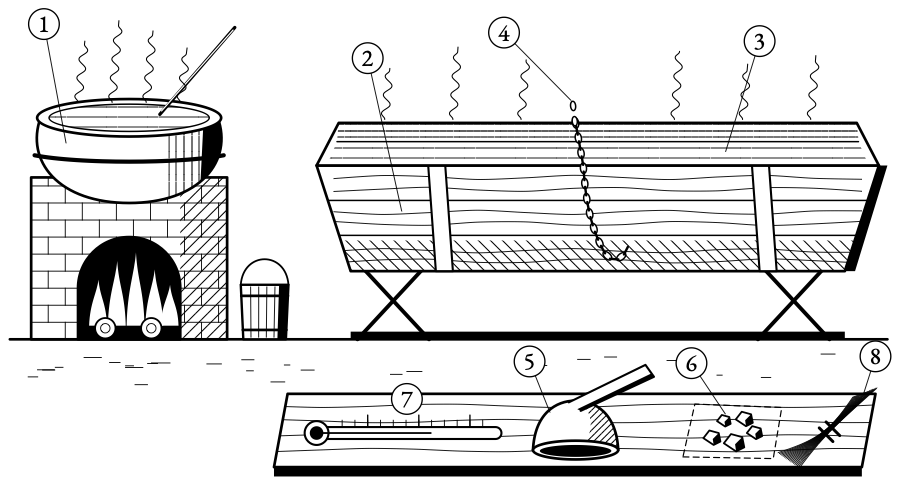
- The fat: render within 12 h or hold under 7 °C. Dry 105 to 115 °C, never smoking. Suet 86 to 90 % fat, back 88 to 90 %, trim 62 to 76 %. Tallow melts 45 to 50, smokes about 215, catches about 200 and above, breaks down at 293. Lid or sand, never water. Crock in the dark, tallow a year, lard 6 to 9 months. Soap: 140 g caustic soda or 200 g potash per kg tallow, egg floats a coin's width. (49, 129, own)
- The bones: roast 200 °C 35 to 45 min, 1:2 bone to water, vinegar, 85 to 95 °C 6 to 8 h for gelatin, 12 to 24 for peptides. Acid raises calcium 17-fold. Boil daily or reduce. Ash a third P2O5, 40 kg bone to 25 kg ash, garden needs 30 to 40 kg P2O5 a year on half a hectare, 50 g/m² in autumn, acid sand only. (62, own)
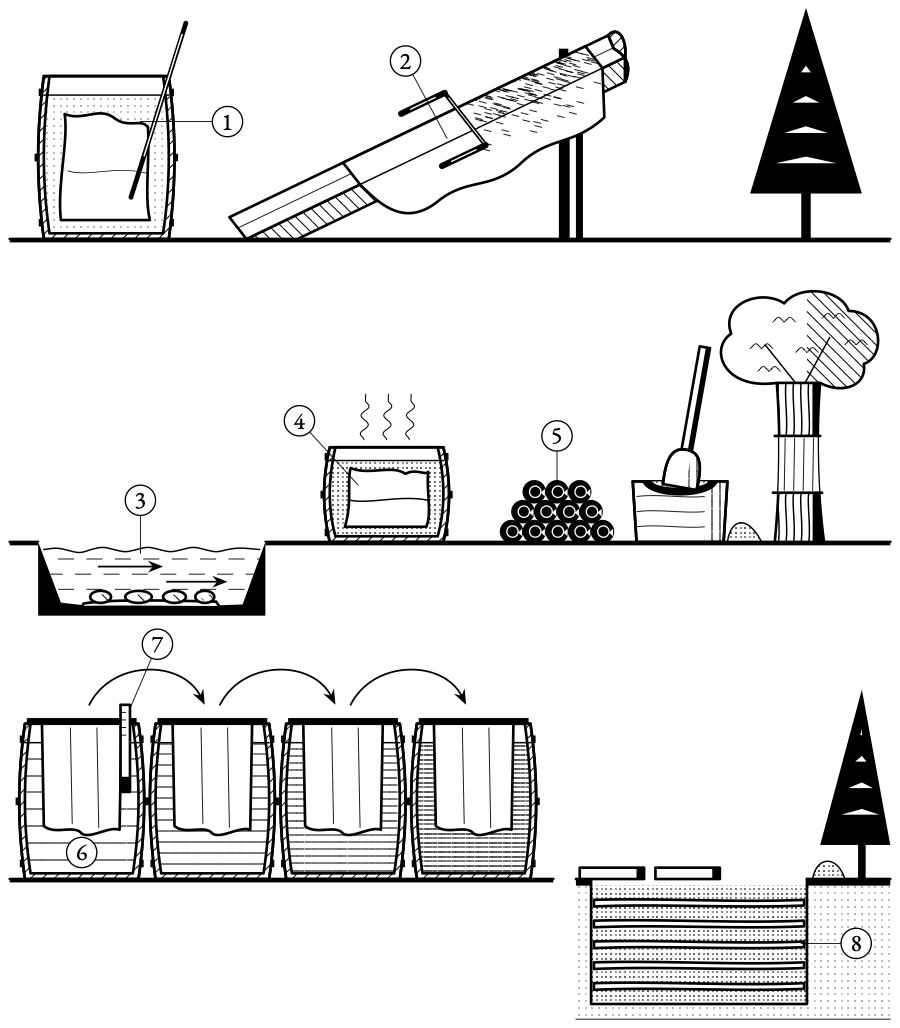
- The hide: two thirds water, salt a third to half its weight within the hour. Lime 1 kg to 20 l, 7 to 14 days. Collagen shrinks at 58 to 60 °C raw, 80 to 85 tanned. Bark 2 to 4 × hide weight, weakest first, 1.006 to 1.010 on the float, months. Apron 0.5 m², boots 1 m². Brain: one per hide, smoke a day. Anthrax lives in a hide for years. (61, own)
- The year: a cow a village, 45 kg a house. A pig a household, 75 kg hanging. A hen a week, 50 a year. About 200 kg of meat for four, over half of it pig, nearly all of it salted, smoked or boiled. (own)
The Library
The research documents behind this chapter, all of them on the website: 45 Cattle Stunning and Dispatch Methods · 46 Bovine Carcass Dressing Guide · 47 Bovine Manual Butchery Dissection Guide · 48 Beef Muscle Cookery and German Cuts · 52 Swine Slaughter and Processing Steps · 53 Pork Primal Cuts and Curing · 56 Poultry Slaughter and Evisceration · 57 Poultry Fabrication and Cookery · 129 Bovine And Pig Yield Mapping · 49 Beef Tallow Rendering and Refining · 54 Porcine Leaf Lard · 62 Bone Broth and Meal Calcination · 61 Bovine and Swine Hide Tanning.
The bolt energies and speeds, the skull and brain depths, the bolt lengths, the frontal landmarks and the poll's failure rate, the cartridge table, the spring bolt's failure on bulls, the firearm calibres and the burst barrel, the banned instruments and their dates, the signs of a good and a failed stun, the sixty seconds, the pithing rod and its ban, the thoracic stick against the neck cut, and the four-second electrical stun from the stunning document (45). The two-knife stick, the blood fraction, the legging and the fell, the fisting, the tied gullet, the bagged bung and its count, the pelvis and the pluck, the spinal cord's milligrams on the saw, the risk-material ages, the hot water and acid sprays, the chill and the dry-age limits, the rumen's hundred litres and the heat shortening from the dressing document (46), which cites 45. The vertebrae, the cleaver and the bow saw, the quartering between the twelfth and thirteenth rib, the fore and hind shares, the American primals and their percentages, the bone dust and the bone sour from the butchery document (47), which cites 46. The shear forces, the protein temperatures, the pull-off and braise ranges, the Viennese cut names, the Bolognese and the goulash from the cookery document (48), which cites 47. The lairage, the electrical stun current, the fifteen seconds, the stick from a forum thread, the scald matrix and its damage thresholds, the thermocouple readings under the skin, the singe, the guarded hand and the pelvis and the pluck from a homestead blog, the split, the spinal vacuum, the acid sprays, the Trichinella digestion and freezing rule copied from document 50, and the blast chill from the pig slaughter document (52). The iodine value, the fat layers, the American primals and their numbers, the three DLG names, the water-phase salt of an online calculator, the water activity thresholds of an instrument vendor, the nitrite and ascorbate limits for pumped bacon, and the Cassel story from the curing document (53), which cites 52. The feed withdrawal, the dislocation limits, the cone, the bleed, the scald table, the stun signs, the evisceration order, the gall bladder window, the chill and the rigor from the poultry document (56), and the eight-piece cut, the protein temperatures and the bone-in allowance from its fabrication twin (57), which cites 56. The dressing percentages by breed and feed, the pig's skin fraction, the cooler shrink, the American steer and hog in pounds and their unreconciled sums, the fatty acid table from a tallow vendor, and the rendering recoveries from the yield document (129), which cites 47. The twelve-hour rule and the seven degrees, the fat compositions, the melting, smoke and decomposition points, the dry-rendering range and yield, the wet-rendering layers, the soap values and the salting-out, and the claim that tallow does not burn from the tallow document (49), which cites 46. The leaf-fat names, the pastry argument, the crystal chemistry, the rosemary dose and the loss of every temperature from the lard document (54), which cites 52. The bone selection, the roast, the three vessels and their temperatures, the gelatin and peptide hours, the acid and the calcium factor, the lead, the calcination stages and the crystallinity, and the loss of the phosphorus figure from the bone document (62), which cites 46. The hide's water, the shrinkage temperatures, the lipase degreasing, the brain and smoke chemistry, the barkometer's starting reading from a hobby forum, the pit system from a 1922 manual, the currying oils and the belt friction from a homework site, from the hide document (61), which cites 46.
The plates