FEASTING · Part III · The Animals
Chapter 10
The Water
Draft 1, 25 September 2026 · 13,213 words · 5 movements
The Opening
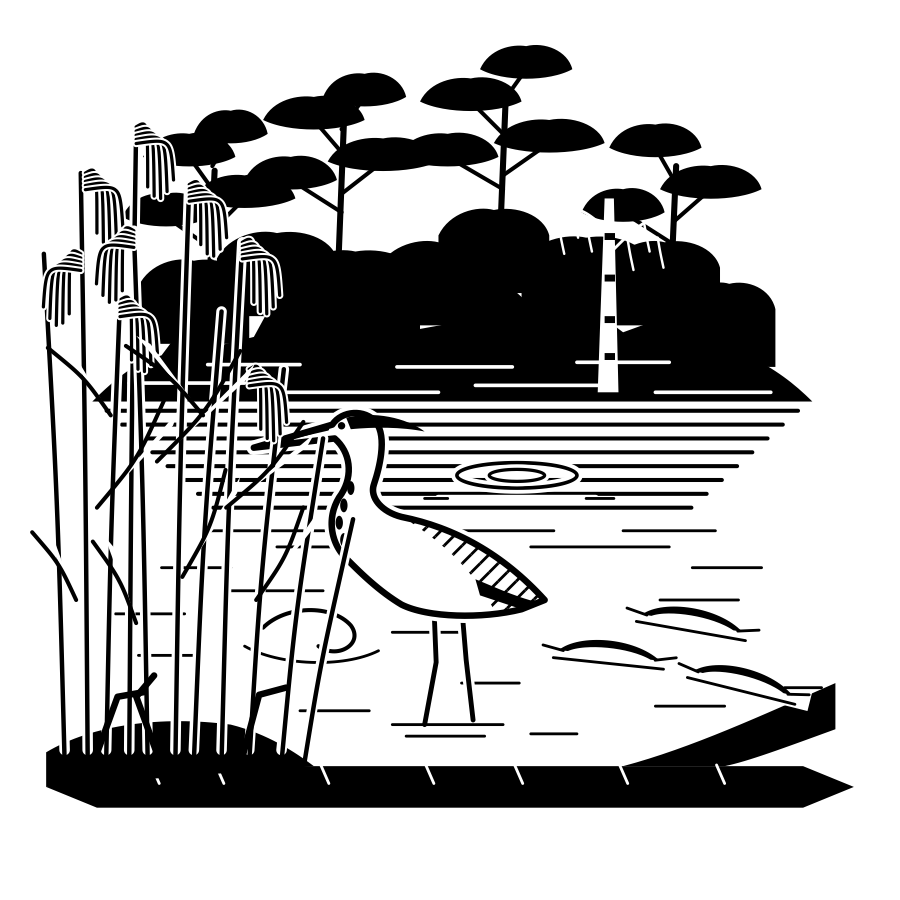
Go down to the Havel at Tegel on a still morning in late October, before the light, and stand where the reeds thin out. Do not do anything. After ten minutes the water will begin to tell you what is in it. A ring opens forty metres out and closes. Something the length of your forearm turns over near the reed edge with a sound like a wet cloth dropped on stone. A heron that you had taken for a post lowers its head a centimetre. And then, if the night was warm and there was no moon, the surface where the outflow meets the lake will crease and uncrease with the backs of eels going down to the sea, on a journey that will end, if it ends, seven thousand kilometres away in the Sargasso, in a place no one has ever seen them arrive.
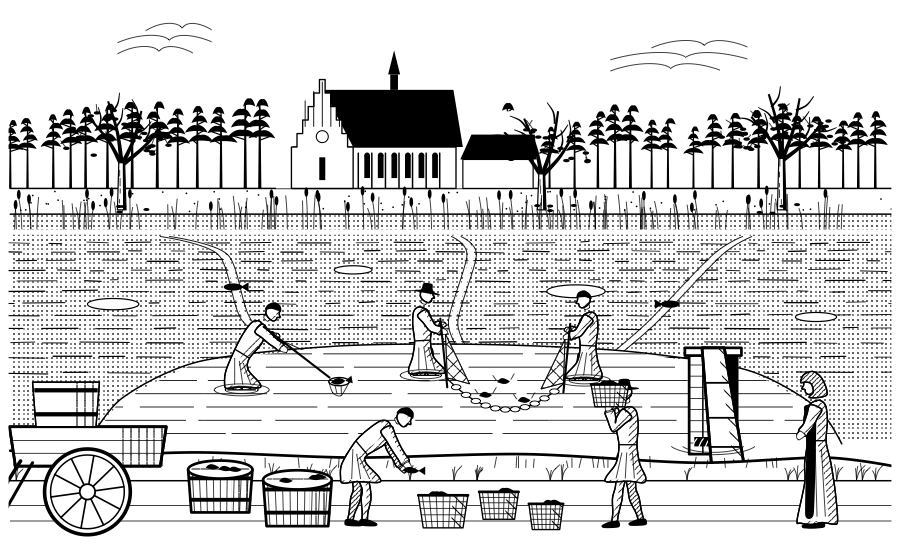
This chapter is about taking some of that, and it is different from the two chapters before it in one way that matters. The cow and the pig were kept. They were fed, watched, known by name, and killed on a day the household chose. The fish are not kept, or not mostly. They are in the water, doing what they do, and the fisher's work is to set something in their way and go home. The trap fishes while you sleep. The line hangs in the dark with nobody holding it. The pond, if you dig one, will not give you a meal for three summers and will give it then without any help from you except the grain you threw in and the hole you kept open in the ice. Every other provider in this book makes something. The fisher trusts the water to make it, and comes back in the morning to see whether the trust was kept.
That is the soul of the thing, and it is also its danger, because the water is the only element in the household that will kill a child in a minute without malice, and the only food in this book whose flesh can be eaten raw with a tapeworm in it or smoked with a spore in it that no smoke touches. So the chapter is two chapters. One is about trust, the willow trap and the monk's pond and the smoke that turns a muddy carp into something the Evening would be proud of. The other is about the four or five things the water must never be trusted with, and where they sit in the order of the day. Berlin is a city that was a fishing village first, on an island in a river, and it has forgotten that more thoroughly than it has forgotten anything else in this book. The Havel has not forgotten. Stand there long enough and it will show you.
The opening of the chapter. It goes on in the book.
The Story
- The city on the water
- The pond on sand
- The wild water and the law
- The trap, the weir and the line
- The killing and the knife
- The Honest Broker's fish
- Salt and smoke
- Water that is not to be trusted
- The turn to the present
9,208 words in the book.
At the Bench
1 The household pond Safety
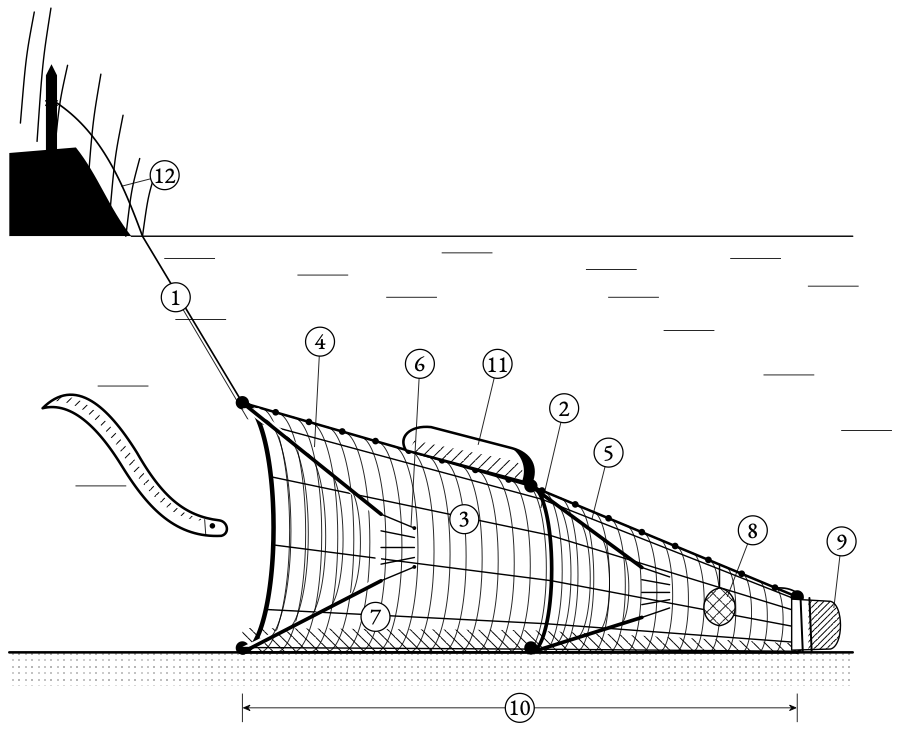
2 The willow eel trap Safety
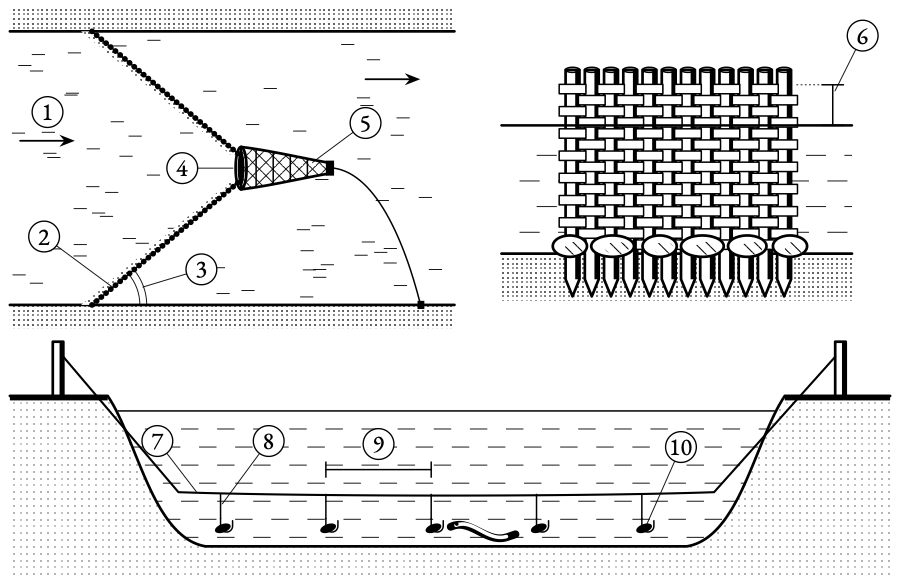
3 The V-weir and the night line, for knowledge
4 Killing and bleeding Safety
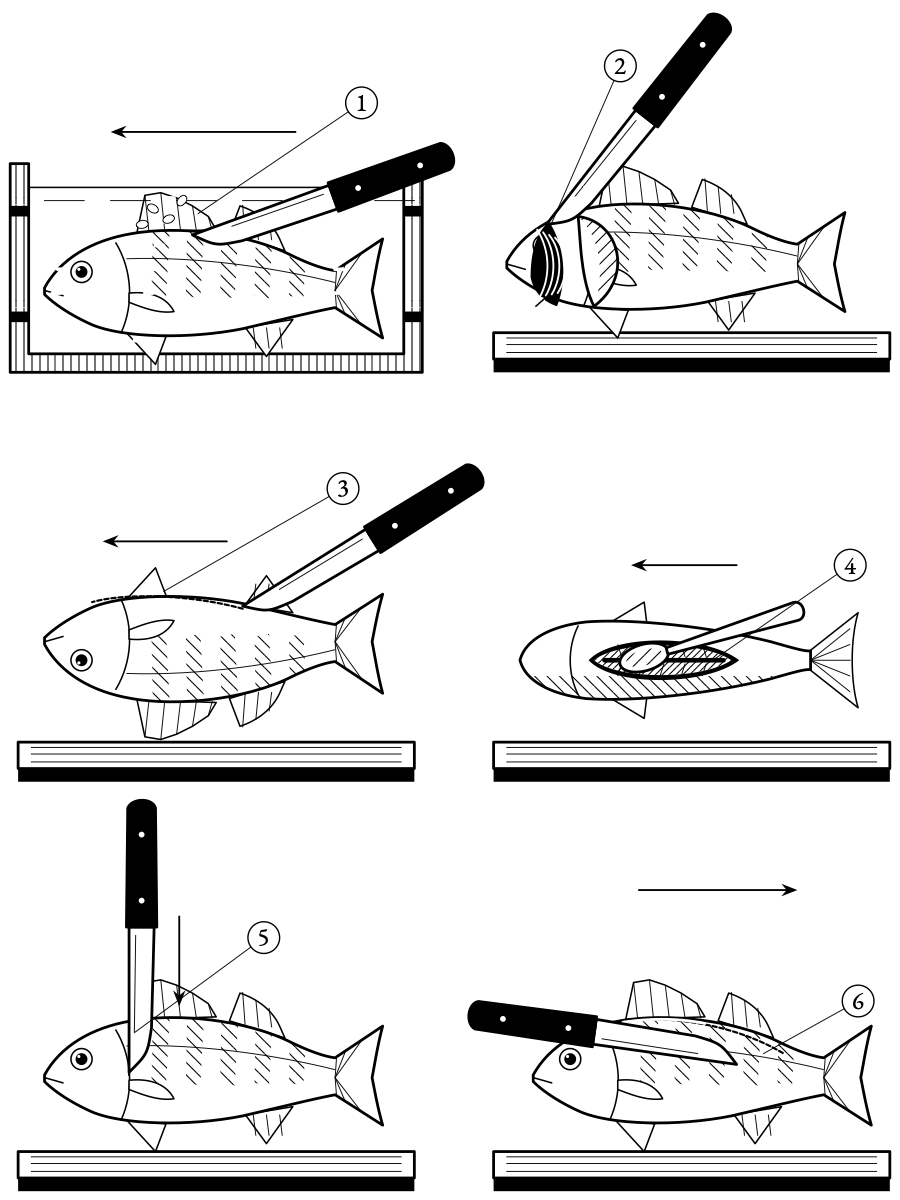
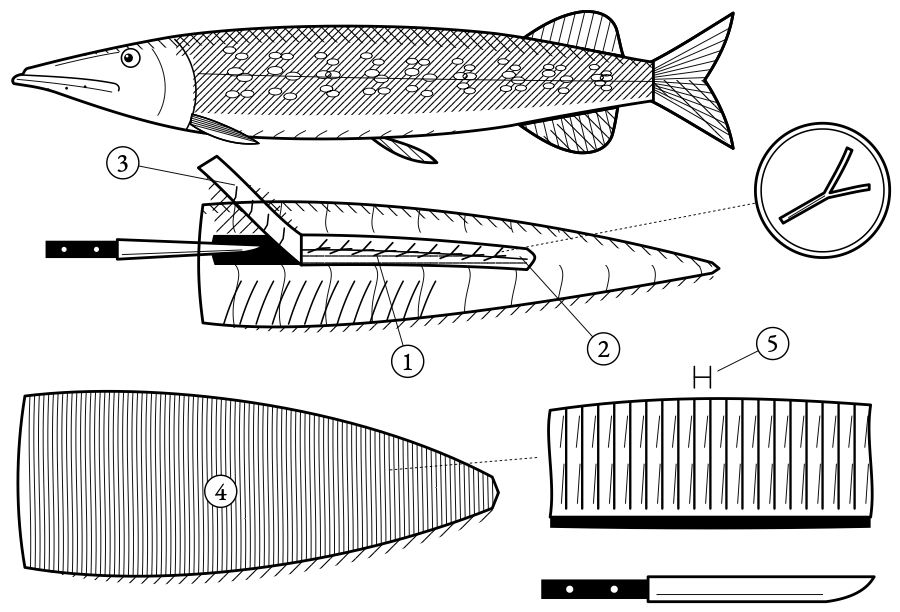
5 Scaling, gutting and filleting Safety
6 Keeping without a refrigerator Safety
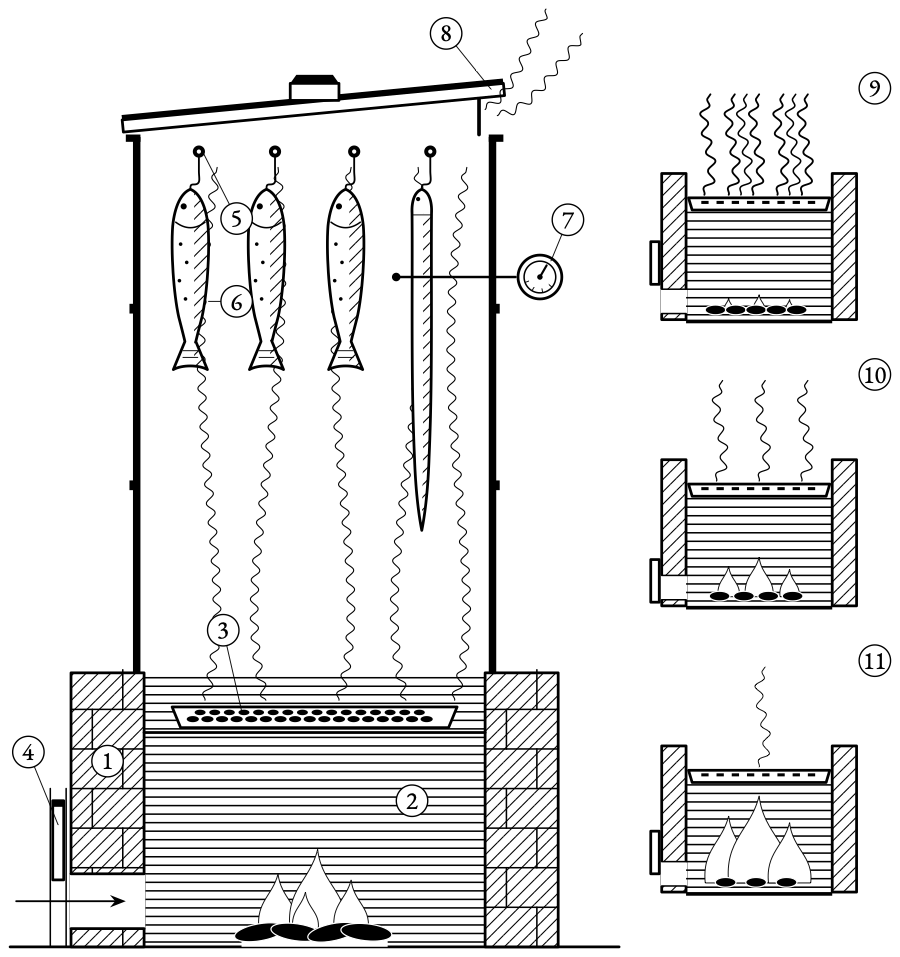
7 Brine and hot smoke Safety
8 Salt fish for the store, and the bones
If it goes wrong
Carp at the surface at dawn, mouths out of the water. No oxygen. Stop feeding today. Pump or bucket water in a stream from a height so it falls and splashes, all morning, or cut weed and drag it out. Kill and eat the largest fish this week: the pond is overstocked for its summer.
The first lines of each protocol. The steps, weights and temperatures are in the book.
Numbers to Carry
- Two summers, then the third The carp is stocked at 150 to 300 g and eaten at a kilo, and the pond is trusted for three years before it pays. (58, own)
- A metre of water, two at the outlet Under 30 cm of ice a carp lives on the bottom at 4 °C. Under less, it suffocates by February. Keep a hole. (58, own)
- 10 to 40 kg from 1,000 m² Unfed at the low end, grain-fed at the high. A family eats 50. The rest is the wild water, and the wild water is 20 to 50 kg/ha and belongs to the neighbours. (own)
- Odd ribs, sharp tines, lifted at dawn The trap. Every dawn, or it is not fishing. (59, own)
- Blow behind the eyes, then the gills Every fish, every time. The eel gets the spine cut. (own, TierSchlV)
- 60 °C at the bone, or minus 20 °C for a day, or salt hard The three things that kill the tapeworm; the fluke is surer killed by fire than by frost or salt. Dill, vinegar and cold smoke kill neither. (own)
- 220 to 250 g of salt to the litre Seventy to eighty degrees on the salinometer. Thin fillet 10 minutes, whole fish 2 to 4 hours. Rinse, dry to the shine. (71, Ch 11)
- 30, 50, 80 The three steps of the hot smoke, and 65 °C at the bone. Alder, never pine. (71 via Torry)
- Four days A hot-smoked fish in the cellar, in the open air. The spore in fish grows at 3 °C. Never a jar, a bag or oil. (71, own)
- 15 cm of black ice, and a plank Never a river. Ten minutes of hands. (own)
- A fence before a fish The pond kills a child in a minute. (own)
The Library
The research documents behind this chapter, all of them on the website: 58 Off-Grid Aquaculture Pond Design · 59 Low-Resource Aquatic Foraging · 60 Fish Preparation and Safety Guide · 71 Fish Brining and Smoking Protocols.
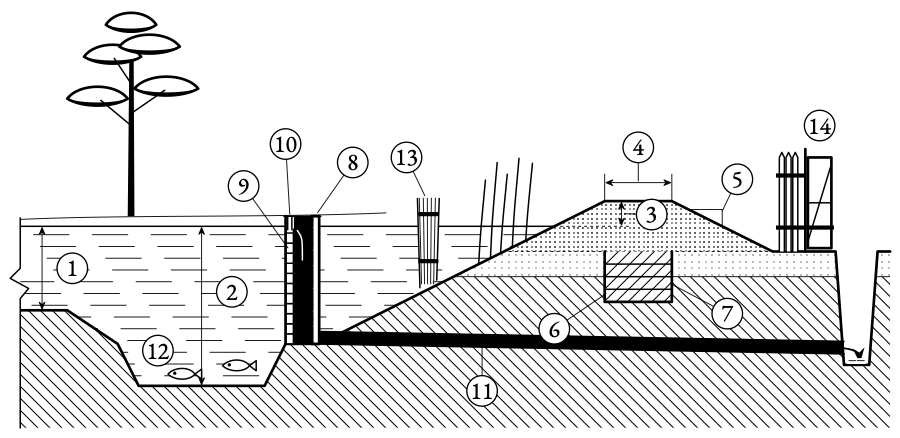
The FAO pond tables, the ribbon and ball tests, the core trench and its lifts, the settlement allowance, the four-degree layer and the carp's survival under ice, the tilapia, carp and trout temperatures, the natural and fed yields per hectare, the dawn oxygen minimum, the cyanobacteria thresholds and the ban on copper, the duckweed and larvae figures, and the solar aeration that the chapter declines, from the pond document (58). The Dutch dogwood traps, Syltholm's panels, the Boylston weir and its stakes and dates, Magna Carta's clause, the odd ribs, the sharp unwoven tines, the door, the willow soaking, the Californian basket, the V-weir figures and their survival-website source, the trotline droppers and their spacing, the gorge, the nettle cord and its lost strengths, and the Spreewald's Einbaum, Fischzaun and Bünn, from the trap document (59). Submerged scaling, gilling, the vent-to-throat cut, the kidney line, the round-fish fillet through or over the ribs, the pin bones pulled after rigor and in their own direction, the yields by species, the sea-worm freezing rule and its regulation, rigor and its timing, histamine and its limits, from the preparation document (60). The salinometer scale and its conversion, the seventy to eighty degree brine, the brining-time table, the fifteen degree limit, the weighting of fat fish and their rusting, the rinse and the salt bloom, the pellicle and its drying, the cold-smoke ceiling, the Torry three-step schedule with its blank core temperature, the spore that grows at three degrees, the three and a half per cent rule, from the smoking document (71). Everything else, the Fischerinsel and the Kietz, the monks' ponds and Dubravius and Peitz and Krčín, the three-year rotation, the household pond's size, depth, hole, monk, pit, stocking, feed rate, winter straw and draining, the holding tank and the mud taste, the summer drying, the Brandenburg and Berlin fishing law, seasons, sizes and the ban on gear, the eel's status, the Havel eel's contaminants, the wild yield per hectare, the Aalreuse's dimensions and setting, the eel run, the priest and the gill cut and the eel's spine, the pike's Y-bones and the scored carp, the eel's skin, the fresh-water yields, the tapeworm and the fluke and what kills them, the fish-handler's infection, the wood, the barrel smoker, the sixty-five degrees, the eel's smoking, the four-day rule, the salt fish and its weights and times, the fish bones to the field, the drowning, the ice and the algae, is the writer's own and is marked.
The plates