FEASTING · Part III · The Animals
Chapter 8
The Cow, the Pig and the Hen
Draft 2, 25 September 2026 · 14,969 words · 5 movements
The Opening
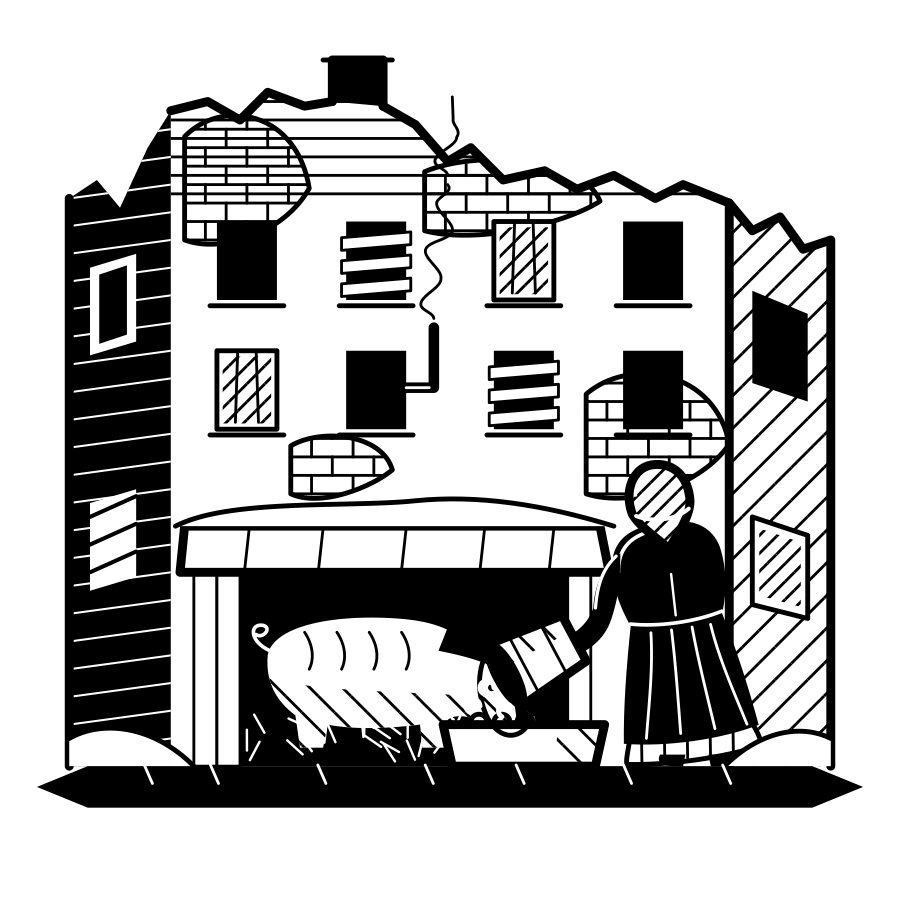
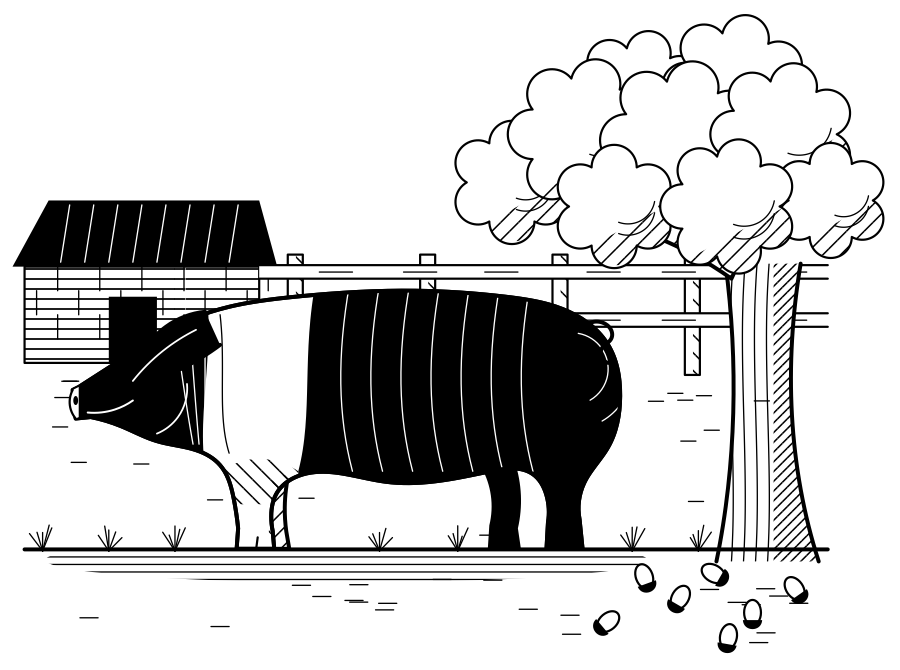
In the winter of 1946 there were pigs in Kreuzberg. Not many, and not for long, and nobody registered them. They lived in cellars and in the sheds of the back courtyards, on the peelings of a whole staircase of families, and the families that fed them ate them in the spring, in the dark, with the windows hung with blankets, because a pig killed at home in the year of the ration card was a crime called black slaughter and the penalty was prison. My grandmother's street had one. She remembered the smell of it more than the taste, and she remembered that the family who kept it were the only ones on the stair who did not lose a child that winter, and she did not think those two things were unconnected.
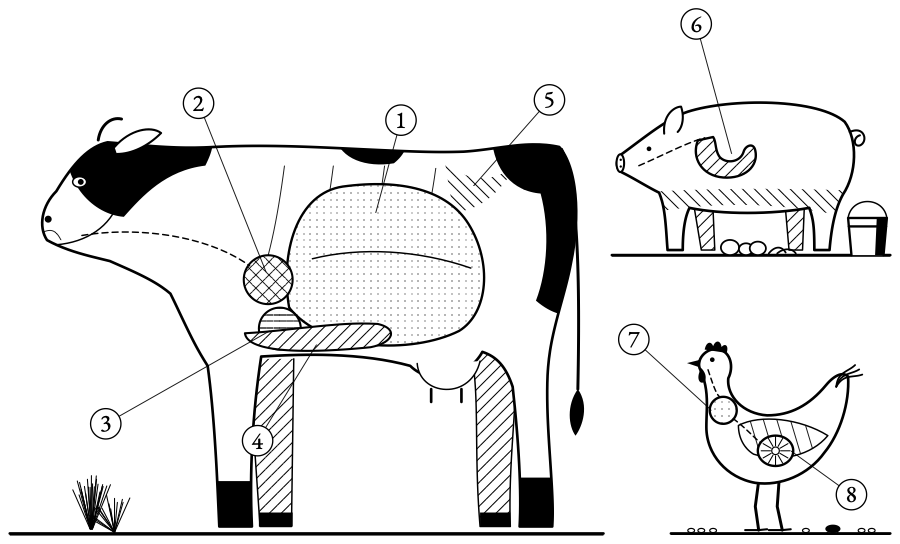
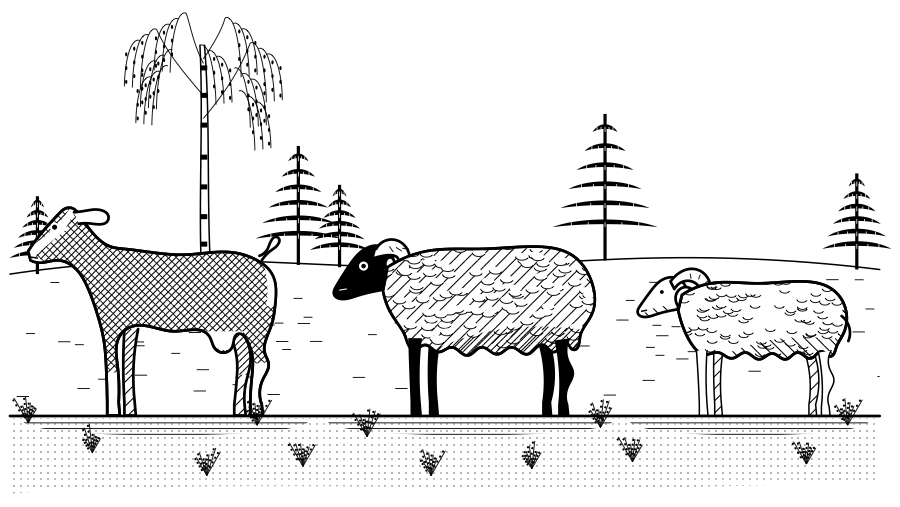
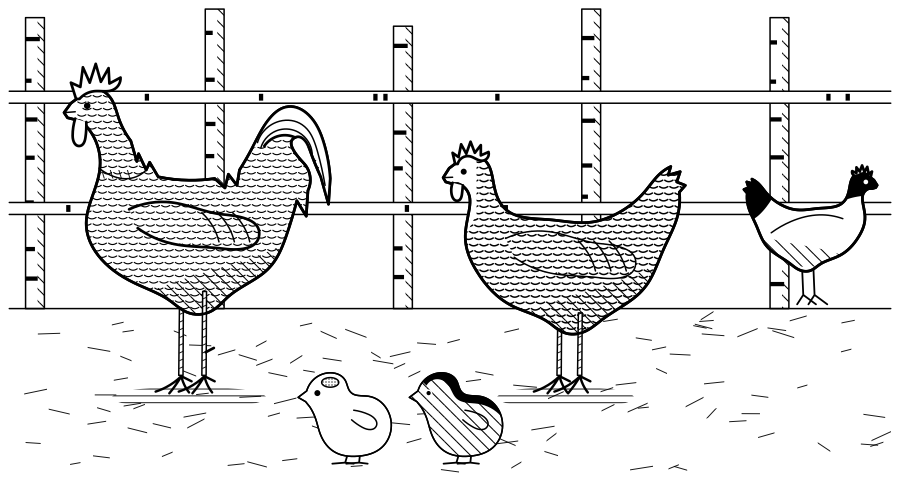
That is the whole of this chapter in a paragraph. A city that has lost its supply lines does not go short of calories first. It goes short of fat, and of the kind of protein that a body can build with, and of a handful of elements that the sandy soil of the Mark does not hold and the plants that grow on it cannot supply. Chapters 5 to 7 grew a diet of rye, potatoes, cabbage, lupin and apples, and a person can live on it, and a child cannot grow on it, and nobody can do a winter's work on it. The missing part comes from an animal. Not because meat is a pleasure, though it is, but because a cow, a pig and a hen are each a stomach that the human body does not have. The cow's four stomachs turn grass, which no person can digest, into fat and milk. The pig's single stomach turns the peelings, the whey and the small potatoes, which a person will not eat, into lard and bacon. The hen's gizzard grinds the beetles, the fallen grain and the weed seeds, which a person cannot gather, into an egg. The household that keeps them is borrowing three stomachs and paying in labour, and this chapter is the account.
It is also the chapter where the library is thinnest at the scale that matters. The documents know what a six-hundred-and-fifty-kilo cow eats and what a forty-cow herd drinks. They do not know how many hectares of Brandenburg sand feed one family cow, or how a person milks her, and it was only in the library's second round that they learned how many hens a family needs and that the sand would rather carry a goat, and the Honest Broker will have to do the cow's arithmetic in the open, as promised at the end of Chapter 6.
The opening of the chapter. It goes on in the book.
The Story
- What the sand cannot give
- The stomach you borrow
- The cow of the Mark
- Hay, hectares and the hand
- The goat, which the sand prefers
- The pig is a refinery
- The hen that does two things
- The Honest Broker's hectares
- When there is no vet
- The turn to the present
10,137 words in the book.
At the Bench
Everything here is done with a bucket, a stool, a bar of wood, a length of wire, a box of straw, a billhook, a paddle with four cups and a thermometer. The dangers are the sow, the bull, which the household does not keep, the buck and the ram, which strike, the raw milk, the raw pork, and the bloat that kills in an hour.
1 A hay budget for one cow
2 Hand milking Safety
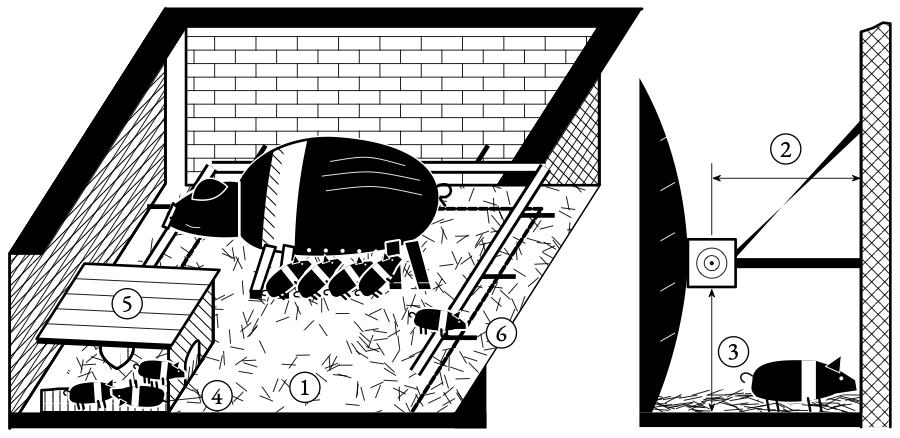
3 A farrowing pen with a rail and a creep Safety
4 The pig's ration Safety
5 Hatching under a broody
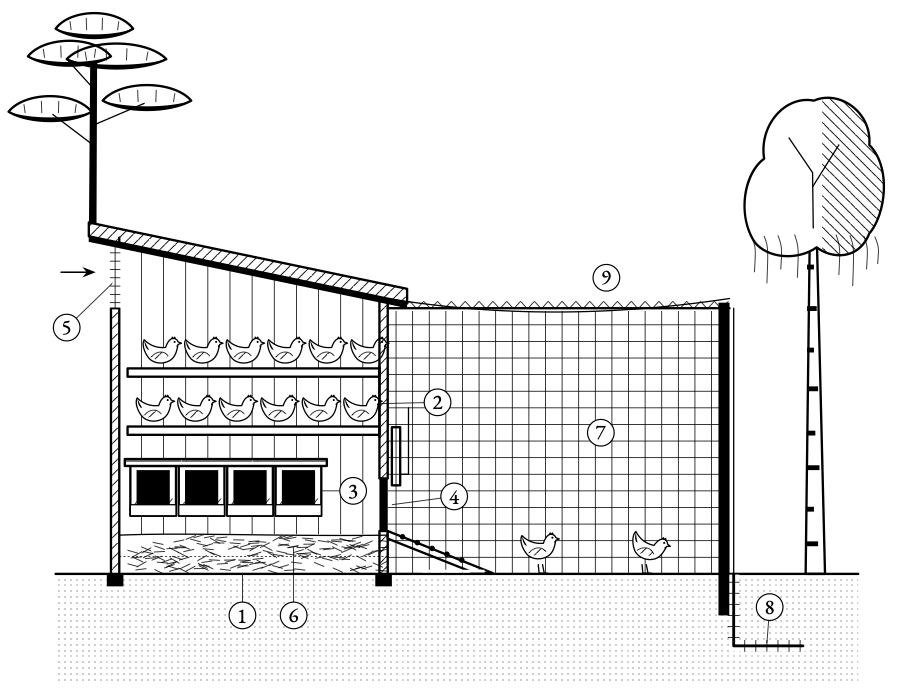
6 Deep litter for a dozen hens
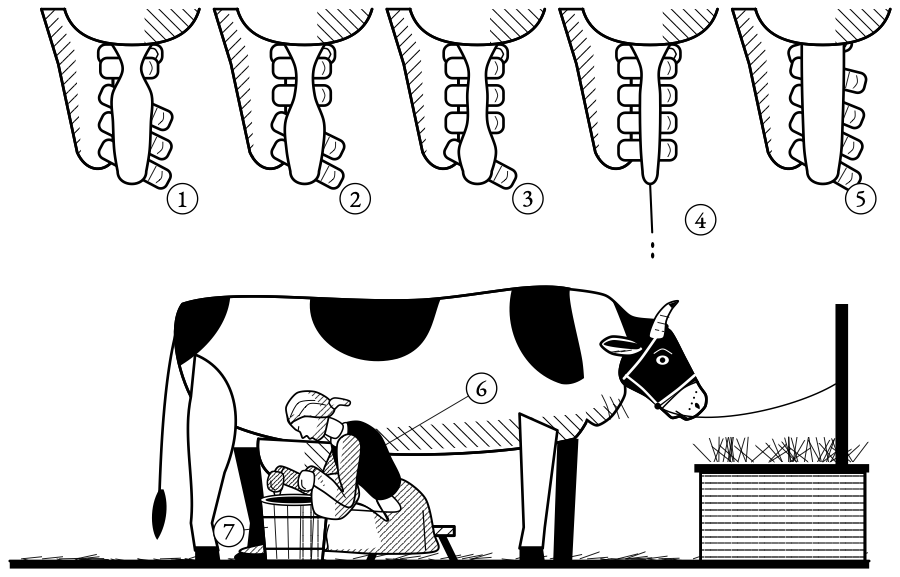
7 The paddle test and the udder
8 Eggs in lime water Safety
9 Milking a goat, and the kid's first day Safety
10 Tree hay Safety
If it goes wrong
The left flank is swelling and she is groaning. Bloat. Up, walking, stick in the mouth, oil down the throat, and if she staggers, the trocar. Do not wait for anyone.
The first lines of each protocol. The steps, weights and temperatures are in the book.
Numbers to Carry
- The gap: rye 1.5 per cent fat, a working body wants 60 to 80 g a day by the chapter, 86 to 126 by the nutrition plan. B12 in no plant, the body's store 2 to 5 years. Selenium, iodine: not on the sand, not in the animal either, unless the ley has plantain and chicory, which the plan says brings the milk to 12 to 19 µg and the egg to 23 to 43 in 100 g, unmeasured here. (own, 148)
- The stomach: 86 per cent of livestock feed is inedible to people. Ruminants 0.6 kg human protein back per kg fed. Feed to live weight: chicken 1.5 to 2, pig 2.5 to 3.4, beef 6 to 12. 118
- The cow: eats 3 to 3.5 per cent of her weight in dry matter, 650 kg cow 19.5 to 22.75 kg. Grass-only yield 3,250 to 7,000 kg, take 6,000. Maintenance 76 MJ a day, 0.39 ha at 11.2 t DM/ha. On sand about 2 ha of grass, half again for the heifer, half again for the dry year. (43, 128, 118, own)
- The calendar: cycle 21 days, heat 18 h, ovulation 24 to 32 h after onset, gestation 283 days, calving interval 365 to 390 days, dry 40 to 60 days. Colostrum 3 to 4 l in two hours, again at twelve, gut closed by 24 to 36 h. Go in after an hour of straining with nothing moved. Pull with two or three people, never a vehicle. 44
- The sow: cycle 21 days, stands 48 to 72 h, gestation 114 days, 10 to 12 born, litter in 1 to 5 h, a piglet every 10 to 15 min, intervene at 45 to 60 min. Crushing is 80 per cent of first-72-hour deaths. Creep 32 to 35 °C and not below 30 for ten days, sow 18 to 20. Pen 6.5 to 7.5 m². Pasture 10 to 15 sows or 25 to 30 finishers a hectare, move at 5 to 8 cm, rest 4 to 8 weeks. Roundworm eggs 5 to 10 years. 50 51
- The pork: Trichinella dies at 62 °C at once, 60 °C in a minute, 57 °C in six. Cook to 70 at the centre and hold it a minute. A home freezer is not enough, least of all for wild boar. Swill: boil an hour, never from another kitchen. (50, own)
- The hen: eats 110 to 130 g a day by the chapter, or 80 g grain, 30 g pulse, 40 g roots, 25 ml whey and 8 g grit by the poultry plan, 29 kg of grain a year, a fifth of a hectare for fifteen. Lays from 20 to 26 weeks, 12 to 14 h of light, moults 8 to 12 weeks, half rate after, a fifth less each year. Keep 7 pullets, 5 second-year, 2 old, a cock. Dual-purpose 180 to 260 eggs. Cock per 10 to 12 hens. 21 days at 37.5 to 37.8 °C, stop turning at day 18. Cockerels at 16 to 20 weeks. Layer 16 to 17 per cent protein, 3.5 to 4 per cent calcium. (55, own)
- The house: hardware cloth 12 mm, skirt 45 to 60 cm, a square foot of vent a bird. Deep litter 10 to 15 cm to 25 to 30, C:N 25 to 30, moisture 40 to 65 per cent, plus 5 to 6 degrees, cleared twice a year leaving 5 cm. Red mite: diatomaceous earth on the house and the birds and the bath, kills in 31 to 34 h, dust bath 70 sand 30 soil, repeat at 7 to 10 days, three times. 55
- The shelf: procaine is the lawful local anaesthetic for food animals in the EU. Lidocaine 8 to 10 mg/kg cattle, 4 to 6 sheep and goats and never above 7, cornual block 5 to 10 ml for a cow, under 2 ml for a kid, 10 min. CMT 3 per cent SLS, gel at 310,000 cells/ml. Nitrate, as NO3 in the dry matter: under 5,000 ppm safe, 5,000 to 10,000 half the ration at most with safe hay, above 10,000 never. Acorns kill cattle and sheep, goats stand more, slaked lime a tenth in the feed prevents and does not cure. Grass tetany: 60 g magnesium oxide a day a cow, 10 g a sheep, in the feed. Comfrey outside only. Wormwood is thujone. Dose only below 683 g/day gain. 63 43
- The law: register, disease fund, register 3 years, Newcastle every 3 months in the water. Swill banned. ASF in Brandenburg since September 2020. Flu housing orders most winters since 2016, by district order. Newcastle back in Brandenburg February 2026. Germany free of bovine TB and brucellosis since 1996. (55, 50, own)
- The goat: Thüringer Wald 700 to 900 kg a lactation by the breed, 580 by the curve, 3.5 to 3.9 per cent fat, twins in four of five. Four does and six ewes: 2,800 l, 220 to 260 kg dressed, 18 to 24 kg wool, 1,010 h, 4.5 ha of sand. Winter 215 days: 4.3 t meadow hay and 1.4 t tree hay. Pasture 1.8 to 2.8 t DM a hectare unimproved, 3.8 to 4.8 with plantain and chicory. Gestation 147 to 155 days, colostrum 50 ml/kg in 2 h. 137
- The village of sheep: 45 to 50 does for 100 ml a head a day, 150 to 160 ewes, 60 ha heath, 50 ha hay, 15 ha hedge, 2 shepherds, 5,800 h. A night's fold 350 kg of dung. 137
- The winter egg: 12 to 14 hens give 1,950 to 2,250 a year, 8 to 11 a day in summer, 2 to 3 in December. A lamp burns 15 to 25 g of fat an hour. 50 hens lit 4 h a night: 43 to 72 kg of fat for 600 to 900 eggs. Not worth it. 138
- The crock: 1 kg slaked lime to 15 l, eggs under 36 h, 5 to 8 cm cover, lard film, 8 to 12 °C, 8 to 12 months. Wax at 68 to 72 °C, 2 to 3 s, 4 to 6 months. Salmonella dies at 70 °C for 2 min. Never wash an egg you mean to keep. Illness 6 to 72 h. 138
- The waterfowl: Khaki Campbell 280 to 320 eggs of 75 to 90 g. Pomeranian goose 35 to 50 eggs of 140 to 180 g, 1.2 to 2 kg of fat, 5 to 6.5 kg carcass, 6 to 12 breeders. 138
- The plan's plate: man 3,400 to 3,800 kcal and 113 to 126 g fat, woman 2,600 to 2,900 and 86 to 96, household 10,100 to 11,300 a day. Iodine 150 to 200 µg a day. Vitamin D none from the sun late October to mid-March. Trichinellosis kills 15 to 30 in 100 untreated, Hedersleben 1865 337 ill and 101 dead. 148
The Library
The dry-matter table, the energy system, the protein window, the grazing arithmetic, the four-step rotation, the water figures, the silage values, the nitrate table and the targeted worming threshold from the cattle nutrition document (43), which is written for a forty-cow herd and mentions Brandenburg once. The oestrous cycle, the follicle waves, the liquid semen extenders, the two ways of inseminating without plastic, the calving chains and the force limits, the fetotomy, the colostrum timing, the milk fever thresholds and the Gemeindebulle from the reproduction document (44), which cites 43 for all its nutrition. The grass-only yield of 3,250 to 7,000 kg, the milk composition, the butter over-run, the cheese yield equation and the whole-cow product budget from the heritage dairy document (128), which cites 44 and through it 43, so that the three are one witness. The maintenance energy of cow, sow, finisher and hen, the acreage at intensive yields, the feed conversion ratios, the inedible-feed share and the nitrogen cap from the acreage document (118), which gives land for no working animal and none for sand. The creep and sow temperatures, the pasture stocking and rest, the roundworm, the swill ban and the 2001 epidemic, the Trichinella temperatures and the whey warning from the pig husbandry document (50). The sow's cycle, the gestation, the nest, the farrowing timings, the crushing figure, the crate law of 2021 and 2036, the savaging and the sow's danger from the pig breeding document (51), which cites 50. The egg counts by breed, the autosexing Bielefelder, the starter ration, the wire and the vent, the deep litter, the Berlin registration and vaccine rule, the coccidiosis, the red mite regime and the failed pumpkin-seed wormer from the poultry document (55). The breed yield table copied from 43, the SARA and nitrate tables, the worming threshold, the CMT recipe and scores, the udder paste, the acorn antidote, the comfrey and wormwood warnings, the lidocaine doses, the bloat, the rumenostomy and the abscess from the ethnoveterinary document (63), which gives no dose, no withdrawal time and no zoonosis, and from which every temperature was lost in extraction.
Read for draft 2 on 25 September 2026:
- 138, Egg Production and Preservation. The light threshold, the oviduct's clock, the moult, the three ages, the ration, the lamp arithmetic, the breeds with their dates, the limewater and the wax, the salmonella's temperatures, the cuticle rule, the ducks and the Pomeranian goose. Its physiology and its kinetics rest on journals and the BfR, its breed dates on Wikipedia, its wax on blogs, and its Berlin well water on a memoir.
- 137, Goats and Sheep on Brandenburg Sand. The two goats and the two sheep, the household of ten, the four and a half hectares, the tree hay, the 215-day winter, the folding right and Frankenfelde, the village of shepherds, the goat's milking and kidding, Q fever's precautions. Its breed yields and its own lactation curve disagree, and it was read first for Chapter 14.
- 148, Autarkic Brandenburg Nutrition Plan. The household's plate in kilocalories and grams, the iodine of the ley, the winter's vitamin D, the case fatality rates. Its arithmetic is right where it can be checked and its inputs are unsourced or misfit, its eel does not cover the need it claims, and its cow on a hectare and a half is the land document's goats misread.
The plates