FEASTING · Part II · Soil and Seed
Chapter 5
Making Ground
Draft 1, 25 September 2026 · 8,772 words · 5 movements
The Opening
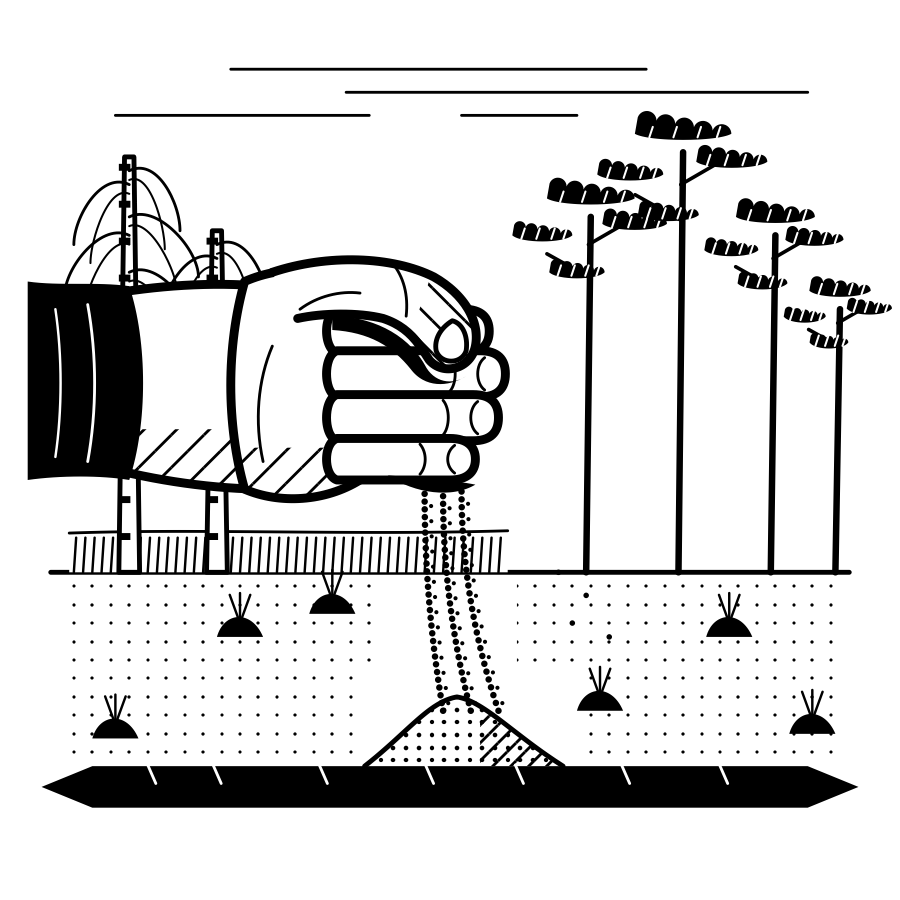
Kneel down somewhere between the Oder and the Elbe, anywhere the pines grow, and take a handful of the ground. It runs. It will not hold a shape when you close your fist, and when you open your hand there is nothing on the palm but a few grains and a grey dust that the next breath moves. Put it to your tongue and it is gritty and tastes of nothing. This is what the ice left when it went home, twelve thousand years ago, and it is what most of Brandenburg is made of: sand, and under the sand more sand, and here and there a lens of clay that the farmers found by where the puddles stood in spring.
The old farmers called it hungry. That is the exact word, in German as in English, and it was not a figure of speech. A hungry soil eats. Whatever you put on it, dung, straw, leaves, a dead cow, is gone in a season or two, burned up by the air that runs freely between the grains, and the soil is as pale and empty as before. It cannot hold its drink either. Rain goes through it like water through a sieve, and the nitrogen and potash go with it, down past the roots and into the groundwater, which is falling anyway and has been falling for forty years. A hungry soil gives you a crop the first year on the strength of what you brought, and the second year it asks for more, and the third year, if you have nothing more to bring, it gives you rye and lupins and heather and not much else.
This is the chapter about feeding it. Not the crops, which come next, but the ground itself, which has to be fed before it will feed you, and which on sand has to be fed for years before it stops being hungry. The work is slow in a way that nothing in Part One was slow. A knife is made in a week. A pan is raised in a day. Soil is made at the rate of a few millimetres a year, by heaps that ferment and worms that eat and charcoal that stays, and by crops that are grown to be cut down and left where they fall, and there is no shortcut in the library or anywhere else. Everything the sand takes, it takes at once, and everything you give it, you give a little at a time, for a long time.
The opening of the chapter. It goes on in the book.
The Story
- The land the ice left
- Feeding the ground
- The heap with a fever
- The worm's gut
- The black that stays
- The crop you do not eat
- Asking the ground
- The water that runs through
- The Honest Broker's forty years
- The turn to the present
5,873 words in the book.
At the Bench
Everything here is done with a spade, a fork, a bucket and a thermometer, and the only dangers are in the dung and the fire. Wear gloves for the heap, wash before you eat, keep the children off it, and keep the char pit in the open and downwind of nothing.
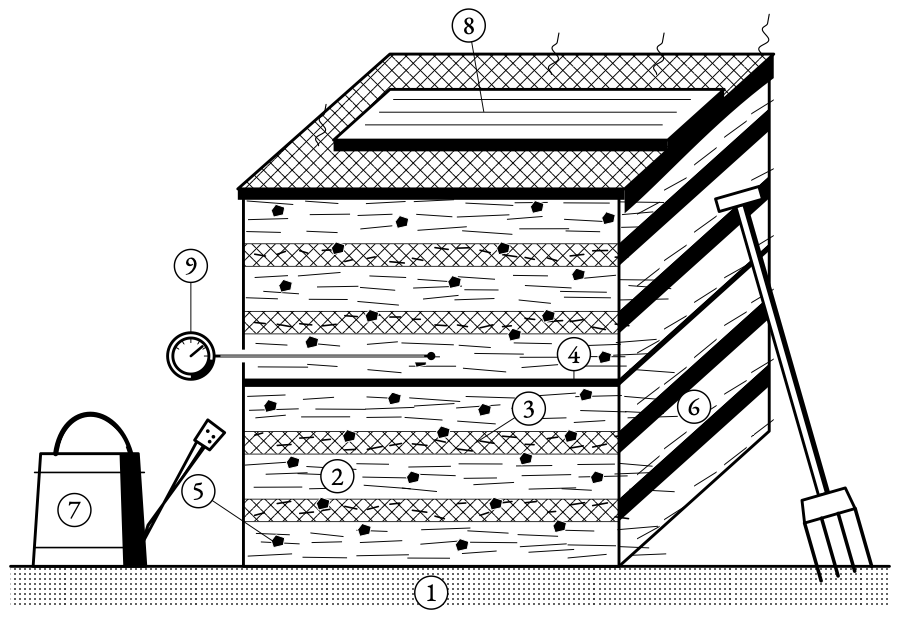
1 A hot heap Safety
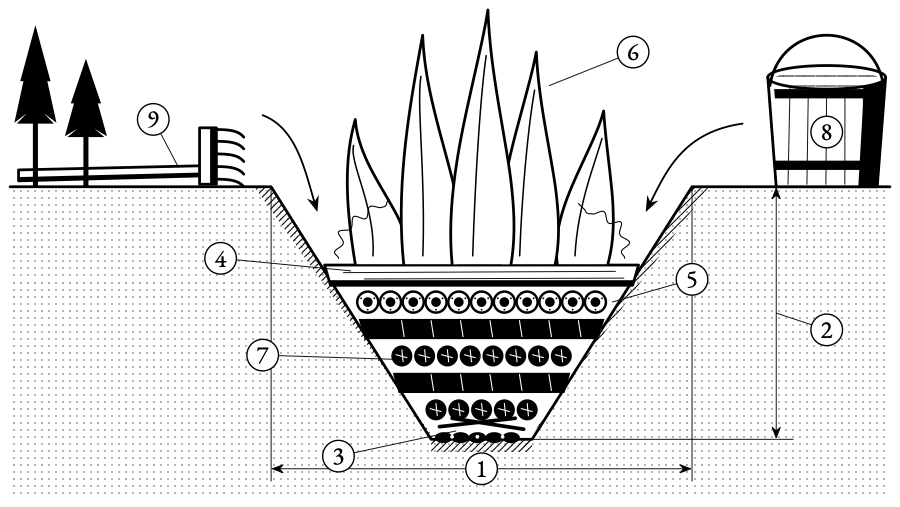
2 Charcoal, made and charged Safety
3 Asking with a cabbage
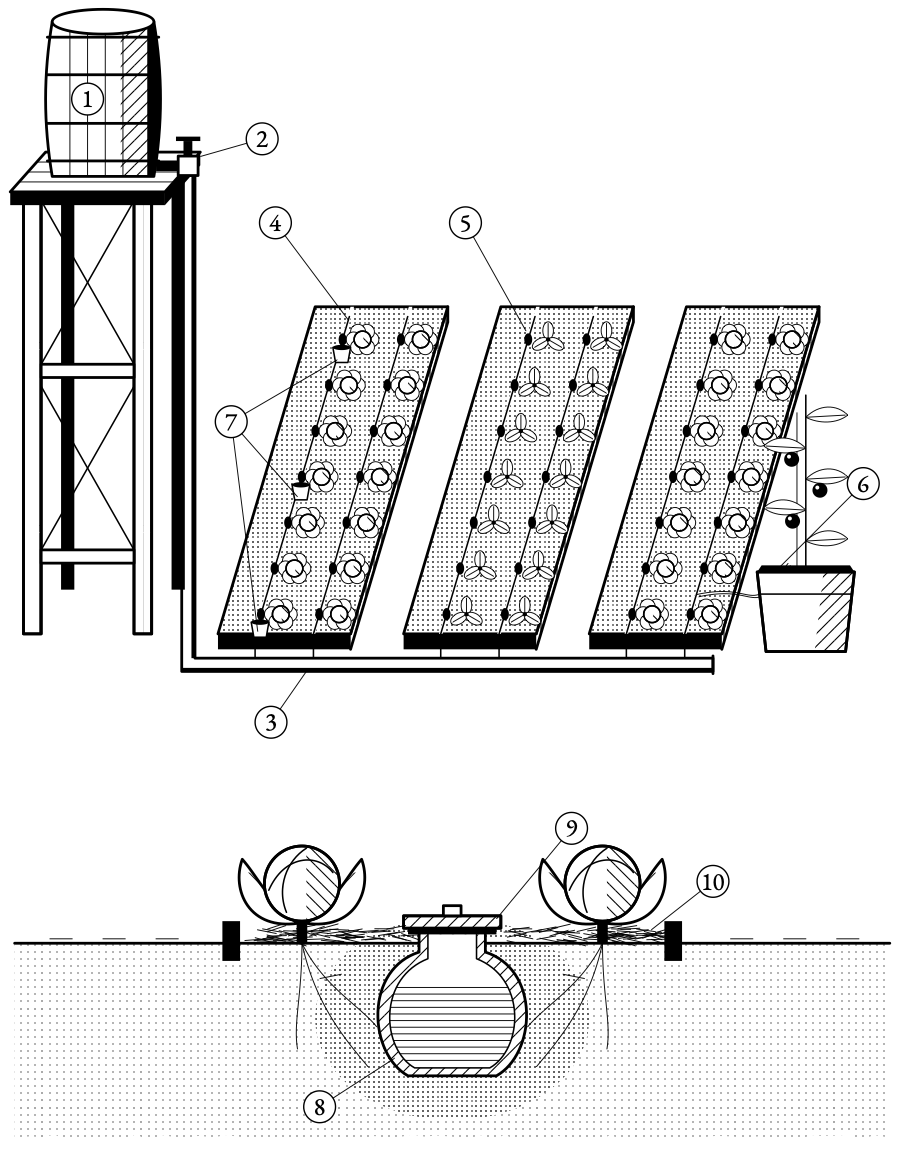
4 A drip line from a barrel
5 A slow sand filter Safety
6 The bucket Safety
If it goes wrong
The heap does not heat. Too dry, too small, or too much brown. Pull it apart, wet it, add grass or dung or a bucket of urine, and rebuild it a metre each way.
The first lines of each protocol. The steps, weights and temperatures are in the book.
Numbers to Carry
- The sand: 25 to 40 soil points against 100 for the Börde. 590 mm of rain on 167 days, 75 in July and 36 in February. 137 frost-free days, 8 May to 22 September. Recharge down 40 % since 1980. 25 122
- The ledger: cabbage costs 1,000 kg of humus carbon a hectare a year, potatoes 760, rye 280. Lupin gives 160, clover-grass 600 to 1,400. A tonne of dry rotted manure pays 200 kg. Roots count 2.5 times straw. (25, via 24)
- The heap: carbon to nitrogen 25 to 1, water under 65 %, one cubic metre at least. 55 °C for three days aerated or fifteen days with five turnings. Roundworm eggs dead after a month at 55 to 60 through every part of the heap, and months of maturing. Cress at 80 % or better means ready. A well-turned heap done in about two months, a garden heap longer. (23, the cubic metre the book's own)
- The person: 90 g of dry matter, 10 to 12 g of nitrogen, 2 of phosphorus, 3 of potassium a day. Seventy to eighty per cent of the nitrogen in the urine, 1.4 l of it. Store a month closed and undiluted, dilute 1 to 10 on the day, a month before harvest. (23, the dilution and the month the book's own)
- Charcoal: 1 to 2 kg to the square metre, once. Charge at a tenth of the heap. Clean wood, cool fire. 25
- The lupin: 150 to 180 kg N a hectare, 110 days, a root to 3 m, 70 to 100 plants a square metre. Rye and vetch by mid-September, cut at flowering in late May. (25, via 24)
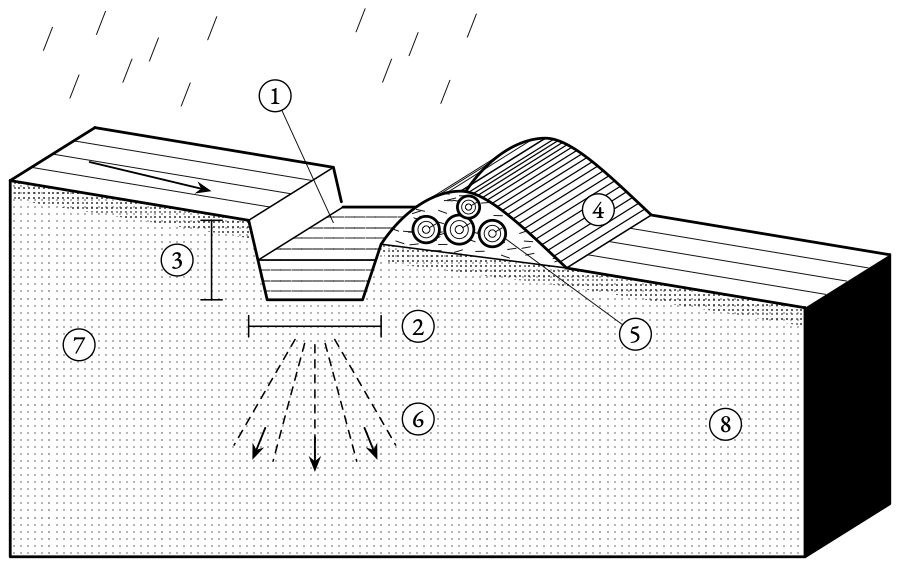
- Water: 480 l a year from a square metre of roof. Four people, 73 m³ a year. A square metre of vegetables, 600 l a season, 300 of it from the sky. Ten metres of head is a bar. Filter sand a quarter of a millimetre, 50 cm deep, 5 cm of water over it, half a litre a minute, a month to ripen. Boil one minute. (39, 78, 122, the household figures the book's own arithmetic)
The Library
The Arenosol, the soil points, the frost dates, the humus ledger, the lupin, the rye and vetch, the crimping, the brassica rules and the biochar rates from the topsoil document (25), which copies nearly all of it from the rotation document (24) that Chapter 6 uses, so the two count once. The compost temperatures and days, the manure analyses, the humanure figures, the worm species, the maturity tests and the pathogen and plastics warnings from the fertiliser biology document (23). The fizz tests, the cabbage, the extractants, the deficiency symptoms and Ellenberg from the testing document (42), whose compost section copies 23. The head pressures, the dripper types, the tubing limits, the swales, the bentonite and Yeomans from the gravity irrigation document (39), which also rests on 24 for the sand. The biosand filter, its sand, its skin, its removal rates, the boiling rule and the algae warning from the purification document (78). The rainfall, the roof yield, the tank standard, the groundwater and the Spree from the water demand document (122), which models a thousand-cover kitchen and never a house.
The plates