FEASTING · Part IV · Time
Chapter 14
Milk into Cheese
Draft 1, 25 September 2026 · 7,282 words · 5 movements
The Opening
Pour a little milk into a spoon and hold it on your tongue.
It is sweet, faintly, with a sweetness that is not sugar as you know it. It coats. When you swallow, the coating stays for a moment on the roof of your mouth, and that is fat, which is milk's way of carrying warmth. Underneath the sweetness there is something that is almost nothing, a clean mineral flatness, and that is the protein, and it is the part this chapter is about.
Milk is the first food. It is the only food on earth that was made to be food. Everything else we eat was a plant that wanted to be a plant or an animal that wanted to be an animal, and we took it. Milk was made by a body for another body, and it was made to be swallowed. You drank it before you could see properly. You drank it before you had a name.
The opening of the chapter. It goes on in the book.
The Story
- The bag that turned
- What the enzyme does
- The cow's arithmetic
- Cream
- Butter, and the fat that keeps
- The curd's decisions
- The cave
- What we cannot grow
- What the supermarket hid
3,958 words in the book.
At the Bench
1 From udder to pan Safety
2 Rennet from a calf Safety
The calf must be under two weeks old and must never have eaten anything but milk. The killing is in Chapter 9.
3 The fresh cheeses Safety
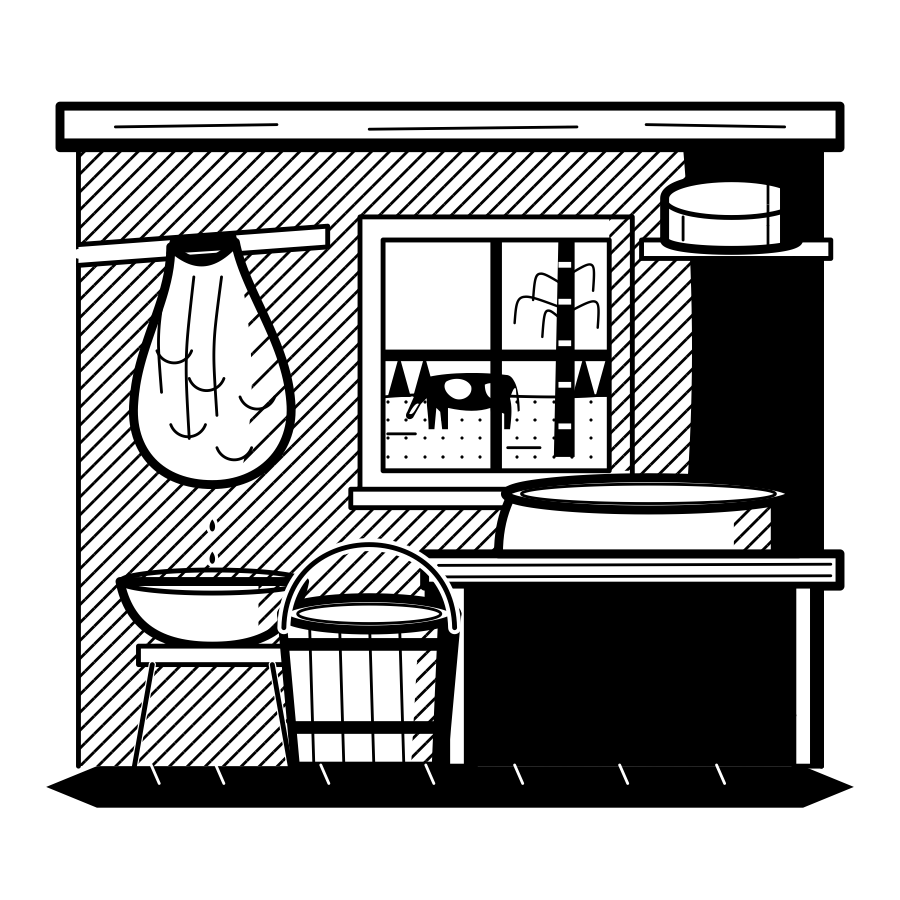
Quark. Skim milk, soured overnight with a spoon of yesterday's, until it is a soft set. Warm it slowly to about 40 degrees, no hotter, until the curd shrinks from the whey. Pour into a cloth and hang to drain for 12 to 24 hours. Salt lightly or not at all. Eat within four days.
4 Mozzarella by hand Safety
5 The wheel, the brine and the cave Safety
If it goes wrong
The milk will not set, or sets like custard and will not cut clean. The rennet is weak, dead or too old. Or the milk was heated too hot at some point. Or the milk is too fresh and not sour enough. Test the rennet on 4 litres as above. If it fails, sour the milk longer next time and use more rennet. Curd that will not set still makes quark. Nothing is lost but the day.
The first lines of each protocol. The steps, weights and temperatures are in the book.
Numbers to Carry
- Ten litres to the kilogram Cow's milk to hard cheese. Six for the ewe. 128 86 137
- Four to six thousand litres a year from a cow on grass. Four to six hundred kilograms of cheese if it all went to the vat. 128 125
- 35 degrees, 15 minutes The rennet test. A calf under two weeks. One calf, one year. 84
- 4.6 and 5.2 Where milk sets by sourness alone, and where mozzarella stretches. 88 87
- 26 kilograms of salt in the vat, 18 a year to keep it, 44 in all Sour it, feed it calcium, never throw it out. 125
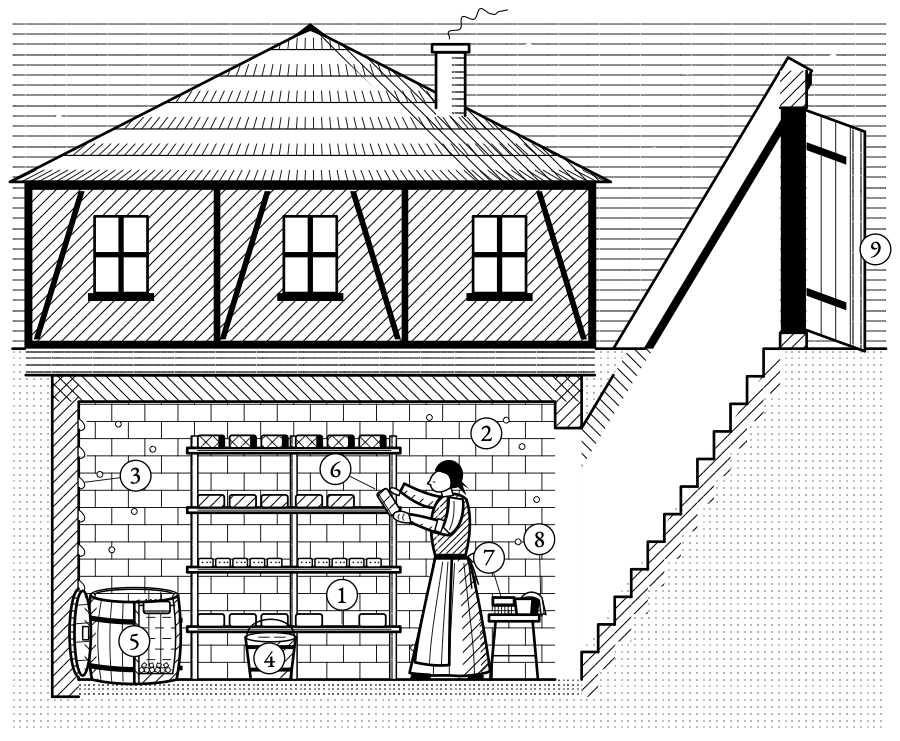
- 10 to 13 degrees, the wall damp to the touch The cave. Below 14 for the white coat. 94
The Library
The research documents behind this chapter, all of them on the website: 80 Traditional Dairy Processing Protocols · 81 Gravity Cream Separation Physics · 82 Cream Separator Design Research · 83 Biochemistry of Butter and Ghee · 84 Traditional Calf Rennet Extraction · 85 Fig Sap Rennet Extraction Details · 86 Botanical Cheese Coagulant Process · 38 Botanical Cheese Coagulants in Berlin · 87 Biochemical Mozzarella Cheesemaking Guide · 88 Mascarpone Production Process Analysis · 94 Cheese Cave Construction and Affinage · 125 Annual Family Salt Requirements · 128 Heritage Cow Milk Yield Conversion · 137 Small Ruminant Husbandry Plan · 43 Dual-Purpose Cattle Nutrition Plan. The yoghurt and the sour milk are in Chapter 13 (95).
The plates