FEASTING · Part IV · Time
Chapter 13
Sour
Draft 1, 19 September 2026 · 5,459 words · 5 movements
The Opening
Think of biting into a lemon.
Not eating one. Just the moment the teeth go through the skin and the juice hits the tongue. If you have done it properly, your mouth is already filling. You did not decide that. The body did it for you, at the mere thought, because the body has an opinion about sour and the opinion is: yes, more, get ready. Of the five things a tongue can taste, sour is the one that makes the mouth reach out.
There is a reason, and it is older than lemons. For most of the time our kind has been eating, a sour taste in a stored food was the sign that it was safe. Not the sign that it had gone off. The opposite. Milk that had turned sour would keep for days when sweet milk would not. Cabbage that had gone sour in its barrel would last the winter when fresh cabbage rotted in a fortnight. The sourness was the taste of something having happened in the dark, slowly, while nobody watched, and the something was on our side.
The opening of the chapter. It goes on in the book.
The Story
- The bags again
- The man who saw it
- The starter is not the air
- The skin on the wine
- The crock on the windowsill
- What the supermarket hid
2,862 words in the book.
At the Bench
Instruction follows. Weigh, do not measure. Temperatures in degrees Celsius. Where a range is given, the safer end is named. Brine strengths are as in the salt chapter.
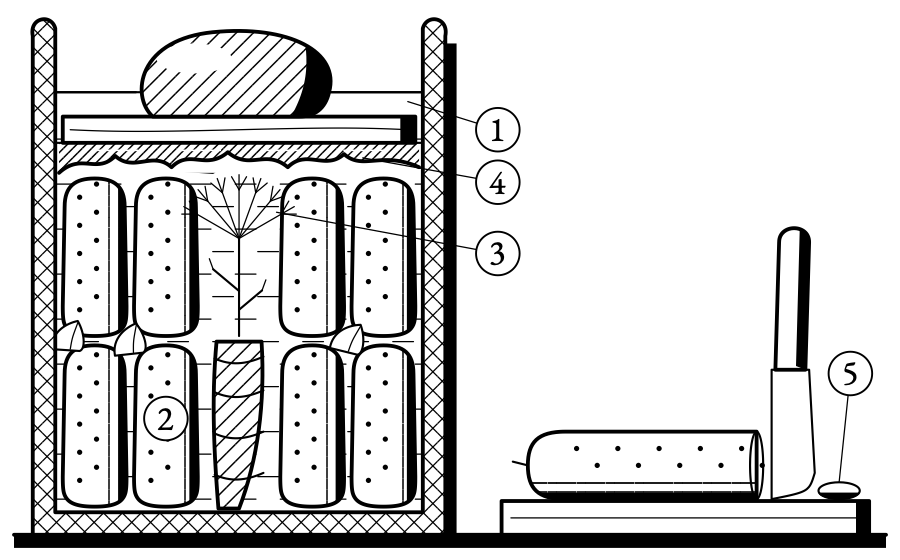
1 Sauerkraut, the master recipe for every fermented vegetable Safety
The same method, adjusted, for everything else. Whole cucumbers, beans, carrots, beetroot, turnips and whole small onions cannot be squeezed, so they are covered instead with a brine of 35 to 50 grams of salt to the kilogram of vegetables and water together, as in the salt chapter, with dill, garlic, horseradish and a few oak, cherry or grape leaves for crispness. Cut a sliver off the blossom end of every …
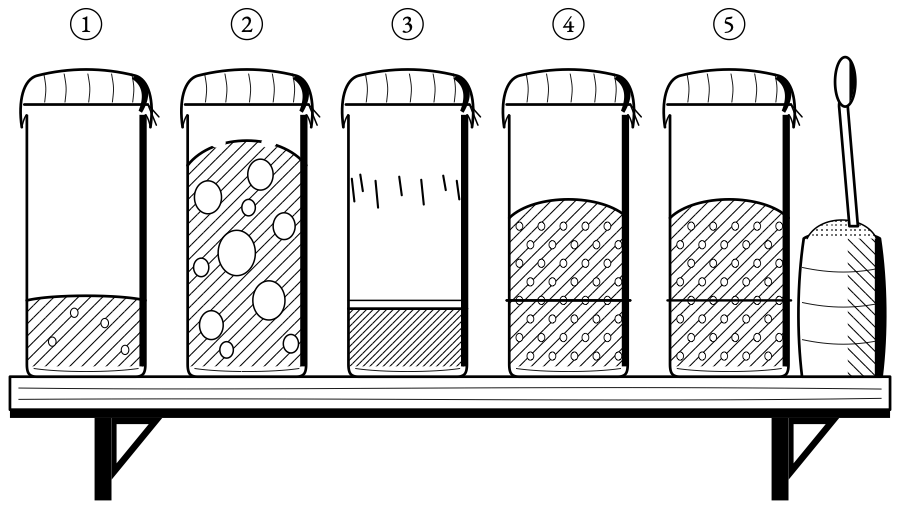
2 A rye starter from Berlin flour
You need dark rye flour, wholemeal or the German type 1150, and water that has not been chlorinated. Rain water, well water, or tap water left uncovered overnight. Berlin tap water is very hard and will slow the first days. Do not be alarmed.
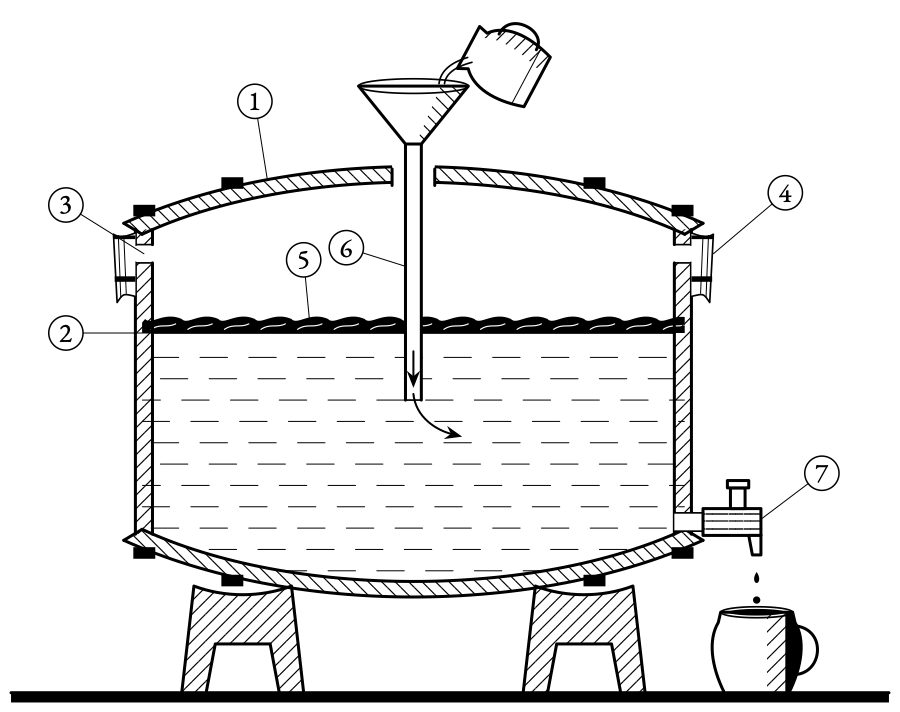
3 Cider vinegar in the Orléans manner Safety
4 Sour milk, two ways Safety
Dickmilch, the northern way, no thermometer.
If it goes wrong
A white film or fur on the surface of the crock, or on the vinegar. A dry, wrinkled, white film that smells of yeast is kahm yeast, which is harmless: skim it, wipe the rim, make sure everything is under the brine, and carry on. Fur that is blue, green, black or pink, or fuzzy, is mould. A small patch caught early can be skimmed, the rim wiped and everything checked under the brine. If it is thick, fuzzy, pink …
The first lines of each protocol. The steps, weights and temperatures are in the book.
Numbers to Carry
- 22 grams of salt to the kilogram of cabbage for sauerkraut, dry-salted, never under 20 or over 30. 35 to 50 to the kilogram of vegetables and water together for whole pickles under brine. 93 114
- 18 to 22 degrees until clearly sour and still, two to four weeks, then the cellar The rule for every crock. 93
- 50 and 50, once a day, for fourteen days a rye starter from dark flour, then a hundred bacteria to every yeast for as long as you feed it. 90
- 5 in a hundred The acid a vinegar must reach to preserve, and the alcohol the cider must have to get there. 89
- One to three spoonfuls per litre, never more Sour milk and yoghurt, from a culture that has been kept, not bought. 95
- A dried spare, given to two neighbours The way a culture survives.
The Library
The research documents behind this chapter, all of them on the website: 93 Vegetable Lacto-Fermentation Process · 114 Traditional Fermented Pickle Recipe · 90 Sourdough Microbiology and Culture Stabilization · 91 Sourdough Microbiology and Yeast Isolation · 89 Acetobacter Vinegar Production Guide · 95 Traditional Heirloom Yogurt Making Guide · 109 Wood-Fired Sourdough Baking Guide.
The plates