FEASTING · Part V · The Feast
Chapter 17
The Table
Draft 2, 25 September 2026 · 11,744 words · 5 movements
The Opening
In 1530 the most famous scholar in Europe wrote a short book for an eleven-year-old boy, and it sold more copies in his lifetime than anything else he wrote. Erasmus of Rotterdam's De civilitate morum puerilium, on the civility of children's manners, went through a hundred and thirty editions in the century after it appeared and was translated into every language of the continent, and most of it is about the table. Do not be the first to reach into the dish. Do not lick your fingers, or wipe them on your coat, or put back on the platter what you have had in your mouth. Do not spit across the table. Do not gnaw a bone like a dog. Turn away to blow your nose. Take the salt with the point of your knife and not with your fingers. A modern reader laughs at these, and then, as Norbert Elias noticed in 1939, stops laughing, because the laughter is the point: every one of them was necessary advice to a well-born child of 1530, and every one of them is now so deep in us that we cannot remember learning it.
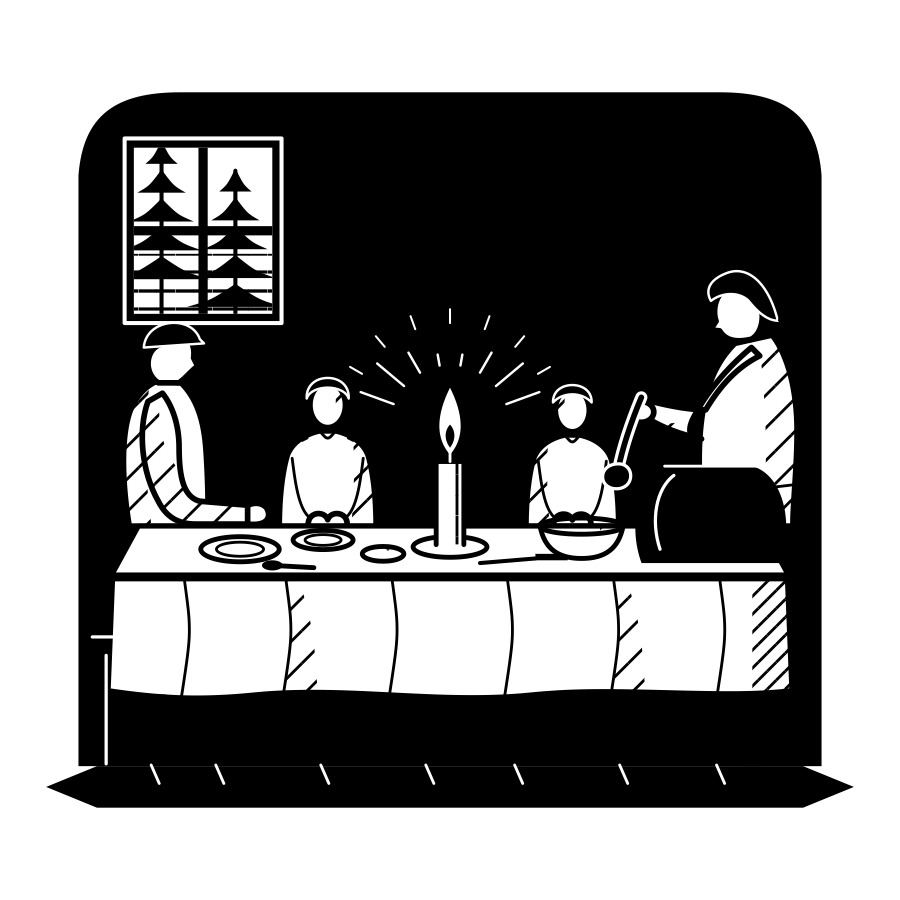
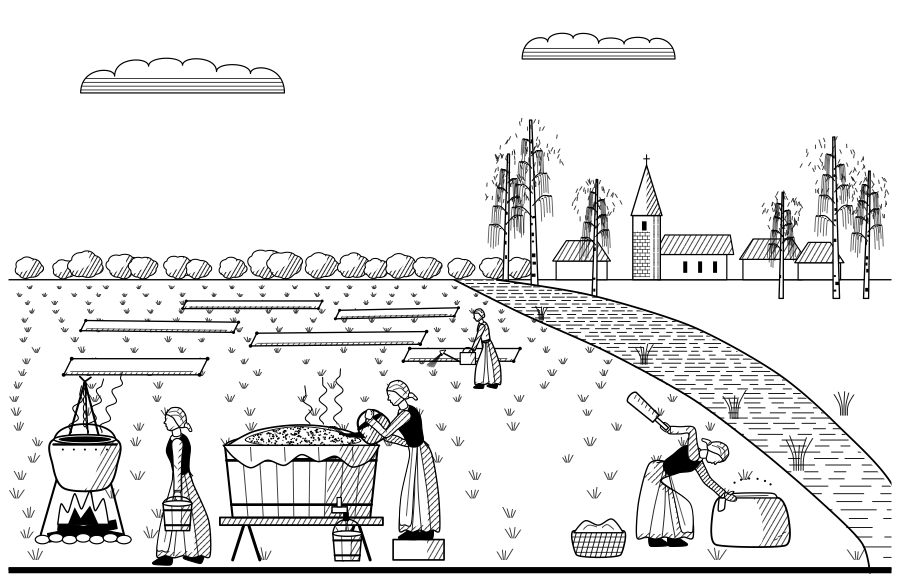
Lay a cloth tonight. Any cloth, on any table, and put one candle on it and the plates that you have, and sit down together at the same time to the same food, and notice how quickly the room changes and how little it took. That is the whole of this chapter, and it is also the reason the chapter is here, at the end of the book, after the pond and the pig and the salt, and not at the beginning, where a reader who wanted to survive would expect to find it. The Preface said that when the chain breaks the table is the first thing to go. The plates break and are not replaced, the candles run out, and we eat with our hands from the pot, standing, because we are tired and it is cold and who is watching. This chapter is about the four things that stop that happening, and each of them is a craft with a fire in it: the wooden plate and the fired clay one, the candle of tallow or of wax, the lye that is the ash of the hearth turned into the only thing that will make a cloth white again, and the manners themselves, which are, as this chapter will argue, the peace of the household made into habit, and which matter more after the Fall than they ever did before it.
The opening of the chapter. It goes on in the book.
The Story
- The truce at the board
- The board
- The fired plate
- The candle
- The clean cloth
- The Honest Broker's table
- Why it matters more
- The turn to the present
6,919 words in the book.
At the Bench
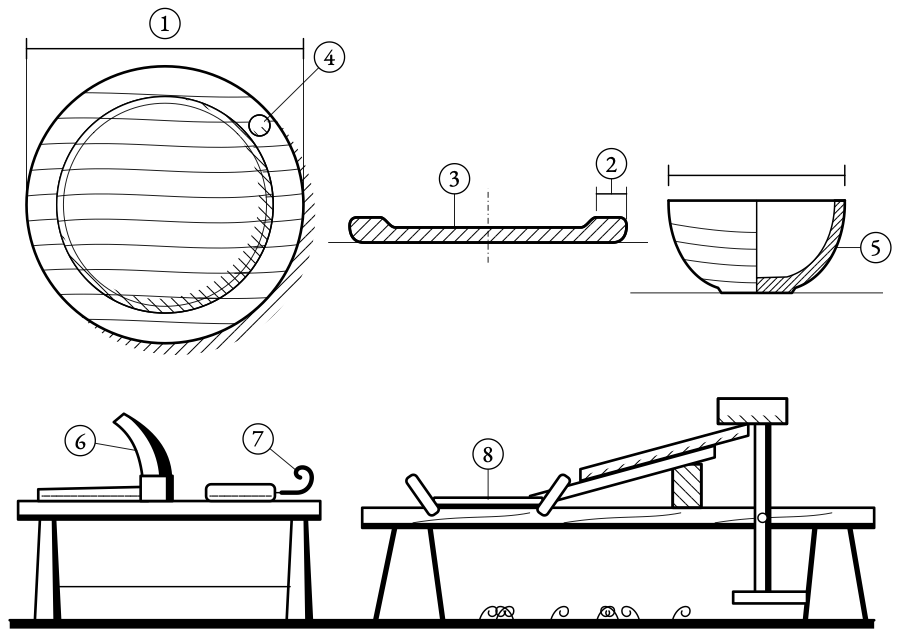
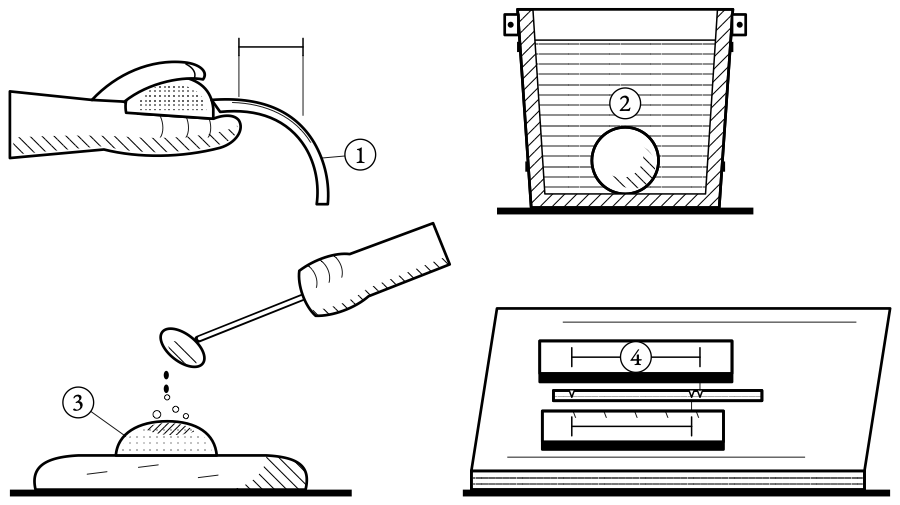
1 A wooden plate and bowl from the green log Safety
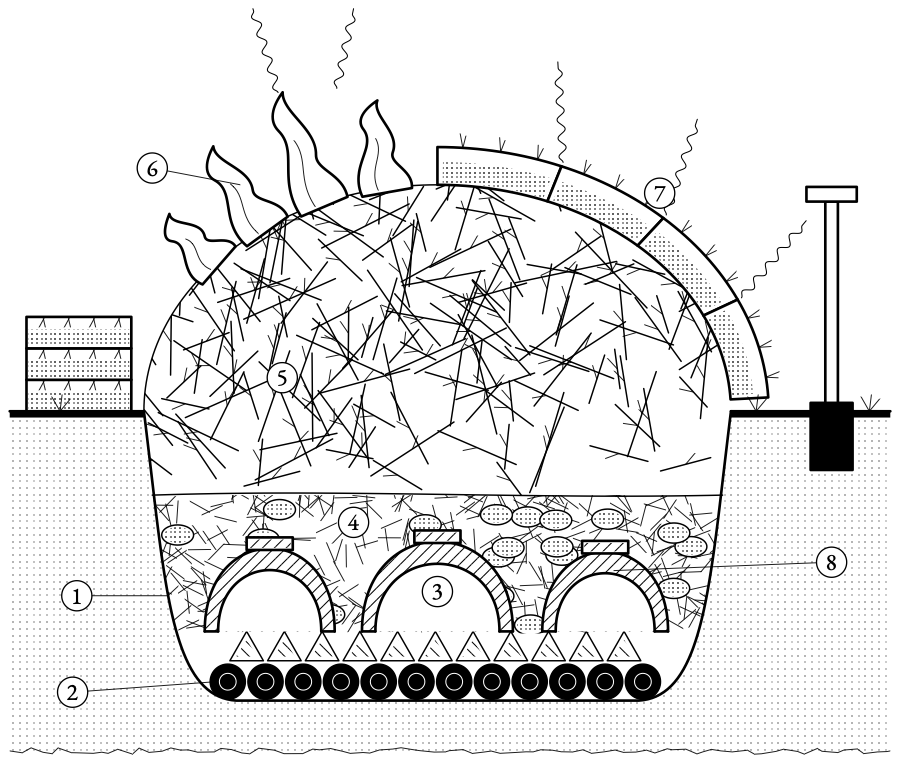
2 A pit-fired clay bowl Safety
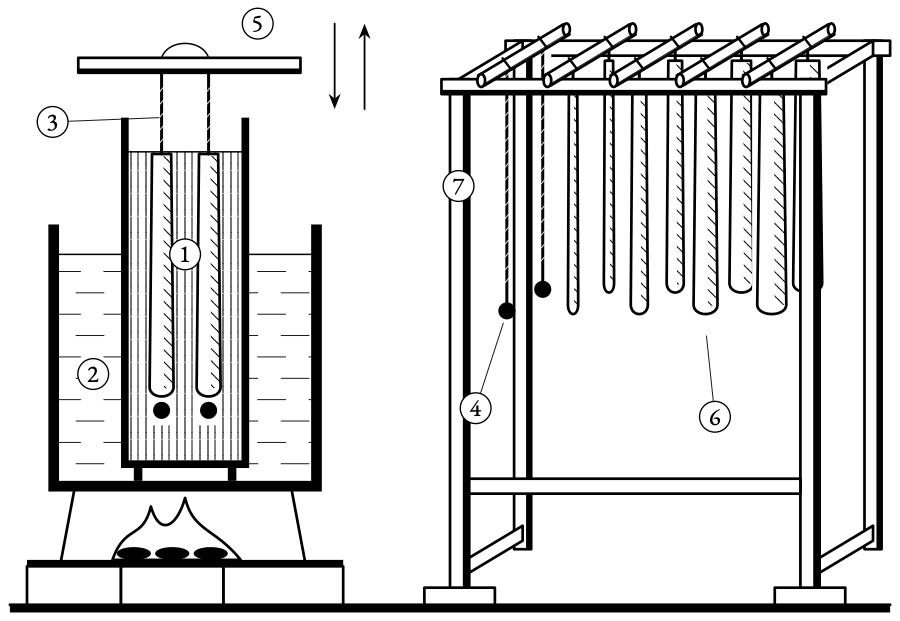
3 Candles Safety
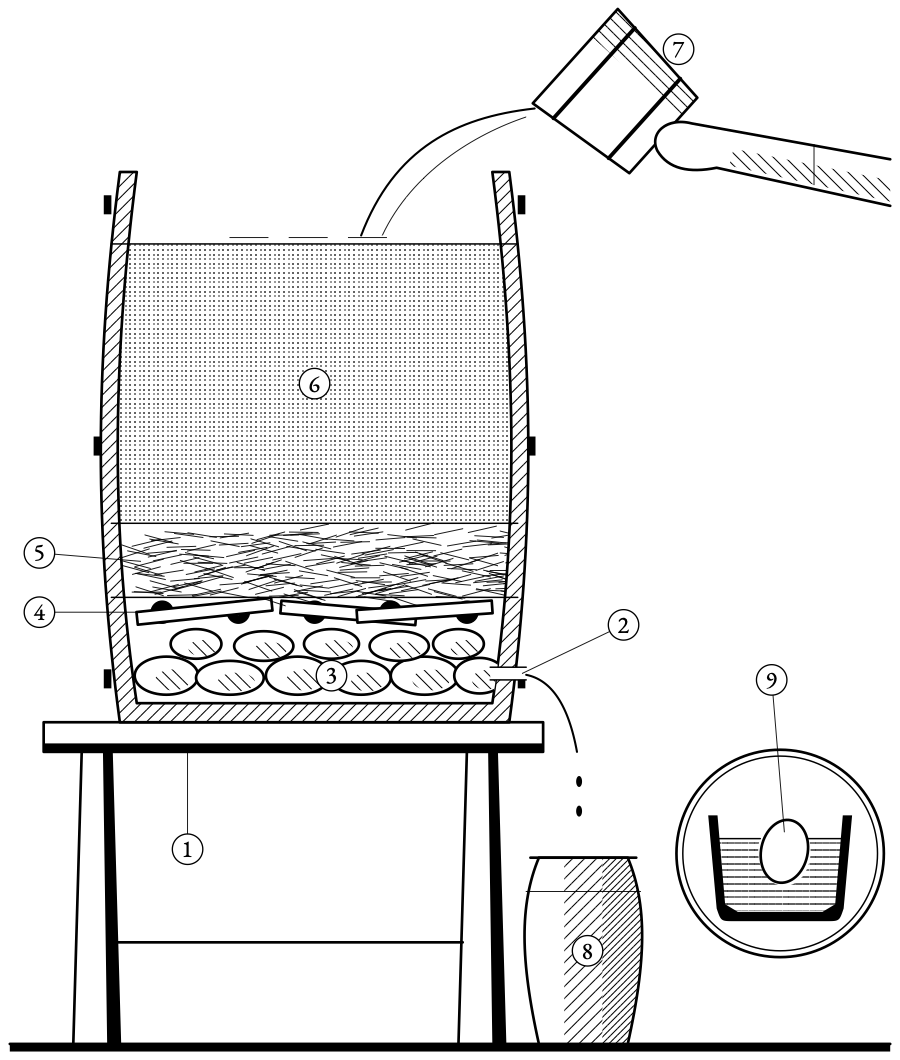
4 Lye from ash Safety
Read the whole of this before starting. Eye covering on, sleeves down, a bucket of clean water and a jug of vinegar within reach, and no child in the room.
5 Soft soap Safety
6 The great wash
7 Laying the table Safety
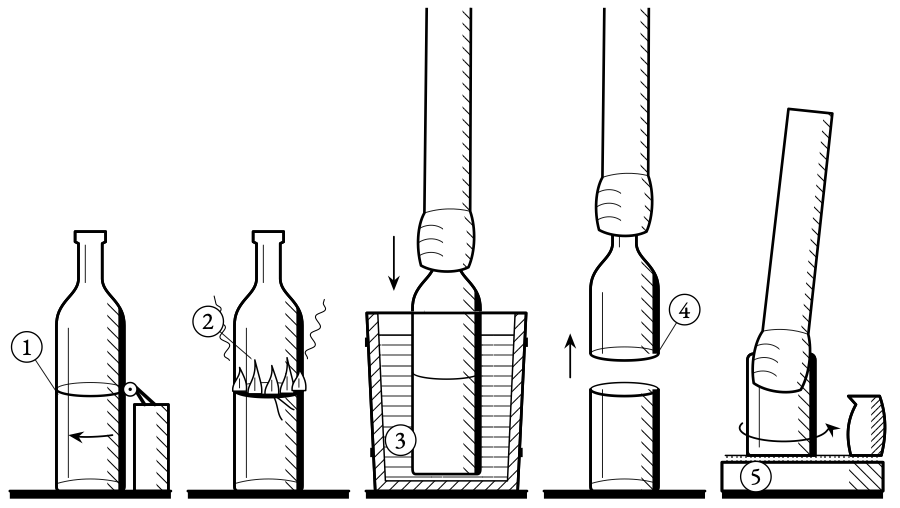
8 A glass from a bottle Safety
9 A horn beaker and a horn spoon Safety
If it goes wrong
The first lines of each protocol. The steps, weights and temperatures are in the book.
Numbers to Carry
- The three woods for the plate: birch, cherry, lime. The three that are not: oak, ash, yew.
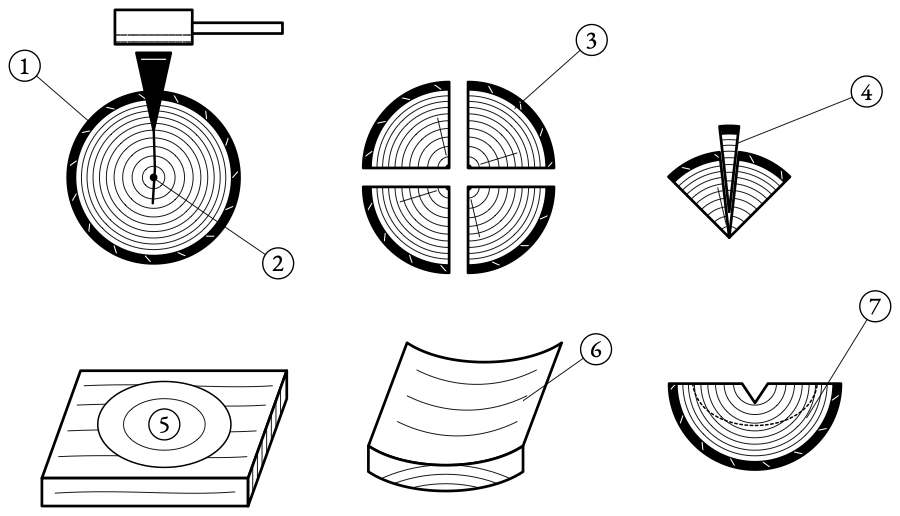
- Wood shrinks across the rings 6 to 10 parts in 100 and along the radius 2 to 5. Cut the plate radially and dry it for six weeks in shavings.
- Spoon butter: 4 parts oil to 1 part beeswax. The oily rag lies flat outside.
- Clay: ribbon past 5 cm, ball survives a night in water, no fizz under vinegar, a 100 mm line shrinks 5 to 8. Body 65 clay, 20 sand, 15 grog. Walls 6 to 8 mm for a plate, 10 to 12 for a crock. A fortnight to dry, a day to fire, two to cool.
- 573 °C is where the quartz turns, and 220 °C is the second trap on the way down. Slowly up, slowly down, and a kiln sealed until it is under 80 °C.
- Pit fire 650 to 850 °C makes earthenware. Salt glaze needs 1,200 °C and a village kiln: 28 hours up, 36 to 48 down, 3.5 to 4.5 stacked metres of pine a firing. The village potter: 1,850 vessels, 12 firings, 44 to 48 stacked metres of pine, 980 hours a year. No lead.
- Beeswax melts at 63 to 65 °C, tallow at 45. Dip wax at 70 to 75 °C, tallow at 65 to 70. Wax shrinks a tenth: pour twice.
- A 2 cm beeswax taper burns about 8 g an hour. A hive's kilo of wax is 125 hours. Six hives are two hours a night for a year.
- Beech leaves about 1 part in 100 as ash. Chapter 1's wood gives 50 to 70 kg of hardwood ash a year.
- A bucket of ash gives a quarter of a bucket of lye. Egg floats with a coin's patch: strong enough.
- Soap: 1 kg tallow to 200 g potash, or to 3 to 4 litres of egg-floating lye. Stir to trace. Tongue test for free lye.
- A household of four: 10 to 15 kg soap a year, 7 to 8 kg tallow, one winter's beech ash.
- Berlin water is 14 to 17 °dH by the flax report, up to 25 by district by the soap report. Wash in rain: 50 g of soft soap to 10 l for an hour, and a rinse at 1 part vinegar in 100.
- Flax: a hectare gives 3,500 kg of straw and 150 kg of bleached cloth for 654 hours, 387 of them spinning. A village of 300 needs 3.5 to 4 ha and 75 to 90 spinners. Hoard the sheets.
- The bleach: lye 8 to 12 h, grass 7 to 14 days, sour 24 to 48 h, four to eight times. Never lye over 3 in 100 on cloth.
- The fork: Venice 1004, Coryate 1608, Richelieu's story 1639, the French ordinance 1669. A table of twelve in forged steel and pewter: 520 hours and 340 kg of charcoal.
- Glass is hoarded, not made: 1,300 °C and 350 to 450 kg of charcoal per 100 kg. A bottle: one score, a burning string for a minute, cold water, a ground rim. Lead crystal rings long and weighs at least 2.9 times water: never for storing drink.
- Horn: boil 60 to 90 min, tallow 15 to 20 min, press 10 to 15 min, edge 1 mm. Lukewarm water only.
- Görzke's potters 1706, Seger's cones 1886, Kunckel's glass 1679, Baruth 1716, Neuglobsow 1780.
- Potash into water, never water onto potash. Eyes covered. Vinegar jug filled first. No child in the room.
- Serve the guest first, the children next, yourself last. Nobody eats until all are served. Nobody leaves until the candle is out.
The Library
The chapter draws on three documents in the research library, none of which has been verified against primary sources:
- 116, Crafting Civilized Dining Experiences. The four anthropologists of the Preface, the bread and wooden trencher with the Newcastle shipping figure, the shrinkage ratios and species list for tableware, the clay firing stages and the quartz inversion, the lead-glaze warning, the tallow dipping temperature and the beeswax figures. Its wood section rests on another library document, the green woodworking guide of Chapter 4, and its candle section on vendor blogs and social media.
- 76, Historical Pioneer Lye Extraction. The barrel, the leaching stone, the layers, the rainwater rule, the quart-from-a-gallon yield, the lime, the egg and feather tests, the soft potassium soap, all on the American frontier and all from hobbyist sources. No safety.
- 77, Tallow Saponification Stoichiometry. Cites 76 as its first source and repeats it. Tallow's melting range and fatty acids, the saponification value, the potash density table, the Krafft points, Berlin's water hardness, the vinegar rinse. Its stoichiometry did not survive the extraction.
Read for draft 2 on 25 September 2026:
- 140, Berlin-Brandenburg Traditional Ceramics. Glindow's lime, Zehdenick, the Spreewald's stoneware and Görzke's guild, Seger and his cones, the four clay assays, the 65/20/15 body, the pit fire's 650 to 850 °C, the reaction ladder and the second dunting point, the lime pop, the kiln's 28 hours and its cooling, and the village potter's year. Its geology rests on the state survey and Seger's own analyses, its history on museum and tourism pages, its kiln on a forum and vendor pages, and its budgets are uncited arithmetic. The chimney rules and the lead limits were lost in extraction.
- 141, Historical Glassmaking and Food Preservation. Kunckel, Baruth and Neuglobsow, the furnace's heat and charcoal, the density and ring of lead crystal, and the bottle cut. Its history is from tourism pages and its cutting from video sites. Its conclusion, that the household hoards and cuts glass and does not make it, is adopted.
- 142, Brandenburg Linen and Flax Production. The hectare's mass balance and its 654 hours, the village's spinners, the bleaching cycle, the water's hardness, the soap dose and the vinegar rinse, and the three kitchen cloths. Internally consistent and largely uncited. The website's flax page is built from it.
- 147, Historical Dining Cutlery Fabrication. The fork's dates, from a museum page and journalism, the horn beaker and spoon, from one re-enactment forum, and the table of twelve, uncited.
- 143, Traditional Cooperage. The laundry tub and its life.
Erasmus, the Tischzuchten, Knigge, Gilbert White's rushlights, the bucking and the bleaching green as a household scene, Velten's tiles, the milk seal, the rushlight, the beeswax burn rate, the horn beaker's wooden disc and the whole of the lye safety are the book's own and are marked. The flax, from field to cloth, is the website's, with the flax report (142) as its source.
The plates